ProtectCrystal handling note
Meaning boundaries
What Protective Crystal Meanings Can and Cannot Promise
Protective crystal meanings can explain why a stone is worn, displayed, collected, gifted, or sold under a “protection” category. They can describe personal intention, cultural symbolism, ritual use, or seller language. They cannot show that a crystal will prevent harm, change health outcomes, block electromagnetic exposure, verify authenticity, or make a material harmless to handle.
That is the practical point behind protective crystal meanings limitations: meaning can help you interpret a stone, but it does not replace material facts, sensible handling, or testing when the question depends on identity or composition.
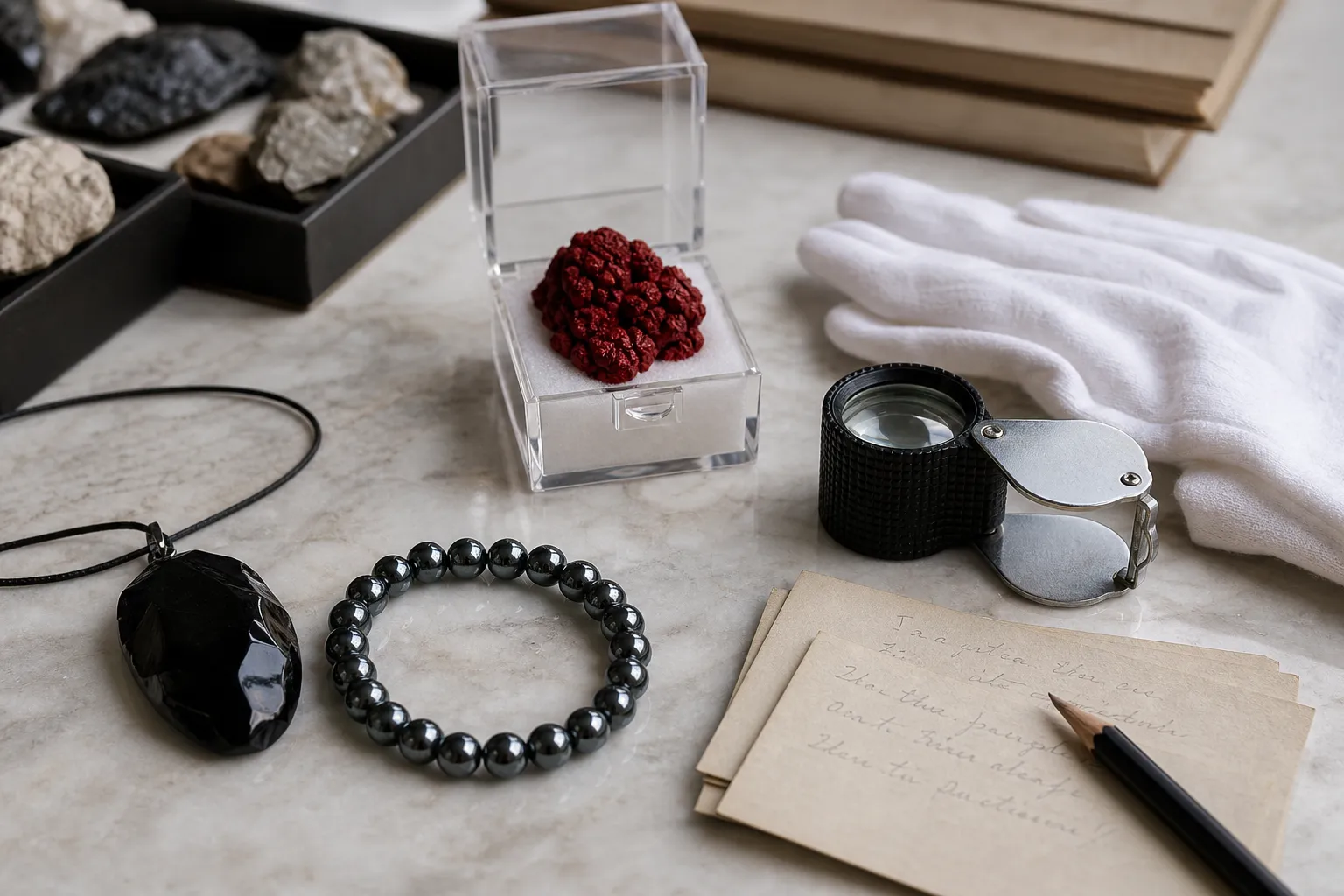
A black obsidian pendant may feel like a reminder of boundaries. A hematite bracelet may be sold with grounding language. A cinnabar specimen may carry strong red symbolism and historical interest. None of those meanings, by itself, tells you what the material can do or how it should be handled.
upward
Read the full overview first
Use the broader guide first if you need the full scope before this page.
What protective meanings can reasonably do
Protective crystal meanings are strongest when read as symbolic, personal, or cultural language. They can help you understand what a stone represents to someone, how a seller is positioning it, or why certain materials appear in amulet, talisman, or intention-based categories.
A protection crystal meaning can reasonably serve as:
A personal reminder
Carrying a stone may remind someone to pause, set a boundary, or move through a stressful setting with more intention.
A ritual or reflection cue
Some users place stones on a desk, near an entryway, beside a bed, or in a small arrangement as part of a personal practice.
A cultural symbol
Protective objects, amulets, and talismans have appeared in many cultures. That history supports the idea that objects can carry protective meaning, not that every modern product claim should be accepted as fact.
A shopping category
Words such as “protection,” “grounding,” “cleansing,” and “shielding” often tell you how a listing is being marketed.
A collection theme
Dark, metallic, red, glassy, or high-contrast stones often fit a protective look or symbolic role.
A stone can be meaningful, beautiful, culturally resonant, or personally steadying without being treated as a measurable force in the world.
What protective meanings cannot show
The main crystal meaning misconceptions start when symbolic wording is treated like proof. A listing may say that a stone absorbs negativity, creates an energetic shield, strengthens boundaries, grounds the wearer, or protects a room. In most listings, those phrases describe belief language or sales language unless there is separate evidence outside the crystal-meaning vocabulary.
Listing or belief language
What it may mean
What it does not show
“Black obsidian protection”
Obsidian is being framed as a symbolic boundary stone.
That it prevents harm, conflict, misfortune, or unseen threats.
“Hematite grounding”
Hematite is being associated with steadiness or focus in crystal-use language.
That it changes health, stress response, or physical safety.
“Cinnabar for power or alchemy”
Cinnabar’s red color and history are being used symbolically.
That it is appropriate to grind, ingest, soak, lick, or wear without checking the material concern.
“Shungite EMF protection”
The seller is using a common marketing association.
That the item reduces electromagnetic exposure.
“Authentic protective crystal”
The seller is combining identity language with meaning language.
That the material has been confirmed by proper mineral testing.
A crystal meaning also cannot confirm what a specimen is. Visual signs may suggest a material, but appearance can mislead. Polished black glass, natural obsidian, dyed pieces, coated beads, metallic-looking hematite, and imitation stones can overlap visually for a buyer. For certainty about mineral identity, composition, or contamination, specialized testing may be needed.
The same separation applies to outcomes. If a claim depends on health, psychological, electromagnetic, safety, or material-testing evidence, a meaning page or seller description is not enough.
Why different “protection stones” need different caution
Protection categories often group very different materials together because they share a meaning theme. That is convenient for browsing, but it can hide practical differences that matter when choosing, wearing, storing, or cleaning a stone.
Black obsidian
Black obsidian is often described as a mirror, boundary stone, or absorber of unwanted energy. In material terms, obsidian is volcanic glass. Its meaning does not verify its source, confirm that a polished piece is natural, or make every sharp edge or chipped surface suitable for casual handling. Obsidian seller descriptions can explain symbolism, but they should not be read as proof of effect or identity.
Hematite
Hematite is commonly sold with grounding claims. Buyers often notice its dark metallic look, polished bead format, and heavy-feeling presence for its size, though those cues can suggest rather than prove identity. Hematite grounding claims are best treated as symbolic or personal-use language. They do not confirm that a bead is natural hematite rather than a magnetic, coated, or imitation product.
Cinnabar
Cinnabar needs the clearest separation between meaning and handling. Cinnabar is associated with mercury sulfide and has a long history as a vivid red pigment and symbolic material. Archaeological and conservation sources discuss its visual power and cultural use, but that history does not remove modern handling caution. Do not treat a protective meaning as permission to grind it, powder it, ingest it, lick it, soak it for drinking water, give it to children or pets, or wear a questionable specimen without considering material risk. If identity or condition is uncertain, handle it conservatively and seek appropriate mineral or safety guidance.
Shungite
Shungite is often pulled into protection categories through EMF wording. That language is common in the market, but this page does not verify electromagnetic protection from a stone, pendant, plate, or bracelet. If the product is sold mainly through shungite EMF protection claims, read the claim as marketing unless the seller provides evidence that can be assessed outside crystal-meaning language.
The simple rule: meaning may explain why a stone is chosen; material facts decide how it should be handled.
How to read seller descriptions without over-interpreting them
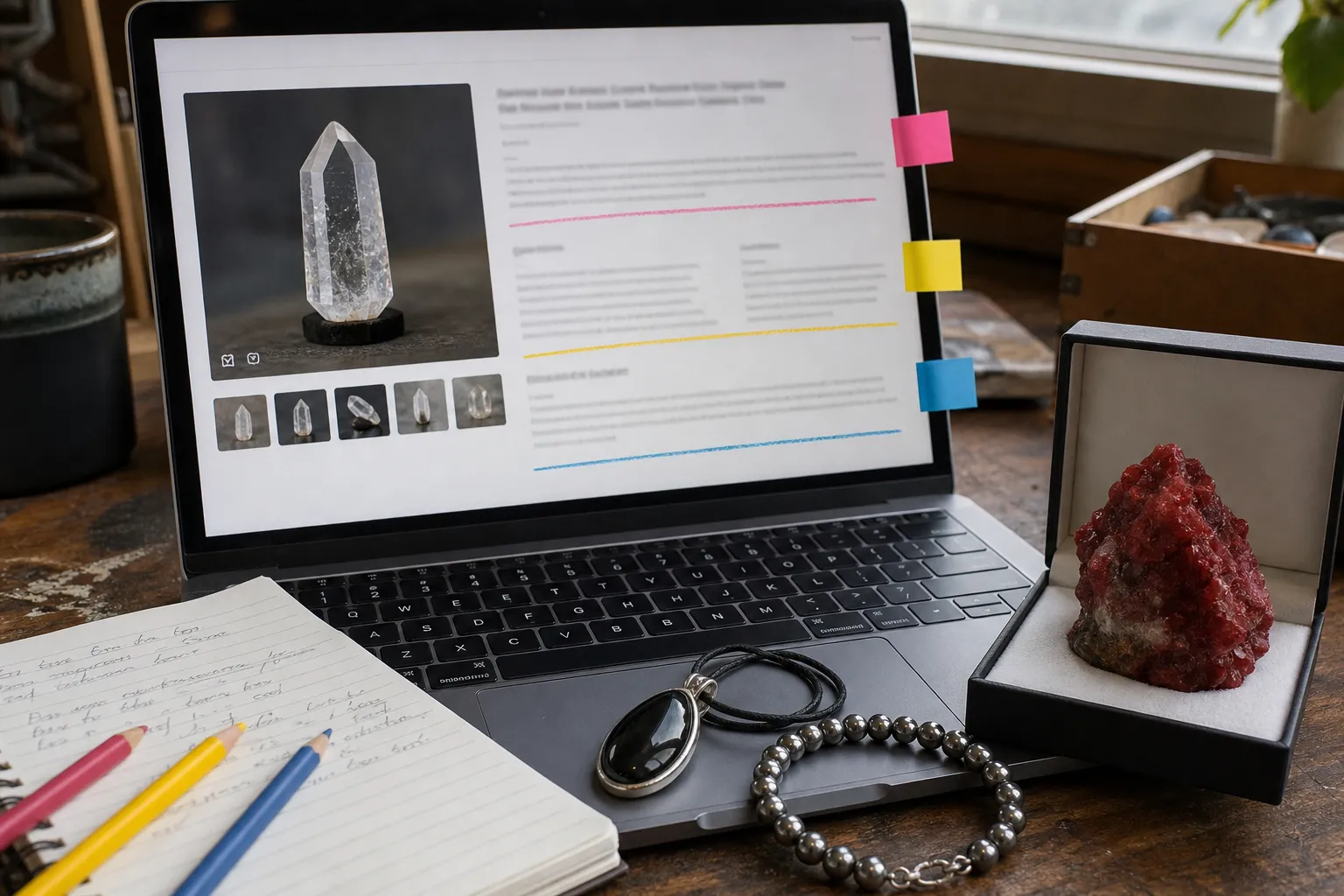
Many readers first meet protective crystals through product listings, not mineral references. A necklace or palm stone may be described as supporting boundaries, warding off negativity, grounding the wearer, amplifying intention, or protecting a home. The words may sound specific, but they often belong to a shared marketplace style.
Separate the listing into three layers.
1. Meaning language
This includes phrases such as “negative energy,” “spiritual protection,” “energetic shield,” “grounding,” “cleansing,” or “amplifying intention.” These phrases tell you how the seller wants the stone to be understood. They do not, by themselves, show that an effect occurs.
2. Material language
This includes the named stone, color, finish, shape, bead size, carving style, metal setting, and whether the piece is rough, polished, tumbled, or powdered. Material language is more useful for practical decisions, but it can still be incomplete. A listing that says “obsidian” or “hematite” may not provide enough information to confirm identity.
3. Handling language
This includes care notes, water exposure, skin contact, storage, fragility, and warnings. For ordinary polished stones, handling notes may be simple. For cinnabar and other materials with composition concerns, vague or absent handling notes should make you more cautious, not more confident.
A useful buyer question is: “Is this statement about meaning, material, or handling?” If it is meaning, enjoy it as context. If it is material or handling, look for observable details and stronger verification when the stakes are higher.
Where cultural symbolism fits
Protective stones and objects have real cultural history. Amulets, talismans, carved forms, pigments, beads, and ritual objects have been used across societies to express protection, status, identity, devotion, mourning, or transition. Cinnabar’s red color, for example, has been discussed in archaeological work as visually powerful and symbolically important in burial, decorative, and ritual settings.
That background matters because it explains why people continue to attach meaning to stones. It also helps avoid treating protective crystals as “just products.” Objects can carry serious meaning for the people who use them.
But cultural symbolism is not the same as a modern product result. Historical use of an amulet does not show that a pendant will protect a buyer today. Ancient symbolic use of a pigment does not make that pigment appropriate for casual handling. A story about travelers, warriors, or ritual specialists may be interesting, but it should not replace mineral identification, care instructions, or evidence for a modern claim.
A practical way to judge a protection claim
Use the protection claim as a starting point, not the conclusion.
If the claim helps you choose a symbolic object, it can be taken personally: “This stone represents steadiness to me,” or “This pendant reminds me to hold a boundary.” That is a reasonable use of protective crystal meanings.
If the claim asks you to rely on the stone for safety, health outcomes, emotional stability, electromagnetic exposure, authenticity, or risky handling, it has moved beyond what meaning can support. Ask for better information, check the material details, and do not let symbolism replace practical precautions.
A quick check
- Is it about personal meaning? It may be useful as a reminder, ritual object, or collection theme.
- Is it about an effect on the body, mood, environment, or exposure? Do not treat the meaning as proof.
- Is it about authenticity? Visual clues can suggest, but not confirm, identity.
- Is it about cinnabar or another material with handling concerns? Put material caution before symbolism.
- Is the seller using strong protection wording but giving few material details? Read the listing more carefully before buying.
Protective crystal meanings can be part of a thoughtful crystal practice or buying decision. Their limit is that they describe what a stone means to people, not what it can reliably do on its own.
Sources
Sources and further reading
Reference links are limited to sources considered suitable for public citation in this page.