ProtectCrystal handling note
Root guide
Protective Crystal Meanings and Use Boundaries
Protective crystal meanings are best read as symbolic, cultural, and personal-use language. They can help you choose an object that feels right for a desk, pocket, bracelet, shelf, or gift, but they should not be treated as proof that a stone will produce a specific result.
Most buyers comparing obsidian, hematite, and cinnabar are really asking four separate questions:
- What does this stone commonly represent?
- How might I wear, carry, or display it?
- How confident can I be about what the material is?
- What should I avoid assuming from seller wording or crystal-use language?
This root guide keeps those questions separate. Obsidian is often described through protection and boundary symbolism. Hematite is commonly framed through grounding, steadiness, and composure. Cinnabar may appear in symbolic or decorative contexts, but it also needs closer attention to identity, surface condition, and handling choices.
The useful approach is not to rank stones as “stronger” or “weaker.” It is to compare meaning style, use context, material confidence, and practical limits.
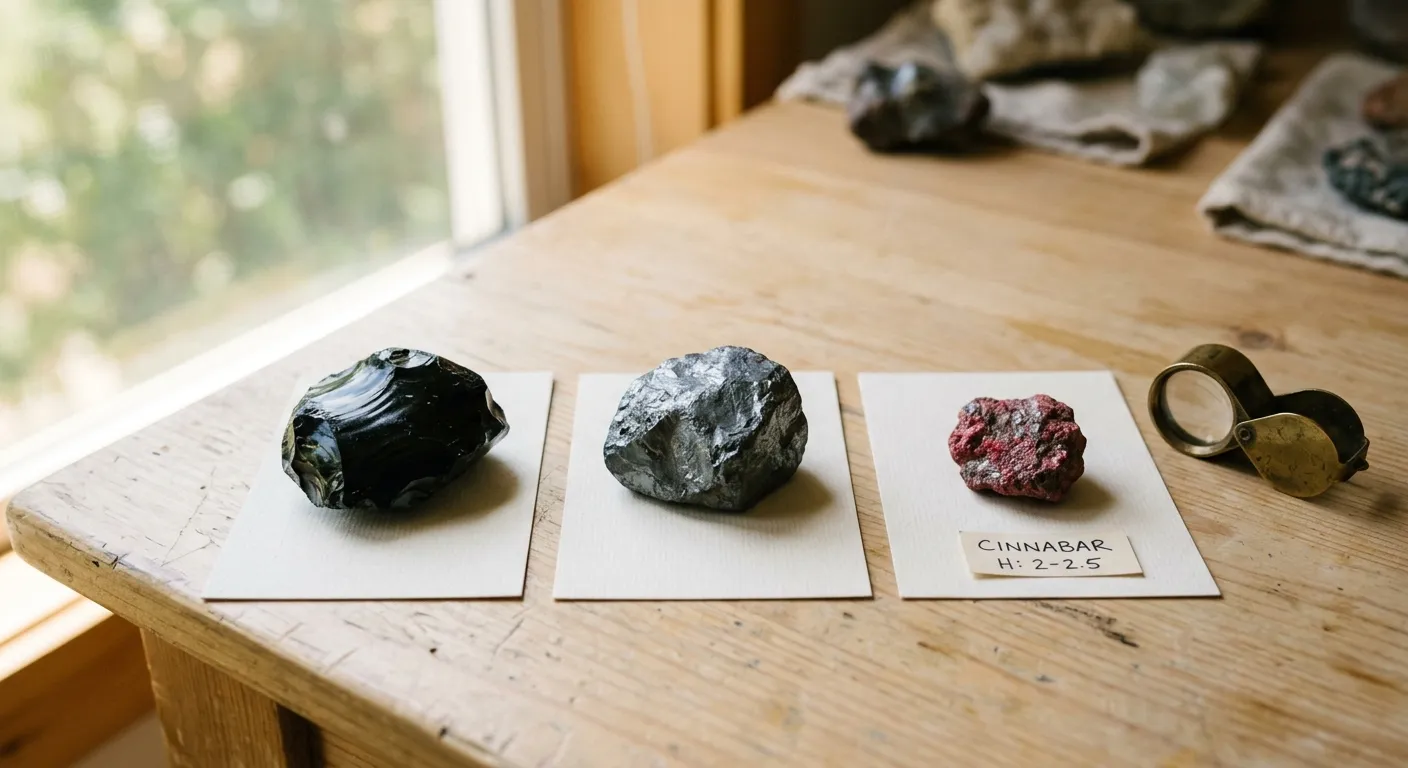
Meaning, material, and expectation are different questions
A search for protective crystal meanings often mixes symbolism, shopping, authenticity, and use advice into one phrase. Those topics overlap, but they are not the same.
This split matters because product descriptions often blur the lines. A listing may describe a stone as “protective,” “grounding,” or “for energy work.” That wording can tell you how the object is being presented, but it does not settle authenticity, composition, handling, or personal outcome.
A grounded buyer reads meaning as context, not proof.
What “protective” usually means in crystal-use language
“Protective” is a broad label. In crystal-use language, it may refer to boundaries, steadiness, privacy, focus, a threshold marker near a door, a reminder object, or simply a dark, weighty, serious-looking stone.
That does not make the meaning useless. It just keeps it in the right lane.
A protective crystal can be meaningful because the owner uses it as a reminder, a ritual object, a display piece, or a gift with intention. The overreach happens when symbolic language is treated as a guaranteed result.
Three ways buyers usually use the word “protective”
Symbolic role
The stone represents boundary, steadiness, privacy, or focus.
Useful for choosing an object that matches your intention.
Marketplace label
The seller is placing the item in a protection or grounding category.
Helpful for understanding positioning, not proof of material or result.
Choosing shortcut
The buyer wants a certain look, feel, or personal association.
Practical, as long as meaning is not confused with certainty.
This is why a black polished stone, a metallic-looking bead, and a red decorative specimen can all be sold under “protective” language while raising very different questions.
Obsidian, hematite, and cinnabar at a glance
The three stones most relevant here sit in different meaning zones. This comparison is a buyer-facing overview, not a lab identification guide.
Obsidian
Common meaning frame: protection, boundaries, reflection, symbolic shielding.
Typical buyer expectation: “I want something direct, dark, and boundary-focused.”
Main limit to remember: obsidian protection meaning is symbolic unless supported by a specific personal or cultural context.
Hematite
Common meaning frame: grounding, steadiness, composure, stability.
Typical buyer expectation: “I want something weighty, calm, and centering.”
Main limit to remember: hematite grounding meaning should not be treated as a verified effect.
Cinnabar
Common meaning frame: intensity, display value, tradition-linked or seller-framed meaning.
Typical buyer expectation: “I like the look or story, but I need to be careful about use.”
Main limit to remember: cinnabar crystal meaning should be considered together with identity and handling limits.
For a first decision, ask: Do I want boundary symbolism, steadiness symbolism, or a distinctive display object that requires more caution?
Obsidian protection meaning: boundary symbolism, not proof
Obsidian is one of the stones most often searched with protection language. The phrase obsidian protection meaning usually points to boundary symbolism: seriousness, reflection, shielding imagery, or a firm line in personal practice.
That can be a clear and useful meaning. A buyer may choose obsidian because it looks minimal, feels visually strong, or fits a private intention better than a brighter decorative stone. It can work well as a desk piece, shelf object, pendant, pocket stone, or part of a personal routine.
The limit is simple: “protective obsidian” does not prove the item will protect the wearer or the room. It also does not prove that every black polished item sold as obsidian is correctly identified.
Obsidian may fit when you want:
- a direct boundary symbol;
- a dark, simple object for display or carry;
- a stone commonly described in protection language;
- a reminder of privacy, focus, or personal limits.
Pause when seller wording does too much work. A dramatic description, a shape name, or a polished finish does not verify the material. Visible signs may suggest possibilities, but for certainty, specialized testing may be needed.
Hematite grounding meaning: a steadier kind of protection language
Hematite is often searched through grounding language. Compared with obsidian, hematite’s meaning tends to feel less like a shield and more like steadiness: weight, composure, routine, balance, or staying settled.
That difference is useful. Many people searching for protective crystals are not looking for a forceful boundary image. They want something quieter—an object that represents staying steady.
Hematite grounding meaning often includes ideas such as:
- steadiness;
- focus;
- composure;
- connection to routine;
- a less scattered feeling;
- protection through stability rather than separation.
These are metaphors and personal-use meanings. They can help you choose an object, but they should not be turned into claims about physical, emotional, or safety outcomes.
Hematite is also commonly sold in wearable forms such as beads, rings, and small polished pieces. Wearability should still be judged separately from meaning: look at comfort, finish, setting quality, seller clarity, and whether the material description is specific enough for your use.
Cinnabar crystal meaning: meaning and use limits belong together
Cinnabar needs a different kind of caution. With many stones, a buyer can first explore meaning and later think about care. With cinnabar-labeled items, meaning and practical use limits should be considered at the same time.
A buyer may be drawn to cinnabar because of its name, color, decorative presence, traditional associations, or seller description. But before treating it like an everyday pocket stone or skin-contact item, ask more careful questions about what the object is, how it was made or finished, and what kind of handling information is available.
This page does not provide a technical handling guide. The source set available for this article does not include enough public, display-ready references to support detailed mineral or safety instructions. The root-level guidance is narrower and more practical: do not treat a cinnabar-labeled object as just another casual crystal when its identity, surface stability, or intended use is unclear.
For cinnabar-labeled objects, ask:
- Is the seller clear about what the item is?
- Is it sold as a natural specimen, carved piece, bead, pendant, pigment-like material, or decorative object?
- Is the surface stable, sealed, altered, powdery, chipped, or uncertain?
- Is there handling guidance beyond promotional wording?
- Is display more appropriate than frequent wearing or pocket carry?
- Would uncertainty make a lower-contact choice wiser?
If the answers are vague, choose the lower-contact path. A display setting is often a more conservative choice than close, repeated handling for an uncertain cinnabar-labeled item.
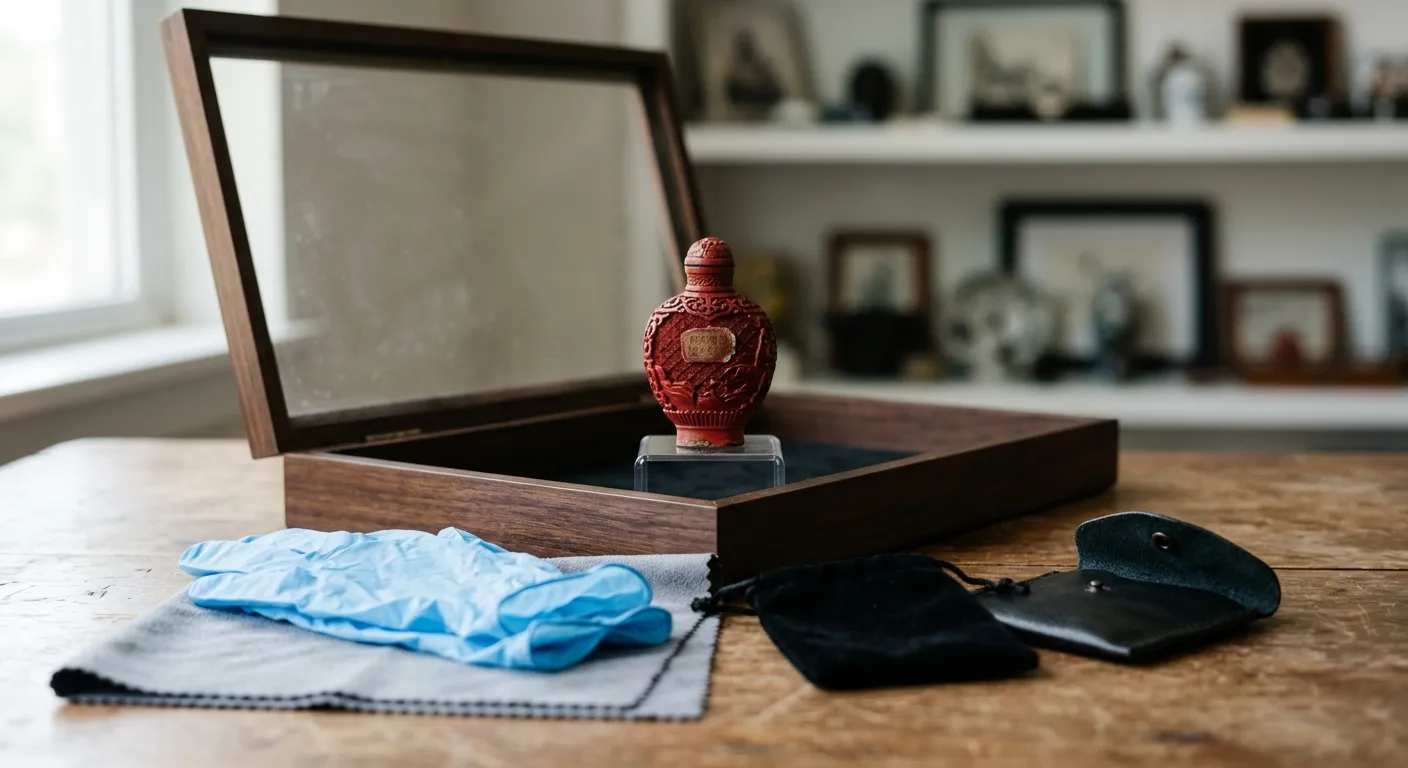
Wearing, carrying, or displaying: the use style changes the question
The same stone carries a different practical profile depending on how you use it. A pendant, bracelet, pocket stone, shelf display, doorway piece, or collection specimen does not create the same level of contact.
Wearing may make the meaning more present to the wearer. Carrying may make it private and familiar. Displaying may give it visual presence with less handling. None of those use styles verifies an outcome; they only change how the object fits into daily life.
Wearing
Why buyers choose it: visible, personal, easy to remember.
Ask: Is it comfortable? Is the finish stable? Is the setting secure? Is skin contact appropriate for this material?
Carrying
Why buyers choose it: private reminder, pocket or pouch use.
Ask: Will it rub, chip, scratch, or contact keys and coins? Is repeated handling sensible?
Displaying
Why buyers choose it: visual presence with less contact.
Ask: Is it stable where placed? Is it fragile, rough, dusty, or better left untouched?
Gifting
Why buyers choose it: symbolic meaning for another person.
Ask: Is the meaning clearly framed as personal or cultural rather than a promise? Is the material description honest?
Collecting
Why buyers choose it: interest in name, form, source, or appearance.
Ask: Does the material identity matter enough to ask for stronger support?
For obsidian and hematite, many buyers think first of jewelry or pocket stones. For cinnabar-labeled items, it is better to slow down before assuming close contact is the right use.
What you can and cannot know from appearance
Authenticity is one of the biggest pressure points in protective crystal buyer education. People often want the “real” stone because the meaning matters to them. That is understandable, but material certainty for crystals has limits.
Photos, color, shine, weight impression, carving style, bead shape, and seller wording can suggest possibilities. They cannot prove exact identity on their own.
Visible clues that may help you screen a listing include:
- color and surface shine;
- uniformity across multiple pieces;
- chips, edges, and bead holes;
- carving or molding marks;
- whether the name changes across listings;
- whether the seller uses vague words such as “style,” “look,” “inspired,” or “type”;
- whether terms such as treated, coated, dyed, synthetic, or reconstituted are explained clearly.
Those words are not automatically bad. Sometimes they are honest and useful. The issue is when strong meaning language is paired with weak material language.
A careful buyer separates the layers:
- Meaning language tells you how the object is being framed.
- Material language tells you what the seller claims the object is.
- Testing or credible documentation may be needed when certainty matters.
Material certainty matters more when the item is expensive, intended for frequent skin contact, being collected, used around children or pets, labeled cinnabar, or chosen because the mineral name affects care and handling decisions.
Common misunderstandings about protective crystals
Most confusion comes from treating one type of statement as another. A symbolic phrase becomes a promise. A seller label becomes proof. A polished surface becomes certainty. A display piece becomes jewelry without checking contact questions.
“Protective” means the stone will produce a specific result.
Better reading: “Protective” is usually symbolic, personal, cultural, or marketplace language.
A stone’s meaning proves what the material is.
Better reading: meaning and identity are separate questions.
If it looks right in photos, it must be the named stone.
Better reading: photos can suggest, not prove.
A display object is automatically suitable for jewelry.
Better reading: wearing adds skin contact, friction, comfort, and breakage questions.
A dramatic seller description counts as support.
Better reading: seller wording should be read as positioning unless backed by better information.
Cinnabar can be treated like any other crystal because it has a meaning page.
Better reading: cinnabar-labeled items need closer use questions before frequent contact.
Grounding and protection mean the same thing.
Better reading: grounding is often steadiness language; protection is often boundary language.
Bigger stones have stronger results.
Better reading: size may change visual presence, not prove an outcome.
These misunderstandings do not mean crystal meanings have no value. They mean the meaning should be used for selection, intention, and personal connection—not as verification.
A practical decision path before you buy or use one
Use this path when you are deciding between obsidian, hematite, cinnabar, or another protective crystal.
1. Name the meaning you actually want
Start with the role, not the product name.
Ask:
- Do I want boundary symbolism?
- Do I want grounding or steadiness language?
- Do I want a visual display piece?
- Do I want a private reminder object?
- Do I want jewelry for frequent wear?
- Do I want a collector piece where material identity matters?
If you want boundary symbolism, obsidian may be the first route. If you want steadiness, hematite may fit better. If you are drawn to cinnabar, pair the meaning question with use limits from the beginning.
2. Separate symbolic fit from material confidence
Once the meaning feels right, ask a different question: how confident am I about what this object is?
You do not need laboratory certainty for every decorative purchase. But if the listing is vague, the price is high, or the use involves close contact, uncertainty matters more.
3. Choose the use style
Decide whether the object will be worn, carried, displayed, stored, gifted, or kept mostly as a visual symbol. The use style changes the practical concerns.
A pocket stone needs a smooth surface and reasonable durability. Jewelry needs comfort and secure construction. A display piece needs a stable location. A cinnabar-labeled item may be better kept as a lower-contact object unless stronger handling information supports another choice.
4. Keep the statement proportional
A balanced purchase statement might sound like this:
- “I’m choosing obsidian because its boundary symbolism fits my intention.”
- “I’m choosing hematite because grounding language matches the kind of reminder I want.”
- “I like this cinnabar-labeled piece, but I’m treating it mainly as display until I have better material and handling information.”
- “The photos look consistent with the listing, but I’m not treating appearance as proof.”
- “This bracelet is meaningful to me, but I’m not relying on it for a guaranteed outcome.”
That kind of wording keeps the personal value without overstating what the object can do.
Where to go next
This root page gives the map. Narrower guides can handle each question in more detail.
Obsidian protection meaning
Use this path if you want to understand why obsidian is often placed in the protection category and how to keep that meaning symbolic rather than absolute.
Hematite grounding meaning
Choose this route if you are comparing grounding, steadiness, and quieter protection language.
Cinnabar crystal meaning and use limits
Start here if a cinnabar-labeled item interests you, especially for jewelry, frequent handling, or a purchase where material identity matters.
Wearing, carrying, or displaying protective crystals
Use this guide when the main question is how contact level changes expectations and practical caution.
Common protective crystal misunderstandings
Read this when you want a clearer way to spot overstatements about effects, authenticity, seller claims, and symbolic meanings.
Final checklist
Before choosing a stone based on protective crystal meanings, run through the key questions.
Meaning fit
- Can you explain why this stone’s symbolism appeals to you?
- Are you choosing boundary, grounding, display presence, or another personal role?
- Are you comfortable treating the meaning as symbolic or cultural language rather than a promised result?
Material confidence
- Is the seller clear about the stone name?
- Does the listing explain natural, treated, coated, synthetic, imitation, or style-based wording?
- Is the price high enough that you should ask for more support?
- Would specialized testing be needed for certainty?
Use style
- Will the object be worn, carried, or displayed?
- Will it touch skin often?
- Could it chip, rub, shed, stain, or break in the planned use?
- Would a lower-contact display choice be more sensible?
Cinnabar pause
- Is the item labeled cinnabar?
- Is the intended use close-contact or frequent handling?
- Is there credible handling information beyond seller enthusiasm?
- If uncertain, can you choose display rather than wear or pocket carry?
Expectation check
- Are you using the crystal as a symbolic reminder, not as a substitute for higher-stakes support?
- Are you separating meaning from authenticity?
- Are you avoiding guaranteed-result language?
- Are you willing to leave uncertainty visible rather than forcing certainty from photos?
Protective crystal meanings are most useful when they stay connected to real buying decisions: what you want the object to represent, how you plan to use it, how much you know about the material, and where caution is appropriate. Obsidian, hematite, and cinnabar each offer a different entry point. Keep the meaning, but keep the practical limits with it.