
ProtectCrystal handling note
Buying note
Buying and handling notes
ProtectCrystal’s buying notes are meant to slow down quick crystal decisions. They focus on what a reader can observe, ask, compare, and handle with care when looking at obsidian, cinnabar, or hematite in a shop or online listing.
These notes do not verify authenticity, promise protective results, or replace specialized testing. They give practical checkpoints: surface finish, color wording, weight impression, seller description, storage habits, and caution points that matter before purchase or use.
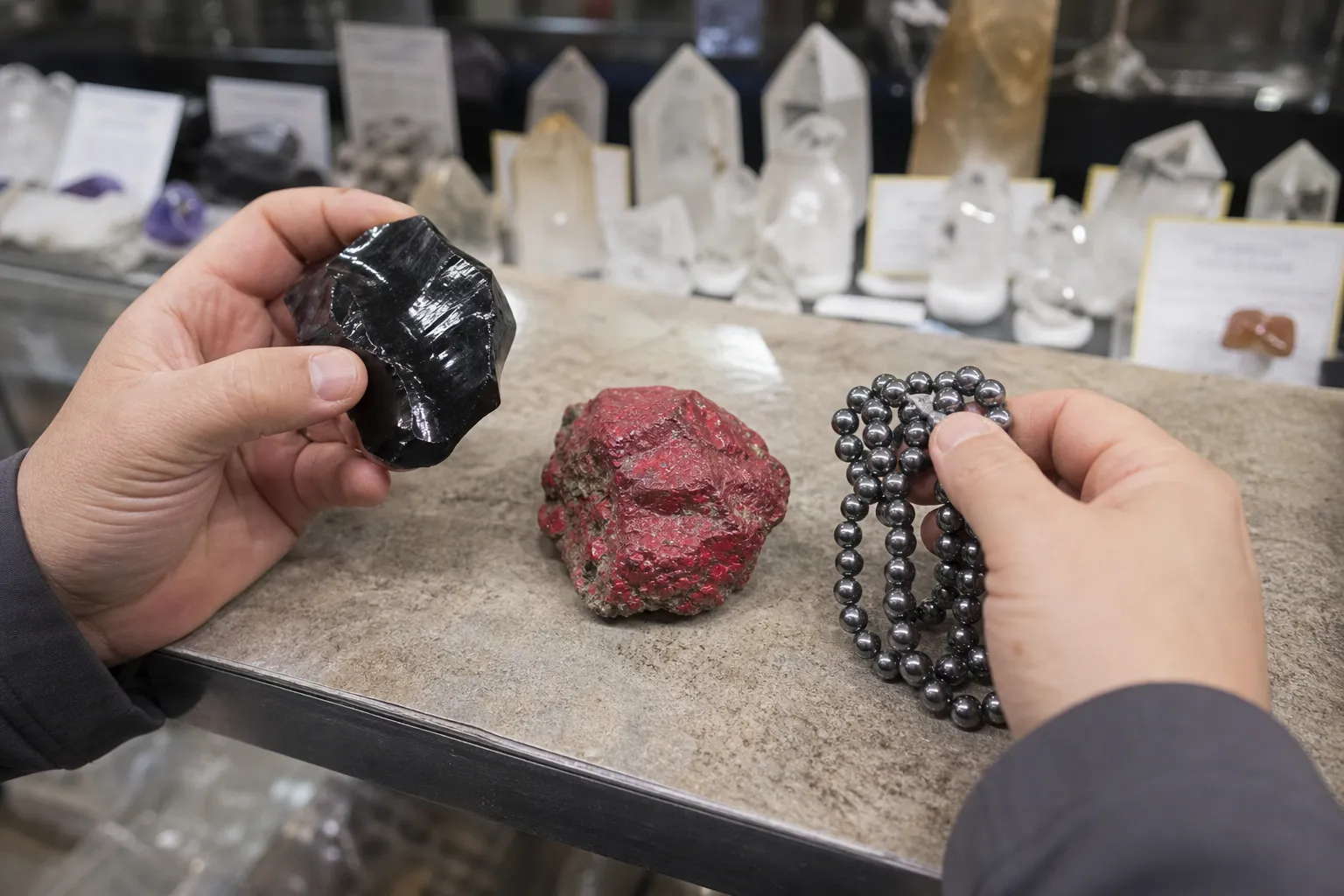
Look before naming
A glossy black piece may suggest obsidian, a metallic gray bead may suggest hematite, and deep red material may be sold as cinnabar, but appearance alone should be treated as a clue rather than proof.
Ask practical seller questions
Useful questions include whether a piece is natural, composite, dyed, coated, magnetic-looking, sealed, or intended only for display. Clear answers help more than dramatic protective claims.
Handle cinnabar cautiously
Cinnabar deserves extra caution because of its mercury sulfide content. Avoid grinding, soaking, heating, mouthing, or wearing questionable pieces against broken or irritated skin.
Reader checkpoint
- Use crystal meanings as personal or cultural context, not as guaranteed protection.
- Keep seller wording, visible cues, and handling risks separate in your decision.
- When a claim would require laboratory testing, treat it as unverified unless proper testing is provided.