ProtectCrystal handling note
Comparison guide
Black Obsidian Meaning Compared With Hematite and Cinnabar
If you are looking up black obsidian meaning compared with hematite and cinnabar, the real question is probably not “Which stone is strongest?” It is more likely: What does each one symbolize, what is the material, and when is a seller saying more than the stone can reasonably support?
In common crystal language, black obsidian is often described as protective, boundary-focused, and truth-facing. Hematite is more often associated with grounding, steadiness, and weight. Cinnabar may be described through red color, symbolic power, prosperity language, or historical value. Those meanings belong to cultural, personal, and marketplace use. They are not verified outcomes.
The practical comparison starts with the material facts: obsidian is volcanic glass, hematite is an iron oxide mineral, and cinnabar is mercury sulfide. That last point changes the handling conversation.
upward
Read the full overview first
Use the broader guide first if you need the full scope before this page.
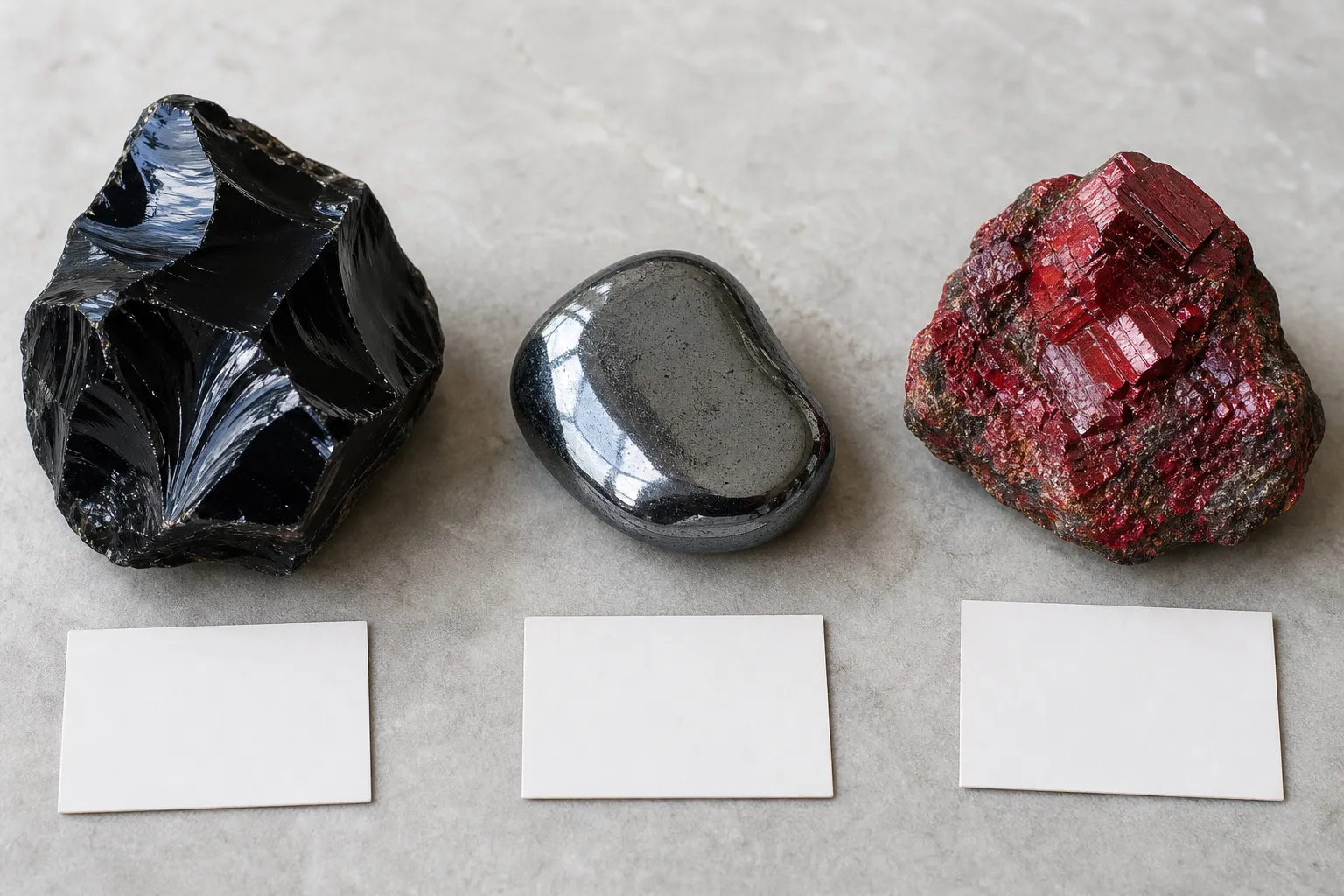
Black Obsidian, Hematite, and Cinnabar Meanings Side by Side
A useful comparison keeps two things separate: what people commonly say the stone means, and what the object actually is.
Black obsidian
- Common meaning: Often described as protective, reflective, truth-oriented, and linked with “shadow work” language.
- Material identity: Volcanic glass.
- Buyer-visible cues: Glossy black surface, glass-like luster, sometimes sharp-looking edges on rough pieces.
- Main caution: Appearance can suggest obsidian, but it does not prove identity.
Hematite
- Common meaning: Commonly associated with grounding, steadiness, strength, and stability.
- Material identity: Iron oxide mineral.
- Buyer-visible cues: Metallic gray-black look, high polish, dense feel for its size.
- Main caution: Very magnetic “hematite” items may be altered, synthetic, or loosely named.
Cinnabar
- Common meaning: Sometimes linked with power, vitality, ritual value, or prosperity symbolism.
- Material identity: Mercury sulfide / mercuric sulfide mineral.
- Buyer-visible cues: Red to reddish-brown color, sometimes bright red in specimens or pigment context.
- Main caution: Avoid dust, grinding, ingestion, mouth contact, and casual access by children or pets.
This side-by-side view matters because marketplace language often compresses dark stones into one broad “protection” category. Black obsidian and hematite are frequently paired in bracelet listings, while cinnabar may be promoted with power or prosperity language. That does not make the stones interchangeable, and it does not make their handling needs equal.
A clearer reading is:
- Black obsidian protective meaning is mostly about symbolic shielding, reflection, boundaries, and seeing clearly.
- Hematite grounding meaning points more toward steadiness, weight, presence, and focus.
- Cinnabar prosperity meaning or power symbolism should always be kept separate from its mercury-containing composition.
What Does Black Obsidian Mean Compared With Hematite?
Black obsidian and hematite are easy to compare because both are dark, popular, and often sold in protection-style jewelry. They also get blurred together in charts, bracelet bundles, and “black stone” shopping pages.
Black obsidian is usually the more intense, inward-facing stone in crystal descriptions. It is often tied to protection, truth, emotional honesty, and shadow-work language. In practical terms, many people use it as an intention object: a visual reminder of boundaries, self-examination, or cutting through confusion. That is different from saying the stone produces a measurable protective result.
Hematite is usually described in more grounded, body-and-earth language. Its symbolism often follows its appearance: polished hematite can look metallic, dark gray, and dense in the hand. Because hematite is an iron oxide mineral, its identity and feel are different from obsidian’s glassy volcanic origin.
A simple buyer comparison:
- Choose black obsidian for symbolism around reflection, boundaries, truth, and a glossy black look.
- Choose hematite for symbolism around steadiness, groundedness, weight, and metallic shine.
- Do not treat either one as proof of protection, physical outcomes, or guaranteed authenticity from appearance alone.
Is Black Obsidian More Protective Than Hematite?
In crystal-culture wording, black obsidian is more often called “protective,” while hematite is more often called grounding or stabilizing. That is a difference in common symbolism, not a proven ranking.
If a seller says black obsidian is “more protective,” ask what they actually mean. They may simply be using the stronger protection symbolism attached to obsidian in modern crystal descriptions. Hematite can also appear in protective bracelet language, but its dominant association is usually steadiness.
For a buyer, the better questions are:
- Which symbolism matches how I want to use the object?
- Which appearance do I prefer: glossy black glass or metallic gray-black weight?
- Does the seller separate meaning language from material identity?
- Are there handling concerns, especially if cinnabar is included?
That shift keeps the comparison useful without turning protective crystal meanings into promises.
What Does Black Obsidian Mean Compared With Cinnabar?
Black obsidian versus cinnabar is a different kind of comparison. The meanings differ, but the bigger issue is handling.
Black obsidian is commonly described as protective partly because of how it looks: dark, reflective, glassy, and visually sharp. Its material story supports that symbolism without proving any effect. Obsidian forms from rapidly cooled volcanic material and has long been valued for sharp edges, tools, ornaments, and objects. In modern crystal language, that sharp black surface is often translated into themes of boundaries, truth, and introspection.
Cinnabar sits in another category. Mineral references identify cinnabar as mercury sulfide, and chemical references describe mercuric sulfide as mercury-containing. For a crystal buyer, the key point is not just “red stone meaning.” It is that cinnabar needs a handling layer that black obsidian does not.
Cinnabar has a long history as a vivid red material, including pigment and symbolic uses in some cultural contexts. That background helps explain why it may be associated with power, status, vitality, or prosperity. But historical use does not make modern handling casual.
Read the cinnabar comparison in two parts:
- Symbolic meaning: red, intense, powerful, sometimes prosperity-linked in crystal language.
- Material reality: mercury sulfide, requiring more care than ordinary polished stones.
Does Cinnabar Have Protective Meaning Like Black Obsidian?
Some crystal pages may describe cinnabar as protective, powerful, or prosperity-supporting. That is marketplace and crystal-culture language. It is not the same as black obsidian’s more familiar protective symbolism, and it should not override the material caution.
When comparing black obsidian and cinnabar meanings, keep this distinction close:
- Black obsidian is usually discussed first as a protective or reflective black stone.
- Cinnabar is often discussed through red color, potency, prosperity, or historical symbolic value.
- Cinnabar should not be treated as just another bead or pendant material without asking what it is, how it is presented, and whether the handling context makes sense.
Visual appearance can suggest cinnabar, but it cannot prove composition. If identity or handling suitability matters, specialized testing or qualified material advice may be needed.
Why These Meanings Get Mixed Up in Crystal Shopping
The confusion rarely starts with mineral references. It usually comes from packaging and retail wording.
Black obsidian and hematite often appear together in bracelet listings, commonly with tiger eye as a third stone. In that retail script, black obsidian may be assigned protection and truth, hematite grounding and strength, and the full set described as a combined symbolic object. That language helps explain why readers search for black obsidian and hematite meanings, but it should not be treated as evidence of a defined result.
A second source of confusion is visual grouping. Shopping platforms and image boards often place black obsidian beside hematite, black tourmaline, onyx, and other dark stones. They may look similar in a mood-board sense, but materially they are not interchangeable.
A third source is overextended meaning language. Commercial pages sometimes move from “this stone is associated with protection” into broad claims about health, luck, personal safety, wealth, or major life outcomes. A careful guide can describe what people believe, what sellers commonly say, and how buyers use symbolic objects. It should not convert those meanings into assured results.
Can Black Obsidian and Hematite Mean the Same Thing?
They can overlap, but they do not usually mean exactly the same thing.
Both may be grouped under protective crystal meanings because both are dark, popular, and commonly used in bracelets or pocket stones. Both can be used by some people as reminders of boundaries or steadiness. The emphasis, however, is usually different:
- Black obsidian: protection, truth, reflection, shadow work, cutting through what feels hidden.
- Hematite: grounding, steadiness, focus, strength, weight, stability.
If a seller uses identical wording for both, that does not automatically make the listing wrong. Crystal meanings are not a strict scientific classification. Still, overly interchangeable descriptions can be a clue that the copy is generic rather than material-aware.
Material Identity Changes the Meaning Conversation
A good comparison should not stop at symbolism. The object in your hand matters.
Obsidian Volcanic Glass Meaning
The phrase obsidian volcanic glass meaning is useful because it keeps black obsidian from becoming just “a black crystal.” Obsidian is glassy volcanic material. It is not hematite, onyx, or black tourmaline.
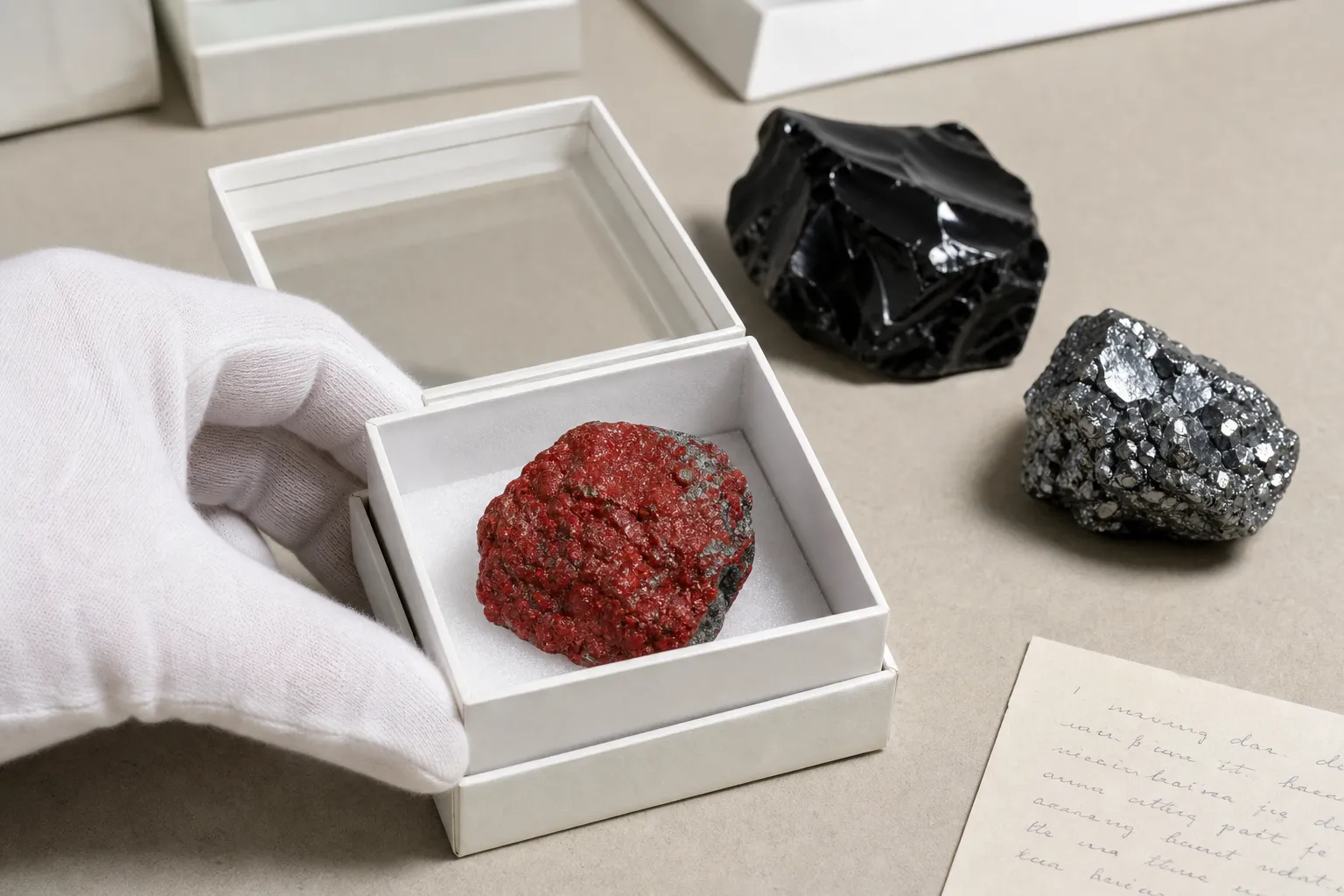
Its glossy surface and glass-like fracture help explain why people associate it with sharpness, reflection, and boundary symbolism. Buyer-visible cues may include deep black color, high gloss, and a smooth glass-like polish. These signs can help you question a listing, but they cannot confirm identity by themselves.
Hematite Iron Oxide Meaning
The phrase hematite iron oxide meaning points in a different direction. Hematite’s symbolism is often built around density, metal-like shine, and earthiness. Polished hematite is commonly gray-black and reflective, with a heavier impression than many stones of similar size.
Buyer-visible cues may include:
- Metallic luster
- Dark silver, steel-gray, or black-gray appearance
- Smooth polished surface in beads or worry stones
- A noticeably weighty feel for its size
One marketplace caution: very magnetic “hematite” jewelry is common, but magnetic behavior alone does not prove a simple natural hematite identity. Some items may be manufactured, altered, or sold under loose naming. If exact identification matters, photos and magnetism are not enough.
Cinnabar Mercury Sulfide Meaning
Cinnabar’s red color is central to its symbolism, but its composition is central to how it should be handled. Mineral and chemical references support cinnabar as mercury sulfide / mercuric sulfide. That does not mean every cinnabar item carries the same concern in every form, but it does mean buyers should treat it differently from black obsidian and hematite.
Plain handling habits are appropriate:
- Do not grind, sand, drill, or powder cinnabar casually.
- Avoid ingestion and mouth contact.
- Wash hands after handling specimens.
- Keep uncertain pieces away from children and pets.
- Be cautious with broken, dusty, or poorly described items.
- If identity or handling suitability matters, seek specialized testing or qualified advice.
This does not need to turn a meaning comparison into a chemistry lesson. It is simply the practical line that belongs beside any cinnabar meaning discussion.
How to Read Seller Claims for Black Obsidian, Hematite, and Cinnabar
A good listing does not have to avoid meaning language. Many buyers want symbolic context. The problem is when meaning, material identity, and promised outcomes are blended together.
Use this quick reading frame before buying or comparing.
1. Does the seller separate “is” from “is said to”?
Careful wording sounds like:
- “Black obsidian is often described as protective.”
- “Hematite is commonly associated with grounding.”
- “Cinnabar has historical and symbolic associations, but it is mercury sulfide and should be handled thoughtfully.”
Less careful wording treats symbolism as an assured result. Be especially cautious when a listing moves into health, wealth, personal safety, or major life-outcome language.
2. Does the material description match the stone?
For black obsidian, look for volcanic glass language and glass-like appearance. For hematite, look for iron oxide identity and metallic luster. For cinnabar, look for mercury sulfide wording and handling awareness.
A seller who discusses cinnabar only as a prosperity stone, with no mention of mercury-containing composition or careful handling, is leaving out an important buyer-facing fact.
3. Are visual cues being overstated?
Photos help, but they cannot prove everything. Black shiny beads may not be obsidian. Metallic gray beads may not be straightforward natural hematite. Red material may not be cinnabar, and genuine cinnabar may not fit every jewelry context.
Visible signs are clues, not final proof.
4. Is a bracelet bundle doing too much work?
“Triple protection” and similar bundle language can be useful as a map of how stones are marketed. It should not become the basis for believing that three stones together create a fixed result.
If you like the combination of black obsidian and hematite, it is reasonable to choose it for appearance and personal symbolism. A bracelet can be a reminder, a style choice, or a meaningful object. It should not replace practical precautions or formal support when the situation is more serious than a symbolic object can address.
A Practical Decision Frame: Black Obsidian Versus Hematite Versus Cinnabar
If you are choosing between the three, start with why you are drawn to them.
Choose black obsidian if you want the classic protective-symbolism stone: glossy black, volcanic glass, direct, reflective, and often tied to truth or shadow-work language. It fits readers who want a dark stone with strong boundary symbolism, while accepting that the meaning is personal and cultural rather than guaranteed.
Choose hematite if you want the more grounded-feeling comparison point: metallic, weighty, steady, and commonly associated with focus or stability. In the black obsidian versus hematite decision, hematite is usually the calmer, denser counterpart rather than the sharper symbolic shield.
Be more selective with cinnabar. In the black obsidian versus cinnabar comparison, cinnabar’s red color and symbolic intensity may be appealing, and its history as a valued red material helps explain that appeal. But cinnabar is mercury sulfide, so it belongs in a more careful category. It is better approached as a specimen or carefully considered object than as a casual “meaning stone” bought only from a prosperity description.
A grounded comparison looks like this:
- For symbolic protection language: black obsidian is the most common match.
- For grounding language: hematite is the clearer match.
- For red power or prosperity symbolism: cinnabar appears in some crystal language, but handling comes first.
- For everyday jewelry with fewer handling questions: black obsidian or hematite are usually simpler choices than cinnabar, assuming the item is well described.
- For identity certainty: none of the three can be fully confirmed by a photo or short listing alone.
The main limitation is straightforward: crystal meanings can help people choose an object that feels personally significant, but they cannot promise protection from harm, difficult emotions, bad luck, financial loss, or other life outcomes. The strongest comparison is layered: meaning as cultural language, material identity as factual grounding, and handling requirements as the practical filter.
FAQ
What does black obsidian mean compared with hematite?
Black obsidian is often described as protective, truth-facing, and introspective. Hematite is more commonly associated with grounding, steadiness, and strength. Their meanings overlap in bracelet marketing, but their usual emphasis is different.
What does black obsidian mean compared with cinnabar?
Black obsidian is commonly framed as a protective black volcanic glass. Cinnabar is often linked with red, powerful, or prosperity-related symbolism, but it is mercury sulfide, so handling matters more in the comparison.
Is black obsidian more protective than hematite?
It is more often called protective in crystal-culture language, while hematite is more often called grounding. That is a difference in symbolism and seller wording, not a proven ranking of effects.
How should I read protective crystal meanings?
Read them as cultural, spiritual, or personal-use language. They can explain why people choose a stone, but they should not be treated as guaranteed outcomes or as proof of material identity.
Sources
Sources and further reading
Reference links are limited to sources considered suitable for public citation in this page.