ProtectCrystal handling note
Meaning comparison
Can Black Obsidian and Hematite Mean the Same Thing
Black obsidian and hematite can share similar meaning in crystal language, but they should not be treated as the same stone or as exact symbolic duplicates. If you are asking can black obsidian and hematite mean the same thing, the practical answer is: yes, they can overlap under broad ideas such as grounding or protection, but the overlap is loose.
Black obsidian is volcanic glass. Hematite is an iron oxide mineral. When a seller uses similar protection or grounding wording for both, that usually means they are being grouped by theme, not that they are interchangeable or able to guarantee an effect.
Practical reading
Related category, different stone.
upward
Start with the broader guide
Use the broader guide first if you need the full scope before this page.
Same theme, different material
In crystal shops, black obsidian and hematite are often placed near each other because both are dark-looking stones and both are commonly described with grounding or protection language. That is the main reason people confuse them.
The answer depends on what you mean by “meaning.” If you mean a personal intention, both can fit a grounding or protection theme. If you mean material identity, appearance, buying accuracy, or a more specific symbolic role, they should stay separate.
Why the physical difference matters
The clearest difference is not spiritual or symbolic. It is material.
Obsidian is described in geology references as natural volcanic glass formed from rapidly cooled lava. Hematite is a distinct iron oxide mineral, commonly represented as Fe₂O₃. That difference does not decide anyone’s personal use of the stones, but it does prevent a common mistake: a shared dark color or shared “protection stone” label does not make them the same object.
This matters when reading listings. A bracelet may be described as containing “grounding and protection crystals” and include both black obsidian and hematite. That does not mean the seller is saying they are chemically, visually, or symbolically identical. It usually means the stones are being grouped under a broad theme.
Where their meanings overlap
The strongest overlap is in broad protective crystal meanings. In marketplace and crystal-use language, both black obsidian and hematite are often described as stones for grounding, protection, intention-setting, or steadiness.
That overlap can make sense if you are asking:
- Can either one be used as a symbolic grounding stone?
- Can both appear in a protection-themed bracelet?
- Can both be part of a personal ritual or reminder?
- Can a seller place both in the same grounding and protection category?
For those uses, yes. They can sit in the same meaning family.
A person might choose black obsidian as a dark, reflective reminder of boundaries or self-awareness. Another might choose hematite as a heavier-looking reminder of steadiness and focus. These meanings are personal, cultural, or marketplace-based; they should not be read as measurable promises.
Where their meanings differ
Even when both stones are called protective or grounding, they are often given different symbolic roles.
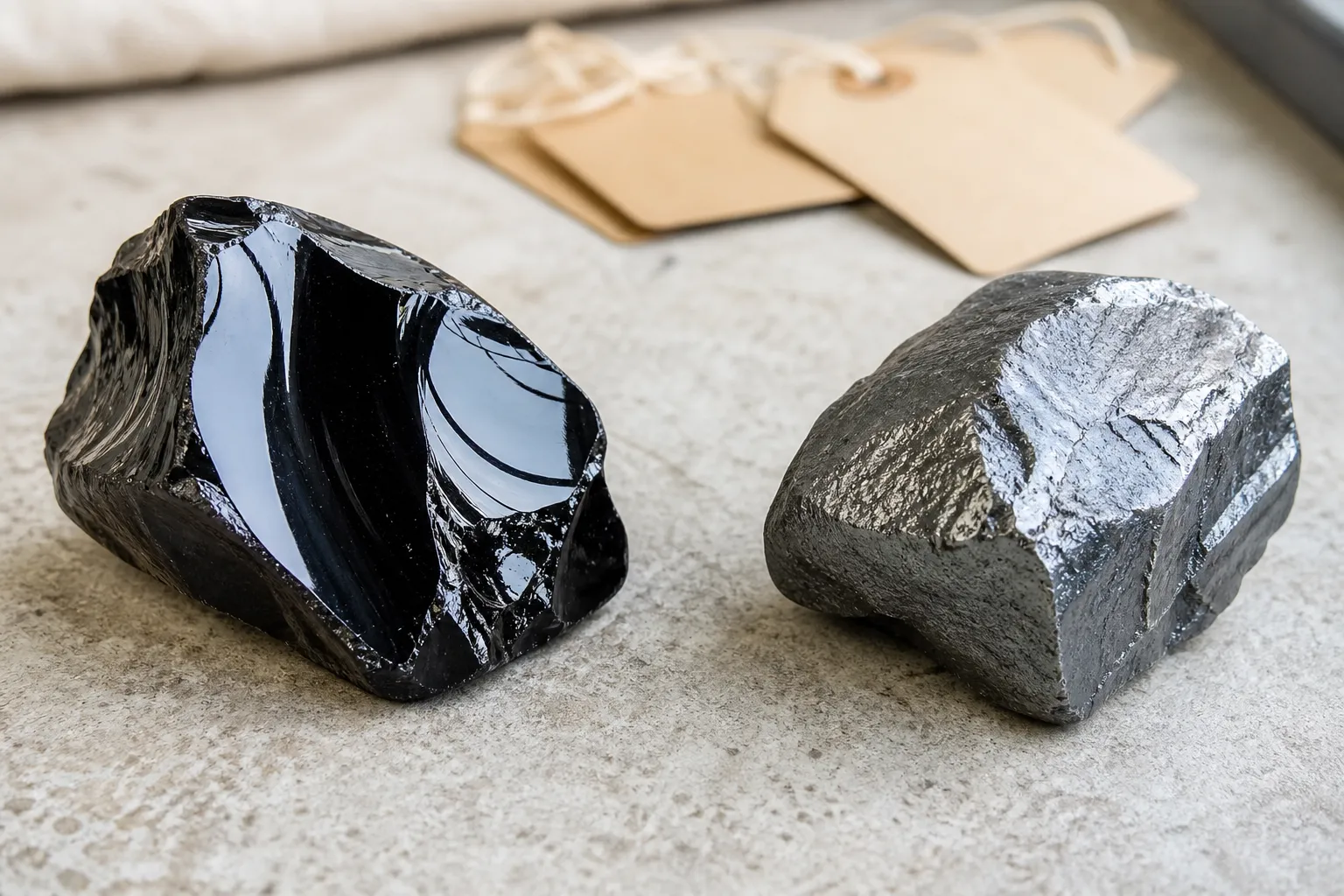
Black obsidian is commonly framed as sharper, darker, and more mirror-like. In crystal language, it is often connected with protection, clearing, reflection, truth, or facing what has been avoided. That symbolic style fits its look: glossy, black, glassy, and sometimes highly reflective.
Hematite is more often framed as steady, dense, and anchoring. It is commonly described with grounding, stabilizing, strengthening, balancing, or focus-oriented language. That style fits its usual appearance: metallic, steel-gray to black-gray, polished, and visually weighty.
So the better black obsidian vs hematite meaning comparison is not “which one protects?” A more useful question is: what kind of symbolic role is being assigned?
Black obsidian
Often treated as a protective mirror or reflective stone.
Hematite
Often treated as a grounding weight or stabilizing stone.
Those are common patterns, not universal rules.
When you can treat them as meaning the same thing
You can loosely treat black obsidian and hematite as meaning the same thing when your category is very broad.
For example, if you only want “a dark grounding stone” or “a protection-themed stone,” both can fit. This is why they often appear together in bracelets, bead sets, and crystal bundles. In that context, the stones do not need to be identical. They are being layered as related symbols.
You might also treat them similarly if you are choosing a piece for personal intention rather than following a fixed tradition. If hematite reminds you to feel steady and black obsidian reminds you to hold a boundary, either can serve as a personal cue.
That is the flexible answer: yes, they can share a broad meaning in personal or marketplace language.
When you should keep them separate
Do not treat black obsidian and hematite as the same when the question involves identification, buying, value, care, or a specific symbolic meaning.
Do not assume they are the same just because:
- both are dark;
- both are sold as grounding stones;
- both appear in protection-themed jewelry;
- a seller uses similar wording for both;
- they appear in the same bracelet or set.
Those signs show category overlap, not identity.
For a first-pass visual comparison, black obsidian commonly looks glassy black, while hematite commonly looks metallic, steel-gray to black-gray, and weightier. These visible signs may help, but they cannot confirm the material on their own. Lighting, polishing, coatings, dyed beads, and imitation materials can all confuse the eye. For certainty, specialized testing may be needed.
The seller-language trap
Much of the confusion comes from product wording. A listing may describe both stones as “protective,” “grounding,” or suitable for intention work. That can make black obsidian and hematite sound like duplicates.
Separate the wording into three parts:
-
Material fact
Black obsidian is volcanic glass. Hematite is an iron oxide mineral.
-
Marketplace category
Both are commonly sold under grounding and protection themes.
-
Personal symbolism
A buyer may choose either one for a similar intention, but that does not make the meanings fixed or guaranteed.
The word “protection” is especially easy to overread. In crystal listings, it is usually symbolic, cultural, or belief-based language. It should not be read as a promise of physical safety, emotional outcome, or scientifically verified effect. The same caution applies to “grounding” when it is presented as more than a personal association.
A clear listing should identify the actual stone before leaning on meaning words. If a product only says “black protection stone” and does not say whether it is obsidian, hematite, onyx, tourmaline, or another material, ask for more detail.
A practical way to choose
Choose black obsidian
Choose black obsidian if you are drawn to a glossy black stone and want symbolism that is often described as reflective, protective, clearing, or connected with facing what is hidden. In crystal-language terms, it often feels more intense because of its mirror-like look.
Choose hematite
Choose hematite if you are drawn to a metallic dark stone and want symbolism that is often described as steady, grounding, strengthening, balancing, or focus-oriented. It often feels more anchored because of its visual density and common bead-jewelry use.
Choose both
Choose both if you like layered symbolism: black obsidian for a darker reflective quality, hematite for a steadier grounding quality. In that case, the point is not that they mean exactly the same thing. The point is that their meanings can sit beside each other.
For buying, do not let the meaning label replace the basic checks: stone name, appearance, seller clarity, and realistic expectations.
Bottom line
Black obsidian and hematite can share broad protective and grounding meanings, especially in crystal-shop language. They do not mean exactly the same thing in a careful comparison, and they are not the same material.
Black obsidian is volcanic glass. Hematite is an iron oxide mineral. If you are using them symbolically, their meanings can overlap. If you are identifying, buying, or interpreting a seller description, keep the distinction clear: similar category, different stone; related symbolism, different emphasis; personal meaning, not a guaranteed result.
Sources
Sources and further reading
Reference links are limited to sources considered suitable for public citation in this page.