ProtectCrystal handling note
comparison point
Obsidian, cinnabar, and hematite basics
This page gives a short starting point for readers comparing three commonly discussed protective crystals. ProtectCrystal treats protective meanings as personal or cultural context, while focusing on visible material cues, safer handling habits, and buyer questions that can be checked before purchase.
Obsidian
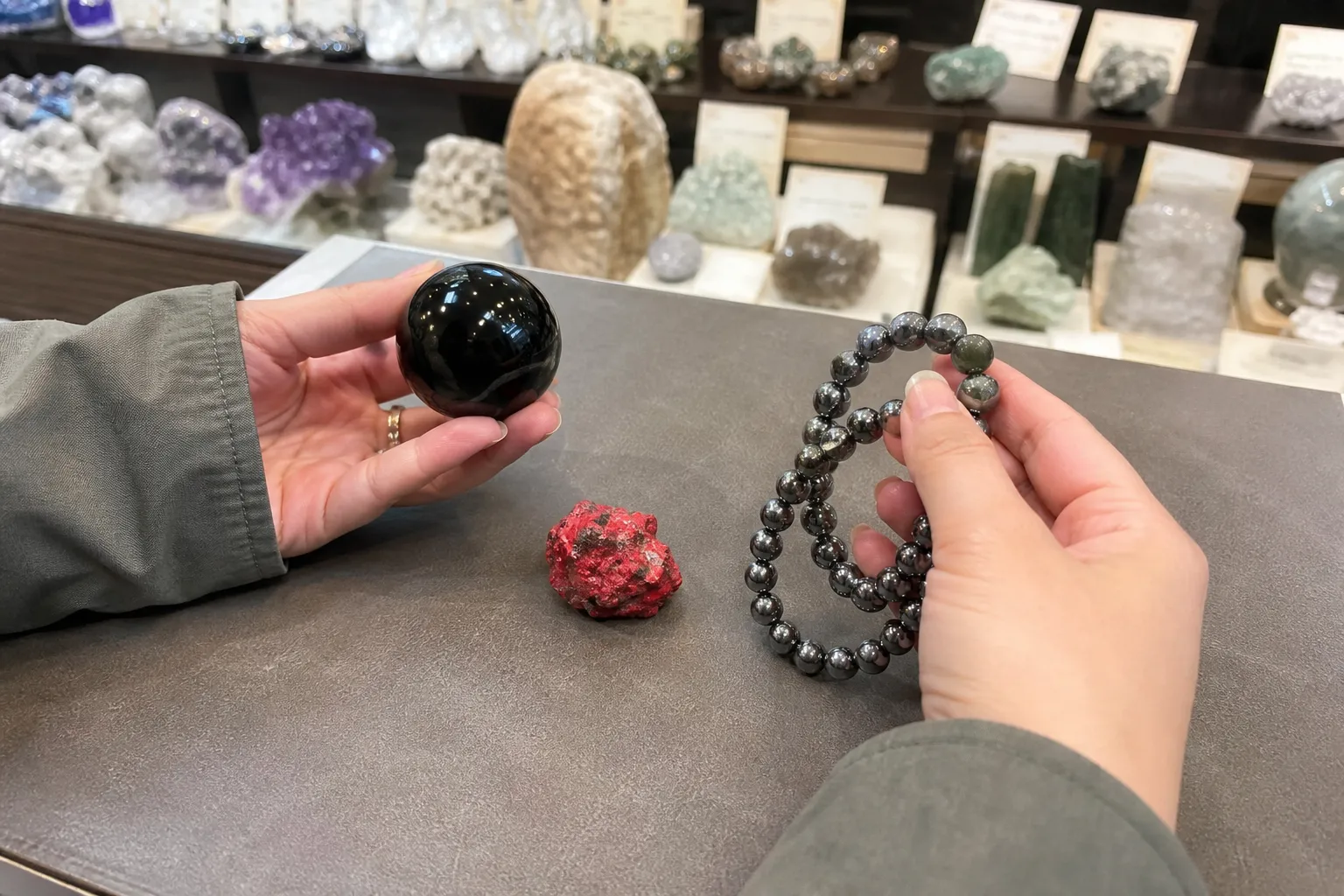
Obsidian is volcanic glass, often sold as glossy black polished pieces, tumbled stones, beads, or carved forms. Look for glass-like luster, smooth breaks or edges, and seller wording that explains whether the piece is natural, dyed, treated, or a named variety.
Cinnabar
Cinnabar is known for deep red to brick-red color, but it needs more caution than many decorative stones. Avoid grinding, soaking, licking, or using damaged material against skin; if a piece may be cinnabar, handle it calmly, store it separately, and ask the seller clear material questions.
Hematite
Hematite is commonly sold as metallic gray beads, tumbled stones, rings, and pocket pieces. A heavy feel, gunmetal sheen, and smooth polished finish can be useful cues, but magnetic-looking or strongly magnetic items may involve manufactured or altered materials.
buyer checkpoint
- Compare visible cues first: color, luster, surface texture, polish quality, chips, bead holes, and seller descriptions.
- Do not treat appearance as proof: visual checks can suggest questions to ask, but certainty may require specialized testing.
- Keep cinnabar precautions close to the object: store separately, avoid dust or damage, and do not use risky cleaning methods.
- Separate meaning from guarantee: protective crystal language may matter to readers, but no stone should be presented as guaranteed protection, treatment, or safety.