ProtectCrystal handling note
Obsidian vs Hematite Rings: Which Material Makes More Sense
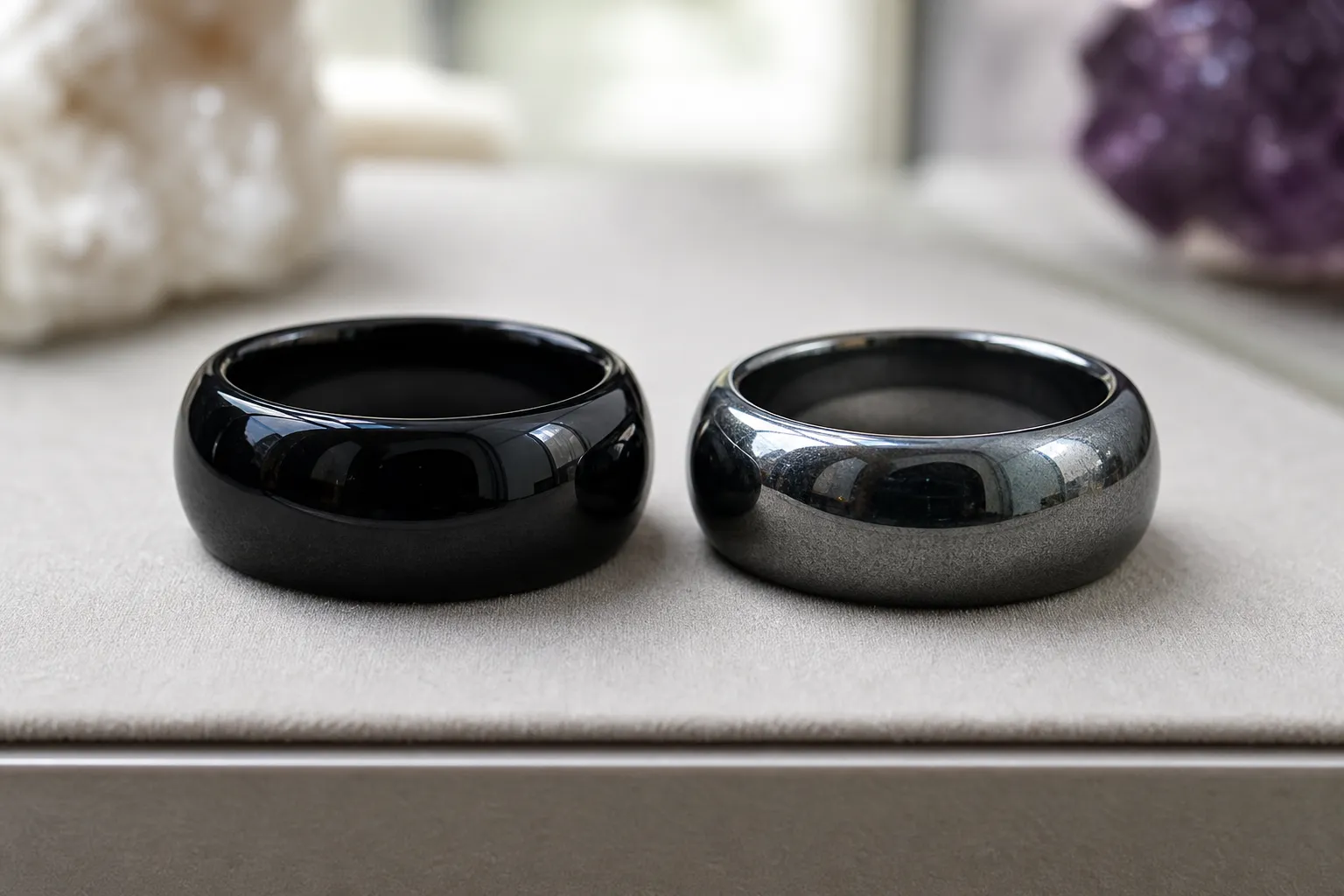
If you are choosing an obsidian vs hematite ring, start with the look and the way you plan to wear it. Choose obsidian if you want a deep black, glossy, glass-like ring and you are willing to treat it gently. Choose hematite if you prefer a metallic grey, heavier-feeling ring with an iron-mineral character, while remembering that its shine does not make it behave like a metal band.
For rough everyday wear, neither material is as forgiving as gold, silver, steel, titanium, or platinum. Obsidian and hematite rings make the most sense as intentional crystal jewelry: attractive, symbolic, and wearable with care, but not ideal for hard knocks, squeezing pressure, gym work, or careless storage.
upward
Start with the broader guide
Use the broader guide first if you need the full scope before this page.
The quick buyer decision
| If this matters most | Obsidian ring | Hematite ring |
|---|---|---|
| Look | Black, glossy, glass-like; sometimes sold in brown, grey, rainbow, gold-sheen, or silver-sheen varieties | Metallic grey to black, gunmetal-like; sometimes reddish brown or sold with rainbow/iridescent color language |
| Material identity | Volcanic glass | Iron oxide mineral |
| Hand feel | Smooth, cool, dark, usually less “metal-heavy” than hematite | Often noticeably weightier and cool to the touch |
| Main durability concern | Glass-like chips, cracks, or fractures from impact | Breakage despite a metallic appearance |
| Best for | A dramatic black crystal ring or minimalist dark style | A metallic grey crystal ring with a heavier feel |
| Care tolerance | Needs impact caution and separate storage | Needs impact caution, pressure caution, and gentle cleaning |
| Authenticity clues | Appearance alone cannot prove natural obsidian | Luster, weight, cool feel, and reddish streak may suggest hematite, but do not prove it |
The simple rule: obsidian looks more like polished black glass; hematite looks more like a metallic grey mineral. If you want black and reflective, obsidian usually makes more sense. If you want dense, metallic, and iron-toned, hematite is usually the better fit.
What changes the answer: look, comfort, and wear habits
Obsidian is commonly described in mineral and gem references as volcanic glass. In ring form, that usually means a smooth, dark, glassy surface. A black obsidian ring can look clean, severe, and modern, especially as a simple polished band or as a stone set into metal. It is the more natural choice if what you really want is a black glassy ring material with a crystal context.
Hematite sits in a different visual category. It is an iron oxide mineral often recognized by metallic luster and a grey-to-black appearance. A polished hematite ring can look almost like a metal band at first glance. That is part of its appeal: it has a cool, gunmetal presence without being a conventional metal ring. If you want a metallic grey hematite ring, obsidian will not give the same effect.
Comfort can also tip the decision. Hematite’s density often makes it feel heavier than many stones of similar size. Some buyers like that noticeable weight; others find it too present for long wear. Obsidian can feel smooth and cool too, but it reads more like glass than a dense iron mineral.
Your habits matter more than the stone meaning. If the ring is for occasional wear, photos, meditation jewelry, or low-impact routines, either can work with care. If you plan to wear it while lifting, gripping tools, moving boxes, working out, cleaning, or frequently hitting your hands against hard surfaces, both materials become less sensible. The issue is not that they cannot be worn; it is that brittle mineral or glass rings do not forgive impact the way many metal bands do.
Obsidian ring durability: beautiful, but glass-like
An obsidian volcanic glass ring should be treated with the same common-sense caution you would give a polished glass object. Obsidian can take a beautiful polish and may look bold in a ring, but its glassy nature is also why durability questions come up.
The practical concern is glass-like chip risk. A sharp strike against tile, stone, metal gym equipment, a car door, or a countertop can create a chip or crack. A full stone band is especially exposed because the material goes all the way around the finger. A metal setting that protects the edges may reduce some exposure, but it does not turn obsidian into a metal-like material.
This does not mean obsidian is unsuitable for jewelry. Gem and mineral references discuss obsidian as an ornamental and jewelry material. The ring format is the demanding part. Rings take more abuse than pendants, earrings, beads, or display pieces because hands constantly hit and grip things.
Useful buying cues
- Rounded edges are preferable to sharp exposed corners.
- Very thin carved obsidian bands are more vulnerable to accidental force.
- A ring set into metal may offer better edge protection than a fully carved stone band.
- A thicker band may feel more reassuring, but thickness does not remove brittle behavior.
- Seller phrases about strong energy or protection do not tell you anything reliable about physical durability.
If you want a ring you never think about, obsidian is probably not the right material. If you want a black polished crystal ring and can remove it during rough tasks, obsidian can make sense.
Hematite ring care: metallic shine is not metal durability
Hematite creates a different misunderstanding. Because it has a metallic luster, buyers sometimes assume a hematite ring will behave like a metal ring. It will not. A hematite iron oxide ring may look metallic, but it is still a mineral ring, not a bendable gold, silver, steel, or titanium band.
That distinction explains many hematite ring breakage questions. A hematite ring can crack or break from impact, squeezing pressure, dropping onto a hard floor, or stress at a weak point. Manufacturing quality, internal flaws, composite materials, coatings, and imitation materials can also affect what happens. If a hematite ring breaks, the most grounded explanation starts with material stress before symbolic interpretation.
Basic hematite ring care
- Remove it before heavy lifting, gym work, tool use, gardening, or moving furniture.
- Do not squeeze the band to “test” strength.
- Store it away from harder jewelry that can scratch or strike it.
- Wipe it with a soft cloth after wear.
- Avoid harsh cleaners and long soaking unless the seller gives material-specific care guidance you trust.
- Be cautious with coated, dyed, bonded, or composite pieces, because the surface finish may behave differently from solid polished hematite.
The main care mistake is treating hematite like a metal band because it shines. Its metallic shine durability depends on polish, surface condition, and handling. A dull patch, scratch, chip, or worn surface does not automatically prove the piece is fake; it may simply show rubbing, impact, or poor storage.
Hematite vs black obsidian: how to tell what you are looking at
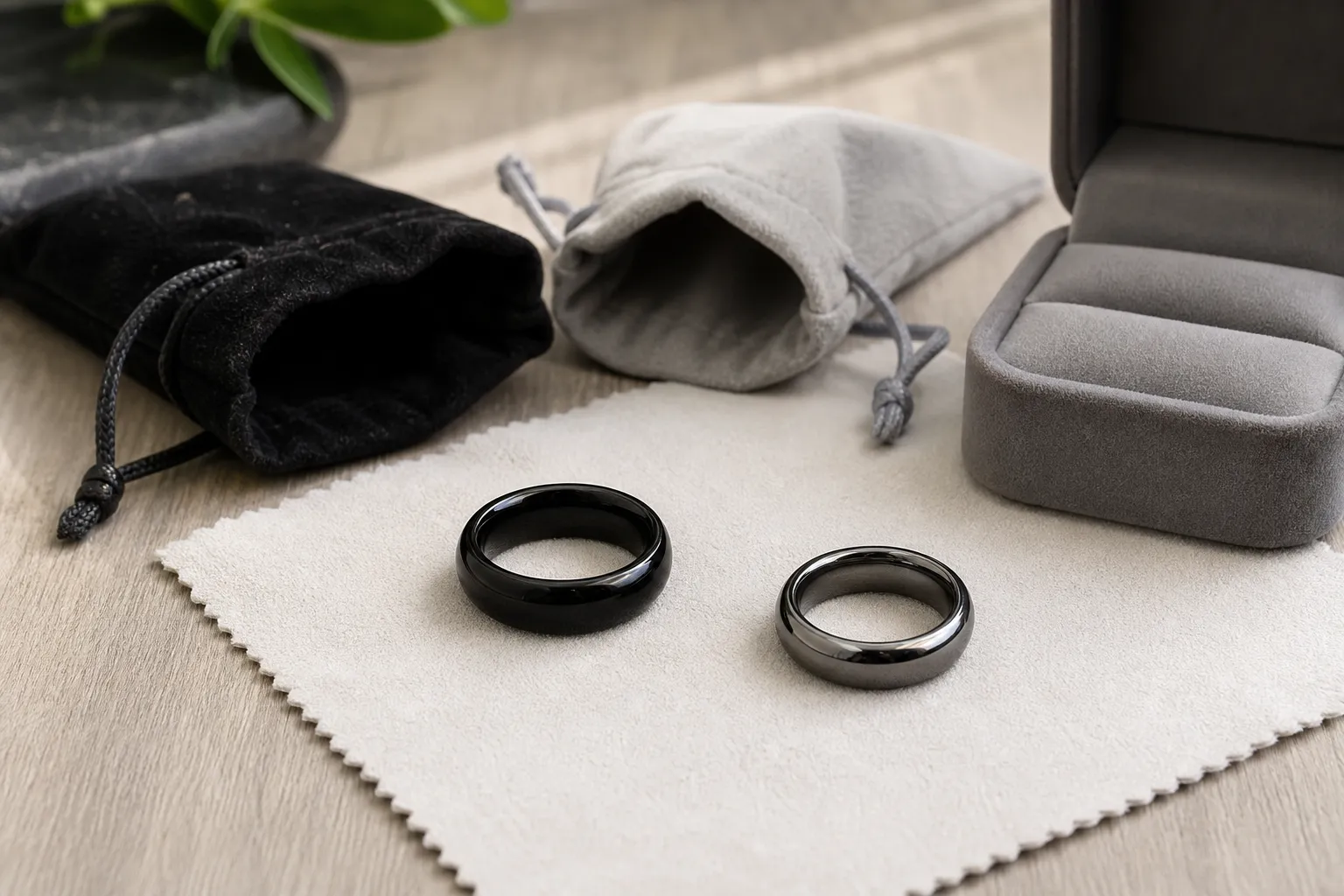
Hematite and obsidian are not the same material. They can both be dark and polished, and both are commonly sold in protective crystal jewelry, but they have different identities.
Obsidian is volcanic glass. It often presents as black and glassy, though some pieces show brown, grey, gold, silver, or rainbow-like effects depending on inclusions, structure, or surface appearance. Hematite is an iron oxide mineral. It is often recognized by metallic luster, heavier feel, and a reddish-brown streak in mineral testing contexts.
Obsidian signs
Glassy luster, deep black body color, smooth reflective polish, sometimes translucent edges in thin pieces.
Hematite signs
Metallic grey or black shine, heavier hand feel, cool touch, reddish-brown streak when tested on an appropriate streak plate.
Possible confusion
Black glass, coated stones, synthetic materials, magnetic imitations, or composite jewelry sold under simple labels.
These clues can suggest a material, but they do not prove authenticity. Weight, cool touch, and shine can be imitated or affected by design. A reddish streak is a useful mineral clue for hematite, but many ring buyers will not want to scratch-test jewelry. For certainty, specialized testing may be needed.
Be especially careful with broad seller wording. “Real hematite,” “black hematite,” “rainbow hematite ring,” and “natural obsidian” can mean different things depending on the seller. Rainbow hematite may refer to naturally iridescent material, surface coatings, treatments, or commercial color language. A better move is to ask what the seller means by the term, whether the color is natural or treated, and whether the ring is solid stone, coated, bonded, or set into another material.
Protective crystal ring language: useful as symbolism, not as a durability test
Many people compare obsidian and hematite because both are commonly sold as protective crystal ring choices. Seller descriptions often frame black obsidian as protective, shielding, or reflective. Hematite is often described as grounding, steadying, or strengthening. That vocabulary explains why buyers search for a protective crystal ring comparison rather than a plain jewelry-material comparison.
The grounded way to use that language is symbolic. If obsidian’s dark glassy look feels like a personal reminder to set boundaries, that can be meaningful to the wearer. If hematite’s heavy metallic feel serves as a reminder to stay steady, that can also be personally meaningful. Those meanings should not be treated as guaranteed effects, and they should not override material care.
This matters when a ring breaks. A broken hematite ring meaning is sometimes discussed in crystal-belief spaces as a sign that the ring has taken on too much negativity or completed a protective cycle. That is a personal or cultural interpretation, not a material diagnosis. In practical terms, the ring may have broken because it was dropped, struck, squeezed, made thin, flawed, or not actually solid hematite.
The same applies to obsidian. A chipped obsidian ring is not automatically a sign of spiritual success or failure. It may simply be a brittle glass-like material responding to impact.
So which ring makes more sense?
Choose obsidian if...
Your priority is a black, glossy, dramatic crystal ring and you are comfortable wearing it carefully. It is the stronger aesthetic choice for someone who wants a polished dark stone look rather than a metallic mineral look. The tradeoff is obsidian ring durability: chips, cracks, and breakage are realistic concerns if the ring is knocked or dropped.
Choose hematite if...
Your priority is a metallic grey appearance, heavier feel, and iron-mineral identity. It makes more sense if you like a cool, dense, gunmetal-style ring but still understand that hematite is not a bendable metal band. The tradeoff is care: hematite can break under impact or pressure, and visual clues cannot confirm authenticity on their own.
If you want the most practical everyday ring, neither obsidian nor hematite is the easiest material. A metal band with an obsidian or hematite inlay, cabochon, or protected setting may be more forgiving than a fully carved stone ring. If you want the clearest crystal-material expression, a solid obsidian or hematite band can be appealing, but it should be worn with the limits of the material in mind.
In short: obsidian is the better choice for a black glassy look; hematite is the better choice for a metallic heavy feel. For durability, both require care, and neither should be bought on protective language alone.
FAQ
Is hematite stronger than obsidian in a ring?
Not in the way many buyers assume. Hematite looks metallic, but it is still a mineral material and can break under impact or pressure. Obsidian is volcanic glass and can chip or crack from hard strikes. In ring form, both should be treated as careful-wear materials.
Is a hematite ring the same as a black obsidian ring?
No. Obsidian is volcanic glass with a glassy look. Hematite is an iron oxide mineral with metallic luster and a heavier feel. They may both appear dark and polished, but they are not the same material.
Can I tell real hematite from appearance alone?
Appearance can offer clues, but it cannot prove the material. Metallic luster, heavier feel, cool touch, and reddish-brown streak may suggest hematite, but coatings, composites, and imitations can complicate the picture. For certainty, specialized testing may be needed.
What does it mean if my hematite ring breaks?
From a material point of view, breakage usually points first to impact, pressure, thin construction, flaws, or the way the piece was made. Some people attach personal symbolism to a broken ring, but that interpretation should not replace the practical explanation.
Sources
Sources and further reading
Reference links are limited to sources considered suitable for public citation in this page.