ProtectCrystal handling note
Crystal comparison
Is Black Obsidian More Protective Than Hematite
Black obsidian is not more protective than hematite in a measurable, real-world sense. If you are asking is black obsidian more protective than hematite because both stones appear in protection bracelets or crystal listings, the practical answer is this: black obsidian is often described as the more intense “shield” stone, while hematite is often described as the steadier grounding stone.
That is symbolic and marketplace language. It is not evidence that either stone can keep you safe, prevent bad outcomes, or change what happens around you.
For a bracelet, pendant, or pocket stone, the better question is: which meaning, look, weight, and wearing feel fit your personal use?
upward
Read the full overview first
Use the broader guide first if you need the full scope before this page.
Short answer: obsidian sounds more intense, hematite feels steadier
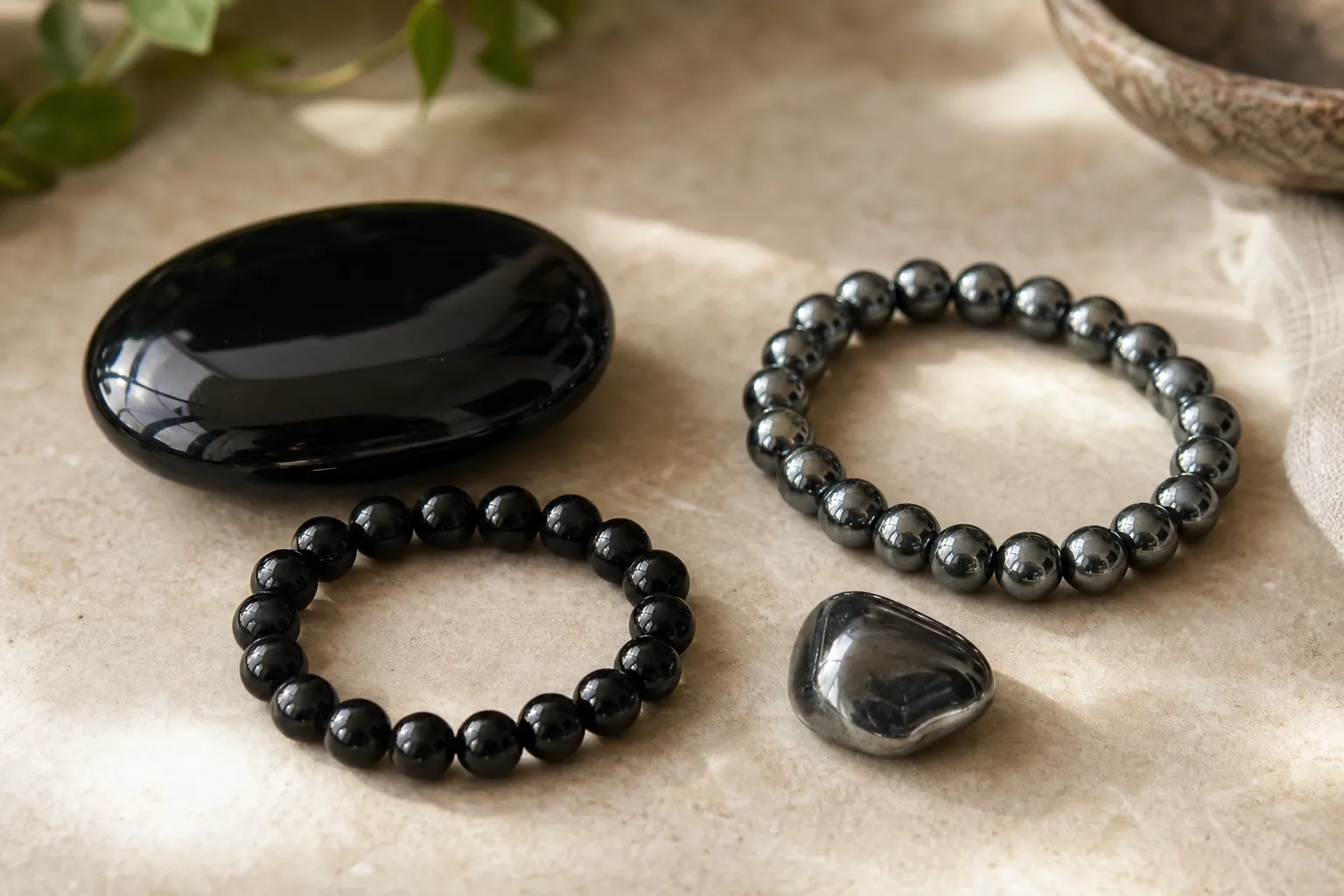
In modern crystal-use language, black obsidian and hematite are usually given different protective roles. Black obsidian is commonly framed as sharp, reflective, direct, and shield-like. Hematite is more often framed as grounded, weighty, stabilizing, and steady.
That difference can help if you choose crystals for personal symbolism, reminders, meditation objects, or jewelry meaning. It should not be treated as a ranking of actual protective power.
Question
Black obsidian
Hematite
Is it objectively more protective?
No reliable protection scale shows obsidian outranking hematite.
No reliable protection scale shows hematite ranking below obsidian.
Common protection meaning
Often described as shielding, intense, boundary-focused, or truth-facing.
Often described as grounding, steady, strengthening, or stabilizing.
Material impression
Usually glossy black and glass-like. Broken pieces may have sharp edges.
Often metallic-looking, dark gray to black, and dense-feeling for its size.
Jewelry feel
Sleek, polished, dark, and visually sharp.
Heavier, more metallic, and more substantial on the wrist or neck.
Best symbolic fit
A bold reminder of boundaries or “shield” imagery.
A quieter reminder of steadiness, focus, or staying grounded.
What not to assume
“Intense” does not mean stronger real-world protection.
Weight or iron content does not mean body protection.
So when someone says black obsidian is “more protective,” they are usually speaking from a symbolic or retail crystal framework. Within that framework, obsidian may be framed as more forceful. From a material and evidence point of view, there is no verified protection ladder where obsidian sits above hematite.
What “protection” means in crystal listings
The confusion starts because “protection” is used in several different ways.
In crystal shops, black obsidian protection meaning is often tied to ideas such as shielding, blocking unwanted influence, revealing truth, or supporting stronger personal boundaries. Some listings use dramatic wording, especially around black obsidian symbolic protection, which can make the stone sound more powerful than other dark stones.
Hematite protection meaning is usually softer. It is commonly associated with stability, strength, focus, and a sense of being anchored. Hematite symbolic protection is less often presented as a dramatic shield and more often as a steadying presence.
Those meanings may matter if you want jewelry with a personal intention. You might choose black obsidian as a visual reminder to set boundaries. You might choose hematite because its heavier, metallic feel matches your idea of steadiness.
Both are reasonable symbolic choices. The limit is simple: symbolic meaning is not the same as demonstrated effect. A bracelet listing, short social post, or seller phrase such as “powerful protection” does not prove that the stone changes your surroundings or outcomes.
Material differences you can actually check
A useful protective crystals comparison separates meaning from material. You may not be able to confirm every seller claim by eye, but you can still notice practical differences.
Black obsidian is commonly sold as a glossy black, glass-like material in beads, pendants, palm stones, and carved pieces. Its appeal is often visual: deep black color, high polish, and a reflective surface. Because it is glass-like, damaged obsidian deserves caution. If a bead, pendant, or point chips and exposes a sharp edge, do not keep wearing it against skin.
Hematite is an iron oxide mineral. Mineral education sources describe hematite by traits such as metallic to submetallic luster, dark gray to black or reddish-brown color variations, and relatively high density. In jewelry, polished hematite beads are commonly recognized by their metallic shine and dense, weighty feel.
These cues are useful, but they are not perfect proof. A black shiny bead is not automatically black obsidian. A metallic-looking bead is not automatically natural hematite. Coatings, composites, glass, dyed materials, and seller wording can all complicate identification.
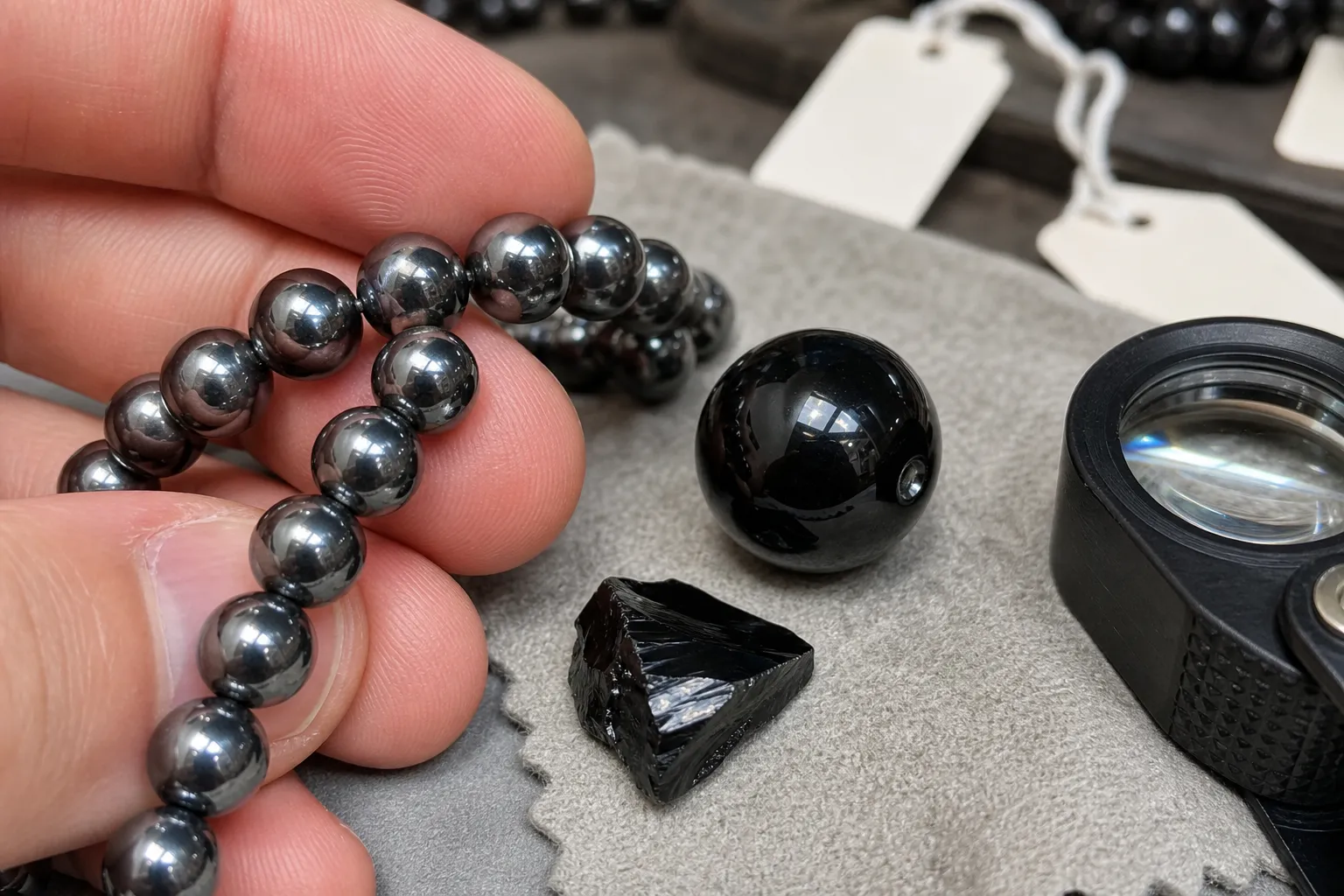
For ordinary buying decisions, check:
- Surface look: obsidian is usually more glassy; hematite is usually more metallic.
- Weight impression: hematite often feels relatively heavy for its size.
- Finish quality: chips, peeling coatings, uneven polish, and sharp areas matter more than dramatic product wording.
- Seller wording: “natural,” “genuine,” and “protective” are claims, not proof by themselves.
- Identification limit: appearance can suggest a material, but for certainty, specialized testing or a reputable seller may be needed.
Those observable details are more dependable than ranking the stones by invisible protective strength.
When black obsidian may feel like the stronger choice
Black obsidian may be the better symbolic choice if you are drawn to strong boundary language. In modern crystal-use wording, black obsidian shielding meaning often carries a sharper tone than hematite. It is presented as direct, reflective, dark, and intense.
That does not make it factually stronger. It means the story attached to the stone is different.
Choose black obsidian over hematite if you want:
- a bold black stone with a glossy, glass-like look;
- a personal reminder to pause before absorbing other people’s moods or opinions;
- jewelry that feels visually darker, sharper, or more decisive;
- symbolic “shield” language rather than “steady ground” language.
For jewelry, inspect polished obsidian for chips, cracks, and sharp edges. Drill holes, pendant points, and bead edges are common places for wear to show. If the piece is damaged, comfort and skin contact matter more than the listing’s meaning.
Also be careful with intensity claims. Some sellers describe black obsidian in very dramatic terms, but strong wording is still just wording. It should not replace ordinary judgment, practical safety habits, personal support, or professional help when those are needed.
When hematite may be the better protection symbol
Hematite may suit you better if “protection” means steadiness rather than a shield. Hematite grounding meaning is usually about weight, stability, focus, and an anchored feeling. The stone’s metallic appearance and dense feel can reinforce that symbolism for many buyers.
The material property is real; the protective meaning is personal. Hematite can be iron-rich and weighty without that translating into protection for the body or life circumstances.
Choose hematite over black obsidian if you prefer:
- a metallic dark-gray or black look instead of glossy glass;
- a bracelet that feels heavier and more substantial;
- symbolism around steadiness, composure, focus, or strength;
- a quieter protection meaning instead of intense shield imagery.
For hematite vs obsidian jewelry use, comfort matters. Hematite beads can feel heavier on the wrist or neck than similarly sized glassy beads. That may be pleasant if you like a noticeable bracelet, or distracting if you prefer lightweight jewelry. Check the finish too; some hematite-style beads may be coated or highly polished, and visible wear can change their appearance over time.
Common misunderstandings about black obsidian vs hematite
The biggest mistake is treating seller language as a measurement. “More protective” sounds like a comparison that could be tested, but in most crystal listings it is a meaning statement. It tells you how the stone is being marketed or used symbolically, not what it has been shown to do.
Another misunderstanding is assuming physical traits create protective outcomes. Hematite’s dense feel and metallic look can support its stability symbolism, but weight does not prove protection. Black obsidian’s glossy black appearance can support shield symbolism, but darkness and shine do not prove protection either.
Protection-bracelet bundles can add to the confusion. In some retail settings, black obsidian and hematite appear together in “triple protection” bracelets, often with another stone added. That bundle language can make each stone sound as if it has a fixed job. It is better read as modern marketplace symbolism, not as a verified system.
It is also worth separating jewelry language from technical materials language. Studies about radiation shielding, UV-blocking materials, or engineered composites do not show that wearing black obsidian or hematite beads provides daily-life protection. The word “protection” can mean something very specific in materials research, and that meaning should not be transferred to a bracelet.
A practical way to decide
If you like both stones, do not force the choice into “stronger” versus “weaker.” Use three simpler filters.
Choose by symbolism
Pick black obsidian if the idea of a clear boundary or symbolic shield is what you want. Pick hematite if grounded stability feels more useful.
Choose by material feel
Black obsidian gives a glossy, dark, glass-like impression. Hematite gives a metallic, heavier impression. If you are buying jewelry, comfort may matter more than the meaning description.
Choose by condition and seller clarity
Look for smooth edges, stable polish, accurate photos, and careful wording. Be skeptical of any listing that turns symbolic language into broad promises. A good product description should help you understand the material, finish, and wearability.
If you are still unsure, hematite is often the calmer symbolic choice; black obsidian is often the more intense symbolic choice. Neither should be treated as an external safeguard.
Bottom line
Black obsidian is not shown to be more protective than hematite. In modern crystal language, black obsidian is often described as more intense, shielding, and boundary-focused. Hematite is often described as grounding, stabilizing, and steady.
That difference can help you choose a stone for personal symbolism, jewelry style, or daily reminder value. For a buyer, the more reliable comparison is not “which one protects more?” but “which meaning, look, weight, and wearability fit me better?”
Use black obsidian if you want bold shield symbolism and a glossy dark look. Use hematite if you want stability symbolism and a heavier metallic feel. Keep the protection language personal, and let observable material quality guide the purchase.
Sources
Sources and further reading
Reference links are limited to sources considered suitable for public citation in this page.