
ProtectCrystal handling note
Bracelet comparison
Which Is Better for a Bracelet: Obsidian, Hematite, or Cinnabar
For most bracelet buyers, obsidian is the easiest everyday choice. Hematite is better if you like a noticeably weighty, metallic bracelet. Cinnabar is the most specialized option: it has strong red symbolism, but it also needs more careful handling and more skepticism toward seller claims.
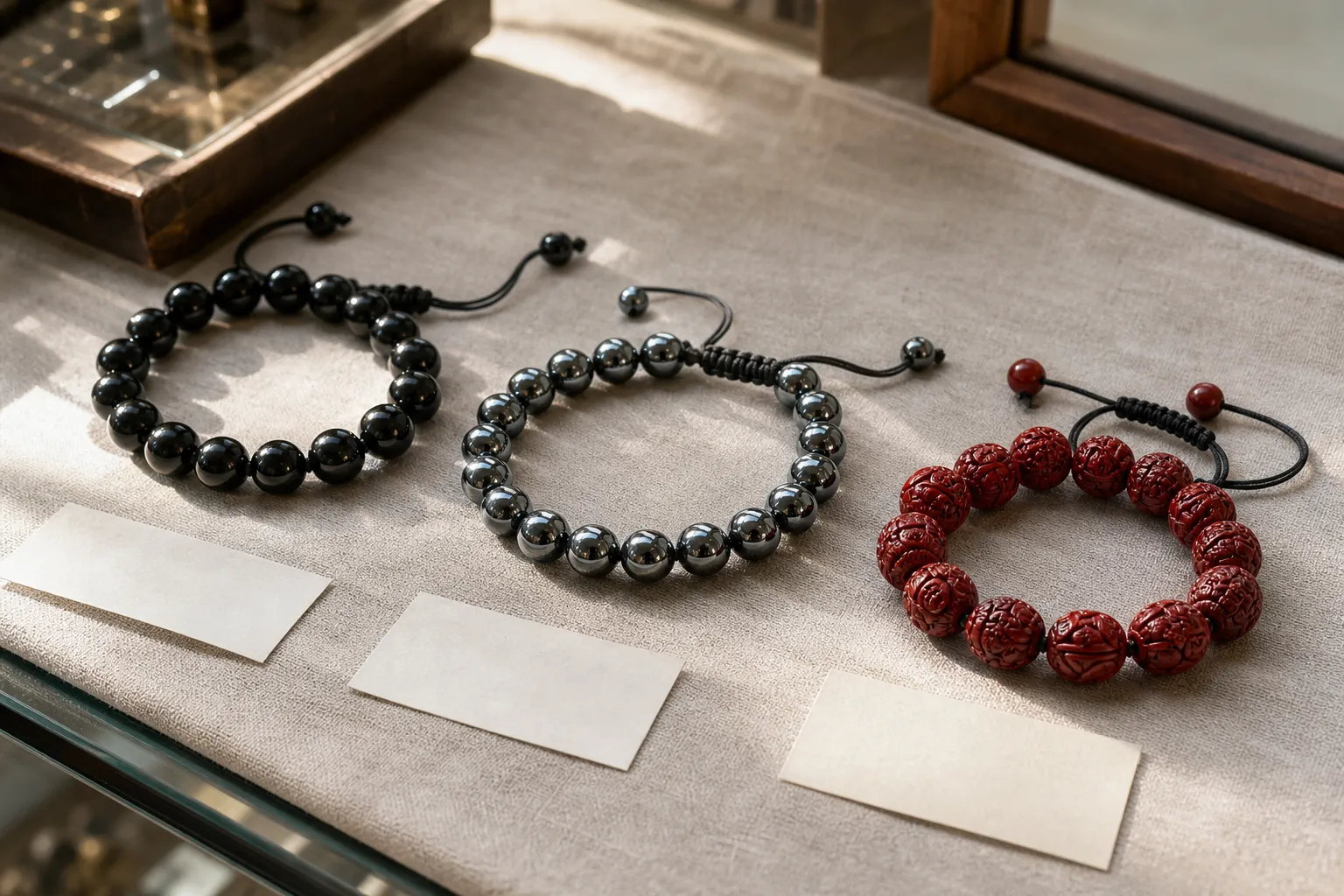
In an obsidian hematite cinnabar bracelet comparison, the practical question is not which material is “strongest.” It is which one fits how you actually wear jewelry: daily and casually, heavy and tactile, or symbolic and more carefully managed.
upward
Read the full overview first
Use the broader guide first if you need the full scope before this page.
Fast comparison
Obsidian
Best fit: Simple glossy black bracelet.
Wear feel: Smooth, glassy, dark.
Care burden: Moderate.
Main caution: Hard knocks can damage polished beads; appearance alone cannot prove identity.
Hematite
Best fit: Metallic gray-black bracelet.
Wear feel: Often heavier-feeling than many bead bracelets.
Care burden: Moderate.
Main caution: Weight helps compare feel, not authenticity.
Cinnabar
Best fit: Red symbolic bracelet.
Wear feel: Red to dark red; sometimes sold with carved or lacquerlike styling.
Care burden: Higher.
Main caution: Cinnabar is commonly identified as mercury sulfide, so damaged or powdery beads need extra caution.
A simple rule works well: obsidian for easy black daily wear, hematite for metallic weight, cinnabar for red symbolism with caution.
The best choice by buyer type
Choose obsidian if you want the most straightforward bracelet among the three. Polished obsidian is commonly sold as a glossy black protective crystal, and that look is easy to match with everyday clothing. It does not carry the same mercury-related handling concern as cinnabar. The tradeoff is that obsidian is glassy in nature, so drops, hard knocks, and rough storage can still chip or dull bead surfaces.
Choose hematite if bracelet material wear feel matters most. Hematite bracelets are often chosen for their metallic gray, black, or mirrorlike appearance and their denser hand feel. Many buyers notice hematite bracelet weight before anything else. That weight can feel substantial, but it may also feel too heavy if you prefer a light bracelet. Very shiny hematite-style beads may show scratches, dulling, or coating wear over time.
Choose cinnabar only if you specifically want its red look and symbolic associations enough to accept stricter handling. Cinnabar is commonly described in mineral and toxicology sources as mercury sulfide. That does not let a buyer decide from photos whether a bracelet is genuine cinnabar, carved lacquer, resin, dyed material, or a composite product. It does mean cinnabar should be treated as the least casual daily-wear choice in this comparison.
Why these bracelets feel different
The wearing experience mostly comes down to color, surface, weight impression, finish, and care habits.
An obsidian bracelet vs hematite bracelet decision is often a black-gloss versus metallic-weight decision. Obsidian usually gives a deep, glassy black look. Hematite is usually described in bracelet shopping as dark metallic gray to black, sometimes with a mirrorlike polish. Hematite may feel more substantial in the hand, but weight is only a clue. It does not prove the material.
A cinnabar vs obsidian bracelet comparison is more about red symbolism versus easy black wear. Obsidian is usually chosen for a polished black protective-crystal style. Cinnabar is chosen for red color, auspicious styling, or cultural meaning. If a listing leans on terms such as “Tai Sui,” “feng shui bracelet materials,” or “auspicious protection,” read that as marketplace or belief-based language, not as proof of material identity or any guaranteed result.
An obsidian and hematite bracelet can make sense if you like black and metallic contrast. The practical questions are simple: does it feel comfortable, are the beads well finished, is the stringing sturdy, and will the surfaces rub against each other? There is no need to treat the pairing as a material problem just because some sellers use spiritual pairing rules.
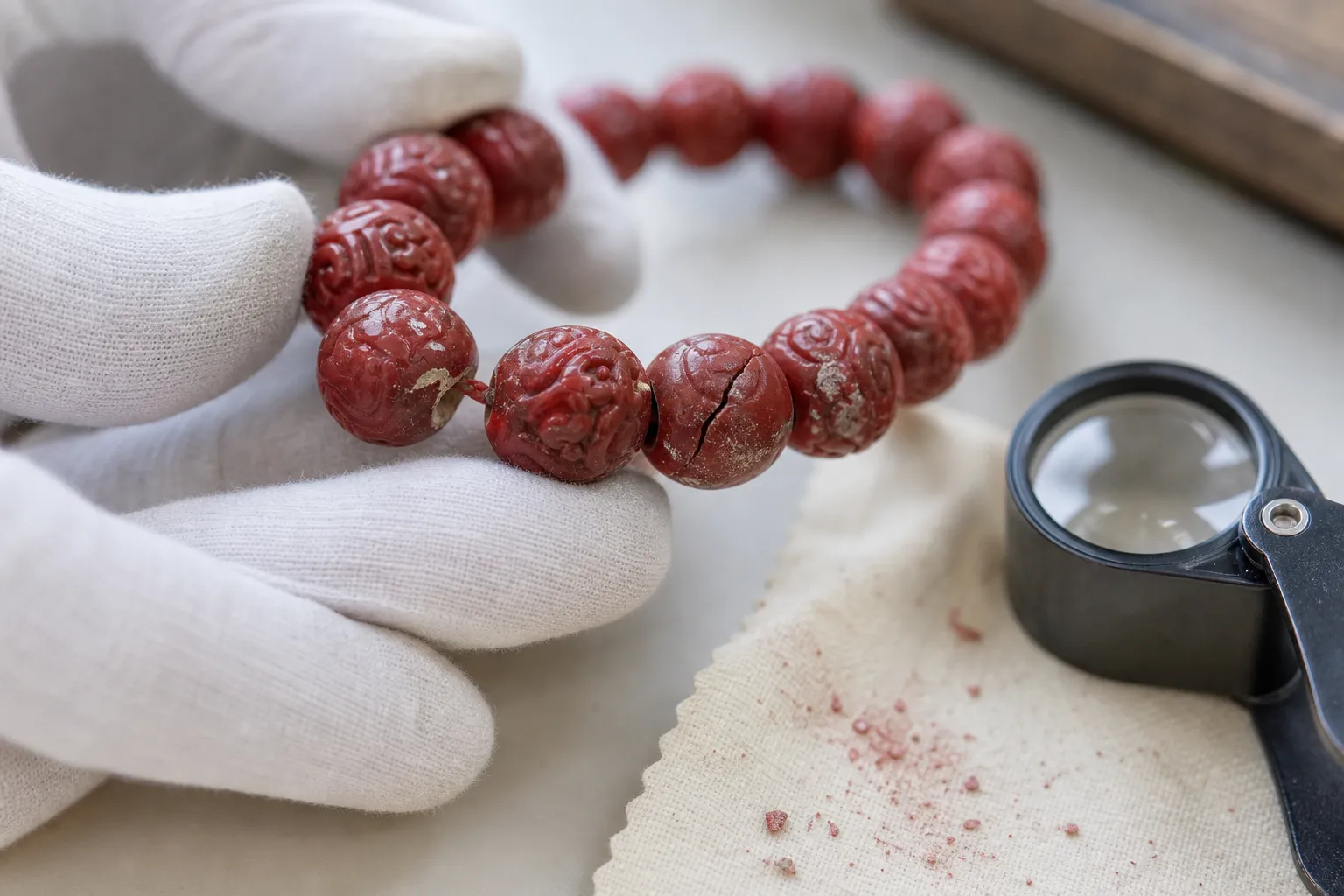
For cinnabar combinations, be more conservative. If red beads are rubbing against sharper, harder, or heavily textured components, inspect them more often. A cinnabar-style bracelet that becomes chipped, cracked, powdery, or abraded should not be worn like an ordinary decorative bead bracelet.
Cinnabar bracelet safety and daily wear
Cinnabar needs the clearest caution in this comparison. It is commonly identified as a red mercury sulfide mineral, and technical studies on cinnabar use methods such as XRF, XRD, and Raman spectroscopy because red materials can look similar while having different composition or structure.
For a bracelet buyer, the useful conclusion is narrow: do not treat cinnabar as a low-maintenance daily bracelet, especially when the bead composition is uncertain.
Practical cinnabar bracelet care cautions
- Do not wear beads that are cracked, crumbling, powdery, or shedding residue.
- Do not grind, sand, drill, scrape, or polish cinnabar yourself.
- Keep cinnabar away from the mouth, nose, eyes, open skin, and food surfaces.
- Do not let children handle or chew cinnabar jewelry.
- Avoid high heat, harsh cleaners, and abrasive scrubbing.
- Remove the bracelet before sports, bathing, cooking, sleep, or rough work.
- Wash your hands after handling a questionable, dusty, or damaged piece.
- If the composition is unclear, handle it more cautiously, not less.
This does not mean every red bead sold as cinnabar is actually cinnabar. Some modern “cinnabar” jewelry may be lacquer, resin, dyed material, composite material, or another red decorative product. That uncertainty cuts both ways: you cannot assume it is genuine, and you also cannot assume it has no material concern.
If you want a bracelet you can wear every day without thinking much about storage, surface wear, or breakage, obsidian or hematite is usually the better fit. If cinnabar’s red symbolic look is the priority, wear it selectively and inspect it more often.
Authenticity cues: helpful, but limited
Cinnabar bracelet authenticity cues often mentioned by sellers include red or dark red color, a heavier feel, fine surface texture, slight metallic luster, or exposed crystalline-looking areas. These signs may help you notice inconsistencies, but they cannot prove authenticity or handling suitability.
Use visual checks in a modest way
- If a “cinnabar” bracelet looks like ordinary plastic, ask more questions.
- If a red coating is peeling, that suggests a surface-treatment issue, not proof of what is underneath.
- If beads leave powder or residue, stop wearing the bracelet and treat it cautiously.
- If a seller claims certainty from photos alone, be skeptical.
- If a listing uses terms such as “high-purity,” “imperial,” or “natural” without meaningful detail, treat them as marketing language unless credible testing is provided.
The same limit applies to obsidian and hematite. A glossy black bead may resemble obsidian, onyx, glass, or another polished material. A heavy metallic bead may be described as hematite, but weight alone is not enough to verify it. For certainty, specialized testing may be needed. For ordinary bracelet buying, the goal is usually more practical: avoid obvious inconsistencies, damaged surfaces, and overconfident seller claims.
Care and cleansing: keep it gentle and physical
For all three bracelets, care starts with ordinary preservation: reduce impact, avoid abrasive rubbing, and store bead bracelets separately from harder jewelry. A soft pouch or lined compartment is better than tossing several bracelets into one drawer.
Obsidian
Protect the polish and avoid hard impacts. Wipe with a soft cloth after wear, especially if lotion, skin oil, or dust is on the surface.
Hematite
Watch the finish. Shiny beads can show dulling, scratches, or coating wear. Keep them away from harsh cleaners, rough surfaces, and long wet storage. If a bracelet is sold with magnetic features, treat that as a separate product claim, not proof of mineral identity.
Cinnabar
Prefer dry, gentle wiping. Avoid soaking, salt immersion, abrasive cleansing, strong cleaners, heat, and any method that could damage the bead surface. Seller advice on cinnabar bracelet cleansing can conflict; when it does, choose the option that creates the least physical stress.
Ritual practices such as sunlight, moonlight, incense, chanting, bells, or similar methods may matter to some people as personal tradition. They do not answer the material-care question. For bracelet longevity and cautious handling, the useful standard is simpler: do not damage the surface, do not create dust, and do not expose sensitive materials to unnecessary stress.
How much should symbolism affect the choice?
Symbolism can matter, but it should not overrule material handling.
Obsidian is often marketed as a black protective crystal. Hematite is commonly described in marketplace language as grounding or stabilizing because of its dense, metallic feel. Cinnabar is often connected with red cinnabar bracelet symbolism, auspiciousness, Tai Sui bracelet symbolism, or feng shui bracelet materials.
Those associations can explain why a bracelet feels meaningful, especially for personal use or gifting. They are not evidence that a bracelet will guarantee a spiritual, emotional, financial, physical, or safety outcome. If a seller mixes material descriptions with promised results, separate the parts: color, finish, weight, and care can be evaluated; promised effects should not be treated as proof.
Quick cinnabar bracelet handling checklist
Before buying or wearing a cinnabar-style bracelet, ask:
- Does the seller describe the bead material clearly, instead of relying only on auspicious or spiritual language?
- Are the bead surfaces intact, smooth, and free from powdery residue?
- Is the bracelet intended for adult wear rather than children’s handling?
- Can you avoid wearing it during sleep, sports, bathing, cooking, or rough work?
- Are you comfortable with dry, gentle care instead of soaking or abrasive cleansing?
- Would you stop wearing it if the beads chip, crack, shed, or change texture?
- Do you understand that color, weight, and seller photos cannot prove authenticity?
If those answers feel uncertain, obsidian or hematite is the more practical bracelet choice.
Bottom line
Obsidian is better for most everyday protective crystal bracelet buyers because it gives a dark polished look with fewer special cautions. Hematite is better if you want a heavier metallic bracelet and do not mind the weight on your wrist. Cinnabar is better only if the red symbolic style is the priority and you are willing to handle, clean, inspect, and store it more carefully.
The choice is not just obsidian bracelet vs hematite bracelet or cinnabar vs obsidian bracelet. It is a question of how you will actually wear the piece: casually every day, for its weight and finish, or for symbolism with a more cautious routine.
Sources
Sources and further reading
Reference links are limited to sources considered suitable for public citation in this page.