ProtectCrystal handling note
Near-skin wear guide
Obsidian, Hematite, or Cinnabar Necklace: What Changes Near Skin
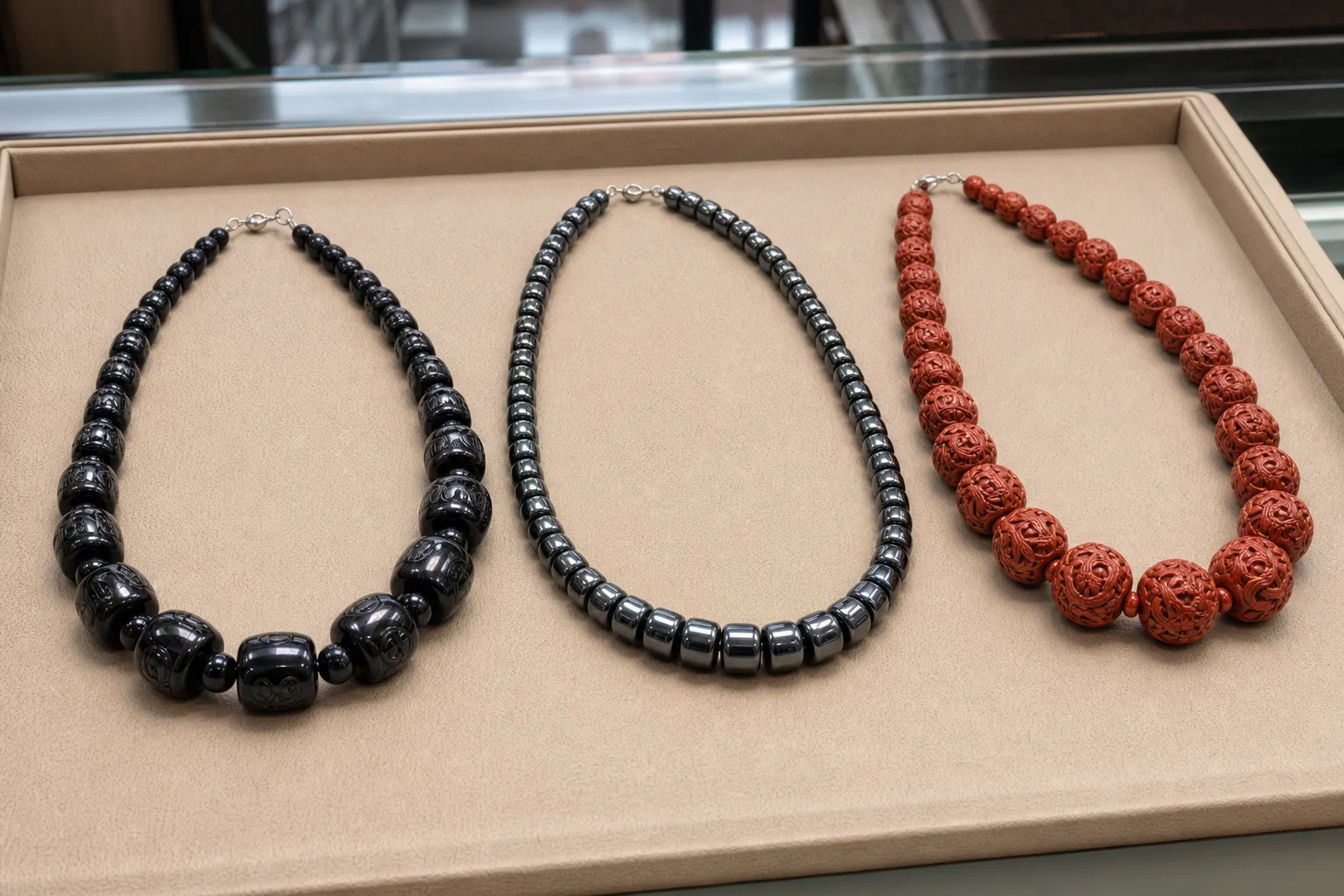
If you are choosing an obsidian hematite cinnabar necklace to wear against skin, the main difference is material behavior, not a promised effect.
Polished obsidian is mostly a comfort-and-edge question: it can feel smooth and glassy until a chip, sharp drill hole, or tight cord changes the feel. Hematite is more about weight, finish transfer, and strain on the clasp or stringing. Cinnabar needs the most caution because “cinnabar” in jewelry listings can mean different things, and true cinnabar is associated with mercury sulfide. A smooth intact ornament is a different handling situation from a chipped, dusty, heated, mouthed, or powdery piece.
upward
Start with the broader guide
Use the broader guide first if you need the full scope before this page.
Quick comparison before wearing
Obsidian
What you may notice near skin: Cool, smooth, glassy feel when well polished.
Main thing to inspect: Chips, sharp edges, rough drill holes, tight spacing.
When to remove it: If it scratches, pinches, or has broken edges.
Hematite
What you may notice near skin: Dense, heavy, metallic-feeling strand.
Main thing to inspect: Finish transfer, rubbing marks, cord or clasp strain.
When to remove it: If it pulls, marks skin or clothing, or stresses the hardware.
Cinnabar
What you may notice near skin: Red decorative surface, often carved or lacquer-like in listings.
Main thing to inspect: Powder, chips, residue, dampness, vague seller wording.
When to remove it: If damaged, dusty, shedding, near the mouth, or worn for long pressure contact.
What changes when a necklace sits on skin
Skin contact adds warmth, sweat, movement, pressure, perfume, hair products, lotion, and rubbing against collars. Those conditions do not prove a necklace is suitable or unsuitable, but they make surface problems easier to notice.
Check the simple contact cues first:
- Smoothness: Does each bead glide across skin, or does one spot catch?
- Edges: Are there chips, sharp pendant corners, or rough drill holes?
- Weight: Does the necklace sit comfortably, or pull at the back of the neck?
- Residue: Does color, powder, dark rubbing, or coating transfer to skin or fabric?
- Moisture response: Does the surface become sticky, softened, stained, or unstable after sweat or humidity?
- Hardware strain: Are jump rings, knots, elastic, thread, or clasps being pulled by heavy beads?
- Wear time: A strand that feels fine for ten minutes may feel different after hours of movement.
That is the useful frame for crystal necklace safety here: condition, contact, and handling.
Obsidian near skin: smooth polish and sharp edges
An obsidian necklace is often chosen for its sleek black surface. Near skin, the noticeable feature is the obsidian necklace skin feel: cool at first touch, smooth when polished well, and glass-like in the hand.
The comfort issue is usually surface quality rather than weight. A polished obsidian necklace can be comfortable when the beads are rounded, evenly spaced, and free from sharp drill-hole edges. The same piece becomes annoying if one bead is chipped, a pendant corner sits on the collarbone, or the cord pulls a hard edge into one spot.
Before wearing polished obsidian close to skin:
- Run a fingertip slowly around bead holes, pendant points, and edges.
- Look for crescent-shaped chips, rough flakes, or fresh-looking breaks.
- See whether the piece catches on a soft cloth.
- Check that the cord or chain does not force a hard edge into the neck.
- Remove it if it scratches, pinches, or feels sharp during movement.
Looks alone cannot prove what a black bead is. Color, shine, and cool touch may be clues, but not certainty. If identity matters for collecting or resale, specialized testing or a qualified mineral or gem assessment may be needed.
For daily wear, the practical question is simpler: is the surface intact, smooth, and comfortable where it touches skin?
Hematite near skin: weight, finish, and rubbing marks
A hematite necklace often feels different before you study the surface. The common buyer issue is hematite necklace weight. Hematite beads are often described as dense-feeling, and a full strand can sit heavier on the neck than glass, resin, wood, or many lighter stone necklaces.
Near skin, that weight changes the decision in three ways.
Pressure
A heavy strand may press at the collarbone or pull at the back of the neck, especially if the beads are large or the necklace is short.
Structure
Heavy beads ask more from knots, elastic, wire, crimp beads, and clasps. Hardware suited for a lighter strand may stretch, loosen, or fail sooner.
Finish
Some hematite jewelry appears highly polished, dark metallic, coated, plated, or treated in ways a buyer cannot verify from photos.
If the finish rubs, flakes, feels coated, or leaves marks, pause before bare-skin wear. Hematite necklace rubbing marks do not identify the exact material or coating, but they do show that the surface is changing during use.
A quick check
- Wear it over a light shirt for a short trial before bare-skin wear.
- Look at the collar area for dark rubbing or coating transfer.
- Check whether beads knock together heavily or chip around drill holes.
- Inspect elastic, wire, and cord after wear.
- Avoid sleeping in a heavy strand because pressure and snagging become more likely.
If you wear an obsidian and hematite bracelet, the same smaller-scale logic applies: weight, rubbing, and cord strain matter more than the symbolic pairing language attached to the listing.
Cinnabar near skin: where caution matters most
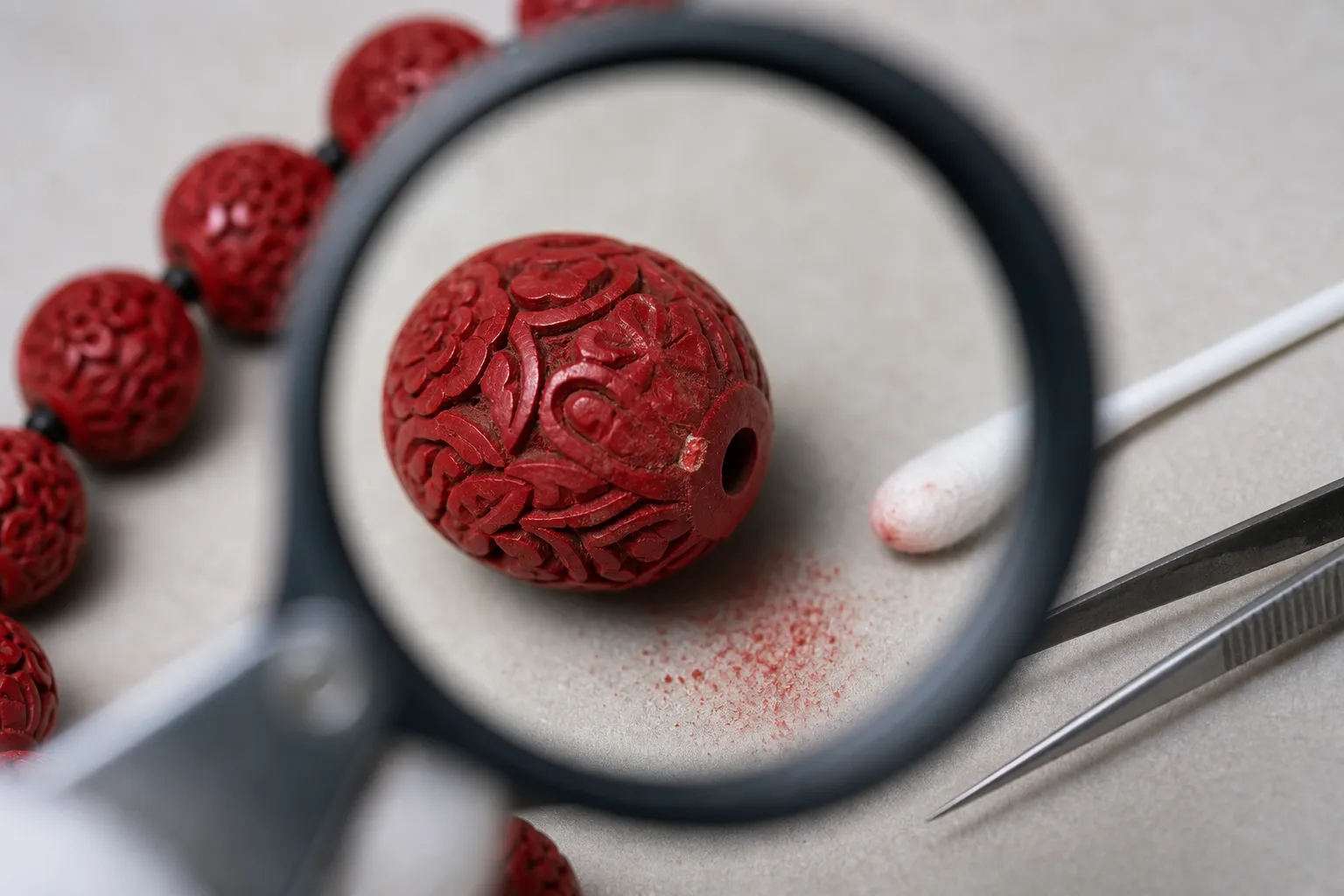
A cinnabar necklace near skin deserves a more conservative read than obsidian or hematite. Not every red bead behaves the same way, and many jewelry listings use “cinnabar” loosely for a color, carved style, lacquer-like surface, resin piece, or uncertain material. The caution comes from uncertainty plus cinnabar’s association with mercury sulfide.
A smooth, intact, sealed-looking red bead is not the same handling situation as a chipped bead shedding powder. A newly made resin imitation is not the same as a vintage carved bead with unclear composition. A pendant worn briefly over clothing is not the same as a tight necklace worn against sweaty skin overnight.
Do not wear a cinnabar piece against skin if it is chipped, powdery, damp, shedding residue, rough at the drill hole, or likely to touch the mouth, eyes, nose, broken skin, children, or pets.
Also avoid grinding, sanding, drilling, heating, or soaking suspect cinnabar jewelry. Those actions can create dust, change the surface, or increase contact with particles. If you handle a damaged or uncertain piece, wash your hands afterward and store it away from jewelry that children or pets can reach.
A carved cinnabar-style necklace needs extra inspection because grooves can hold residue, dust, or worn coating. That does not mean every carved bead is a problem; it means the surface gives you more places to check.
Vintage pieces deserve the same caution. Older descriptions may be vague, and visual cues such as bright red color, dark red tone, heavy feel, luster, or tiny sparkles can suggest questions to ask, not settle identity.
Sleeping and continuous wear
Sleeping with cinnabar necklace pieces is a poor match for cautious handling. Sleep adds pressure, sweat, rubbing, snagging, and long contact time while you are not checking the surface.
The same practical advice can apply to heavy hematite and sharp-edged obsidian, but the cinnabar concern is stronger because damage and residue change the handling context.
For cinnabar necklace continuous wear, keep the threshold low: if the piece rubs, leaves color, feels powdery, has sharp exposed areas, or sits on irritated skin, stop wearing it near skin. A conservative buyer may choose to wear cinnabar-style pieces over clothing, keep them as display items, or avoid near-skin wear for children, during pregnancy, or when skin is already irritated. That is a cautious buying choice when material identity and condition are uncertain, not personal medical advice.
Seller wording that should slow you down
Crystal jewelry listings often mix material description, cultural symbolism, care advice, and sales language in one paragraph. Separate those categories before deciding what belongs near skin.
“Natural cinnabar”
Ask what the seller means: mineral cinnabar, carved lacquer-style material, dyed material, resin, or something else.
“Protective” or “for luck”
Treat as cultural, personal, or marketplace language, not a guaranteed effect.
“Can be worn with obsidian”
Usually a belief or style statement. It does not prove a physical material interaction.
“Heavy red bead”
Weight may be a clue, but it does not verify identity.
“Metallic luster” or “crystalline specks”
Visible cues can raise questions, not settle them.
“Suitable for daily wear”
Check condition, surface, residue, and return policy; do not treat the phrase as independent evidence.
“No special care needed”
Be skeptical if the same item is also described as cinnabar, vintage, carved, or mineral-based.
This is where many buyers get confused about cinnabar and obsidian pairing. Some listings focus on whether the two “energies” should be worn together. That may matter to a personal practice, but it is separate from necklace material skin contact. Physically, the questions remain: Are the surfaces smooth? Is there residue? Is the strand too heavy? Is the cinnabar piece damaged or uncertain?
A short pre-wear check
Before wearing any obsidian, hematite, or cinnabar necklace near skin:
- 1. Inspect under bright light. Look at drill holes, bead edges, pendant corners, and carved grooves.
- 2. Touch-test gently. A rough, sharp, sticky, or powdery area matters more than a flattering product photo.
- 3. Use a cloth test. Rub lightly on a pale dry cloth. Transfer or powder is a reason to pause.
- 4. Check the stringing. Heavy hematite-style strands need hardware that is not already stretched or strained.
- 5. Start with short wear. Try it over clothing or for a short period before all-day bare-skin use.
- 6. Remove before sleep. This reduces pressure, snagging, breakage, and prolonged contact.
- 7. Separate ritual from material care. Personal cleansing rituals may have cultural meaning, but they do not remove dust, residue, chips, or unstable finishes.
Bottom line
For near-skin wear, obsidian changes the least if it is well polished and unchipped; the main issue is glassy comfort and sharp edges. Hematite changes the decision through weight, finish, rubbing marks, and strain on the necklace structure. Cinnabar changes the decision most because damage, dust, mouth contact, heat, uncertain identity, and continuous wear deserve extra caution.
If you want the lowest-maintenance necklace for direct skin contact, choose the piece with the smoothest surface, stable finish, comfortable weight, and clearest material description. If a red necklace is described as cinnabar and you cannot verify what it is, or it shows residue, chips, or powder, do not treat it like an ordinary polished bead against skin.
Sources
Sources and further reading
Reference links are limited to sources considered suitable for public citation in this page.