ProtectCrystal handling note
Obsidian, Cinnabar, and Hematite Beads: Common Listing Terms Explained
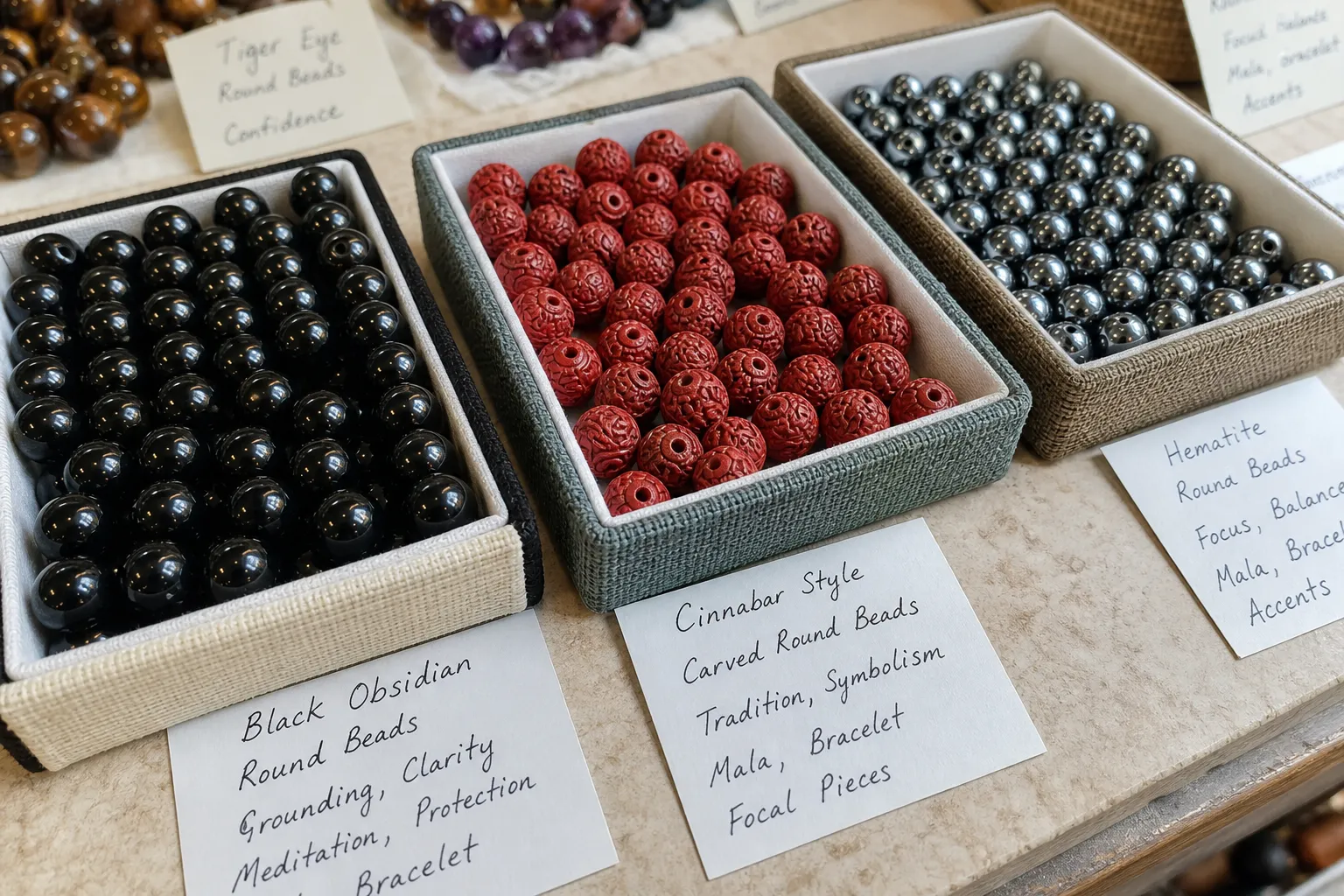
When a seller lists obsidian cinnabar hematite beads, do not read the phrase as one combined material. In most bead listings, the words are being stacked together: obsidian points to volcanic glass, cinnabar may mean true mercury sulfide or simply a red carved cinnabar-style look, and hematite refers to a separate iron-based mineral/material category.
The useful question is not “which one is real from the photo?” It is: which words are material claims, which are style words, and which are crystal-use language? A listing title can be a clue, but it cannot prove composition by itself. If the distinction matters for buying, wearing, storing, or reselling, look for clear seller documentation or specialized testing.
upward
Read the full overview first
Use the broader guide first if you need the full scope before this page.
Read the listing in layers, not as one promise
Bead titles are often compressed. A seller may try to include material, color, size, finish, use, and meaning in one short line. Break the wording apart before deciding what is actually being claimed.
Listing wording
What it may be doing
What it does not prove
“Obsidian,” “cinnabar,” “hematite”
Naming a material, or using a familiar bead category
Independent identification
“Cinnabar-style,” “red carved,” “lacquer-like”
Describing a look or decorative tradition
True mineral cinnabar
“Black,” “glossy,” “metallic,” “matte,” “rich red”
Describing color or surface finish
Mineral identity
“Crystal bead strands,” “bracelet beads,” “8 mm beads”
Describing the sale format
Natural origin or composition
“Grounding,” “protection,” “properties”
Personal, cultural, or seller meaning language
Material evidence or a guaranteed effect
A title such as “red cinnabar carved gemstone beads” or “black obsidian hematite bracelet beads” may be useful, but it is not enough. Check the full description for a sentence that says what the beads are made of.
What “obsidian beads” usually means
In strict material language, obsidian is volcanic glass. That is why obsidian bead listings often mention a glossy black surface, glassy luster, or polished finish. “Volcanic glass obsidian beads” is more specific than a listing that only says “black crystal beads.”
Still, black glassy bead identification is limited from photos. A polished dark bead can look obsidian-like because of lighting, coating, glass composition, dye, polish, or editing. The photo may raise a useful question, but it does not settle the material.
Useful wording distinctions
- “Natural obsidian beads” is a material claim, but still depends on seller reliability or documentation.
- “Obsidian-style black beads” usually points to appearance rather than confirmed obsidian.
- “Black glass beads” is not the same claim as obsidian.
- “Snowflake,” “rainbow,” or other variety-style terms describe appearance; the listing should still identify the material clearly.
If obsidian and hematite appear together in one bracelet or strand, check whether the seller identifies which beads are which. A clear listing should not leave you guessing whether the black glossy bead is obsidian, hematite, glass, or another material.
What are cinnabar beads made of?
Cinnabar needs the most careful reading. In mineral and conservation references, cinnabar is mercury sulfide, also written as HgS. It is known for a strong red color range, often described from scarlet to brick red, but color alone does not identify a bead.
In modern bead marketplaces, however, “cinnabar beads” may not mean true mineral cinnabar. The phrase is commonly used for red carved beads, lacquer-like pieces, resin beads, imitation cinnabar beads, or cinnabar-style beads. Sometimes the seller is describing the decorative look rather than the mineral composition.
Strict material reading
Cinnabar means mercury sulfide, a mercury-containing mineral/material.
Marketplace reading
Cinnabar may mean red carved, lacquer-like, resin, imitation, or style-based beads.
Look for clarifying words
- “cinnabar-style”
- “imitation cinnabar”
- “resin”
- “lacquer”
- “carved resin”
- “red carved”
- “natural cinnabar”
- “mercury sulfide”
- “HgS”
- “material documentation available”
These phrases are clues, not proof. “Natural” is still a seller claim. “Style” or “imitation” usually suggests the seller is not claiming true mineral cinnabar, but it still leaves the actual material to be checked. If a listing says “mercury sulfide cinnabar beads” or “natural cinnabar,” treat it as a serious material claim and ask for documentation before buying or wearing.
Handling unknown red carved cinnabar beads
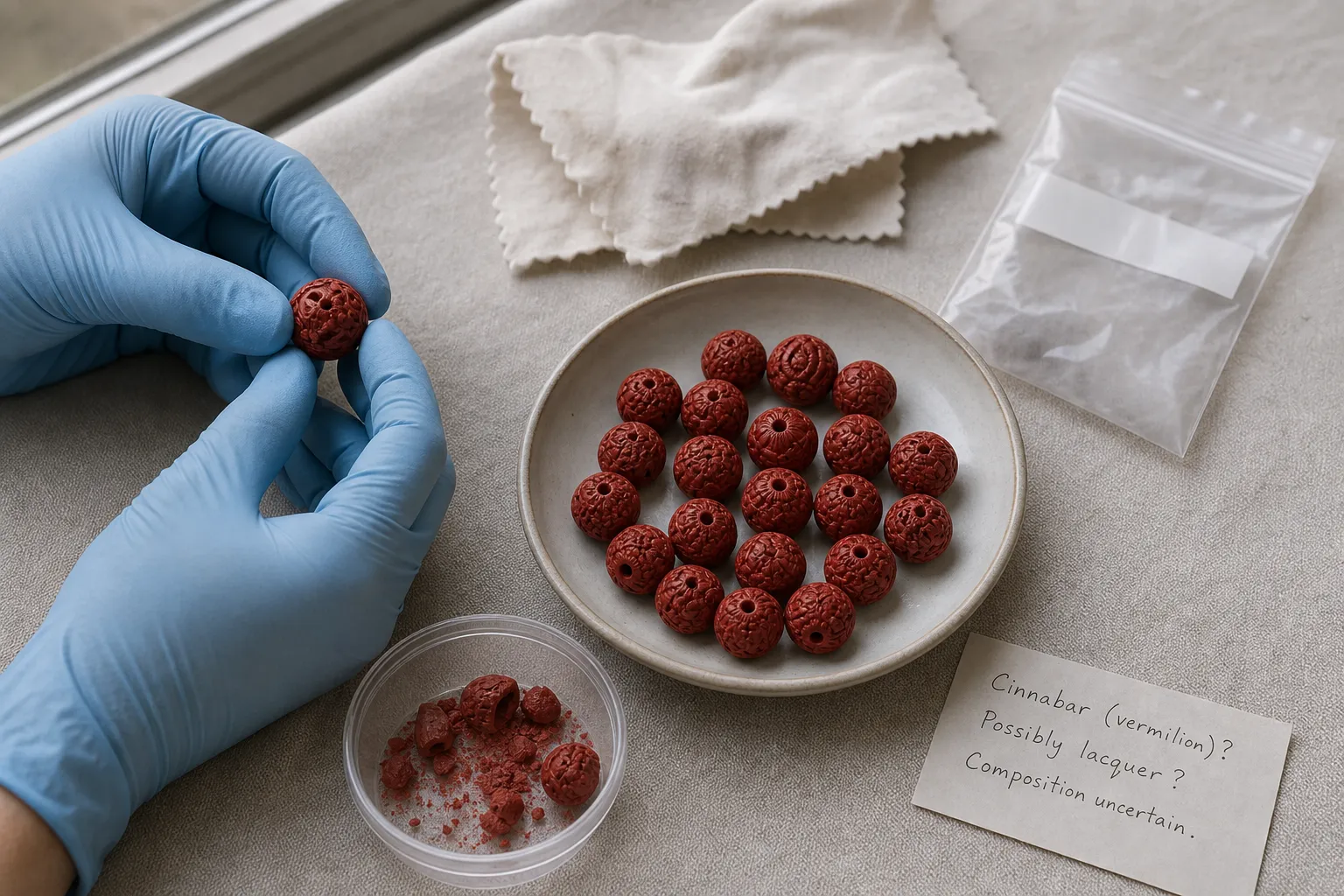
If a bead is described as cinnabar and the composition is unclear, avoid actions that create dust, residue, breakage, or heat. Do not sand, drill, burn, scratch-test, lick, grind, or heavily soak suspected cinnabar beads.
If a red carved bead is damaged, powdery, flaking, or shedding residue, handle it conservatively, keep it away from children and pets, and store it separately while you decide whether to return it, keep it only as a display item, or seek specialized advice.
This does not mean every red carved bead is true cinnabar. Many are style pieces. The reason for caution is simpler: the strict meaning of cinnabar is mercury-containing, so uncertain cinnabar-labeled beads deserve more care than ordinary color labels.
How to read hematite bead descriptions
Hematite bead listings often lean on surface words: dark gray, black, silvery, metallic-looking, polished, matte, smooth, or shiny. Those descriptions may fit hematite, but they can also describe a finish or a look.
A hematite listing may be saying one of several things:
- the beads are hematite as the material;
- the beads have a hematite-like color or finish;
- the beads are part of a mixed strand with obsidian or other dark beads;
- the word “hematite” is being used in a crystal-meaning context.
Photos are not enough here either. A dark polished bead can look convincing online without proving composition. If the listing mentions magnetism, coatings, or special finishes, do not turn that into a simple authentication rule unless the seller clearly explains the material.
A practical check: compare the title with the body text. If the title says “hematite beads” but the description says “hematite color,” “hematite finish,” or “hematite style,” read it as a look or finish term unless stronger material information is provided.
Common wording that causes confusion
“Cinnabar meaning” is not the same as cinnabar material
A listing may discuss cinnabar beads meaning, symbolism, or personal crystal use. That may explain why someone is drawn to the bead, but it does not identify the material.
This matters for shoppers looking at obsidian, cinnabar, and hematite in a protection or grounding context. Meaning language can be part of personal practice or seller description, but it is not evidence that a bead is a certain material, suitable for every use, or able to guarantee an outcome.
“Red carved cinnabar beads” may be style language
Red carved cinnabar beads are often associated with a decorative look: raised carving, red surface color, white or multicolored patterning, or a lacquer-like finish. Depending on the listing, the phrase may describe a style rather than true mineral cinnabar.
If the seller does not say whether the beads are resin, lacquer-like, imitation, natural mineral, or mercury sulfide, the material remains unclear. Ask before buying if the distinction matters to you.
“Black glassy beads” are not automatically obsidian
Obsidian is volcanic glass, but not every black glassy bead is obsidian. A bead can look glossy and dark because it is glass, coated, dyed, polished, or photographed under strong light. “Volcanic glass obsidian beads” is a more specific claim than “black glassy beads,” but it still needs a clear description behind it.
“Obsidian hematite” usually means a mix, not a hybrid
Listings sometimes pair obsidian and hematite because both are popular dark beads in bracelets and crystal bead strands. That pairing usually means a design mix, not a single combined material. If both are present, the seller should identify the bead pattern or explain which material appears where.
A quick shopper check before buying
Use this short reading check before treating a listing as a material claim:
- Find the material sentence. Do not rely only on the title.
- Separate style from substance. Words like “style,” “look,” “color,” “finish,” “carved,” and “inspired” may point to design rather than composition.
- Pause on cinnabar. If the listing claims natural cinnabar, mercury sulfide, or HgS, ask for documentation and avoid rough handling.
- Skip destructive home tests. Scratching, heating, drilling, sanding, soaking, or powdering can damage beads and is especially inappropriate for suspected cinnabar.
- Treat photos as clues only. Color, shine, carving, and surface texture can guide questions, but they do not confirm identity.
- Ask for documentation when it matters. If composition, long-term wearing, or careful storage matters to you, request clearer seller information or seek specialized testing.
This checklist does not certify a bead. It simply keeps the listing language from doing more work than it can support.
When to move on from a listing
Consider skipping the listing if the wording stays vague after you read the full description. Common warning signs include:
- “real cinnabar” with no material explanation or documentation;
- “cinnabar gemstone beads” paired only with meaning language;
- “natural obsidian” shown only as generic black polished beads with no further detail;
- “hematite beads” where the description later says only “hematite color”;
- a seller who cannot say whether red carved beads are resin, lacquer-like, imitation, or mineral cinnabar;
- any cinnabar-labeled item that is damaged, powdery, flaking, or intended for use involving abrasion or heat.
A cautious decision does not mean the seller is wrong. It means the wording is not clear enough for your intended use. Some buyers only need a red carved look or dark bracelet design. Others need a clearer material identity.
Bottom line
For obsidian cinnabar hematite beads, the listing words are clues, not proof. Obsidian should point to volcanic glass, but black glossy beads alone do not confirm it. Cinnabar is the most sensitive term because true cinnabar means mercury sulfide, while many modern cinnabar beads are red carved, resin, lacquer-like, imitation, or style pieces. Hematite descriptions should be read for whether the seller is naming the material or only describing a finish or look.
If the listing clearly separates material, style, size, and meaning language, you can make a more grounded buying decision. If it blends those layers together, ask questions or move on. For certainty about composition, seller shorthand and photos are not enough; reliable documentation or specialized testing may be needed.
Sources
Sources and further reading
Reference links are limited to sources considered suitable for public citation in this page.