ProtectCrystal handling note
Buyer wording guide
How Tumbled Obsidian, Cinnabar, and Hematite Are Sold to Crystal Buyers
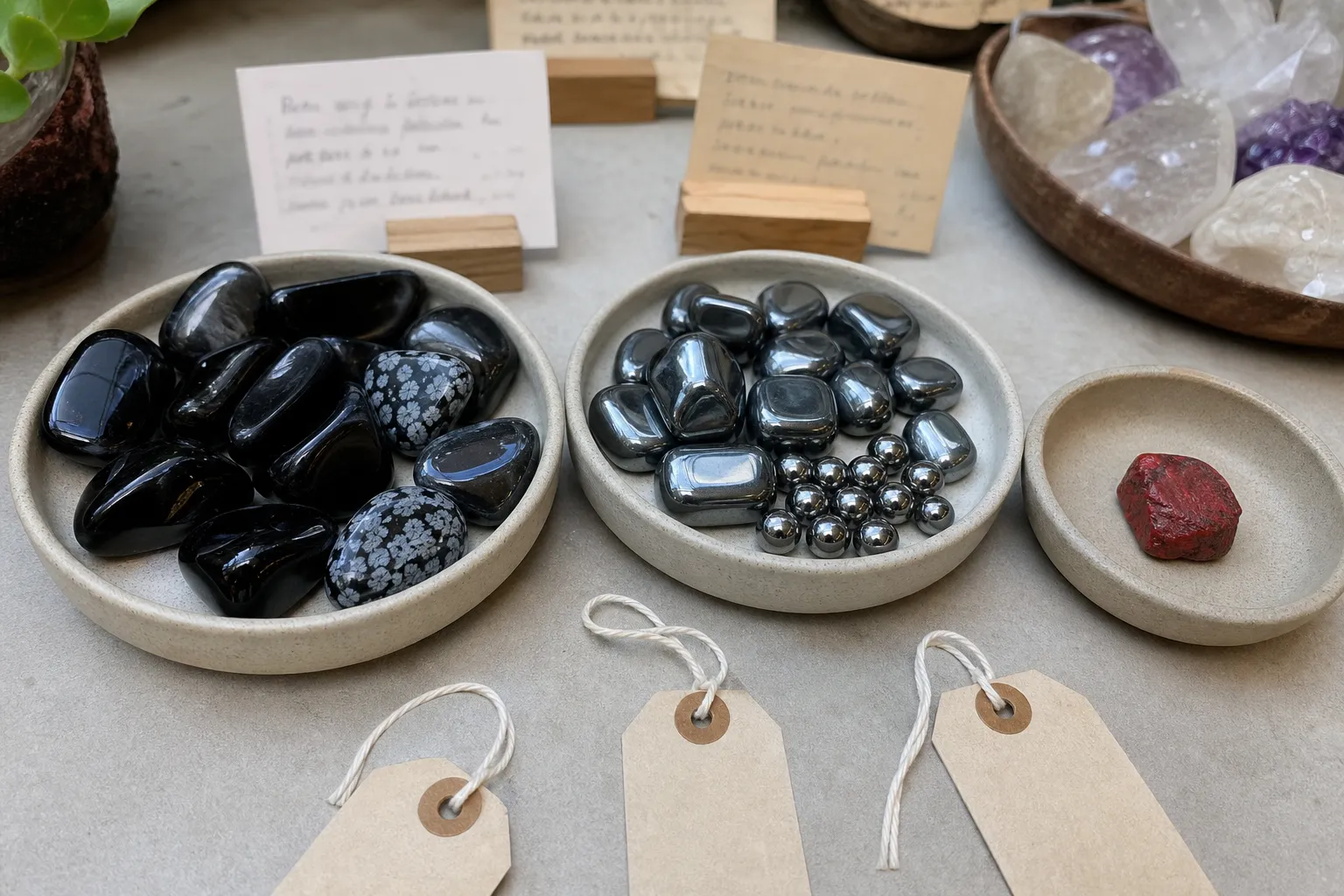
Tumbled obsidian, cinnabar, and hematite are usually sold with very different kinds of wording. Obsidian listings often focus on polish and variety names, such as black obsidian, mahogany obsidian, snowflake obsidian, or gold sheen obsidian. Hematite is commonly sold by metallic appearance, weighty feel, bead form, or labels such as polished hematite, magnetic hematite, and hematine. Cinnabar needs a slower read: it is a mercury-bearing material, so a “tumbled cinnabar” or “cinnabar pocket crystal” listing should raise handling questions, not just color questions.
For buyers, the useful rule is simple: seller wording can describe a look, finish, or intended use, but it cannot by itself confirm identity, treatment status, origin, handling suitability, or any promised crystal-use effect.
upward
Start with the broader guide
Use the broader guide first if you need the full scope before this page.
What seller wording usually tells you
Most tumbled stone listings combine three things:
- Material name: obsidian, hematite, cinnabar, hematine, or a lookalike name.
- Finish or form: tumbled, polished, bead, palm stone, pocket crystal, carving, or worry stone.
- Selling context: variety label, meaning language, jewelry use, rarity wording, or display use.
Those words are useful, but they do different jobs. “Tumbled” and “polished” describe how a piece has been finished. “Pocket crystal” describes a suggested use. None of those terms proves what the material is.
For obsidian, variety names often make sense visually because obsidian is natural volcanic glass. It can polish to a smooth, glossy surface, and its color or sheen may be affected by inclusions, bubbles, flow layers, microscopic crystals, or devitrification features.
For hematite, listings often lean on shine and weight. Hematite is an iron oxide mineral, and polished pieces may look steel-grey, black, mirrorlike, or metallic. Many feel heavy for their size. These are helpful clues, but still only clues.
For cinnabar, listing language such as “red,” “rare,” “specimen,” “tumbled,” or “pocket stone” is not enough. Cinnabar is mercury sulfide. A seller’s broad reassurance should not replace clear information about the material, surface condition, and intended handling.
Buyer shortcut: read the listing in two passes. First, note what the words visibly describe: color, polish, sheen, pattern, bead form, or size. Then separate what they do not prove: identity, origin, treatment, durability, handling suitability, or personal outcome.
Obsidian variety names: useful, but not proof
Obsidian is often the easiest of the three to understand visually. A black obsidian tumbled stone may look like smooth dark glass because obsidian itself is volcanic glass. That is a meaningful material clue, but it is not a complete identification from a photo. Other glossy black materials can look convincing in small online images.
Common tumbled obsidian varieties are best read as descriptive labels:
Seller wording
What it may describe
What it cannot prove
Black obsidian
Smooth, dark volcanic-glass appearance
Genuine identity from a photo alone
Mahogany obsidian
Brown-red or reddish patches
Origin, treatment status, or meaning
Snowflake obsidian
Pale patterning often linked with devitrification features
That every patterned stone is natural obsidian
Gold sheen or silver sheen obsidian
Reflective sheen visible from certain angles
Source, quality grade, or special effect
Rainbow obsidian
Color play under angled light
That the stone will look the same in every lighting condition
The word “glass” can also confuse buyers. In geology, obsidian being glassy does not mean every shiny glass-like tumbled stone is obsidian. It means the natural material lacks the visible crystal structure many buyers expect from minerals.
Broken edges matter with obsidian. It has conchoidal fracture, and chipped pieces can have very sharp edges even when most of the stone is polished. If a polished obsidian piece arrives cracked, has a fresh break, or will be carried with keys or coins, check the edges carefully before using it as a pocket crystal.
Meaning labels should be read separately from material labels. Phrases around black obsidian, mahogany obsidian meaning, or protection symbolism may reflect personal or cultural crystal-use language. They should not be treated as evidence that the stone will produce a specific result.
Hematite labels: shine, weight, streak, and magnetism
Hematite listings often look more straightforward because polished hematite has a recognizable metallic style. Many tumbled hematite stones are sold as dark grey to black, glossy, dense-feeling pieces or beads.
Useful buyer cues include:
- Metallic or sub-metallic shine: polished hematite can look mirrorlike, gunmetal grey, or dark silver.
- Weight impression: true hematite often feels heavier than many common stones of similar size.
- Reddish-brown streak: hematite is classically associated with a reddish-brown streak, though streak testing can mark finished pieces and may not be suitable for jewelry.
- Brittleness: hematite can chip or fracture. A polished surface does not make it indestructible.
These signs can help you ask better questions, but no single cue is enough. Mineral identification usually relies on several properties together, such as color, luster, streak, hardness, fracture, and density. Tumbling and polishing can hide natural surfaces, so a finished bead or palm stone is harder to judge than a rough specimen.
The main marketplace confusion is magnetic hematite. Jewelry sold under that name, especially strongly magnetic bracelets or beads, may be artificial hematite-like material rather than natural hematite. “Hematine” is also commonly used for manufactured hematite-like material.
That does not mean a buyer cannot choose hematine for its look. It does mean it should not be confused with a naturally occurring hematite specimen. If a listing uses both “natural hematite” and “strong magnetic” wording, ask what material is actually being sold.
“Tumbled hematite meaning” is also a different kind of wording from “tumbled hematite crystal.” Meaning language belongs to personal-use or marketplace context. It does not verify the mineral.
Cinnabar listings need separate caution
Cinnabar should not be treated like an ordinary polished pocket stone. It is mercury-bearing mercury sulfide, and a retail listing usually does not show enough about composition, surface condition, prior handling, or intended use.
For a buyer, the first question is not just “Does it look red?” Better questions include:
- Is it sold as natural cinnabar, cinnabar in matrix, a cinnabar-colored stone, or another red material?
- Is the surface intact, sealed, powdery, scratched, chipped, or dusty?
- Is it intended for display, jewelry, carrying, or frequent handling?
- Does the seller explain the material, or only give broad reassurance?
- Does the listing distinguish cinnabar from imitation, dyed material, or cinnabar-colored products?
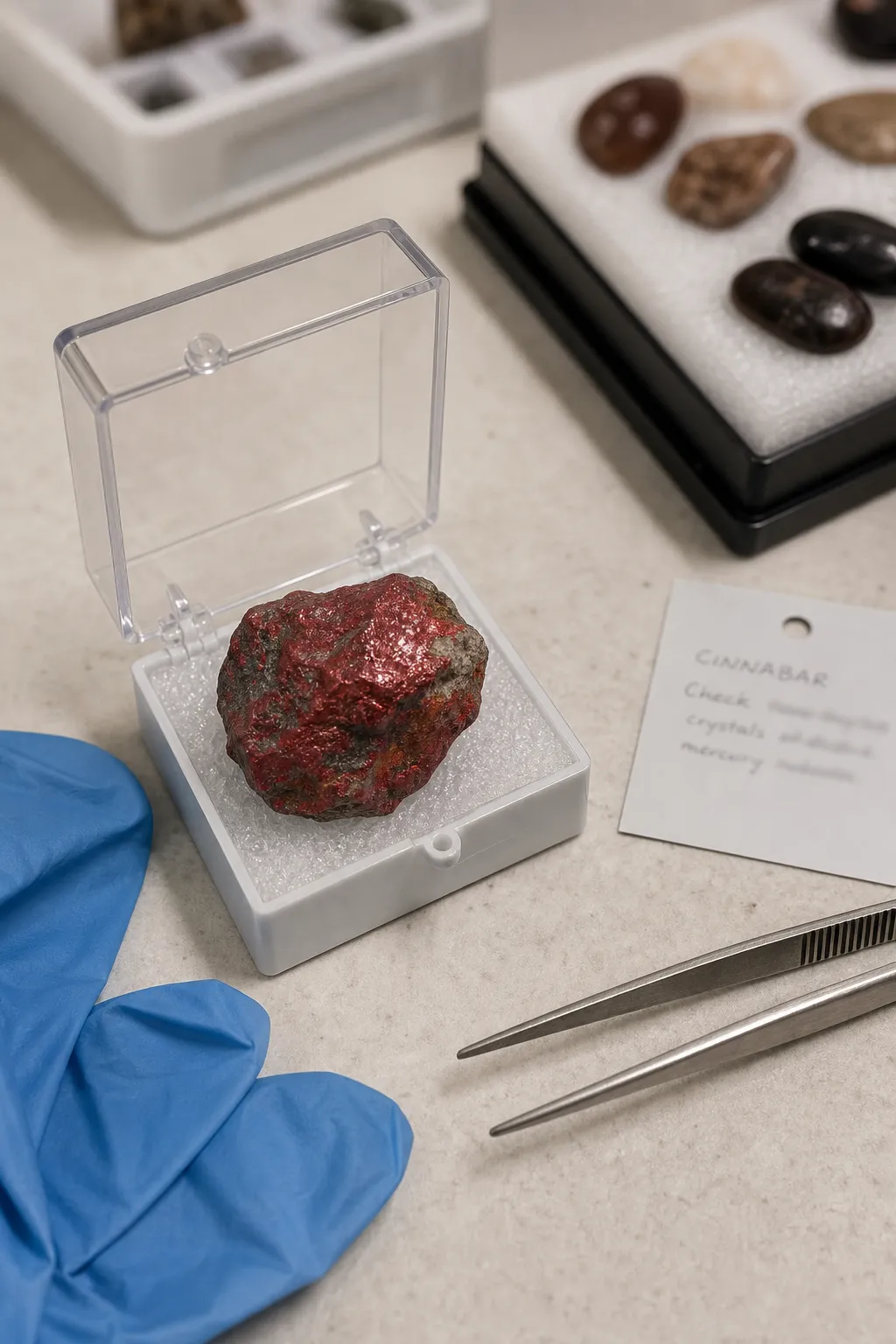
Use a conservative approach before purchase. Avoid cinnabar listings that encourage grinding, soaking, scraping, licking, mouth contact, or use of damaged material in a way that could create dust. Be especially cautious with jewelry, children, pets, broken pieces, powdery surfaces, and anything meant to rub against skin or other stones.
If a cinnabar piece is already in a collection, store it separately from pieces that may abrade it, avoid soaking or rough cleaning, keep it away from children and pets, and wash hands after handling when appropriate.
This does not mean every cinnabar object has the same exposure profile. It means polished retail wording is not enough to answer handling questions. A listing that says “polished cinnabar,” “tumbled cinnabar,” or “pocket cinnabar” should be treated as incomplete until the material and use context are clearer.
Quick comparison for tumbled obsidian, cinnabar, and hematite
When comparing tumbled obsidian cinnabar hematite listings, use the seller words as clues rather than conclusions.
Material in listing
Common selling emphasis
Useful buyer cue
Main over-reading problem
Tumbled obsidian
Variety name, glassy polish, black or patterned appearance
Glossy volcanic-glass look; sheen or pattern may match the label
Assuming a variety name proves identity, origin, or effect
Tumbled hematite
Metallic finish, heavy feel, beads, bracelets
Weighty feel, metallic luster, possible reddish-brown streak clue
Treating shine or magnetism as proof of natural hematite
Tumbled cinnabar
Red color, rarity, specimen or pocket-stone wording
Clear material description, intact surface, cautious handling context
Accepting broad reassurance for a mercury-bearing material
“Tumbled” means the piece has been shaped and polished through abrasion. It may feel smoother in the hand, but the process can also remove natural surfaces that might have helped identification. “Polished” means finished appearance, not verified mineral identity. “Pocket crystal” means a suggested use, not a durability or handling assessment.
For obsidian and hematite, visible features and seller answers can tell you a fair amount. For cinnabar, rely less on casual appearance and more on careful handling decisions.
What to ask before buying
A short seller message can clear up many listing problems:
- For obsidian: “Is this sold as natural obsidian, and is the variety label based on color, sheen, or pattern?”
- For snowflake obsidian: “Are the pale patterns natural-looking devitrification features, or is any dyeing or treatment disclosed?”
- For gold sheen obsidian: “Do the photos show the sheen under angled light, and is the exact stone pictured?”
- For hematite: “Is this natural hematite, hematine, or another hematite-like material?”
- For magnetic hematite jewelry: “Is the magnetic property part of the listed material, or is this a manufactured magnetic bead?”
- For cinnabar: “Is this natural cinnabar/HgS, cinnabar in matrix, or a cinnabar-colored product, and is the surface intact and free of powder or damage?”
A vague answer does not automatically prove a problem. It does mean the listing should be treated as uncertain. For higher-value purchases or safety-sensitive materials, specialized testing may be needed for certainty.
The practical takeaway
Tumbled stones are sold in a retail language that mixes material names, finish words, visual variety labels, and personal-use terms. Obsidian listings are usually about glassy polish and visible variety. Hematite listings often emphasize metallic shine, weight, and sometimes confusing magnetic labels. Cinnabar listings need a more cautious read because cinnabar is mercury-bearing and appearance alone does not answer handling questions.
You do not need to become a mineral analyst to shop more carefully. The useful habit is to separate what the listing visibly describes from what it cannot prove. Polish, sheen, “gem-quality,” “pocket crystal,” “grounding,” and similar wording may explain why a stone appeals to buyers, but they should not be treated as confirmation of authenticity, origin, durability, handling suitability, or protective effect.
Sources
Sources and further reading
Reference links are limited to sources considered suitable for public citation in this page.