
ProtectCrystal handling note
Is It Safe to Use Obsidian Chips in Crystal Bowls or Grids
Small obsidian chips can work in a crystal bowl or grid when the pieces are rounded, clean, stable, and placed where they will not be grabbed, poured out, stepped on, or reached by children or pets. The concern is physical obsidian chips safety, not the stone’s meaning. Obsidian is commonly described as natural volcanic glass, and freshly broken glass-like edges can be sharp.
The answer changes if the chips are raw, freshly broken, needle-like, dusty, or jagged. Those pieces are better separated, contained in a closed display, or kept out of open bowls and touch-heavy grids.
upward
Read the full overview first
Use the broader guide first if you need the full scope before this page.
Rounded Chips Are Different From Broken Fragments
The useful distinction is not simply “obsidian or no obsidian.” It is rounded obsidian chips versus raw obsidian fragments.
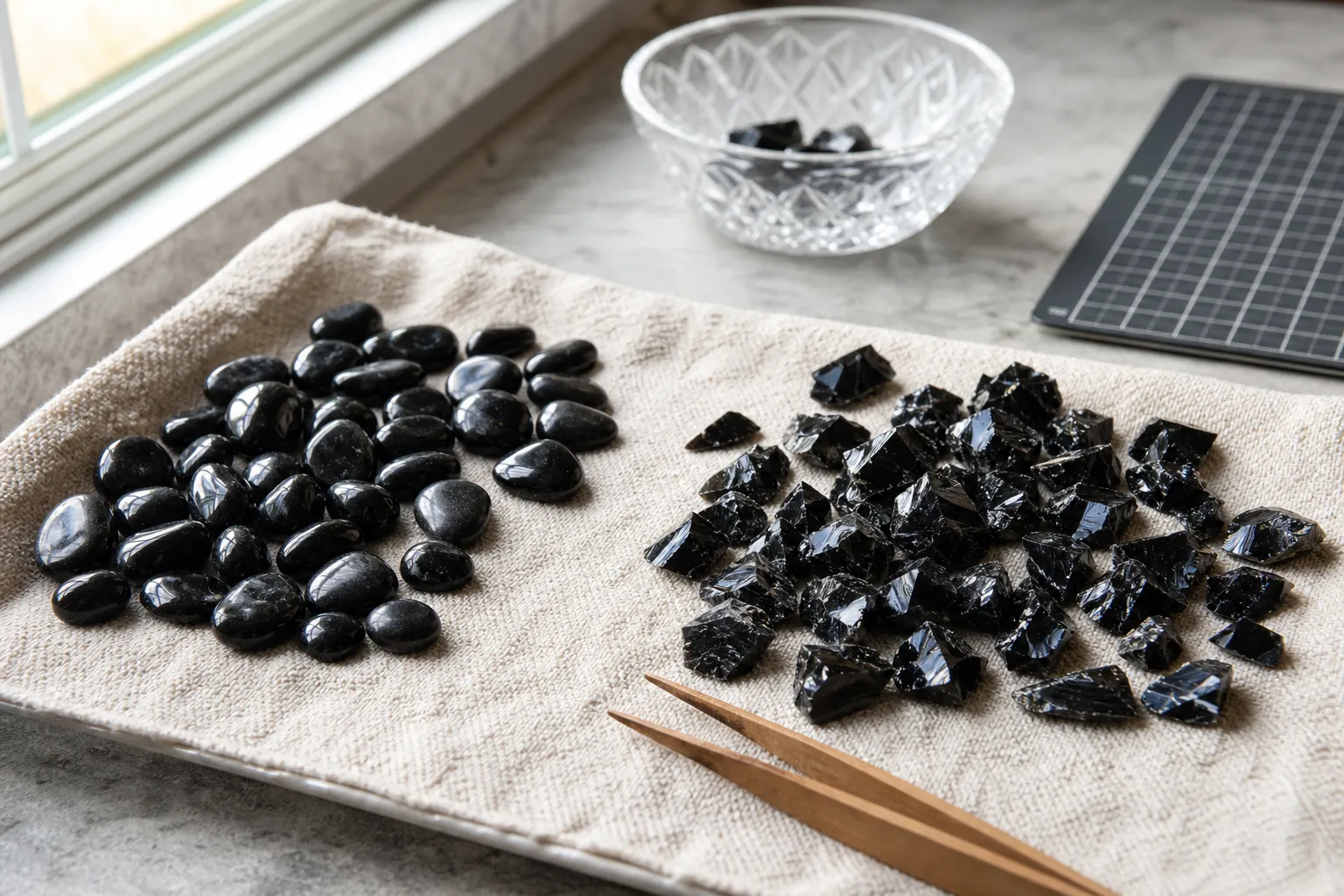
Rounded or tumbled chips usually have softened edges and are commonly sold for decorative bowls, small trays, grids, and craft settings. They still deserve a quick look, especially when they arrive in a bulk bag, but they are different from freshly chipped obsidian or rough shards with glassy points.
Raw, broken obsidian pieces need more caution. Because obsidian is volcanic glass, a fractured edge may behave more like a sharp glass edge than a smooth pebble. A tiny chip can still catch skin, fabric, an altar cloth, or the inside of a bowl.
Before using obsidian crystal chips in a bowl or grid, pour them onto a towel rather than directly into your palm. Look for:
- Needle-like points or thin splinters
- Shiny, newly broken edges
- Loose grit, powdery debris, or flakes
- Chips that scratch against glass or ceramic
- Pieces that rock, roll, or shed fragments when moved
- Unusually sharp corners mixed into smoother chips
If most pieces are smooth but a few are jagged, you do not have to discard the whole lot. Separate the sharp fragments and keep only the rounded pieces for open display. The sharper pieces can go into a lidded jar, a covered case, or a storage pouch that is not handled casually.
Small does not always mean gentle. Check obsidian piece by piece.
Bowls: The Main Issue Is Casual Handling
Obsidian chips in bowls create more contact than many people expect. A bowl gets stirred, topped up, dusted, moved, poured out, or rearranged. Visitors may touch the pieces without asking. A child may see black stones as something to scoop. A pet may paw at loose chips if the bowl sits low.
For an open bowl, choose smooth, rounded obsidian chips and keep the arrangement shallow enough that you can see what is in it. Deep bowls make it easier for sharp fragments to hide under smoother stones. If you need to sort a mixed bag, use a spoon, small scoop, or gloves instead of rummaging bare-handed.
Glass and ceramic bowls add a second concern. Dragging hard, angular fragments across a polished surface may scratch the bowl or loosen more tiny flakes. That does not mean every chip will damage every bowl, but it is a practical reason not to pour rough obsidian chips in and out like gravel.
A bowl is a better fit when:
- The chips are rounded or tumbled.
- The bowl sits above child and pet reach.
- No one needs to dig through the pieces.
- The chips are dry, clean, and easy to inspect.
- Broken fragments have already been removed.
A bowl is a poor fit when:
The pieces are sharp, dusty, unstable, mixed with candle wax, placed on the floor, or used where bare hands will repeatedly search through them. If the display invites touch, use smoother stones.
Grids: Lower Contact Helps, But Placement Still Matters
Obsidian chips in grids may be handled less than bowl chips because the pieces often stay in position. That can reduce rummaging, but it does not remove the need for inspection. A sharp chip at the edge of a table, cloth, shelf, or floor mat can still catch a finger, sleeve, paw, or bare foot.
For grids, place small obsidian pieces where they are stable and visible. Avoid balancing jagged fragments on sloped dishes, fabric folds, candle plates, or narrow ledges. If the grid is under a glass cover, cloche, cabinet, or frame, containment can help reduce casual touch, but the pieces still need to be stable before the cover goes on.
Be careful with grids that combine chips with candles, water bowls, oil, incense ash, plant soil, or other materials that later need cleanup. The issue is not the symbolic use. It is what happens when someone has to pick up, wash, pour, scrape, or wipe around sharp fragments.
If you use crystal grids as a personal or cultural practice, keep that meaning separate from the material check. Placement in a grid does not make a jagged edge less sharp.
What Seller Wording Can and Cannot Tell You
Marketplace listings often use phrases such as “rough obsidian,” “raw tumbling crystal,” “bulk crystal,” “natural grade,” “0.5 to 1 inch pieces,” or “arts and crafts.” These words can help you predict what may arrive, but they do not verify smoothness, origin, edge condition, or suitability for an open bowl.
Seller wording
“Rough” and “raw” often suggest pieces that should be inspected before decorative use. “Tumbling rough” may be intended for later shaping or polishing, not immediate handling in a bowl. “Bulk” tells you about quantity more than finish. “Natural grade” is seller language, not a home safety check.
Photo limits
Photos help, but they have limits. A listing image may show glossy black surfaces while hiding small broken corners. A bag may contain a mix of rounded obsidian chips, rough chips, and broken pieces. If the seller does not clearly show the edge texture, assume you will need to sort the chips when they arrive.
Visible signs that favor display use include softly rounded edges, consistent size, minimal dust, and pieces that look more pebble-like than shard-like. Warning signs include thin flakes, long points, bright fresh fractures, and chips that look like broken bottle glass.
Appearance can guide a buyer. It cannot prove everything.
When to Contain, Remove, or Avoid the Chips
Containment is the simplest answer when you like the look of a piece but do not want it loose. A lidded glass jar, small specimen box, display case, or covered dish can keep decorative obsidian chips visible while reducing casual contact. For particularly sharp pieces, avoid containers that will be shaken, poured, or opened often.
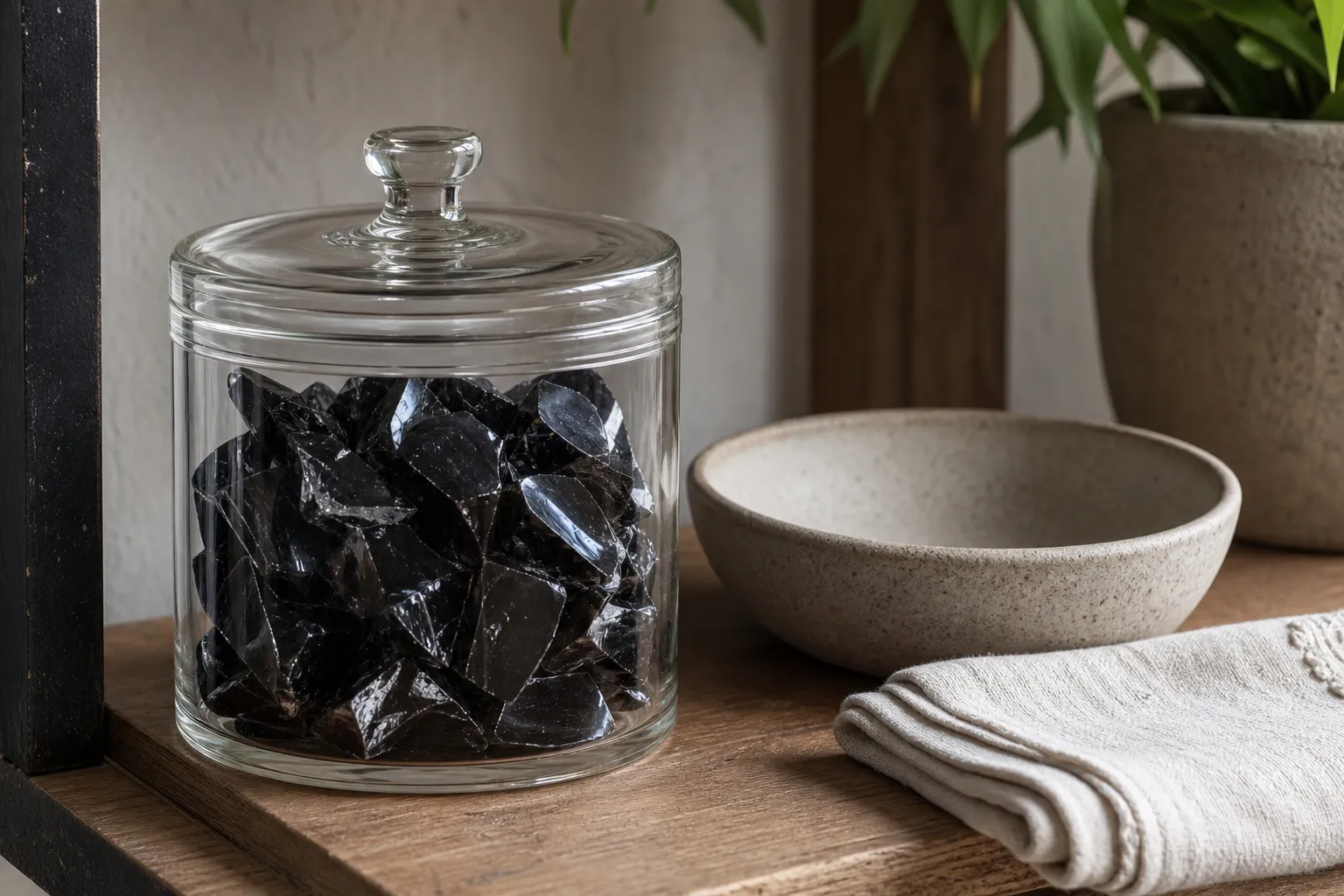
Remove sharp fragments from open displays if the bowl or grid is near:
- Children, pets, or visiting guests
- Beds, carpets, or places where chips may fall unnoticed
- Candles, water, wax, or cleanup-heavy arrangements
- Food areas, mouth-level shelves, or drinkware
- High-traffic surfaces that are bumped or dusted often
Do not use loose sharp chips where someone might step on them. Do not place jagged fragments in a bowl that people are likely to reach into. If the chips shed grit or powder, clean the display area and store the questionable pieces separately.
If a piece has personal meaning, you can keep it without leaving it exposed. Containment is a handling choice, not a rejection of the stone.
Common Confusion About Obsidian Chips Safety
“Volcanic glass” does not make every rounded chip alarming
That description is useful material background, but it should not make every polished obsidian bead or rounded chip sound alarming. The practical question is whether the individual piece has a sharp edge, unstable fracture, or loose debris.
Dramatic online comparisons are not the same setting
Freshly broken obsidian can be very sharp, and that is enough to justify caution. A household bowl of decorative chips is a different setting from toolmaking, cutting demonstrations, or technical glass work.
Crystal meaning does not establish physical safety
Obsidian is often discussed as a protective crystal in personal and cultural contexts, and people may place chips in grids, bowls, or covered displays for that reason. Those meanings do not establish physical safety. The edge check still comes first.
Chipping is not an authenticity answer
A chipped surface, painted-looking finish, or scratch mark may raise buyer questions, but visual inspection alone cannot verify the material with certainty. For certainty, specialized testing may be needed. For this page’s decision, the immediate concern is simpler: sharp, unstable, or dusty pieces should not sit loose in touch-heavy displays.
A Quick Inspection Routine Before Display
Use this short routine when a bag of small obsidian pieces arrives or when an older bowl starts shedding fragments.
- First, pour the chips onto a towel under good light. Do not press your palm into the pile. Turn the pieces with a scoop, spoon, or gloved fingers if they look rough.
- Second, separate the chips into three groups: smooth enough for an open bowl, questionable but keepable in a covered container, and too sharp or unstable for casual display. The middle group is common with bulk or raw bags.
- Third, wipe or rinse only if the seller’s care instructions and your display materials make that reasonable, then dry the pieces thoroughly before returning them to a bowl or grid. Avoid creating a water setup that later requires you to fish through sharp fragments by hand.
- Fourth, place the display where it will not be bumped, poured, or explored by children or pets. Recheck after moving the bowl, changing a grid, or noticing new grit at the bottom.
This is a practical inspection, not a laboratory judgment. It helps you decide how to handle the chips at home.
So, Should You Use Them?
Use rounded, stable obsidian chips in bowls or grids if they stay decorative, visible, and out of casual reach. Avoid loose raw obsidian fragments in open bowls, touch-based grids, candle arrangements, water setups, and any place where bare hands, paws, or feet may meet the pieces unexpectedly.
The safer-looking setup is usually simple: smooth chips, shallow display, no rummaging, no hidden shards, and no access for children or pets. If a piece looks sharp but you still want to keep it, contain it.
Obsidian can be meaningful to many crystal users, but this decision is material and ordinary. Check the edge, control access, and treat broken volcanic glass with respect.
Sources
Sources and further reading
Reference links are limited to sources considered suitable for public citation in this page.