ProtectCrystal handling note
Wearability check
Can Obsidian Be Too Sharp for Jewelry or Wire Wrapping
Yes. Obsidian can be too sharp for jewelry or wire wrapping when the piece has exposed points, chipped corners, thin flake-like edges, rough breaks, or wire ends that press, scratch, or catch on hair, fabric, or clothing.
That does not make every obsidian piece a poor jewelry choice. Many polished beads, cabochons, and tumbled stones are shaped for comfortable wear. The question is whether this specific piece of obsidian is too sharp for jewelry because of its edge shape, finish, setting, damage, or wrap.
Because there are no strong public reference links available for this page’s exact jewelry-use question, treat the checks below as cautious buyer and maker observations. They can help you spot a problem, but they do not prove complete wearability in every situation.
upward
Start with the broader guide
Use the broader guide first if you need the full scope before this page.
The Short Wearability Check
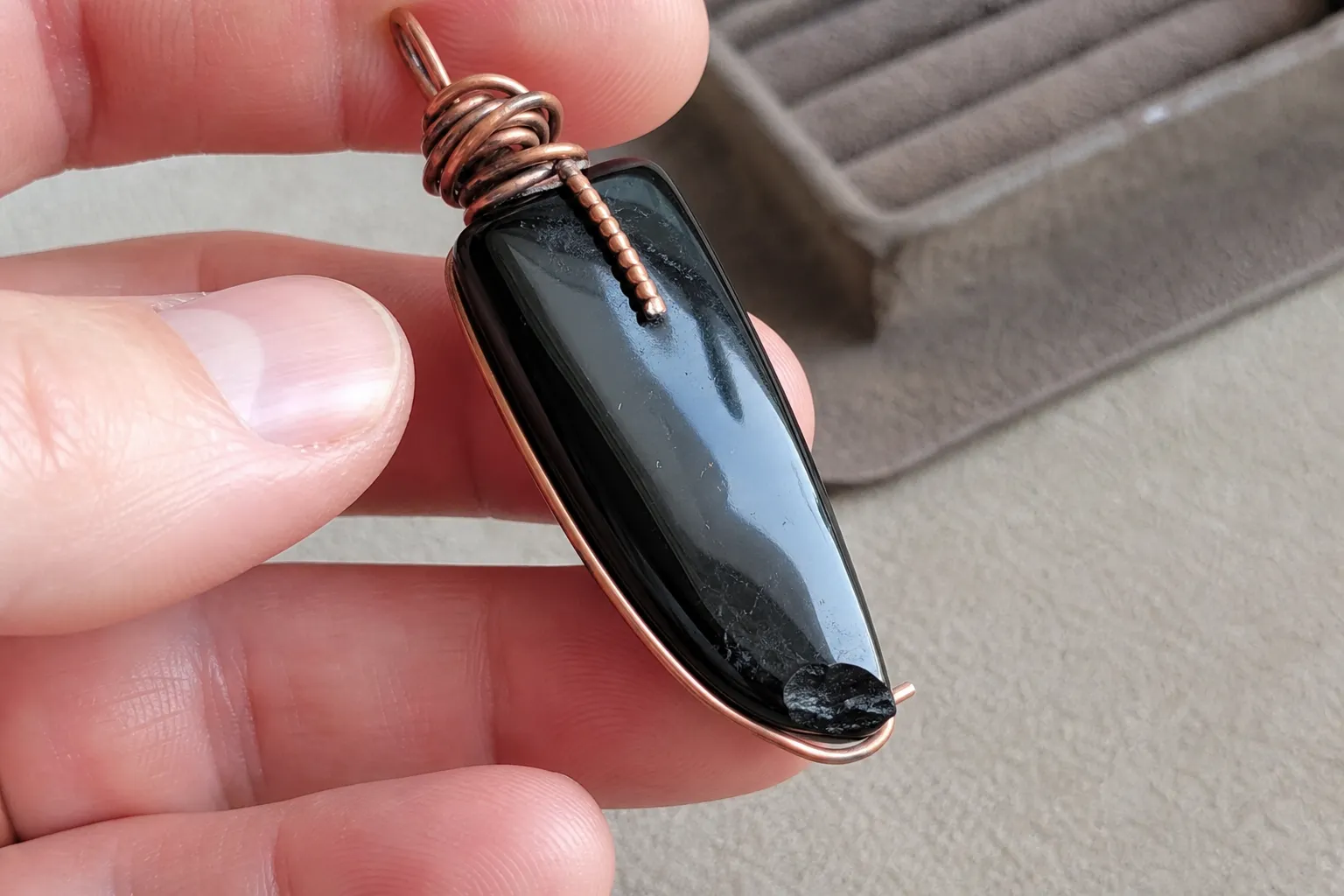
Start with the areas that actually touch the body. A dramatic point on the front of a pendant may matter less than a hidden sharp corner on the back. A wire swirl on the front may be decorative, while a tiny exposed wire end near the bail may be the part that catches hair or rubs the neck.
A piece is more likely to be unsuitable for regular skin-contact wear if you notice:
- Sharp-looking obsidian edges along the back, sides, or lower point
- Chipped obsidian jewelry with fresh-looking breaks or jagged corners
- Thin obsidian flakes that taper abruptly or look fragile at the rim
- Rough obsidian breaks left exposed instead of polished, capped, or covered
- Exposed wire ends near the neck, wrist, fingers, or clothing contact points
- A snag-prone obsidian pendant that catches on knit fabric, hair, scarves, or loose threads
- Points that rest directly against skin when the piece hangs naturally
Use sight first. Turn the piece under light and look for bright glints along narrow edges, uneven chips, lifted wire tips, and points angled toward the body. Then use a very light touch. Do not press a questionable edge into skin to test it.
A simple rule works well: if the contact areas are smooth, rounded, stable, and not snag-prone, the piece may be reasonable for occasional wear. If the contact areas are sharp, chipped, or unfinished, rework it before wearing it against skin.
What Makes Obsidian Jewelry Edges Feel Too Sharp
The comfort problem usually comes from shape and finish, not from obsidian as a category. A smooth obsidian cabochon in a bezel setting is a different wearing situation from a raw shard wrapped in wire and worn against the chest.
Polished pieces
Polished surfaces are usually easier to judge. Look for a continuous curve, a softened rim, and no obvious break line where the stone meets the setting. Still, a polished pendant can have a thin back edge or a pointed lower tip shaped more for appearance than comfort. Sharp obsidian pendant safety depends on the contact points, not only the front-facing photo.
Raw or rough pieces
Raw or rough pieces need more caution. Rough obsidian breaks can leave irregular ridges, small points, or fragile edges that look striking but may not suit moving skin contact. That does not mean rough obsidian can never be used in jewelry. It means the design needs more control: a cap over the point, a bezel around the rim, a wrapped frame that keeps the edge away from skin, or a plan to wear it over clothing.
Chipped pieces
Chips deserve separate attention. A chip can create a new edge after the jewelry was already made. If a pendant or ring used to feel comfortable but now catches fabric or feels pointed, treat that chip as a change in wearability.
Wire-wrapped pieces
Wire wrapping adds its own variables. The stone may be smooth, while the wrap creates the problem. Exposed wire ends, tight corners, raised spirals, or unfinished cut tips can snag or press into skin. When judging wire wrapped obsidian risk, inspect the stone edge, wire end, bail, back, and every crossing point where movement may rub.
A Practical Inspection Before Wearing or Buying
When you are checking a piece in a shop, from seller photos, or at a workbench, the goal is to spot obvious comfort issues before the piece becomes regular jewelry. This is not an authenticity test, and it cannot predict every wear condition.
- First, check the back. The back of a pendant or ring often matters more than the decorated front. Look for unpolished rims, lifted wire, and points that angle toward the body. If photos show only the front, ask for side and back views before buying a sharp-looking obsidian piece.
- Second, check the lower edge. Pendants move as you walk, sit, bend, or adjust clothing. A narrow bottom point that looks elegant in a flat product photo may press into the chest or catch fabric when worn. Capping sharp obsidian points can help when the design allows it, but the work should be done with suitable jewelry or lapidary skill.
- Third, check the bail and wrap. A pendant may be smooth at the stone but irritating at the top where the chain connects. Exposed wire ends near the bail are easy to miss because they look small. They can still matter if they sit near hair, collars, or skin.
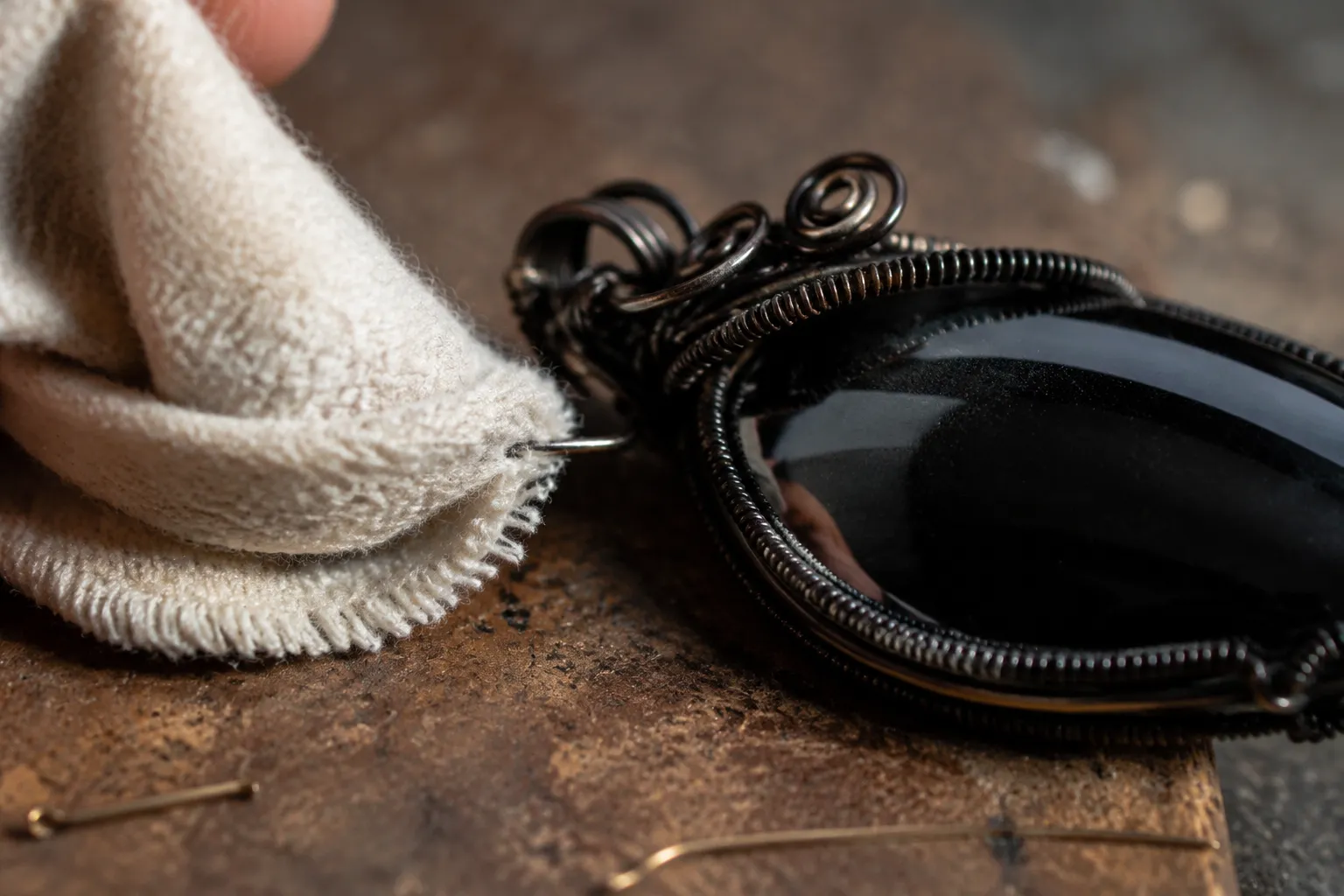
- Fourth, test lightly with fabric if you already own the piece. Pass a soft cloth near the edge without forcing it. If it catches immediately, that is useful information. Do not drag the stone hard across fabric or skin to prove a point.
- Fifth, think about how you will wear it. A sharp-edged display pendant over a thick sweater is different from a choker-length piece against bare skin. Obsidian skin contact wear calls for smoother surfaces and fewer exposed points than occasional decorative wear over clothing.
If the piece fails one of these checks, the next step is not panic. Decide whether it should be smoothed, capped, bezel-set, rewrapped, worn differently, or kept out of jewelry use.
When Wire Wrapping Helps and When It Makes Things Worse
Wire wrapping can make an obsidian piece more wearable when it keeps sharp edges away from the body. A good wrap can hold the stone securely, create a protective frame, cover a point, or shift the contact surface from a stone edge to smoother metal.
But wire can also make the piece less comfortable. Tight decorative wraps may leave raised ridges on the back. Cut wire tips may sit where they touch the neck or wrist. A loose wrap may let a thin edge rotate toward the body. A design that looks balanced on a table may hang differently once it is on a chain.
For a wire-wrapped piece, ask three questions:
- Does the wrap cover the sharpest area, or leave it exposed?
- Are the wire ends tucked away from skin, hair, and clothing?
- Does the pendant hang with a point facing inward?
The inward direction matters most. A point facing outward may be mostly decorative. A point facing inward may become the contact surface. If the pendant flips easily, inspect both sides as possible skin-contact sides.
If you are making the piece yourself, do not rely on wire tension alone to solve a sharp edge. Smoothing obsidian edges, choosing a more rounded stone, using a cap, or setting the stone in a bezel may be more sensible than forcing a fragile edge into a wrap. If the stone is already chipped or very thin at the edge, a different stone may be the better choice.
For valuable, sentimental, or difficult pieces, ask a qualified lapidary or jeweler whether the edge can be softened, capped, or reset. A home check can identify a concern, but skilled finishing may be needed.
Common Misunderstandings About Sharp Obsidian Pieces
“Polished” does not always mean comfortable
Polishing can improve feel, but a polished point can still be narrow enough to press into skin. The shape of the contact area matters more than shine alone.
“Raw” does not always mean unsuitable
Some rough-looking pieces are wrapped so the sharpest areas do not touch the body. Others are better kept as pocket stones, shelf pieces, or pendants worn over clothing. The label matters less than the actual edge, point, and wear position.
A visual check has limits
Inspecting obsidian jewelry edges can suggest whether a piece deserves caution, but it cannot confirm how every person will experience it. Movement, chain length, clothing texture, skin sensitivity, and future chips can all change the result.
Marketplace wording can blur the decision
Words such as “natural,” “raw,” “handmade,” or “protective” may describe style or personal meaning, but they do not answer the physical comfort question. Protective crystal language belongs in personal or cultural context. It should not replace edge inspection.
Material identity and comfort are separate questions. A stone can look like obsidian and still need better finishing. Visual cues alone cannot prove exact material identity, and they also cannot prove all-day wearability.
What To Do With a Piece That Seems Too Sharp
If you already own the piece, stop using it as skin-contact jewelry until you decide what to change. Put it aside rather than testing it repeatedly against skin. Then match the fix to the problem.
- For a small rough spot, smoothing may be enough.
- For a sharp point, capping may make more sense than leaving the point exposed.
- For a thin or chipped edge, a bezel or protective frame may be better than an open wrap.
- For exposed wire ends, rewrapping or trimming and tucking the wire may solve the issue if the stone itself is not the problem.
If you are buying, ask for clearer photos before purchase. Side views, back views, and close-ups of the bail and lower point are more useful than a dramatic front photo. If the seller cannot show the edge or wrap quality, treat that uncertainty as part of the decision.
If you are making jewelry, choose the use before choosing the stone. Earrings, bracelets, rings, and short pendants move differently. A ring or bracelet may receive more bumps and contact than a long pendant. A pointed shard that looks beautiful in a frame may still be a poor choice for a piece that moves against the wrist all day.
When in doubt, choose smoother polished obsidian for jewelry that will touch skin often. Save sharp, thin, chipped, or highly irregular pieces for designs that keep the edge covered or for non-wear uses.
Bottom Line
Obsidian can be too sharp for jewelry or wire wrapping when the actual contact areas include exposed points, chips, thin flakes, rough breaks, or wire ends that catch or press. The best home check is simple: inspect the back, sides, lower point, bail, and wrap; touch lightly; watch for snags; and consider how the piece hangs on the body.
This page does not turn those observations into formal safety rules. It gives a cautious way to sort a wearable piece from one that needs smoothing, capping, bezel setting, rewrapping, or rejection. For obsidian jewelry, the practical answer lives in the edge you can see, the contact point you can feel lightly, and the uncertainty you leave room for before wearing it.