ProtectCrystal handling note
Everyday wear decision
Is Hematite Jewelry Safe to Wear Every Day
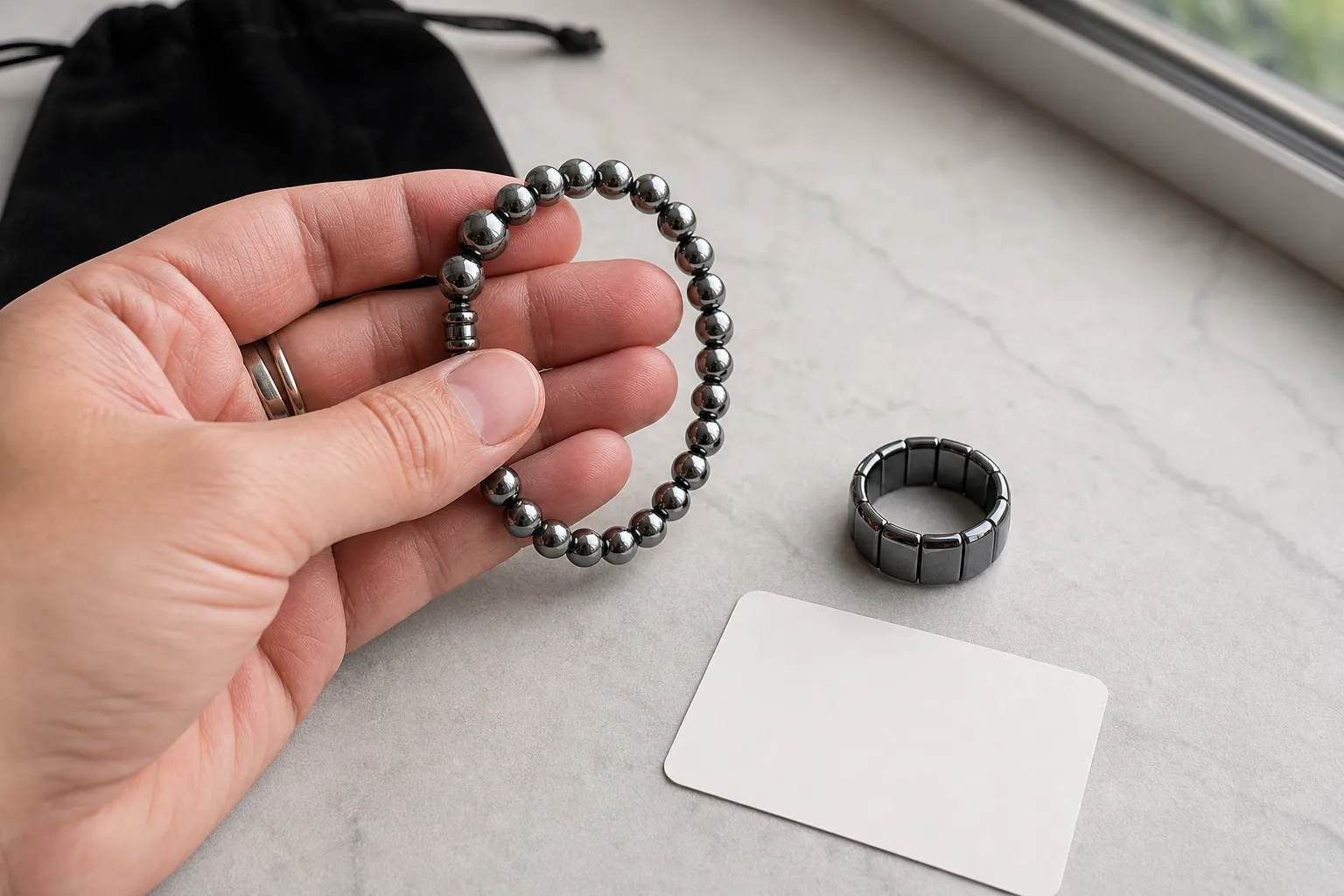
Hematite jewelry can be a reasonable everyday choice for some adults when the piece is smooth, intact, comfortable against the skin, and made with hardware you can identify well enough for your needs. The better answer is conditional. Hematite jewelry safety depends on finish, coatings, metal findings, skin contact, cleaning habits, and whether small or magnetic-looking parts could be reached by children or pets.
Treat hematite as jewelry first. Its protective-crystal meaning may matter to you personally or culturally, but it does not answer the material question. A smooth bracelet with stable elastic and clear seller wording is different from a ring with worn plating, sharp chips, or unknown metal parts touching the skin all day.
upward
Read the full overview first
Use the broader guide first if you need the full scope before this page.
The Short Answer for Everyday Wear
If your hematite necklace, bracelet, or ring is in good condition, does not irritate your skin, and uses secure, identifiable findings, wearing hematite jewelry every day is usually a practical fit-and-finish decision. It is not a special mineral-safety guarantee.
Daily wear deserves more caution when you notice:
- Rough bead edges that rub the skin
- Chips or cracks near bead holes or settings
- Peeling, flaking, patchy, or discolored coatings
- Unknown metal findings in long skin contact
- Tight rings or bracelets that trap moisture
- Loose beads, small parts, or magnetic-looking pieces within reach of children or pets
These signs do not prove what the jewelry is made from. They do lower confidence. Visible cues such as surface dulling, dark residue, exposed layers, loose clasps, or worn color can suggest finish wear or uncertainty, but they cannot confirm composition, coating type, or long-term skin compatibility.
Use a simple rule: if the piece changes your skin, snags, scratches, sheds, smells strongly from the hardware, or becomes uncomfortable, stop wearing it until you know more. Hematite deserves the same everyday caution as any jewelry with partly unknown materials.
What Changes the Answer
The issue is often not the word “hematite.” It is how the jewelry is built: the finish, setting, coating, stringing material, clasp, plating, glue, or seller description.
Skin Contact
Skin contact is the first real test. A pendant touches less skin than a snug bracelet. A hematite ring may press against the finger, trap moisture, and rub during handwashing or work, so hematite ring safety is often more about fit and hardware than the stone name.
Watch the skin under and around the piece. Redness, itching, tenderness, pressure marks, or rash-like irritation means that item is not working well for you in that form. The cause could be friction, trapped moisture, soap residue, a coating, a metal component, or something else that cannot be identified by sight. For persistent or serious symptoms, ask a qualified health professional rather than relying on a jewelry article.
Finish Wear and Coatings
Polished hematite is often valued for its dark metallic gray surface, but the visible surface does not confirm what is underneath. Some marketplace pieces may use coatings, plating, or surface treatments, and seller descriptions are not always detailed.
Finish wear matters because everyday jewelry meets sweat, lotion, fragrance, soap, fabric, desks, bags, and storage boxes. If the surface becomes patchy, flakes, transfers color, or shows a different layer underneath, reduce wear and ask for clearer product information. A worn finish does not automatically identify the material, but it does make daily skin contact less reassuring.
Unknown Findings
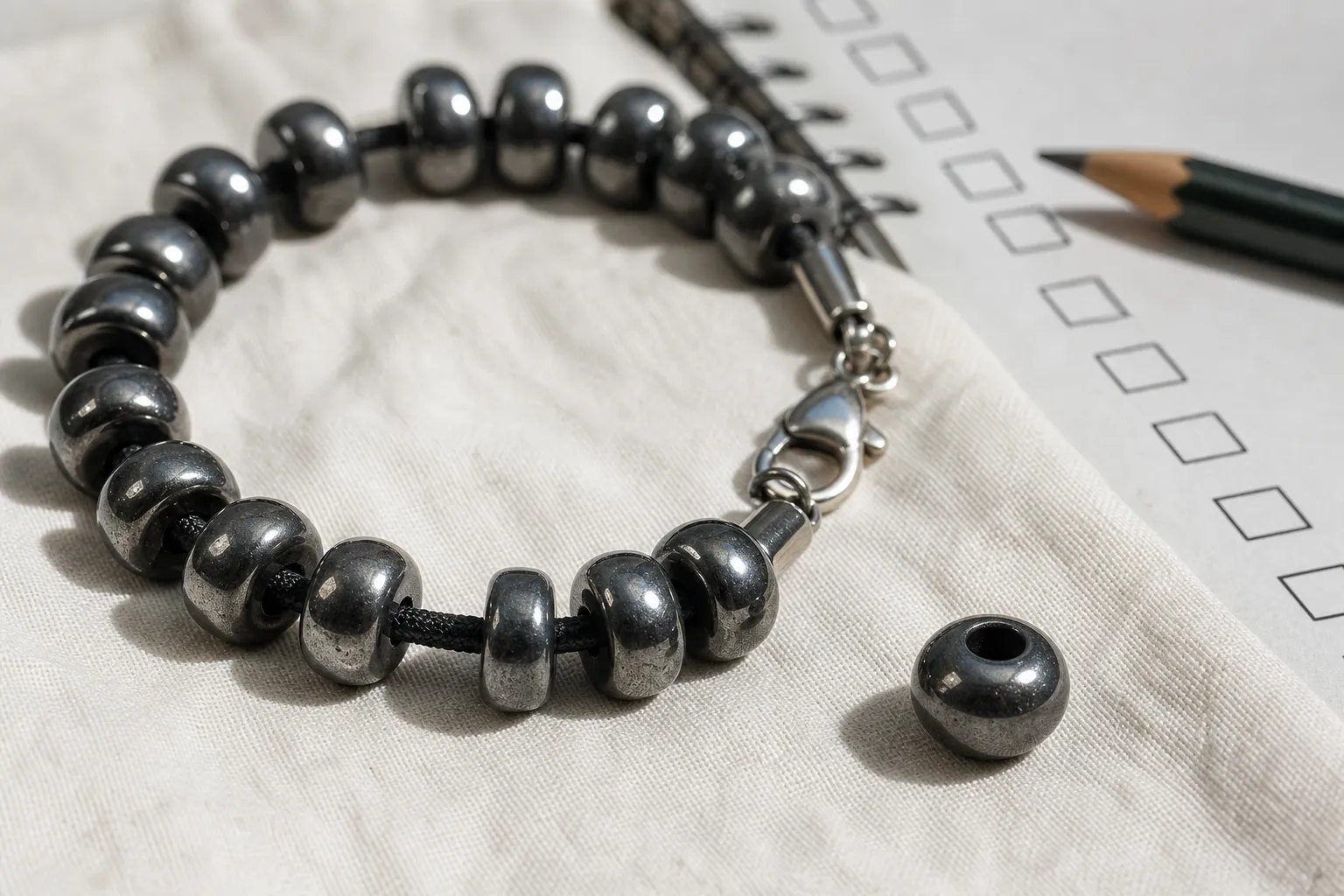
Many hematite pieces include non-hematite parts: clasps, jump rings, earring hooks, bead caps, spacers, elastic cord, glue, wire, or ring settings. These findings are often the overlooked part of hematite jewelry safety.
If a listing only says “hematite necklace” and does not name the clasp or skin-contact metals, the description is incomplete for sensitive skin or daily wear. You do not need a lab report for every casual piece, but clear wording about the materials that touch your skin is useful. If the answer stays vague, wear it briefly at first and check your skin and the hardware afterward.
Magnetic Hematite Beads
Some jewelry is sold as magnetic hematite or made with magnetic-looking beads. Without reliable product information, do not assume the material or magnetic strength from appearance alone.
The practical concern is access. Small loose beads, broken strands, or magnetic parts should be kept away from children and pets. For adults, the daily-wear question is whether the strand is secure, the beads are intact, and the seller wording is clear enough. If a magnetic-looking bracelet stretches, cracks, sheds parts, or breaks, store it out of reach and stop wearing that damaged piece.
A Quick Daily-Wear Check
A short inspection is more useful than trying to prove the stone’s identity by sight. Use this check when deciding whether hematite jewelry every day still makes sense.
This table is not an authenticity test. A piece can pass these visible checks and still contain unknown materials. A piece can also look attractive and still be a poor daily-wear choice for your skin, routine, or household.
Hematite necklace safety often turns on clasp comfort and pendant edges. Hematite ring safety depends more on pressure, moisture, and setting wear. Bracelets sit between the two: they move often, hit surfaces, and can stretch or loosen faster than pendants.
Common Misunderstandings
The first misunderstanding is treating “hematite” as if it answers every safety question. It does not. The word may describe the mineral, the bead appearance, the product category, or the seller’s marketing language, but it may not describe the full build of the jewelry.
The second is mixing protective-crystal meaning with material safety. Hematite is commonly discussed in crystal-use spaces as a grounding or protective stone. That language belongs to personal belief, tradition, or marketplace context. It should not be used as proof that the jewelry prevents harm or works the same way for every wearer.
The third is assuming that a heavy, shiny, metallic-looking bead confirms exactly what you have. Appearance can help with buyer checks, but it cannot confirm composition, treatment, coating, or hardware. For certainty, specialized testing may be needed. For ordinary buying, ask for clearer seller descriptions and inspect the piece for visible wear.
Use hematite jewelry as jewelry, not as a source of certainty.
Cleaning and Wear Habits
Keep cleaning conservative, especially when coatings, elastic, glue, or metal findings are unknown. Wipe the piece gently after wear, let it dry before storage, and avoid soaking it unless the seller gives reliable care instructions for that specific item.
Practical daily habits include:
- Putting jewelry on after lotion, fragrance, or hair products have dried
- Removing tight rings or bracelets before wet, messy, or abrasive tasks
- Storing pieces separately so hard edges and metal findings do not scrape each other
- Checking elastic strands, clasps, and settings before leaving the house
- Keeping small beads and broken jewelry away from children and pets
These habits do not prove material identity. They reduce avoidable wear and make changes easier to notice. A bracelet that was smooth last month but now shows dull spots, rough holes, or loose beads deserves a different decision.
If seller care instructions conflict with what you can observe, choose the gentler habit and limit daily wear until the piece proves comfortable.
When to Stop Wearing It Every Day
Pause daily wear when your skin or the jewelry gives a clear warning: irritation, pinching, swelling around a ring, sharp edges, broken elastic, loose magnetic-looking beads, peeling finish, or residue after normal use.
Also pause when the description is too vague for your situation. Known sensitivity to certain jewelry metals makes an unknown clasp or ring setting more important. A home with children or pets makes loose beads more important. A piece sold for constant wear but already showing finish failure deserves caution.
You can still value hematite as a protective crystal in a personal sense while keeping the physical object under ordinary jewelry rules. Meaning does not replace fit, finish, and handling checks.
Bottom Line
Hematite jewelry can be suitable for everyday wear when it is smooth, intact, comfortable, and clearly enough described for your needs. The answer changes when there is skin irritation, finish wear, unknown findings, loose parts, or magnetic beads that could be reached by children or pets.
The main check is not whether the piece feels meaningful or looks convincing. It is whether the jewelry behaves well in daily contact. Look at the surface, the hardware, your skin, and the seller wording, then treat anything uncertain as uncertain.