ProtectCrystal handling note
Practical surface check
Do Tumbled Obsidian Stones Still Have Sharp Spots
Yes. Tumbled obsidian stones can still have sharp spots, even when they are sold as polished or rounded. A good tumbled piece should not feel blade-like in ordinary handling, but small chips, thin edges, broken points, or rough pockets may still catch on skin, fabric, cord, or a jewelry setting.
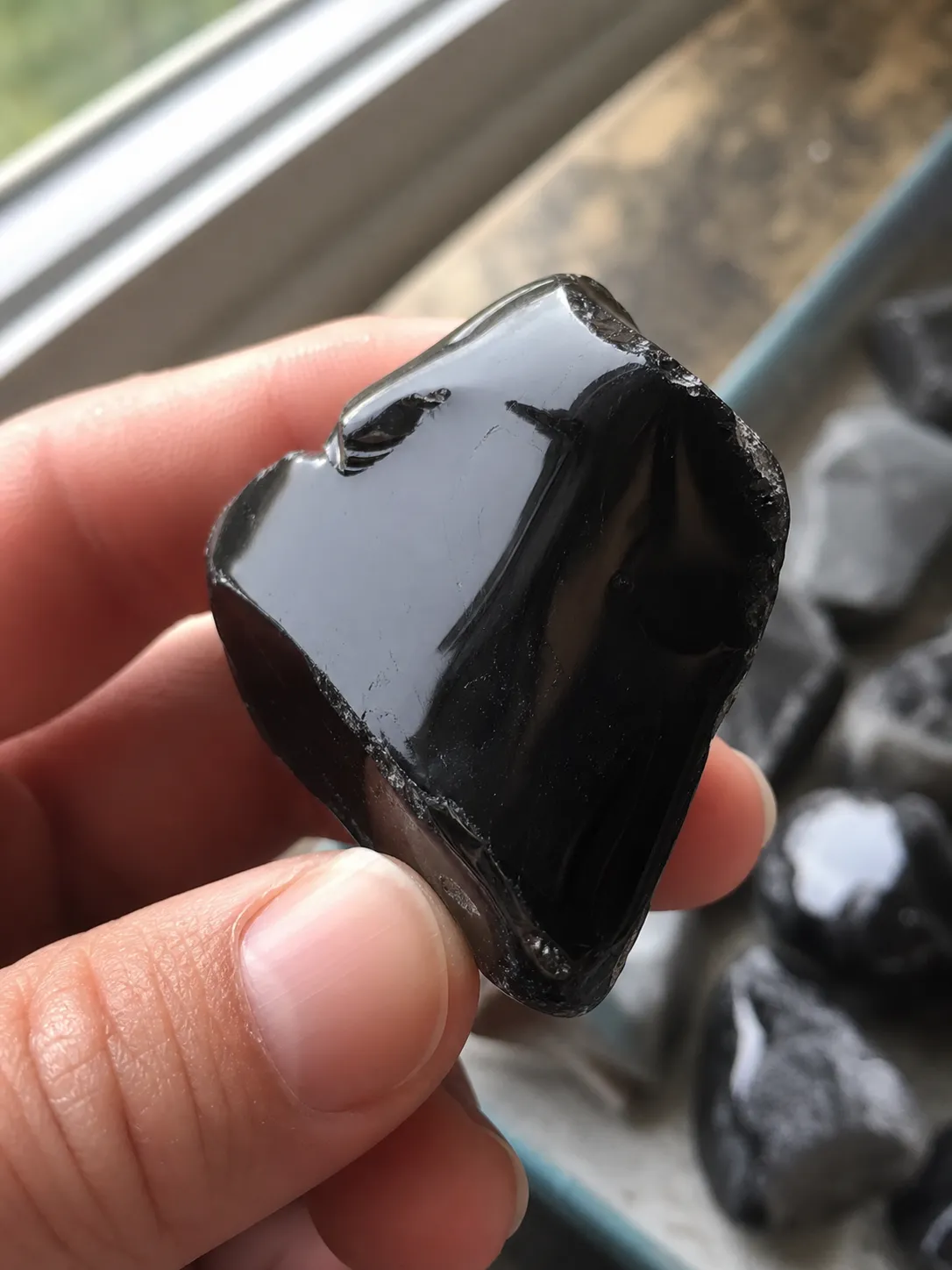
The most useful check is simple: look at the stone in bright light, rotate it slowly, then feel around the edges with a light touch. Do not squeeze a questionable spot into your palm. If one area scrapes, snags, or feels sharper than the surrounding polish, treat that piece as a careful-handling stone rather than a worry stone, pendant, or daily pocket carry.
upward
Read the full overview first
Use the broader guide first if you need the full scope before this page.
Why Polished Obsidian Can Still Feel Sharp
Tumbled obsidian is commonly sold as a smooth, glossy stone. Tumbling can round the surface and soften many edges, but it does not prove that every pit, rim, chip, or fracture line has been fully smoothed.
Obsidian is often described as a glassy volcanic material. For this handling question, the key point is practical: glassy-looking material can chip or break in ways that leave keen edges. A polished piece may look soft from a distance while one small crescent chip or thin corner still needs caution.
The sharp area may be subtle. It might be a bright nick along the edge, a tiny missing flake, a narrow point where two curves meet, or a rough patch that was not fully polished before sale. A quick glance can miss it. The actual surface matters more than the label.
What to Check Before Carrying or Wearing It
Start with light, not pressure. Hold the tumbled obsidian near a window or under a bright lamp and turn it slowly. Sharp spots on obsidian often show up as interruptions in the shine: dull chips, bright nicks, rough hollows, thin rims, or uneven polish.
Then use a cautious touch check. Run a fingertip lightly around the outer edge, ends, and any uneven area. If it catches your skin or feels noticeably sharper than the rest of the stone, stop there.
Outer edge
You may notice a thin rim, tiny notch, or uneven curve. Edges are common places for a polished stone to feel sharp.
Corners or ends
You may notice a broken point, missing flake, or angled chip. A small break can create a stronger contact point.
Surface pits
You may notice a rough hollow, dull patch, or unpolished pocket. Pitted areas can feel scratchy even when the rest is smooth.
Lines in the stone
You may notice a crack-like line or cloudy break path. This can suggest weakness, but does not prove future breakage.
Drill holes or bead openings
You may notice a chipped edge or rough opening. These areas can rub cord, skin, or metal settings.
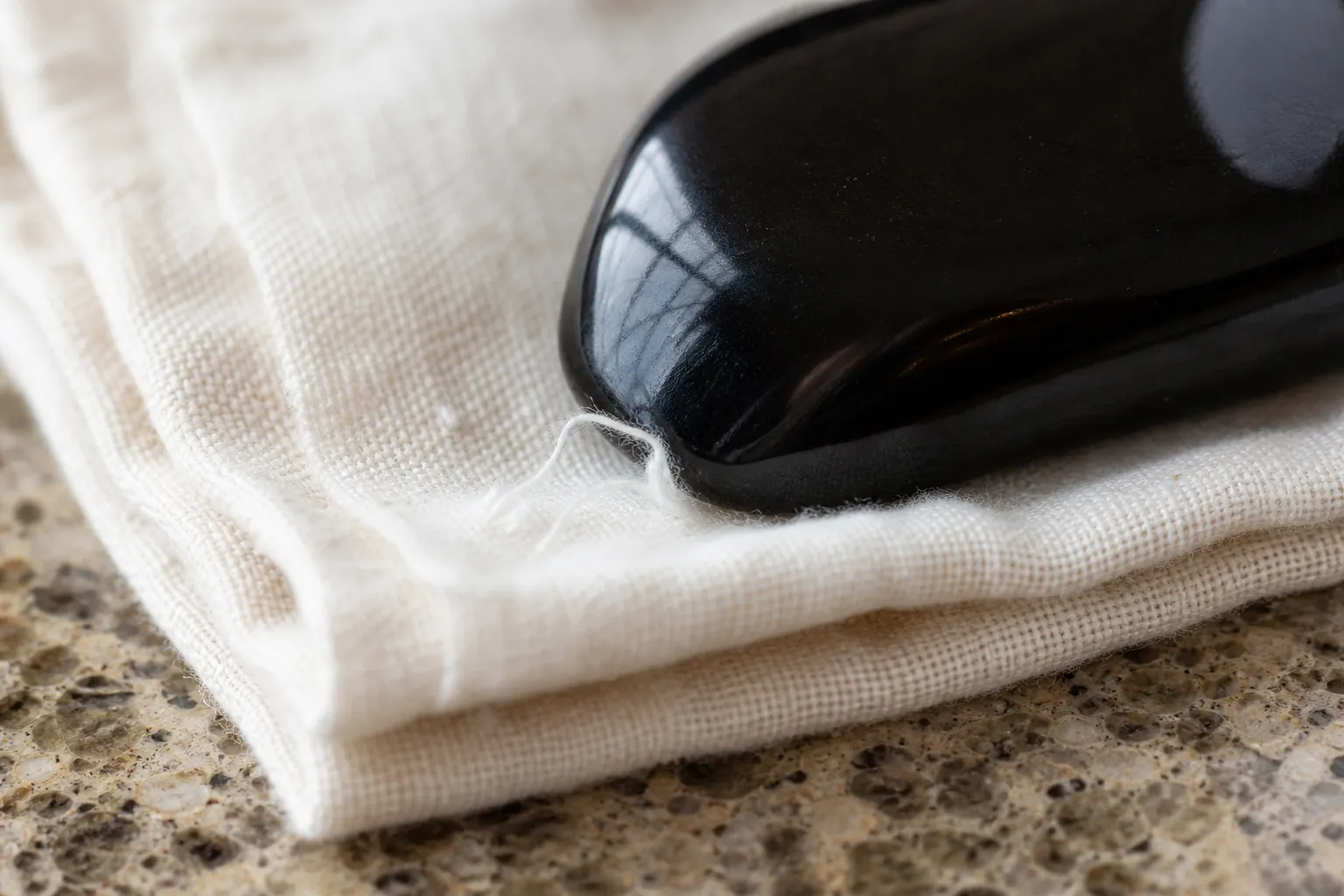
A soft cloth test can help with ordinary handling decisions. Brush the stone gently against cotton or another soft fabric. If it snags, it may also catch on a pouch lining, pocket seam, bracelet cord, or clothing. This does not identify the stone or grade its quality in a formal way; it only helps you decide whether the surface is comfortable enough for the use you have in mind.
When a Sharp Spot Matters More
Not every mark makes a tumbled stone unusable. A shallow pit on a display piece may be mostly cosmetic. A broken point on a pendant, bracelet bead, pocket stone, or worry stone matters more because it touches skin and fabric repeatedly.
A questionable edge also matters more when the stone is carried loose in a pocket or bag. Movement can press the point against fabric, phone screens, keys, coins, or other stones. If you already see obsidian chips and edges, store the piece separately instead of letting it knock around with harder or sharper objects.
Handling boundary
Use extra caution around small children. A chipped, pointed, or very small tumbled stone should not be treated as a toy. That is ordinary handling caution, not a special claim about obsidian.
Crystal-use language does not change the surface. Obsidian is often discussed among protective crystals, but personal or cultural meaning does not make a sharp point smoother, confirm what the material is, or change how it should be handled. Inspect the stone you actually have.
“Tumbled” Does Not Always Mean Perfectly Smooth
The word “tumbled” often suggests rounded and polished, and that is a reasonable buyer expectation. It should not be read as a promise that the stone has no chips, no thin edges, no fractures, and no later damage.
A piece may have left the tumbler with an uneven spot. It may also have been chipped during sorting, shipping, display, storage, or use. From a buyer’s point of view, the cause matters less than the current surface. The question is whether the stone in front of you has a point, chip, or edge that changes how you should use it.
Shine can also be misleading. A glossy black surface can look highly finished, while a glossy broken edge may still feel sharp. Tilt the stone until you can see the outline clearly, then check the thinner, brighter, or uneven parts.
Visible chips, fractures, bubbles, or polish variations do not prove authenticity. They can suggest that a piece deserves closer inspection, but they do not confirm that it is natural obsidian or rule out other materials. For certainty about material identity, specialized testing or a qualified evaluation may be needed.
What to Do If You Find a Sharp Spot
If you find a sharp spot, stop using that piece in ways that press it against skin or fabric. A light touch is enough to decide that the area needs caution.
For a new purchase, take clear photos before altering the stone. Show the chipped edge, broken point, or snagging area in good light. If it was sold as a smooth tumbled piece and the sharp spot affects handling, contact the seller with a plain description of the surface issue.
For a stone you already own, remove it from pocket carry, bracelets, small pouches, and mixed crystal bowls where it can scrape against other pieces. A cloth wrap or individual compartment can reduce contact. This is especially useful when polished obsidian is stored with hematite beads or other stones that can hide small edge damage until the next time you handle them.
Do not try to reshape a sharp obsidian point with household shortcuts if you are unsure what you are doing. Filing, sanding, or snapping off a point can create dust, fresh edges, or a rougher surface. If the piece has personal value, ask someone with suitable lapidary tools whether it can be smoothed. If it is an inexpensive pocket stone, replacing it may be the simpler choice.
Quick Buyer Checklist
Before carrying, wearing, or gifting tumbled obsidian, check:
- The full outer edge for chips, thin rims, and broken points.
- The surface under light for dull pits, bright nicks, or uneven polish.
- Suspicious areas with a light touch, without pressing into them.
- The stone against soft cloth to see whether it catches.
- Drill holes, bead edges, and pendant contact points.
- Whether the piece should be returned, repaired, displayed, or stored separately.
This check does not prove authenticity or perfect workmanship. It helps you match the stone to a sensible use. Smooth-feeling pieces are better for handling and wearing; questionable pieces are better kept out of close contact until the issue is addressed.
The Bottom Line
Tumbled obsidian is usually expected to feel smooth, but it can still have sharp spots from chips, thin edges, fracture lines, broken corners, or uneven polish. The label is only a starting point. The surface is what you can check.
If a polished obsidian piece catches on skin or fabric, do not use it for close handling until it is smoothed, replaced, returned, or kept only for display. A careful edge check answers this narrow question better than seller wording alone, while bigger questions about origin or material identity remain outside a quick home inspection.