ProtectCrystal handling note
Meaning comparison
What Does Black Obsidian Mean Compared With Hematite
Black obsidian is usually read as the more protective, intense, truth-facing symbol. Hematite is usually read as the more grounding, steady, stabilizing symbol. That is the practical answer to black obsidian meaning compared with hematite in common crystal-use language.
The limit matters: these are symbolic meanings, personal associations, and marketplace descriptions. The firmer comparison is material. Black obsidian is volcanic glass; hematite is an iron oxide mineral. That helps explain why they look and feel different, but it does not show that either stone creates a specific spiritual, emotional, or physical result.
upward
Start with the broader guide
Use the broader guide first if you need the full scope before this page.
Black obsidian vs hematite at a glance
Reader question
Black obsidian is often described as...
Hematite is often described as...
Main symbolic theme
Protection, truth, clearing, shadow-facing reflection
Grounding, steadiness, focus, stability
Usual tone
Intense, direct, serious
Calm, practical, weighty
Common search phrase
Black obsidian protection meaning
Hematite grounding meaning
Material identity
Volcanic glass
Iron oxide mineral
Common polished look
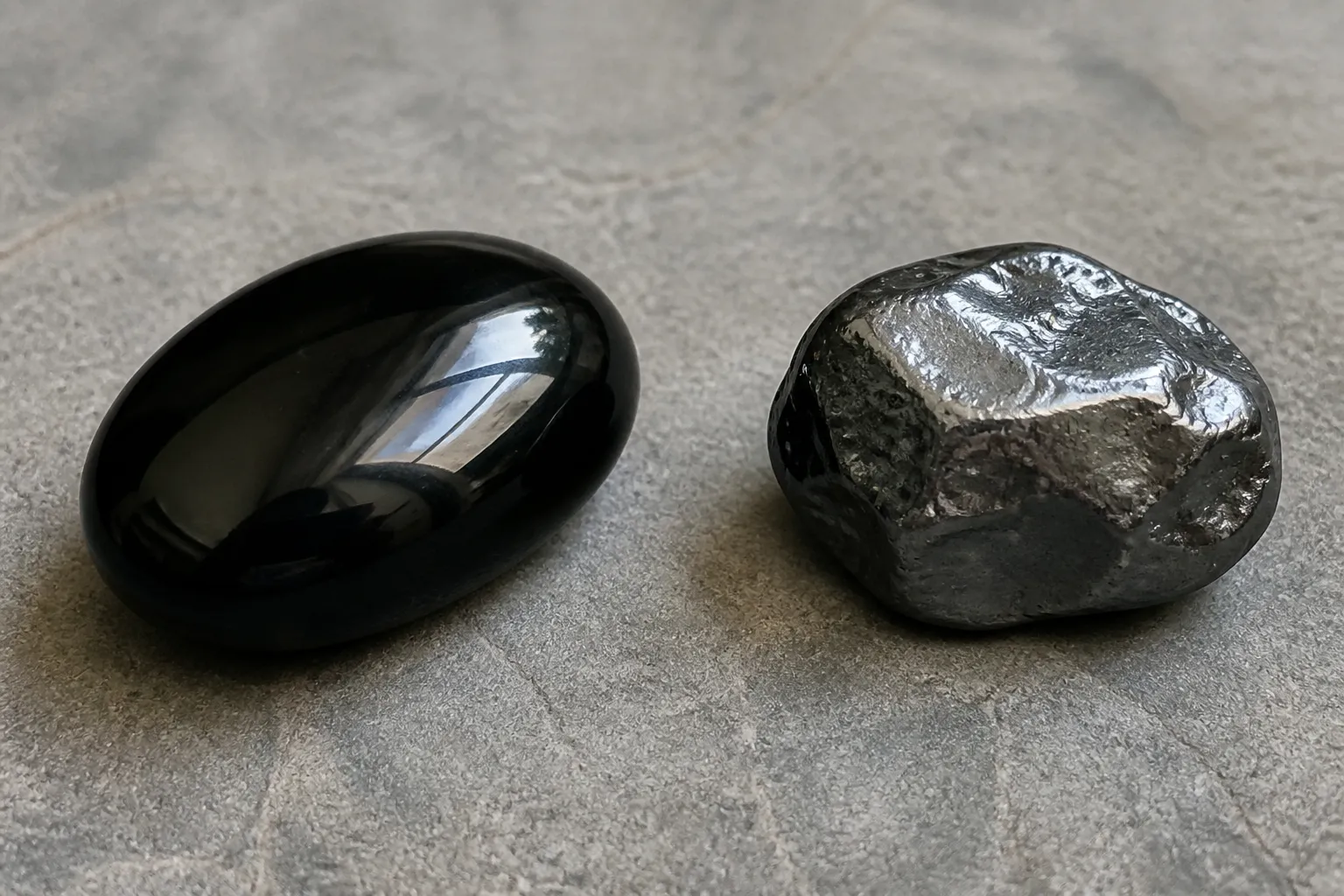
Deep black, glassy, sometimes mirror-like
Metallic gray-black or dark silver
Best way to use the meaning
As symbolism or intention language
As symbolism or intention language
Simple separation
- Black obsidian: “What needs to be faced, cleared, or kept at a distance?”
- Hematite: “What needs to be steadied, organized, or brought back to center?”
That comparison is useful for choosing a stone by meaning. It should not be treated as a measurable ranking.
Why the physical difference matters
Black obsidian is volcanic glass, formed when silica-rich lava cools quickly into a glassy material rather than a visibly crystalline rock. That glass identity helps explain the polished black obsidian look: smooth, dark, reflective, and sometimes mirror-like.
It also explains a practical caution. If obsidian is broken, chipped, or carved into a sharp point, handle the damaged edge like glass. Do not rub a fresh chip with your fingers, and store the piece where it will not scrape skin, fabric, or softer stones.
Hematite is an iron oxide mineral. In crystal shops, it is often sold as beads, palm stones, or polished pieces with a metallic gray-black appearance. Its visual density and dark metallic shine make it easy to understand why modern crystal language links hematite with weight, steadiness, and stability.
Those material facts do not verify the meanings. They simply give the symbolism a practical setting: obsidian’s dark glassiness fits language around reflection and sharp truth; hematite’s metallic weight fits language around focus and steadiness.
How to read black obsidian meaning carefully
The black obsidian protection meaning is usually about symbolic separation: setting limits, cutting through distraction, or keeping unwanted influence at a distance in a personal or ritual sense. It is also often connected with truth-facing language, including black obsidian shadow work and the idea of looking more directly at uncomfortable patterns.
A more careful way to phrase it is: some people use black obsidian as a reminder to be honest with themselves, notice what feels draining, or set clearer personal boundaries.
Choose black obsidian for the symbolism if you like:
- a darker and more direct protective crystal meaning;
- a stone associated with boundaries and truth-facing reflection;
- a polished black surface with a glassy look;
- a more intense style of symbolic language.
Do not identify a stone by meaning or color alone. A shiny black piece is not automatically black obsidian. Other dark minerals, dyed stones, manufactured glass, or lookalike materials may appear similar. Visual signs can suggest an identity, but for certainty, specialized testing may be needed.
How to read hematite meaning carefully
The hematite grounding meaning is usually about steadiness rather than intensity. In crystal-use language, hematite is commonly associated with focus, routine, composure, and returning attention to the present task.
A careful way to phrase it is: hematite can be used as an intention-setting object for stability, focus, or practical steadiness. That is different from saying the mineral produces those outcomes.
Choose hematite for the symbolism if you like:
- a calmer grounding symbol;
- a stone associated with stability and focus;
- a metallic gray-black look rather than a glassy black look;
- a piece that feels practical, weighty, and less dramatic.
One buyer note: many pieces sold as hematite are highly polished, coated, magnetic, or described with simplified seller wording. If exact material identity matters, appearance and product names are not enough.
What changes the answer?
The basic comparison—black obsidian for protection and truth symbolism, hematite for grounding and stability symbolism—holds across much modern crystal language. A few situations can still change how you interpret the choice.
If you are choosing by meaning
Pick the tone you want as a reminder.
Black obsidian fits better when you want direct, reflective, boundary-setting language. Hematite fits better when you want steady, focused, stabilizing language.
This is personal meaning, not an objective performance comparison.
If you are choosing jewelry
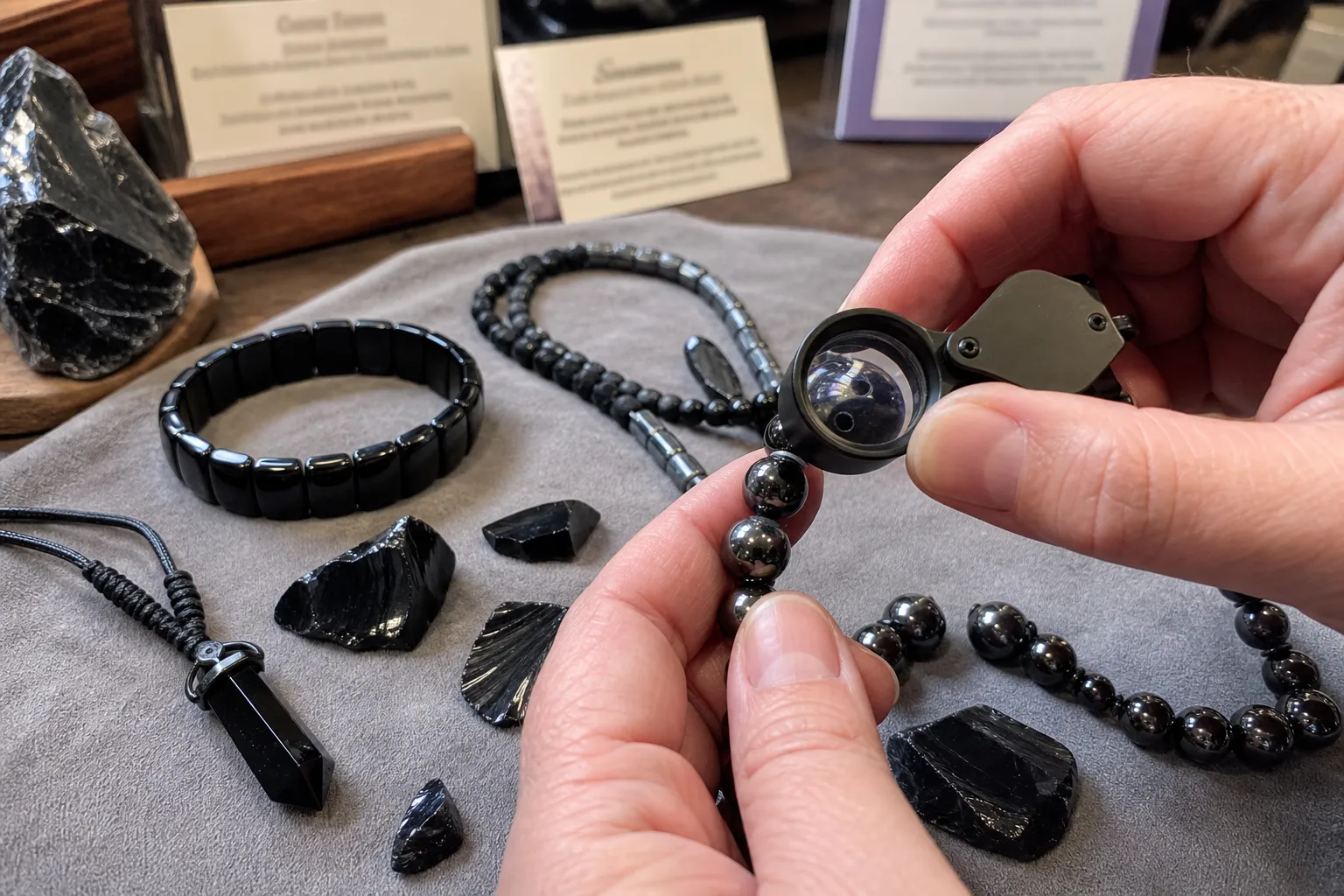
For bracelets, pendants, and pocket stones, meaning is only part of the decision. Check the finish, comfort, bead holes, coatings, edges, and seller wording.
Obsidian jewelry should be checked for chips, especially around points, carved edges, and drilled holes. Hematite jewelry should be checked for surface wear, coating changes, and vague product descriptions.
If you saw both in a “triple protection” bracelet
Many shoppers compare black obsidian and hematite because both appear in “triple protection” bracelets, often with tiger eye. In that retail context, black obsidian is commonly given protection and truth language, while hematite is given grounding and steadiness language.
That phrase is a retail bundle, not a standard. It can explain why the stones are grouped together, but it should not be read as proof of an effect.
If someone says one is “stronger”
Ask what “stronger” means.
They may mean stronger-looking, heavier-feeling, more intense symbolically, more common in protection-stone marketing, or simply more meaningful to them. Black obsidian is often described as more intense. Hematite is often described as steadier. Neither description makes one objectively better.
Common misunderstanding: mineral facts are not meaning claims
It is reasonable to say:
- black obsidian is volcanic glass;
- hematite is an iron oxide mineral;
- polished obsidian often has a glassy black appearance;
- polished hematite is often seen in metallic gray-black forms;
- chipped obsidian may have sharp edges.
It is a different kind of statement to say that black obsidian provides protection or that hematite provides grounding. Those are better kept as crystal-use meanings, cultural language, seller descriptions, or personal intention words.
That does not make the meanings useless. Many people use crystals as symbolic reminders, ritual objects, collecting interests, style choices, or focus objects. The cleaner wording is “often described as,” “commonly chosen for,” or “used as a reminder of.”
Bottom line
Black obsidian is usually the more protective and truth-facing symbol. Hematite is usually the more grounding and stabilizing symbol.
If you want intensity, boundaries, and shadow-facing language, black obsidian fits the common meaning better. If you want steadiness, focus, and practical stability language, hematite fits better.
The material contrast is clearer than the meaning contrast: obsidian is volcanic glass, and hematite is an iron oxide mineral. Use the meaning comparison to choose the symbolism you prefer, while keeping the claims modest and the material checks practical.
Sources
Sources and further reading
Reference links are limited to sources considered suitable for public citation in this page.