ProtectCrystal handling note
Meaning comparison
What Does Black Obsidian Mean Compared With Cinnabar
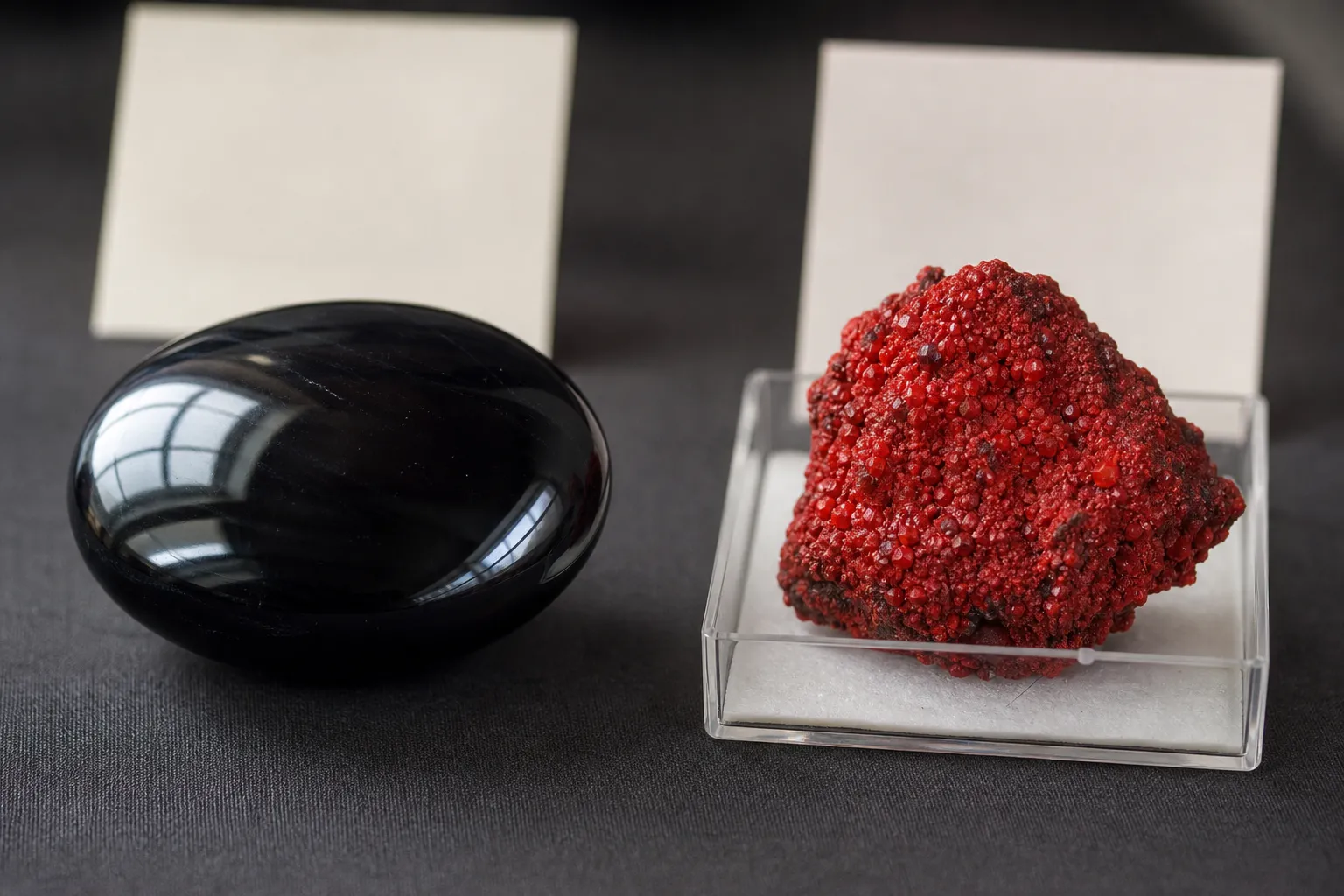
Black obsidian is usually read in crystal-shop language as dark, reflective symbolism: protection, grounding, self-honesty, shadow work, and transformation. Cinnabar is usually read through its vivid red color: vitality, prosperity, ambition, intensity, and transformation.
So the short answer to black obsidian meaning compared with cinnabar is this: black obsidian feels inward and boundary-focused; cinnabar feels outward, fiery, and prosperity-focused. The bigger practical difference is not the meaning, though. Black obsidian is volcanic glass and mainly needs glass-like care. Cinnabar is mercury sulfide, so its meaning should always be separated from a stronger handling caution.
upward
Start with the broader guide
Use the broader guide first if you need the full scope before this page.
Quick comparison: meaning, material, and buyer caution
| Point of comparison | Black obsidian | Cinnabar |
|---|---|---|
| Common look | Glossy black, glassy, sometimes mirror-like when polished | Vivid red to scarlet; seen as specimens, pigment-related material, beads, carvings, or decorative objects |
| Material identity | Volcanic glass, not a crystalline mineral in the strict mineralogical sense | Mercury sulfide, historically valued as a red mineral and pigment source |
| Common symbolic meaning | Protection, grounding, reflection, shadow work, personal transformation | Vitality, prosperity, ambition, red life-force symbolism, transformation |
| Tone in crystal language | Quiet, dark, inward, stabilizing, truth-facing | Bright, intense, active, success- or wealth-oriented |
| Seller wording you may see | “Protection,” “root chakra,” “shadow work,” “scrying mirror,” “absorbs negativity” | “Good fortune,” “prosperity,” “vitality,” “success,” “power,” “transformation” |
| Main buyer caution | Glossy black material is not automatically obsidian; chips can be sharp | Red material sold as cinnabar is not automatically natural cinnabar; avoid dust, powder, soaking, ingestion, heat, or damaged material against skin |
| What meaning cannot prove | Effects, identity, or authenticity | Prosperity effects, identity, authenticity, or suitability for every use |
In plain buyer terms: black obsidian is the easier match if you want grounding protection symbolism. Cinnabar is the stronger red-symbolism choice, but the material itself matters more than the marketing phrase attached to it.
Black obsidian meaning: dark, reflective, and grounding
Black obsidian meaning is often built from the material’s appearance. It is dark, glossy, and glass-like. Because obsidian forms from rapidly cooled volcanic lava, many crystal descriptions connect it symbolically with heat, sudden change, fracture, clarity, and transformation. Those are interpretations, not measured outcomes.
In crystal-use language, black obsidian is often described around:
- Protection, as a symbolic boundary or shield image
- Grounding, especially in root chakra wording
- Reflection, because polished obsidian can look mirror-like
- Shadow work, as a metaphor for facing difficult or hidden parts of the self
- Transformation, linked to its volcanic origin and strong visual contrast
A grounded way to read those phrases is: black obsidian symbolism points toward containment, self-checking, and inward focus. If a seller says black obsidian “absorbs negativity,” it is better to understand that as personal-use language. Many people use the stone as a reminder to pause, set boundaries, or reflect; the stone should not be presented as guaranteeing spiritual, emotional, or physical results.
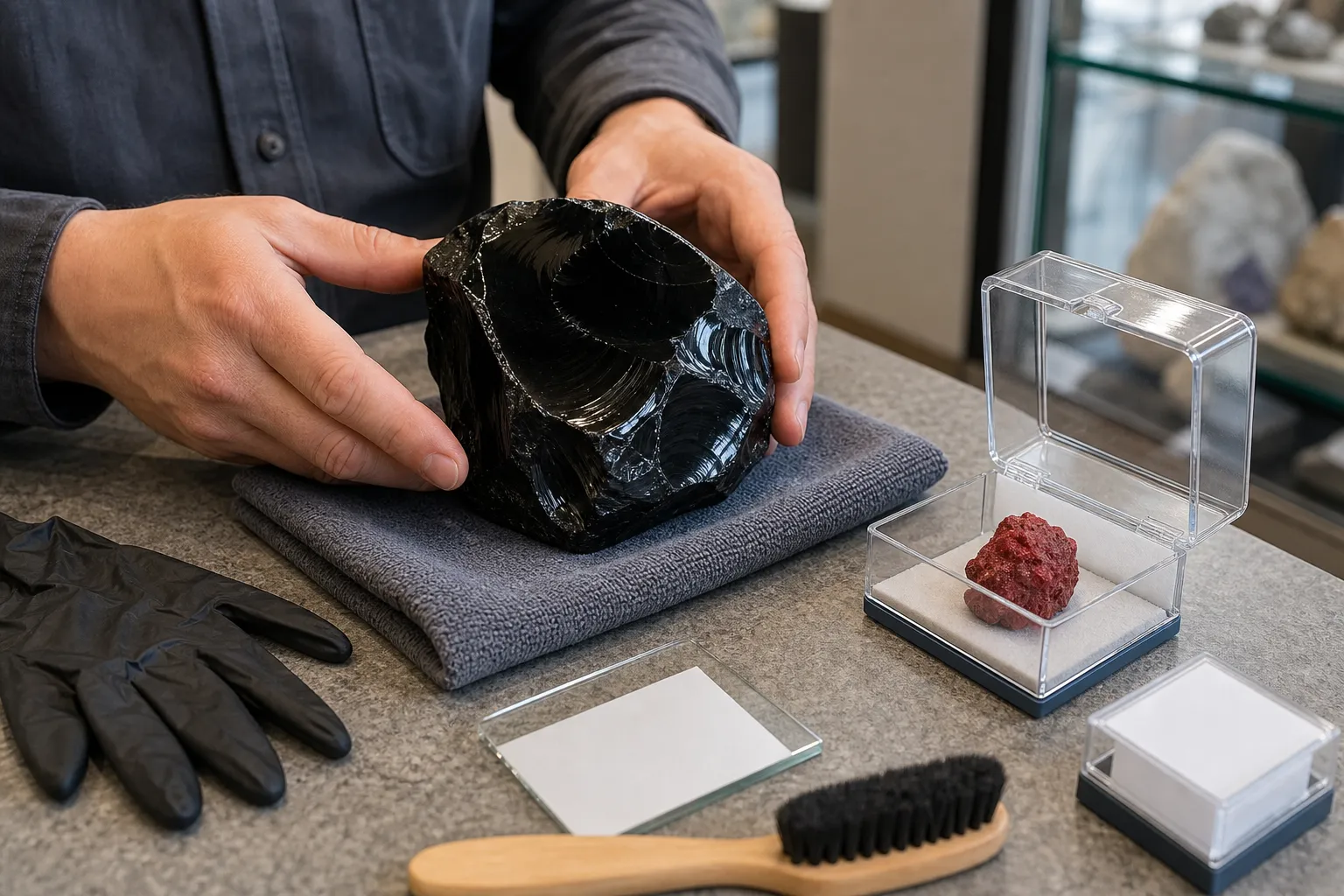
Its material nature also explains some practical care points. Polished obsidian can feel sleek, while chipped or raw edges may show curved, glass-like fracture. Broken obsidian can be sharp, so handle chipped pieces as you would handle glass.
Cinnabar meaning: red vitality symbolism, with real handling limits
Cinnabar meaning is led by color. Its red-to-scarlet appearance is commonly associated with vitality, ambition, prosperity, transformation, and life-force imagery. Historically, cinnabar and cinnabar-derived vermilion pigment were valued for their intense red color, which helps explain why modern listings often frame cinnabar as bold, lucky, powerful, or success-oriented.
For a buyer, the useful distinction is simple: red cinnabar meaning is symbolic; cinnabar handling caution is physical.
Cinnabar is mercury sulfide. Sources discuss how cinnabar differs from some other mercury-containing materials, but that does not make every consumer object casual to wear, grind, soak, or handle roughly. Keep the handling rules practical:
- Do not grind, sand, drill, scrape, or powder cinnabar.
- Do not burn it or expose it to high heat.
- Do not lick it, ingest it, or use it in water preparations.
- Avoid wearing damaged, powdery, or uncertain cinnabar against skin.
- Keep dusty, broken, or unidentified red specimens away from children and pets.
- Wash hands after handling if you notice dust or residue.
- If the item is uncertain, ask a qualified mineral or materials professional rather than relying only on a listing title.
This is where cinnabar differs most sharply from black obsidian. With obsidian, the main practical issues are glass-like chipping and identity uncertainty. With cinnabar, the mercury-sulfide identity means the handling question should come before any prosperity or vitality symbolism.
Why the two meanings feel so different
The difference is not only “black versus red.” The materials naturally invite different symbolic readings.
Black obsidian is dark, glossy, and reflective. That makes it easy for crystal shops to connect it with grounding, protection symbolism, inner work, and transformation through self-awareness. Even terms like root chakra, shadow work, or protective talisman are best read as belief-based or personal-use vocabulary.
Cinnabar is red, intense, and historically tied to pigment, ritual color, and valued mineral material. That makes sellers connect cinnabar symbolism with vitality, prosperity, ambition, and visible force. But the stronger the cinnabar wording sounds, the more important it is to slow down and ask what the object actually is.
A useful shortcut:
- Choose black obsidian symbolism if the theme you want is inward: grounding, reflection, boundary-setting, transformation, and a dark protective look.
- Choose cinnabar symbolism if the theme you want is red and outward: vitality, prosperity, ambition, and intensity—while accepting that cinnabar needs more careful handling.
- If you want a low-maintenance pocket stone or bracelet and you do not know the material source, black obsidian is usually the simpler comparison point. Cinnabar deserves more caution, especially in jewelry, carved beads, powders, or unlabeled red items.
Common confusion in seller descriptions
Many listings mix meaning, material identity, and promised effects into one sentence. “Black obsidian crystal” is common marketplace wording, even though obsidian is volcanic glass rather than a true crystal in the strict mineral sense. In everyday crystal-shop language, people still call it a crystal, but the technical wording is loose.
The same issue appears with “cinnabar crystal meaning.” A red carved bead, pendant, or decorative object sold with cinnabar language may not be natural cinnabar. It could involve lacquer, dyed material, resin, reconstructed material, or another red substance. Visual inspection can suggest possibilities, but it cannot prove identity or handling suitability.
Use these reading habits when comparing black obsidian and cinnabar:
- Treat “protection” as symbolic language, not a verified result.
- Treat “prosperity” as symbolic language, not a financial outcome.
- Treat “root chakra,” “third eye,” and “shadow work” as spiritual-use vocabulary, not material evidence.
- Treat “natural cinnabar” claims carefully unless the seller provides credible identification.
- Do not assume glossy black means obsidian or vivid red means cinnabar.
Color, luster, texture, chips, dust, residue, and seller wording can help you ask better questions. They do not certify what the material is. For certainty, specialized testing may be needed.
What changes the answer for a real buyer
Shelf display
If the piece will sit on a shelf, polished black obsidian is usually easier to manage: avoid drops, hard knocks, and abrasive storage. A cinnabar specimen can also be displayed, but it should be kept stable, dry, undamaged, and away from frequent handling.
Wearing
If the piece will be worn, black obsidian still needs normal jewelry care because it can chip. Cinnabar jewelry requires more scrutiny. Be especially cautious with powdery surfaces, damaged coatings, unclear composition, or direct skin contact when you are unsure what the red material is.
Symbolic practice
If the piece is being bought for symbolic practice, keep both meanings in the realm of personal interpretation. Black obsidian can represent grounding and protection. Cinnabar can represent vitality and prosperity. Neither meaning should replace practical judgment, professional guidance when needed, or ordinary real-world precautions.
Bottom line
Black obsidian compared with cinnabar is best understood as a contrast between dark reflective protection symbolism and red vitality-prosperity symbolism.
Black obsidian is commonly framed around grounding, self-reflection, shadow work, and transformation. Cinnabar is commonly framed around vitality, ambition, prosperity, and transformation.
The material difference matters just as much as the meaning difference. Black obsidian is volcanic glass, so its practical concerns are identification, chipping, and sharp edges. Cinnabar is mercury sulfide, so it needs more careful handling and should not be treated like an ordinary red decorative stone. Meaning language can help you choose the symbolism you like, but material identity should guide how you buy, wear, store, and handle the piece.
Sources
Sources and further reading
Reference links are limited to sources considered suitable for public citation in this page.