ProtectCrystal handling note
Material comparison
Does Cinnabar Shine Like Hematite
Usually, no. Does cinnabar shine like hematite? Not in the same way.
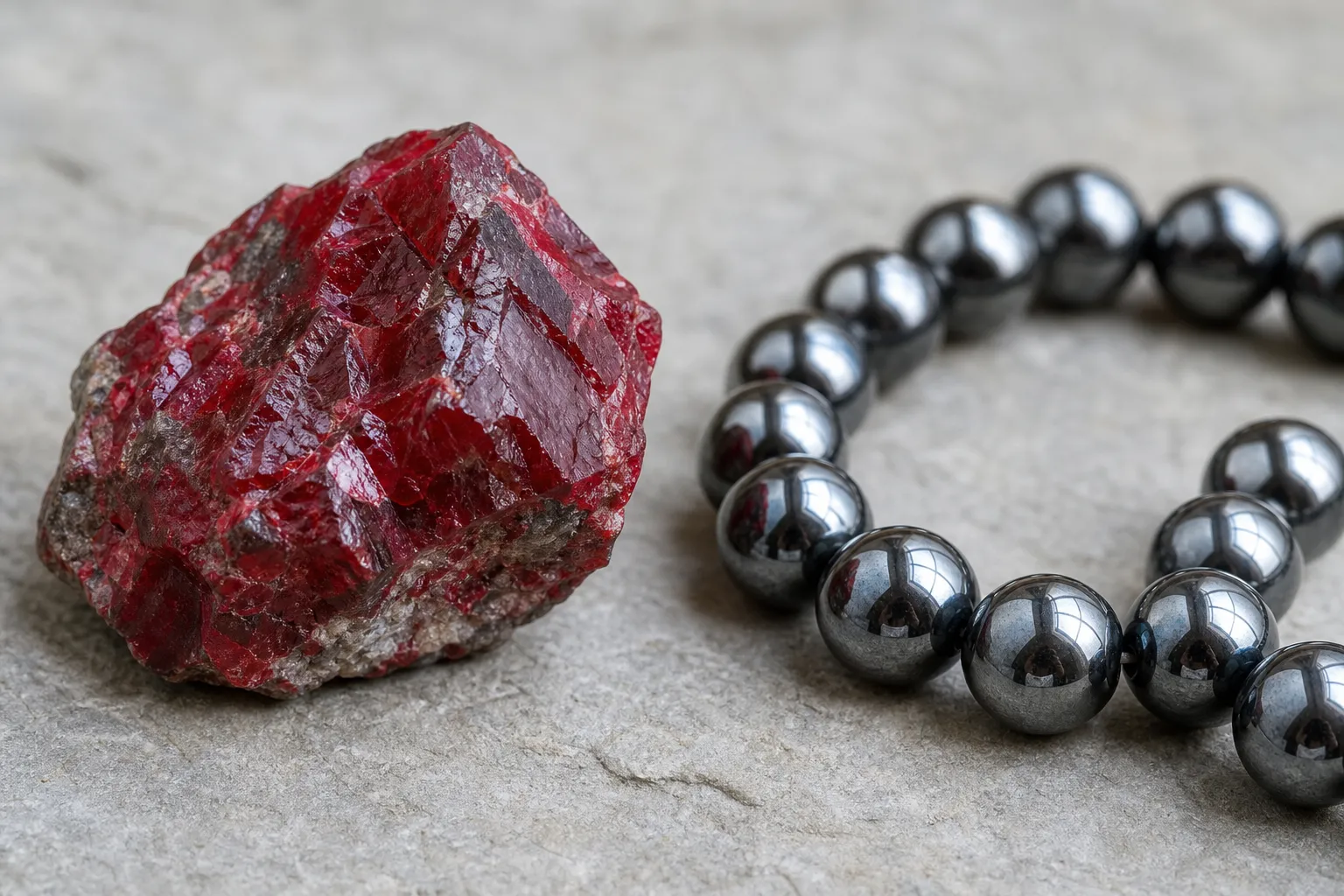
Hematite is the mineral more often associated with a steel-gray, silvery, metallic, or almost mirror-like shine, especially in specular pieces and polished beads. Cinnabar can be bright, glossy, vivid red, or sparkly in some specimens, but its luster is usually described differently: red-bodied, adamantine, resin-like, or sometimes dull rather than hematite-like metal reflectivity.
The simplest distinction is this: hematite’s familiar shine often looks like metal reflecting light; cinnabar’s brightness usually comes from its red color and surface luster. Appearance can point you in a direction, but it cannot confirm the mineral by itself.
upward
Start with the broader guide
Use the broader guide first if you need the full scope before this page.
Red brightness is not the same as metallic gray shine
When comparing cinnabar and hematite in a shop, a bead listing, or a photo, do not stop at “is it shiny?” Look at the kind of shine.
Hematite is an iron oxide mineral. In the crystal market, its familiar look is dark steel-gray to silvery, often with a metallic or submetallic sheen. Polished hematite-style beads can look almost mirror-like, though commercial items may also be coated, treated, or made with related materials.
Cinnabar is mercury sulfide and is best known for its red to brownish red body color. Mineral references commonly describe cinnabar luster as ranging from adamantine to dull. So a cinnabar specimen may look bright or glossy, but it usually does not have the same steel-gray metallic shine people associate with hematite.
If a piece is red and glossy, it may fit some descriptions of cinnabar luster. If it is silver-gray and metallic, it is much closer to the familiar hematite metallic shine.
Why “red shiny cinnabar” labels can mislead buyers
A lot of confusion comes from seller wording. In crystal and bead markets, “cinnabar” may refer to natural mineral material, red carved decorative pieces, lacquer-like objects, dyed or resin items, symbolic bead descriptions, or simply a red visual style. That language can tell you how the item is being marketed, but it is not the same as mineral identification.
A red shiny item labeled cinnabar should be read cautiously. It may be natural cinnabar, but it may also be a decorative trade term, a surface treatment, a resin-like product, or seller shorthand for red color.
That is why “cinnabar vs hematite finish” is a better question than “which one is shiny?” Both can catch light. The difference is the quality of that shine:
- Hematite mirror-like finish: usually dark gray, steel gray, or silvery, with a metal-like reflection.
- Cinnabar glossy luster: usually tied to red body color; it may look bright or glassy, but not normally like polished steel.
- Dull or massive material: both minerals can appear less dramatic, where texture and color matter more than shine.
- Online photos: lighting, polishing, filters, and wet-looking surfaces can exaggerate shine.
If a seller calls a strongly silver-gray metallic bead “cinnabar,” the word may not be referring to natural mineral cinnabar. If a seller calls a red earthy piece “hematite,” that can still be possible, because hematite is not always shiny gray.
Red does not automatically mean cinnabar
Cinnabar’s red body color is important, but red alone is not enough. Hematite can also appear red or reddish brown, especially in earthy forms, and it is well known for a red to reddish-brown streak.
That creates a common buyer trap: a gray metallic hematite surface may leave a red streak, while a red iron oxide material may be hematite-related rather than cinnabar. A red cinnabar vs hematite comparison cannot rely on color alone.
Useful visible clues include:
- Body color: cinnabar is commonly bright red to brownish red; hematite may be gray metallic or earthy red.
- Luster type: cinnabar may be adamantine, glossy, resin-like, or dull; hematite is more often linked with metallic gray shine.
- Texture: massive cinnabar and massive red hematite can be harder to separate by eye than vivid red cinnabar crystals and shiny gray hematite.
- Weight impression: both minerals can feel heavy compared with many common stones, but hand feel is subjective.
- Magnet response: do not treat a simple magnet check as decisive. Hematite is not usually strongly attracted to an ordinary hand magnet, and magnetic behavior in commercial beads may come from other materials.
These clues can suggest possibilities. They should not be treated as a final identification.
Be careful with streak, scraping, heat, and polishing
Streak is a real mineralogy clue, but it has a practical problem here: streak testing creates powder.
Hematite is commonly described with a red to reddish-brown or cherry-red streak. Cinnabar is also described with a red-brown to scarlet streak. Because cinnabar is mercury sulfide, ordinary buyers should not grind, scrape, sand, drill, aggressively polish, heat, burn, or powder a suspected cinnabar piece just to compare it with hematite.
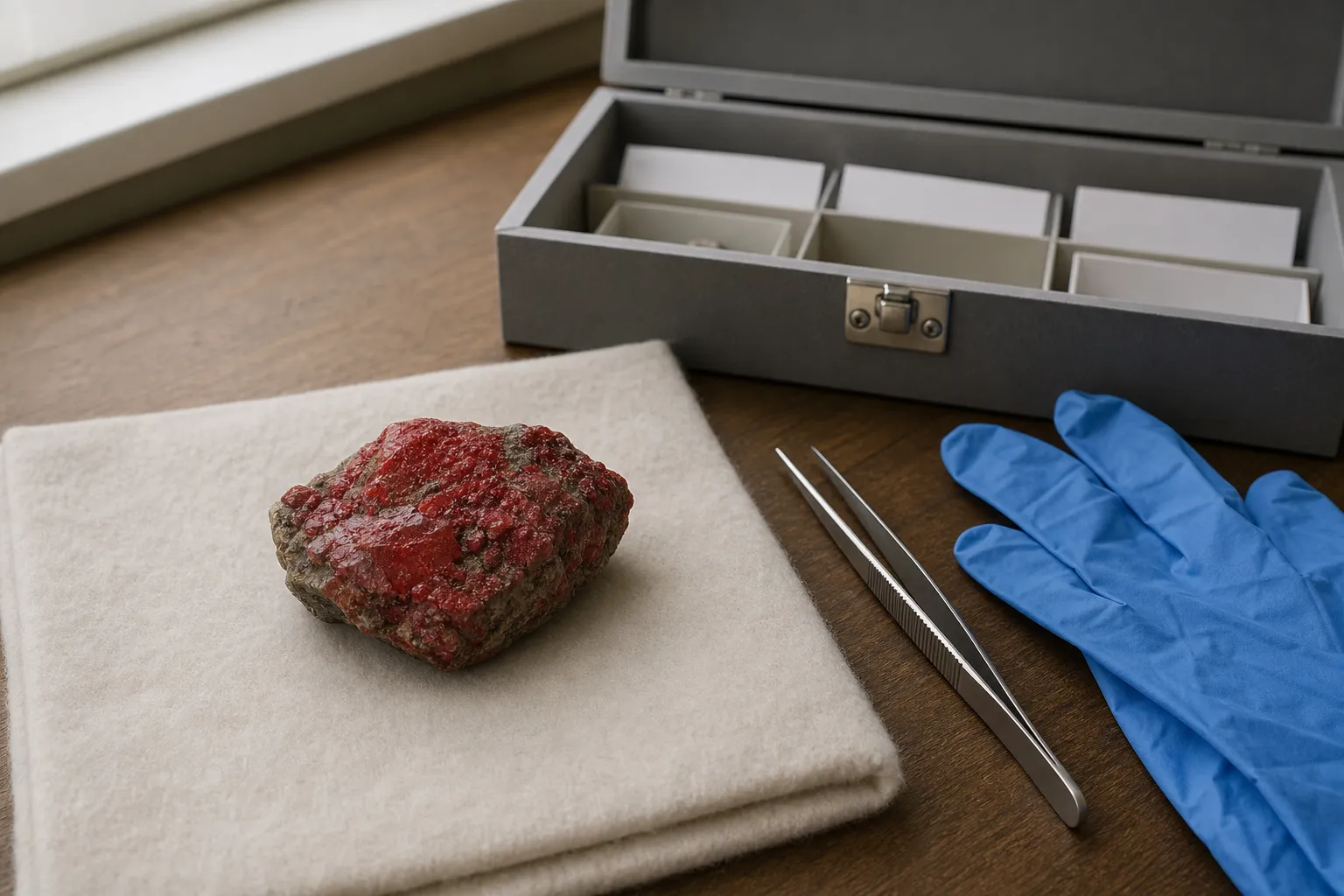
A safer handling approach is simple:
- Keep suspected cinnabar intact.
- Keep it dry.
- Avoid heat and abrasive cleaning.
- Keep it away from children and pets.
- Store it separately if the surface is crumbly, powdery, or flaking.
- Use professional mineral identification if the material matters for buying, selling, wearing, or display.
This does not mean every red item is cinnabar. It means destructive “quick tests” are a poor choice when cinnabar is one of the possibilities.
What shine can reasonably tell you
Shine is useful, but only as one clue.
If the object has a steel-gray shine, dark silver reflection, or polished metallic look, it resembles common hematite much more than typical cinnabar. Cinnabar is not normally expected to shine that way.
If the object is red, glossy, and bright, cinnabar may be one possibility, but the same visual space can include other red minerals, pigments, dyed materials, resin, lacquer-like decorative pieces, and red hematite forms.
If the object is red and dull or earthy, it could still be cinnabar in massive form, hematite in earthy form, or something else. In that situation, shine becomes less useful, and provenance or testing matters more.
If the object is sold as a bead or decorative carving, be extra cautious with the name. Crystal-market wording often blends mineral names, color descriptions, symbolic meanings, and trade habits. A listing can explain the seller’s category, but it cannot verify the material.
For certainty, especially with a suspected mercury-bearing mineral, appearance-based checks are not enough. Professional identification may use methods such as XRF, XRD, Raman spectroscopy, or other mineral-analysis tools. You do not need those methods to answer the basic shine question; the point is that finish alone has limits.
Quick buyer check
Use this as a non-destructive screen, not a final identification.
It looks more hematite-like if:
- The shine is dark gray, steel gray, or silvery.
- The surface reflects light in a metal-like way.
- The item resembles common polished hematite beads or specular hematite.
- The red connection appears mainly as streak, powder, earthy patches, or iron-rich coloring rather than a red crystal body.
It looks more cinnabar-like if:
- The main body color is vivid red to brownish red.
- The shine is bright, glossy, adamantine, resin-like, or uneven rather than metallic gray.
- The piece is described as massive cinnabar or a red mercury sulfide mineral by a credible mineral source.
- The surface appears intact and not merely like a red coating or decorative finish.
Pause before trusting the label if:
- The item is called cinnabar but looks strongly like silver-gray metallic hematite.
- The item is called hematite but is red and powdery-looking with no clear mineral context.
- The seller uses spiritual, decorative, or bead-market language without material details.
- The piece would require scraping, grinding, or heating to check.
In protective-crystal settings, cinnabar and hematite may both appear in personal-use or symbolic language, but that does not change the material comparison. Hematite is more strongly associated with metallic gray shine; cinnabar is more strongly associated with red body color and a different luster range.
Bottom line
Cinnabar can shine, but it usually does not shine like hematite. Hematite’s familiar look is metallic, steel gray, silvery, or mirror-like. Cinnabar’s brightness is usually red, glossy, adamantine, resin-like, or sometimes dull.
A red shiny object is not automatically cinnabar, and a red-looking hematite-related material is possible. Use shine, color, texture, weight impression, and seller wording as clues only. If the piece may be cinnabar, avoid powder-producing or heat-based tests and keep handling simple. If the answer matters beyond casual comparison, seek professional mineral identification rather than relying on appearance alone.
Sources
Sources and further reading
Reference links are limited to sources considered suitable for public citation in this page.