ProtectCrystal handling note
Material comparison
Red Hematite vs Cinnabar: Why They Can Look Similar
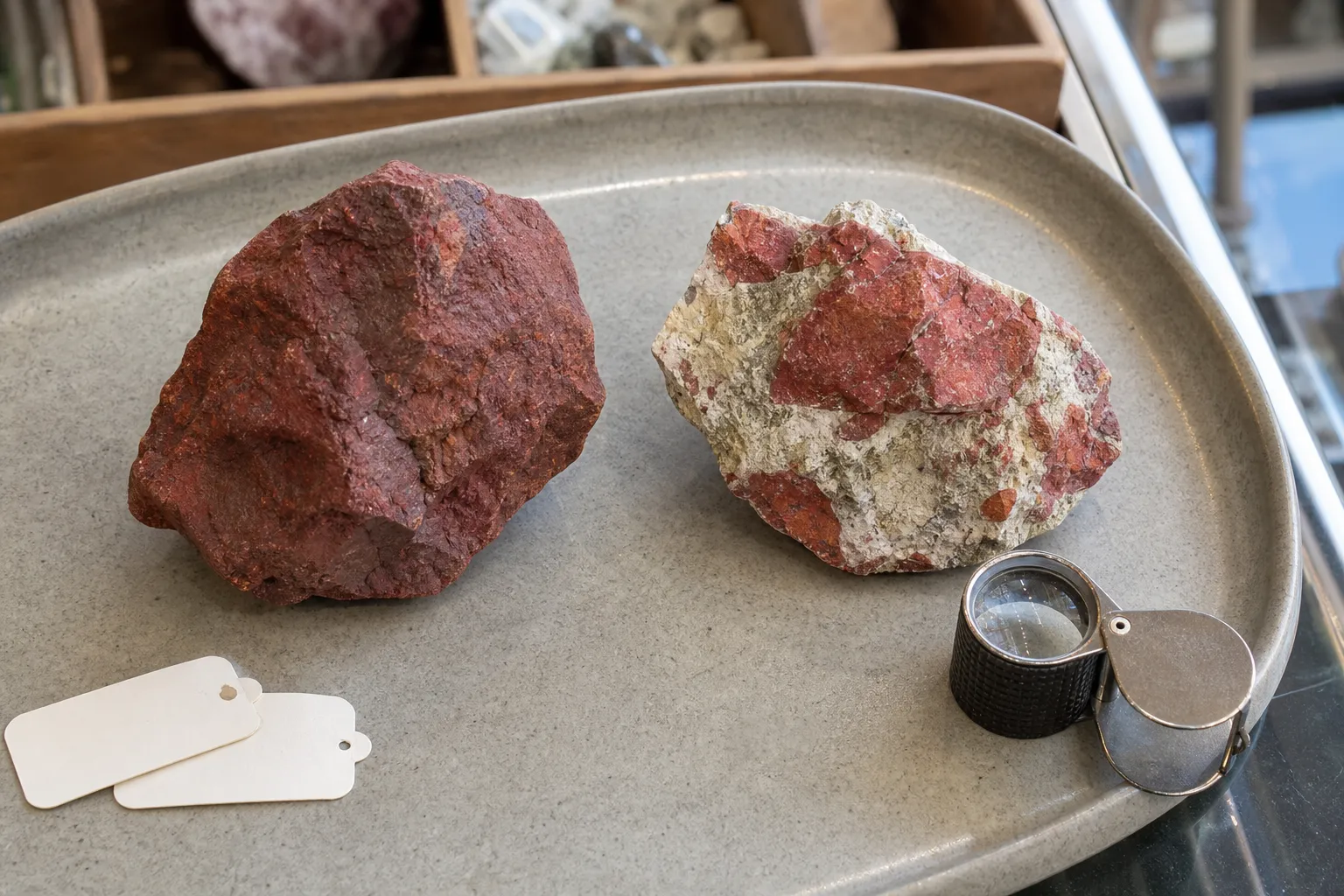
Red hematite and cinnabar can look similar because both can fall into the same red-to-reddish-brown visual range, especially when the material is massive, earthy, polished, or mixed with other minerals. In a quick shop-counter view, hematite may not show the steel-gray shine many buyers expect, while cinnabar may not appear as a bright, clean scarlet crystal.
The practical answer: color alone is not enough. Weight, luster, texture, matrix, seller wording, and handling context can point you in a direction, but they do not prove identity. If a piece might be cinnabar, handle it cautiously because cinnabar is mercury sulfide.
upward
Start with the broader guide
Use the broader guide first if you need the full scope before this page.
Why the overlap happens
Many buyers know hematite as a dark gray, mirror-polished bead or tumbled stone. That is only one common retail presentation. Hematite is an iron oxide mineral, and mineral references describe it in metallic as well as earthy forms. Earthy or massive hematite can look red, reddish brown, brick red, brownish, or pigment-like rather than shiny gray.
Cinnabar is chemically different: it is mercury sulfide. It is often associated with vivid red color, but natural cinnabar can also look dull red, brownish red, darkened, granular, or mixed into a host rock. Sometimes the red is bright and obvious; other times it appears as patches, grains, coatings, or massive material.
That is why massive red hematite and massive cinnabar can be difficult to separate by sight. The confusion is not simply “both are red.” It is that both may appear:
- red to reddish brown;
- earthy, dull, or granular;
- massive rather than crystal-shaped;
- polished in a way that hides natural texture;
- mixed with other minerals or matrix.
A bright red patch in quartz, a dense-looking red lump, a polished cabochon, or a bead sold with dramatic cinnabar wording can all raise the same question: is this red hematite, cinnabar, or another red material?
Cues that may help, and where they stop
Mineral identification usually reads several properties together. For this comparison, no single surface clue is enough, especially from a photo or listing title.
Color
May suggest red hematite: Red, reddish brown, brick red, earthy brown-red.
May suggest cinnabar: Bright red, scarlet, brownish red, dull red.
Limit: The color ranges overlap.
Luster
May suggest red hematite: Earthy to metallic; dull in some pieces, shiny in others.
May suggest cinnabar: Bright, resinous-looking, or dull depending on specimen.
Limit: Polish, coatings, wear, and matrix can change the look.
Streak
May suggest red hematite: Hematite is known for a red to reddish-brown streak.
May suggest cinnabar: Cinnabar can also show a red to scarlet streak.
Limit: Streak testing creates powder and is not a casual check for suspected cinnabar.
Weight impression
May suggest red hematite: Hematite can feel weighty compared with many common stones.
May suggest cinnabar: Cinnabar has high specific gravity and may feel unusually heavy for size.
Limit: Matrix, inclusions, and mixed minerals can mislead.
Form and setting
May suggest red hematite: Massive iron-oxide material, earthy surfaces, iron-rich context.
May suggest cinnabar: Red grains, masses, or patches in matrix.
Limit: Mixed specimens complicate simple labels.
Seller wording
May suggest red hematite: “Red hematite,” “hematite red stone,” “iron oxide.”
May suggest cinnabar: “Real cinnabar,” “cinnabar beads,” “cinnabar in quartz.”
Limit: Wording is a prompt to ask questions, not authentication.
The more useful approach is to look for a pattern. A red, earthy, iron-oxide-looking piece sold as hematite may lean toward hematite. A small red mineral specimen that feels unexpectedly heavy and is sold in a mineral context as cinnabar may make cinnabar worth considering. But either reading remains provisional without better identification.
The streak clue is useful, but not always appropriate
Hematite’s red to reddish-brown streak is a classic identification clue. It also explains why a stone that looks gray or metallic can still be hematite: the powdered mineral leaves a red-brown mark.
For red hematite vs cinnabar, though, streak is less tidy. Cinnabar can also have a red to scarlet streak. More importantly, streak testing makes powder and can damage the piece. Because suspected cinnabar is mercury-bearing, do not use streak testing as a casual home test on an unknown red specimen. Non-destructive observation is the better first step.
The density clue can point, not prove
Cinnabar is denser than hematite in mineral-property comparisons, so a cinnabar specimen may feel surprisingly heavy for its size. That can be a useful clue when two pieces are similar in size.
Still, “heavy” is not an identification result. Hematite itself can feel weighty in buyer settings, and a red stone may include dense matrix, metallic minerals, or mixed aggregates. Weight can sharpen the question; it cannot settle it alone.
Why polished red stones are especially confusing
Polish removes many of the cues a collector would normally read. A broken or natural surface may show grain, matrix, earthy texture, or metallic flashes. A polished bead or cabochon may show only red color and gloss.
That matters for both minerals. A polished red hematite piece may lose the rough iron-oxide look that would make it easier to recognize. A polished cinnabar-bearing piece may appear as a glossy red patch in matrix rather than as a soft-looking mineral specimen.
Decorative naming adds another layer. Words such as “vermilion,” “Chinese Red,” and “cinnabar lacquer” can refer to color, pigment history, carving style, lacquer tradition, or marketplace category—not necessarily a natural cinnabar mineral specimen.
The same caution applies to phrases like “real cinnabar,” “cinnabar dots,” “bloodspots,” and “red cinnabar jewelry.” These terms reflect common buyer questions, but they do not verify what the material is.
How to handle an uncertain red piece
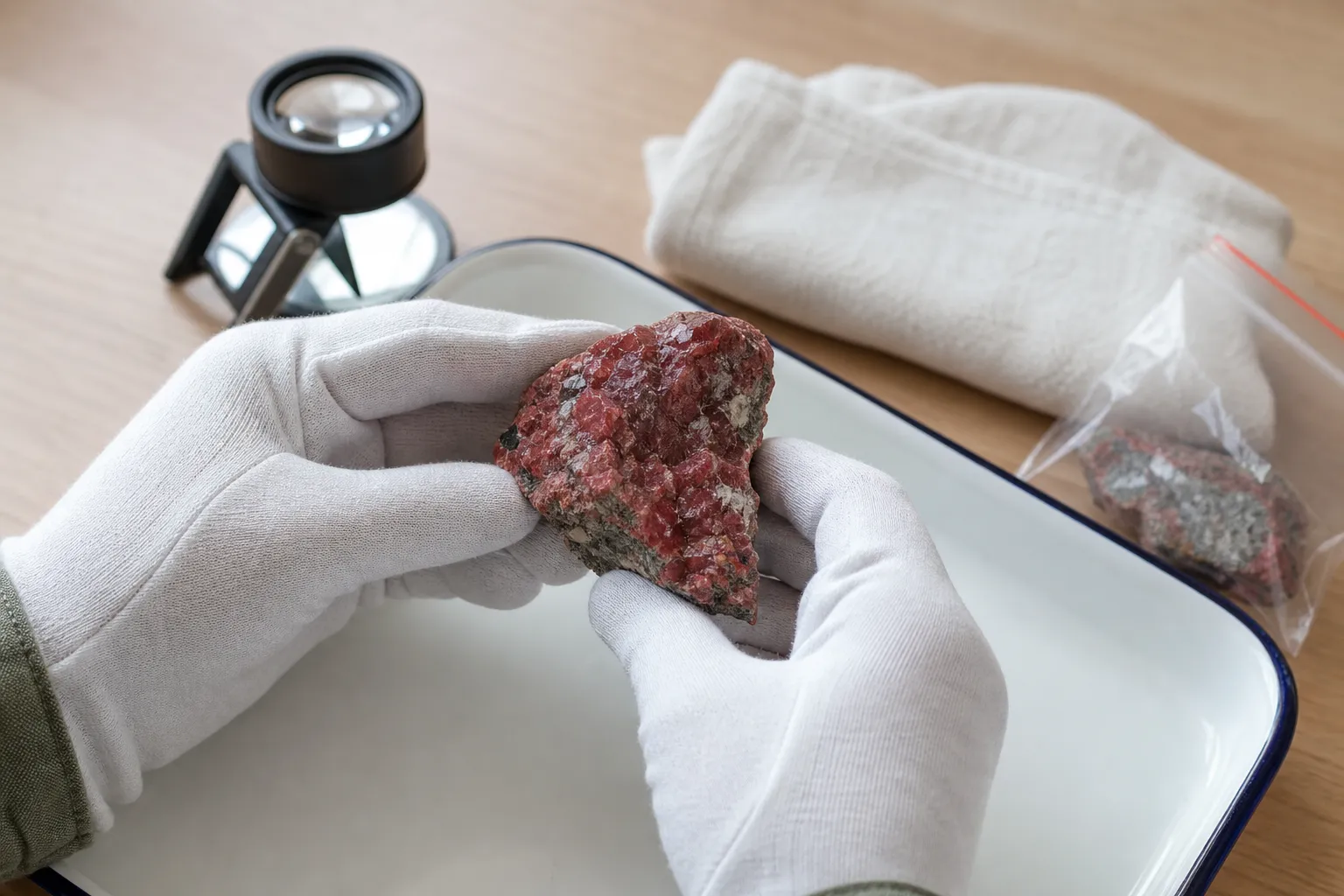
If you are comparing red hematite vs cinnabar in person, start with observation rather than damage.
Check the label or listing first. Does it say hematite, cinnabar, cinnabar in quartz, cinnabar-style, lacquer, resin, dyed bead, or simply “red stone”? A precise mineral label from a reputable specimen seller is more useful than a dramatic jewelry phrase, but it is still not the same as testing.
Then look at the surface:
- Is it earthy and iron-rich looking?
- Are there metallic-looking areas?
- Is the red part sitting in matrix?
- Does the object look carved, coated, dyed, or polished?
- Is the wording about color or style rather than mineral content?
Use weight only as a clue. A noticeably heavy small red specimen may make cinnabar worth considering, but it does not prove cinnabar.
Avoid tests or handling that create dust or heat. Do not drill, grind, sand, crush, burn, heat, lick, or place suspected cinnabar in water. If the item is dusty, damaged, powdery, or uncertain, handle it minimally, wash hands after contact, and keep it away from children and pets. These precautions are practical because cinnabar is mercury sulfide and because unknown red material should not be turned into powder casually.
If the piece is intended for wear, close skin contact, repair, carving, drilling, resale, or a collection record where the label matters, visual checks are not enough. A qualified mineral professional or appropriate testing service may be needed.
Common misunderstandings
Hematite does not have to look metallic gray
Many beads and tumbled pieces are sold with a dark polished finish, so that expectation is understandable. But hematite can also appear red or earthy, and that red appearance is part of its long use as a pigment mineral.
Cinnabar does not have to be bright scarlet
Bright cinnabar is memorable, but natural specimens may be brownish red, dull, massive, or mixed with other minerals. A dull red surface does not rule out cinnabar, and a bright red surface does not confirm it.
Seller wording is not a finished identification
The phrase “real cinnabar” may appear in listings for mineral specimens, beads, carved pieces, lacquer-style objects, or color-based products. Without clearer material information, it is only seller wording.
One clue can be over-weighted
Red-brown streak may fit hematite, but cinnabar can overlap. A heavy feel may point toward cinnabar, but matrix and mixed minerals can interfere. A polished red stone may hide most of the natural surface evidence.
Cautious first pass
A practical decision rule
- A red, earthy, iron-oxide-looking piece sold as red hematite may reasonably be treated as a hematite candidate, but not proven from color alone.
- A bright to brownish red, unusually heavy, soft-looking, or matrix-bound specimen sold as cinnabar should be treated as a cinnabar candidate and handled more conservatively.
- A polished bead, carving, cabochon, or dramatic listing phrase should be treated as uncertain unless the seller provides credible material details.
- If the answer affects handling, wear, repair, price, or records, visual checks are not enough.
Red hematite and cinnabar can look alike because both can occupy the same red-to-brown-red visual space, especially in massive or polished forms. The better response is not to force certainty from color. Read several clues together, avoid damaging tests, and treat suspected cinnabar with extra care until better identification is available.
Sources
Sources and further reading
Reference links are limited to sources considered suitable for public citation in this page.