ProtectCrystal handling note
Material comparison
Obsidian vs Hematite Shine: Glassy, Metallic, or Polished
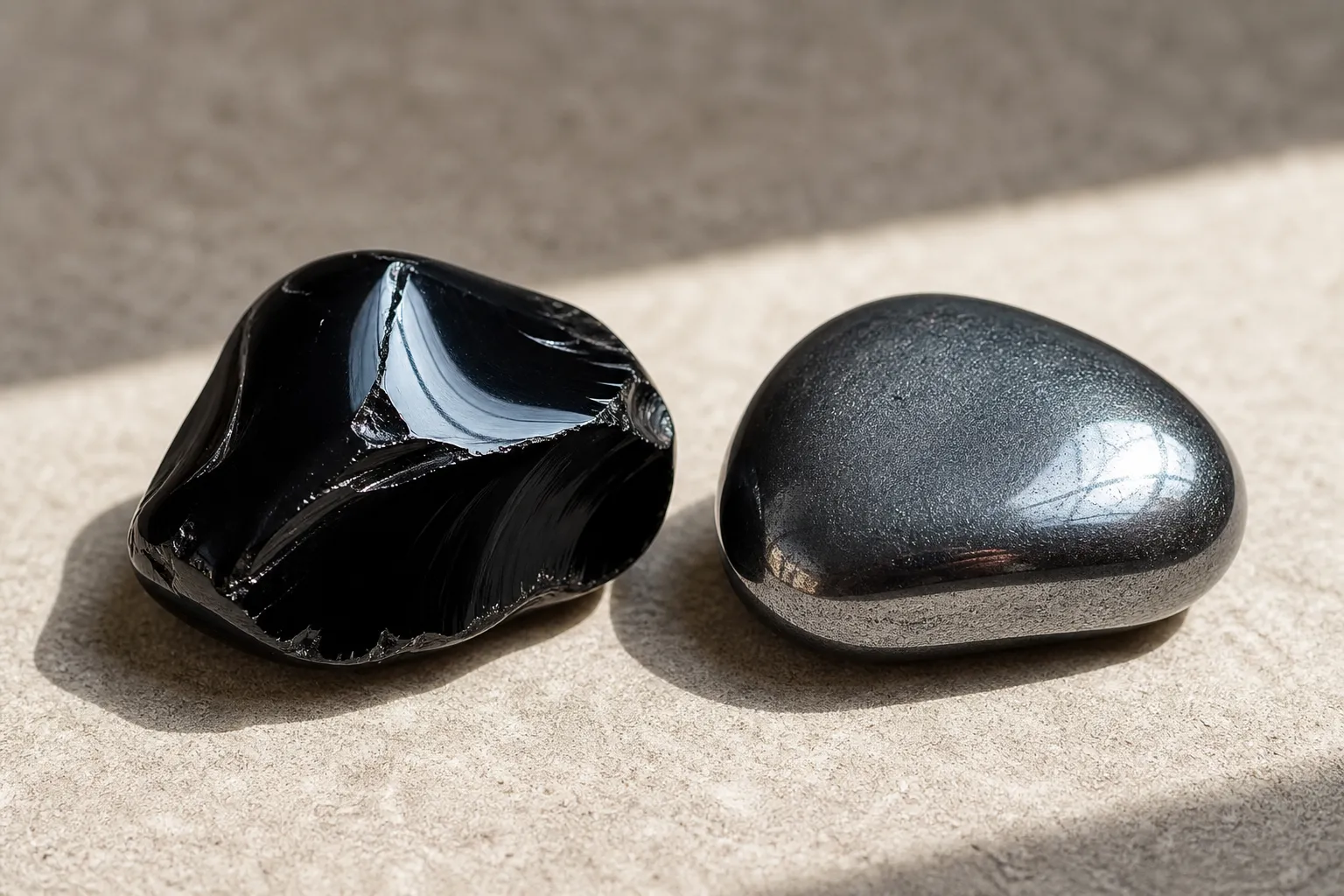
If you are comparing obsidian vs hematite shine, start with the character of the reflection. Polished obsidian usually reads as black glass. Hematite usually reads as dark metal: steel gray, silvery gray, or gunmetal rather than pure black.
The catch is that “shiny” is not enough. A polished black crystal can be reflective because of the material, the surface finish, a coating, the lighting, or the photo. Shine can point you in a useful direction, but it cannot identify the stone by itself.
upward
Start with the broader guide
Use the broader guide first if you need the full scope before this page.
First-pass shine cues
Deep black surface with glass-like reflections
More likely direction: Obsidian
Why it helps: Obsidian is commonly described as volcanic glass with a glassy appearance.
What it does not settle: It does not rule out glass or other black lookalikes.
Dark silver, steel gray, or gunmetal shine
More likely direction: Hematite
Why it helps: Hematite is an iron oxide mineral often described with metallic to submetallic luster.
What it does not settle: It does not prove the bead is solid hematite.
Smooth mirror-like black bead
More likely direction: Could be obsidian, glass, coated material, or another black stone
Why it helps: Polish can make many materials reflective.
What it does not settle: “Polished” is a finish, not an identity.
Velvety or light-absorbing black bead
More likely direction: Could be matte obsidian or another matte black material
Why it helps: Matte finish reduces reflected light.
What it does not settle: Lack of shine does not rule out obsidian.
Heavy feel for its size with gray metallic shine
More likely direction: Often points toward hematite
Why it helps: Hematite is relatively dense among common jewelry stones.
What it does not settle: Fillers, coatings, and substitutes can mislead.
The useful difference: black glass vs dark metal
The best quick comparison is not simply “black” or “shiny.” It is whether the shine looks glass-like or metal-like.
Glassy obsidian usually looks like black glass when polished. On beads, cabochons, palm stones, or broken-looking edges, the reflections can appear sharp and dark, sitting on a deep black body.
Metallic hematite usually looks more like polished dark metal. Even in bracelets sold beside black stones, hematite often shows a steel-gray, silvery gray, or gunmetal cast. A polished hematite bead can be very bright, but the brightness usually feels metallic rather than glassy.
That difference matches common mineral-property language. Luster describes how a surface reflects light. Mineral references commonly use terms such as glassy, metallic, submetallic, dull, and earthy. Hematite is often listed with metallic or submetallic luster, while obsidian is better understood as volcanic glass rather than a typical crystalline mineral.
For a buyer, this gives a simple first pass
- If it looks like black glass, obsidian becomes more plausible.
- If it looks like dark polished metal, hematite becomes more plausible.
- If it only looks shiny and black, you need more information.
A seller phrase like “polished black crystal” is too broad. It describes color and finish, not the material.
“Glassy” and “polished” are not the same thing
This is the most common mix-up in shiny black stone identification.
Glassy luster describes the kind of shine a material shows. It is the hard, smooth, reflective look associated with glass. Obsidian commonly fits this description because it is volcanic glass.
Polished finish describes what has been done to the surface. A lapidary polish can make obsidian, hematite, onyx, glass, black tourmaline, coated beads, and other materials look bright. A polished hematite bead can shine strongly without looking like glass. A polished obsidian piece can look glossy without looking metallic.
Read a polished black crystal in layers
- Body color: deep black, smoky black, brownish black, or gray-silver?
- Reflection type: glassy, metallic, waxy, satin, or coating-like?
- Surface finish: high-polish, matte, rough, chipped, or worn?
- Weight impression: unusually dense for its size, or ordinary?
- Seller wording: named material, or only a style label such as “black crystal” or “polished bead”?
A black glassy obsidian bead and a polished hematite bead can both reflect light, but they usually do not reflect it in the same visual language.
Why matte obsidian and glossy photos confuse the eye
Not every obsidian piece is mirror-shiny. A matte obsidian finish can look soft, velvety, or light-absorbing. That may come from the finishing style, tumbling, wear, natural texture, or a deliberate satin surface. A matte black obsidian bead may still be consistent with the seller’s description even if it does not show the dramatic shine many buyers expect.
Hematite can confuse the comparison from the other direction. Some polished hematite beads look almost black in dim light or small product photos. Under stronger, more neutral light, they often show a gray metallic cast. That gunmetal look is one of the better visual cues for hematite vs black obsidian, though it remains only a clue.
Lighting matters. Research on shiny material perception shows that illumination can change whether a surface appears more glossy, metallic, or dull. In shopping terms, a bright studio photo can exaggerate shine, while a dim photo can make hematite look blacker or obsidian look flatter.
When judging photos, look for
- Multiple angles: one straight-on image can hide the reflection style.
- Neutral lighting: strong glare can make many materials look more dramatic.
- Color beside other objects: hematite often shows a gray-metal cast next to truly black beads.
- Edges or chips: obsidian may show glass-like edges or curved fracture patterns, though photos are not enough for certainty.
- Specific wording: “black obsidian,” “matte obsidian,” “hematite,” or “polished hematite” is more useful than vague style language.
If the only evidence is one glossy black product photo, keep the conclusion narrow: it may suggest a direction, but it is not enough to confirm the material.
Quick readings by appearance
Use these as first-pass buyer cues, not final identification rules.
Deep black and glassy
A deep black, mirror-like surface points toward obsidian, especially if the listing describes it as black obsidian or volcanic glass. Polished obsidian often has a dark, clean reflectivity rather than a silver-gray body color.
Still, glassy black material can include manufactured glass, coated pieces, and other polished black stones. The look supports a question; it does not close the case.
Dark gray and metallic
A dark metal look—steel gray, silvery gray, gunmetal, or almost chrome-like in bright spots—points toward hematite. Hematite’s metallic luster is one reason it stands apart from black glassy stones.
Weight can support the impression. Hematite often feels dense for its size compared with many glassy or silicate stones. Use that as a supporting cue only, because bead size, drill holes, coatings, composite materials, and substitutes can change the feel.
Black but matte
A matte black obsidian bead is not automatically suspicious. Matte finish changes how light leaves the surface, so the piece may look soft rather than glossy. If it is sold as matte obsidian, the lower shine fits the finish description.
But matte black stones are common across many materials. In a matte finish, shine tells you less, so seller disclosure, texture, weight impression, and additional checks matter more.
Shiny black with a metallic cast
This is where many buyers pause. A bead may look black from one angle and metallic from another. It could be polished hematite photographed in shadow, coated material, or another dark stone with a reflective surface. If the gray-metal cast appears repeatedly under neutral light, hematite becomes more plausible than obsidian.
Listed only as “polished black crystal”
That wording is not specific enough. Ask what the material is supposed to be. “Polished” tells you the surface was finished. “Black” tells you the visible color. Neither tells you whether the item is obsidian, hematite, glass, or another stone.
What shine cannot tell you
Shine is useful because it is easy to observe. It is limited because several materials can share a similar surface appearance.
Mineral-identification guides commonly treat color as an unreliable single clue and encourage using several properties together. Luster should be handled the same way. A glassy black surface can suggest obsidian, and a metallic gray surface can suggest hematite, but appearance alone is not a material confirmation.
If the identity matters for labeling, collecting, or a higher-value purchase, stronger checks may be needed. Depending on the piece, those may include:
- Streak observation, especially for hematite in mineral study, though this may not be appropriate for finished jewelry.
- Density or specific gravity context, because hematite is notably dense compared with many common stones.
- Hardness and fracture clues, interpreted carefully and without damaging a finished piece unnecessarily.
- Seller disclosure, including whether the bead is natural, treated, coated, reconstituted, or magnetic.
- Specialist examination or lab-style testing when a confident identification is important.
For ordinary shopping, you may not need formal testing. The practical question is simpler: does the shine match the material name closely enough to continue, or does it raise a question for the seller?
A careful counter check
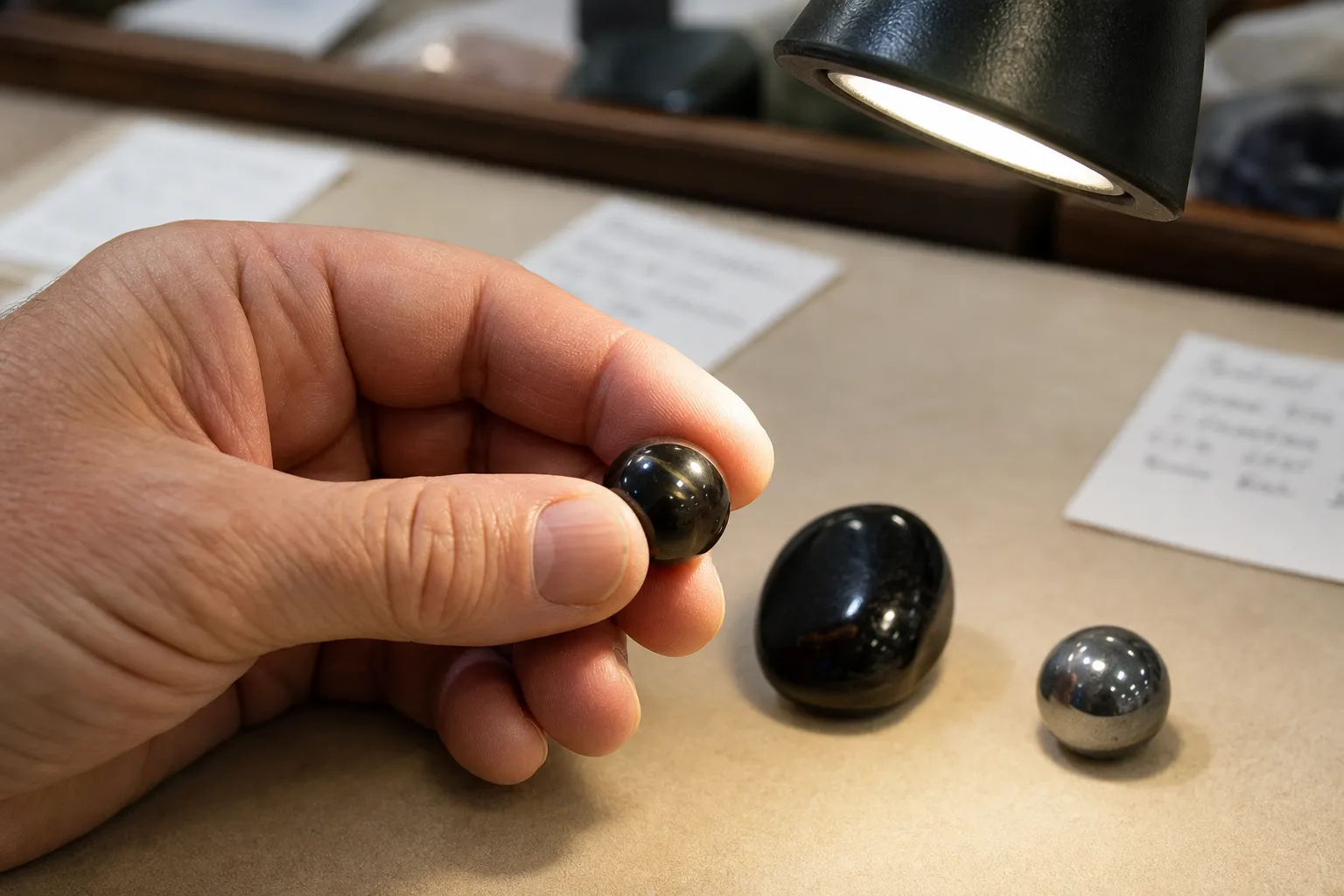
If you have the piece in hand, use steady light and rotate it slowly.
Polished obsidian should usually keep the impression of black glass: dark body color, glass-like highlights, and little to no gray-metal cast. Hematite should usually keep the impression of dark metal: gray-silver body color, metallic flash, and a denser feel for its size.
Compare it with familiar objects if that helps your eye. A black glass cup, phone screen, or polished black ceramic surface can help you notice glass-like shine. A steel tool, dark metal pen, or gunmetal clasp can help you notice metallic shine. This is not a formal test; it simply keeps you from treating every shiny black surface as the same.
For online listings, ask for one photo in indirect daylight and one short video rotating the bead or stone. You are not asking the photo to prove identity. You are checking whether the surface behaves more like glassy obsidian, metallic hematite, or a general polished black material.
Bottom line
For obsidian vs hematite shine, read obsidian as black and glassy and hematite as dark gray and metallic. A high polish can make either one shiny, and a matte finish can make obsidian look less reflective without ruling it out.
The strongest buyer habit is to separate material luster from surface finish: glassy is a type of shine, metallic is a type of shine, and polished is a treatment. Use shine as a first clue, then check color under light, reflection style, weight impression, seller wording, and whether the item may be coated or finished. If you need a confident identification, visual cues are not enough on their own.
Sources
Sources and further reading
Reference links are limited to sources considered suitable for public citation in this page.