ProtectCrystal handling note
How to Tell Cinnabar from Hematite by Color
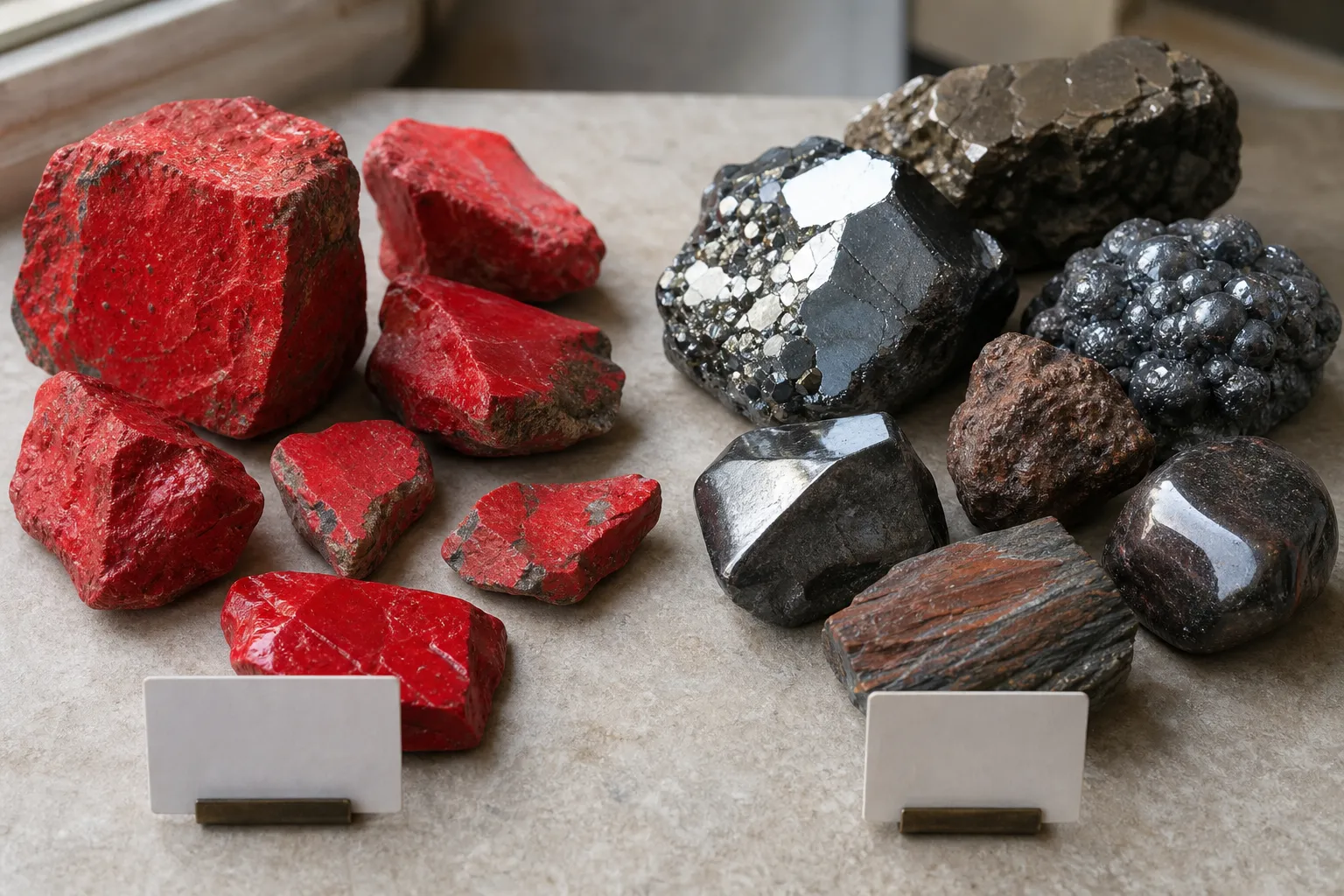
When comparing cinnabar vs hematite color, start with the broad visual split: cinnabar is often described as vivid red, scarlet, or vermilion, while hematite may look steel gray, black, silvery metallic, reddish brown, earthy red, or dark red depending on form and finish.
That difference helps, but it does not identify the mineral by itself. Color is a sorting clue. Hematite’s red clue often shows up more clearly as a rust-red or reddish-brown streak description than as the surface color of a bead or polished stone. Cinnabar can also look bright and shiny enough to blur the difference in photos.
For a buyer looking at a bead, cabochon, carving, rough specimen, or seller image, use body color, shine, streak wording, and finish together. Do not rely on color alone.
upward
Start with the broader guide
Use the broader guide first if you need the full scope before this page.
Quick color comparison
Color-related clue
More suggestive of cinnabar
More suggestive of hematite
Limit
Body color
Vivid red, scarlet, vermilion
Steel gray, black, silvery, reddish brown, earthy red
Surface color can mislead
Surface shine
Bright, sometimes described as adamantine to submetallic
Metallic, specular, dull, earthy, or powdery
Shine is not mineral identity
Streak wording
Red may be noted in references, but avoid making powder from suspected cinnabar
Rust-red or reddish-brown streak is a classic hematite clue
A photo cannot show this reliably
Polished finish
May intensify red or hide texture
May make hematite look mirrorlike, black, or silver-gray
Coatings and treatments can hide clues
A bright red item may fit common cinnabar descriptions. A dark metallic or steel-gray item may fit common hematite presentation. But lighting, polish, coatings, camera color, and seller wording can all change the first impression.
What “cinnabar red” usually means
When people ask “cinnabar is what color,” they usually mean a strong red rather than a muted brown-red. Cinnabar is commonly associated with red mercury sulfide, and “vermilion” is historically tied to a brilliant red pigment made from cinnabar or synthetic mercury sulfide.
In a crystal-buying context, phrases like “vivid red cinnabar,” “scarlet cinnabar color,” or “vermilion cinnabar color” describe appearance. They do not confirm what the object is made of.
That matters with seller photos. A red bead, carved red object, or bright red stone may be called cinnabar-like because it matches the familiar color idea. The photo may support the color description, but it cannot show composition.
What “hematite red” usually means
Hematite has a broader color range than many buyers expect. It may appear as:
- steel gray
- black
- silver-gray or metallic
- dark red
- reddish brown
- earthy red
- dull and powdery
- sparkly or specular, with tiny reflective flakes
This is why red hematite vs cinnabar can be confusing. A red or earthy red piece is not automatically cinnabar. A black or steel-gray piece is not automatically “not red” in mineral terms, because hematite’s powder color is famously redder than many of its surfaces.
Two common mix-ups follow from this:
- Strong red does not automatically mean cinnabar. Hematite and other red materials can also look red or red-brown.
- Hematite does not have to look gray or black. It can, but it can also show reddish or earthy tones.
A better buyer question is: what kind of red is visible, how does the surface reflect light, and does the description mention streak or finish?
Luster changes how the color reads
Luster is the way a surface reflects light. It is not the same as color, but it strongly affects how color looks.
Cinnabar is often described with bright, adamantine luster and may sometimes appear submetallic. In plain terms, a cinnabar specimen may look glossy, intense, or almost metallic on some surfaces.
Hematite can look metallic, submetallic, dull, earthy, or sparkling. A polished hematite bead may look black-silver rather than red. A rough earthy hematite piece may look red-brown and matte. Specular hematite can look glittery, flaky, or micaceous.
When judging a photo or object, separate these observations:
- Hue: red, brown-red, black, gray, or silver?
- Luster: metallic, glassy-bright, dull, earthy, or sparkly?
- Finish: natural-looking, polished, coated, dyed-looking, or too uniform to judge?
A vivid red body color with bright luster may be consistent with cinnabar descriptions. A mirrorlike gray-black metallic surface is more in line with many polished hematite pieces. Neither observation settles the identity by itself.
Streak color: the red clue often linked to hematite
Streak is the color of a mineral’s powder. It can differ from the color of the whole specimen.
Hematite is especially known for a red to reddish-brown streak. That is why black hematite, steel-gray hematite, or metallic hematite can still be connected to a rust-red hematite streak.
Use this clue carefully. A streak plate is a classic mineral-identification tool, but making a streak creates powder and can damage the item. It is not a casual step for polished beads, jewelry, carvings, coated surfaces, or collector pieces.
For suspected cinnabar, be more conservative. Cinnabar contains mercury sulfide, so avoid powder-producing actions such as grinding, sanding, drilling, scratching, streaking, or breaking the piece just to check color. Treat streak information as something you may read in a mineral reference or receive from a qualified assessment, not as an instruction to make powder from an unknown red object.
Safer buyer-level use of streak
- A seller or reference description of a rust-red streak strongly points toward hematite language.
- A black, steel-gray, or metallic item described as having a red-brown streak becomes more plausible as hematite.
- A red item described only by surface color remains uncertain.
Streak explains why hematite can “hide” its red identity on the surface. It should not become a destructive home check for every unknown red piece.
Polished beads, carvings, and photos hide clues
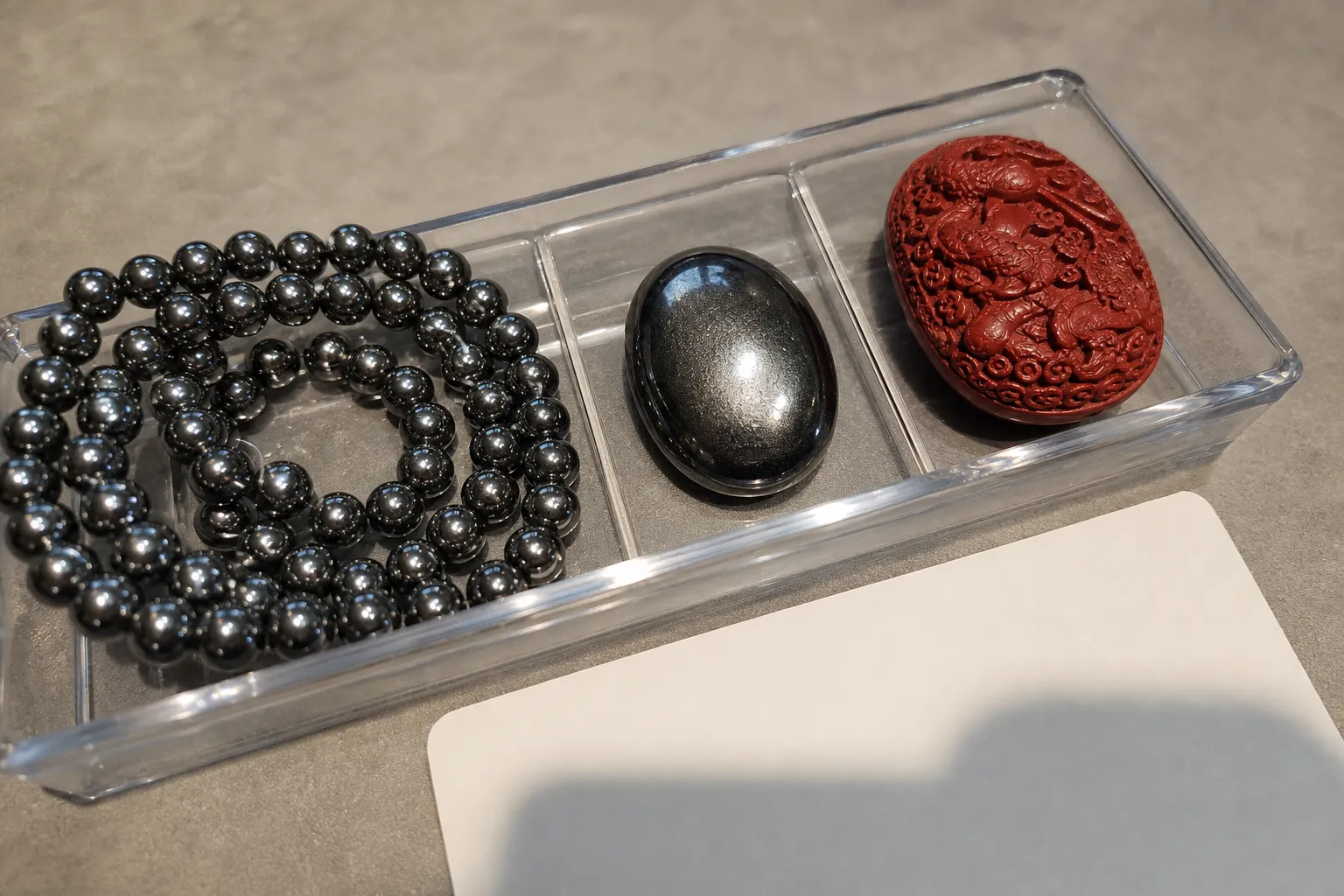
The comparison becomes harder when the object is not a rough mineral specimen. Polished beads, cabochons, carvings, tumbled pieces, and decorative objects often show finish more than natural mineral surface.
A polished hematite bead can look dark, smooth, and reflective: black, charcoal, steel gray, or silvery metallic. The red-brown streak clue may not be visible without damaging the piece.
A red polished bead or carving described as cinnabar is also hard to judge from color alone. Some objects sold with cinnabar language may be resin, lacquer, composite material, dyed material, another red stone, or cinnabar-colored decorative material. The color term may be accurate as a visual description without confirming mineral content.
For finished or photographed items, look for non-destructive clues:
- Is the red extremely uniform, like a coating?
- Does the surface show mineral texture, or mainly polish and carving detail?
- Does the seller distinguish natural cinnabar from cinnabar-colored or cinnabar-style objects?
- Is hematite described with steel-gray, black, metallic, specular, or rust-red streak language?
- Are absolute authenticity or safety claims being made without enough supporting detail?
These questions will not give certainty, but they help keep a color word from doing too much work.
Common color mix-ups
“If it is vivid red, it must be cinnabar.”
Vivid red is a familiar cinnabar description, but red body color is not enough. Hematite and other materials may also appear red or red-brown. Strong red suggests a cinnabar-like appearance, not confirmed cinnabar identity.
“If it is black or metallic, it cannot be red hematite.”
Black, steel-gray, silvery, and metallic surfaces are common hematite presentations. Hematite’s red clue often appears as streak color rather than surface color.
“Shine tells me which mineral it is.”
Shine helps, but it can mislead. Cinnabar may look bright or submetallic; hematite may look metallic, specular, dull, or earthy. Read luster together with body color, streak descriptions, and finish.
“A quick scratch or streak will settle it.”
It may add information in formal mineral identification, but it can damage finished pieces and create powder. With suspected cinnabar, avoid casual powder-producing tests. For certainty, specialized mineral testing or professional assessment may be needed.
A cautious way to read the color clues
Use this order when checking an unknown red, dark red, black, gray, or metallic item:
- Start with body color. Vivid red, scarlet, and vermilion lean toward cinnabar descriptions; steel gray, black, silvery, and metallic lean toward common hematite presentation.
- Check the shine. Bright red with an adamantine-looking surface may fit cinnabar descriptions; mirrorlike gray or black metallic shine often fits polished hematite.
- Read streak wording without making powder yourself. Rust-red or reddish-brown streak wording is a strong hematite clue, even when the surface is dark.
- Account for finish. Polishing, coating, carving, lighting, and photo editing can flatten or exaggerate color.
- Stop short of certainty. Color-related clues can sort possibilities, but they cannot verify mineral identity.
The most useful comparison is not simply “red versus not red.” It is the combination of body color, luster, streak description, and finish. That combination can help you decide whether an item looks more cinnabar-like or more hematite-like, whether the seller description sounds plausible, and whether you should ask for clearer information before buying.
Sources
Sources and further reading
Reference links are limited to sources considered suitable for public citation in this page.