
ProtectCrystal handling note
Hematite bracelet care
Can Sweat Damage Hematite Bracelets or Irritate Skin
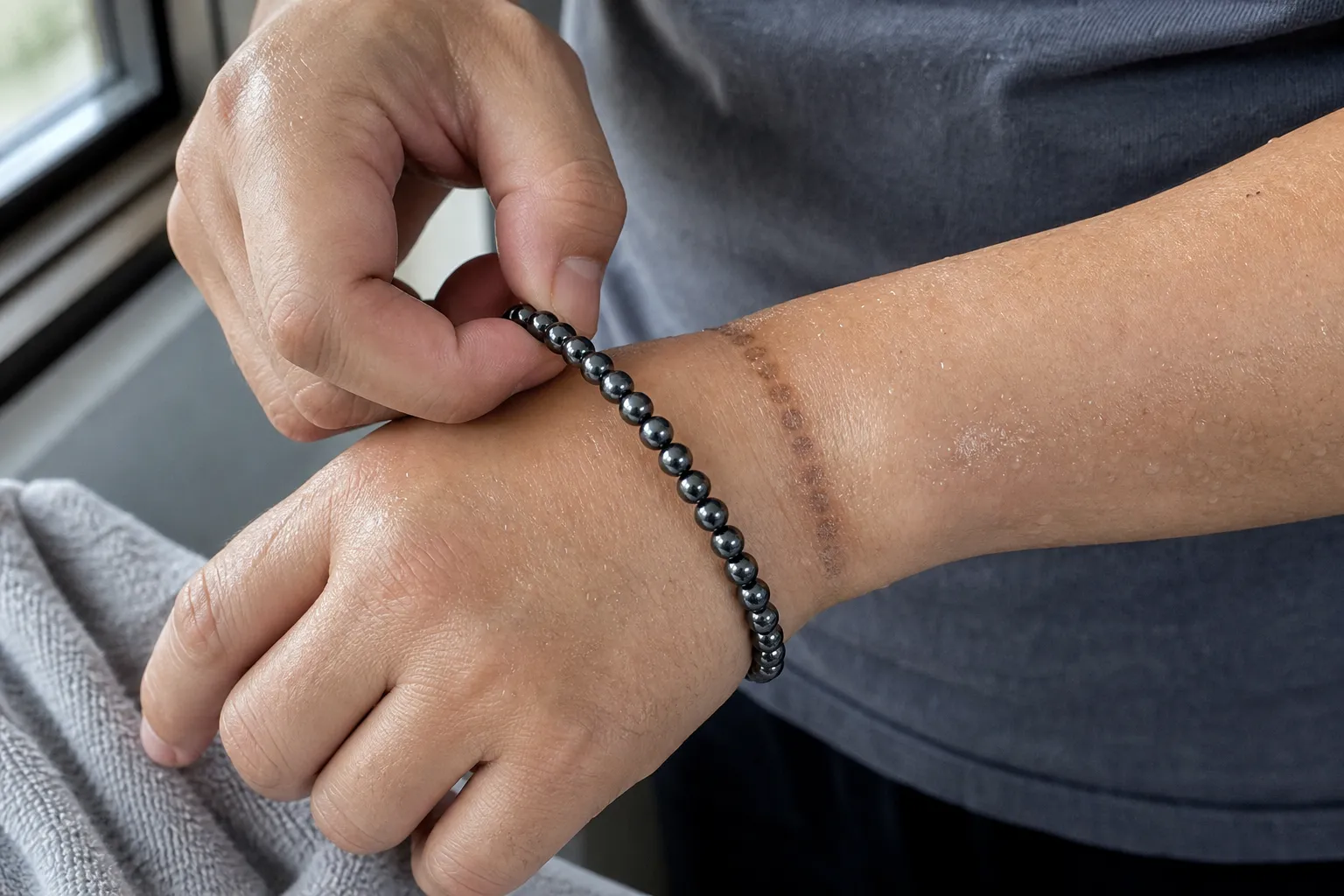
A sweaty hematite bracelet is not automatically ruined, and a dark mark on your wrist does not automatically prove something serious. The practical answer is narrower: hematite bracelet sweat exposure can be linked with residue transfer, dulling, coating wear, trapped moisture, friction, or skin discomfort, but a mark alone cannot confirm the exact cause.
If the bracelet leaves marks, feels scratchy, or makes your skin uncomfortable, take it off. Wipe the beads, dry the bracelet fully, and let your skin settle before wearing it again. Do not keep jewelry pressed against irritated skin.
upward
Start with the broader guide
Use the broader guide first if you need the full scope before this page.
What Sweat Can Change on a Hematite Bracelet
Sweat and hematite jewelry usually become a problem when the bracelet is worn tightly, repeatedly, or while the skin is warm and damp. One sweaty afternoon may leave no lasting change. Repeated moisture and friction can make surface issues easier to notice.
Visible signs may include
- A duller surface after repeated wear
- Dark marks where the beads touch the wrist
- Residue from bead surfaces, elastic, spacers, polish, dust, or grime
- Flaking on beads that look coated, plated, or unusually glossy
- Rough bead edges or drill holes becoming more noticeable
- Moisture trapped near elastic, knots, spacers, or bead holes
These signs can suggest wear, residue, trapped moisture, or a comfort issue. They do not prove the exact material, the authenticity of the hematite, or one specific reaction. For certainty about composition or surface treatment, specialized testing would be needed.
The simplest care habit is to remove the bracelet during heavy sweating if it repeatedly leaves marks or feels uncomfortable, then clean and dry it before reuse. Hematite may carry personal or protective meaning for some buyers, but care decisions should come from what you can see and feel on the bracelet.
Why Your Wrist May Show Dark Marks
Dark marks from a hematite bracelet can look alarming because they seem as if the bead is “bleeding” onto the skin. In practice, several things can create a mark.
Residue
A new bracelet may carry polishing residue, shop dust, packaging debris, or handling grime. Sweat can move that residue onto the skin more easily, especially when the same beads rub the same area again and again.
Finish
Some bracelets sold as hematite have coatings, decorative treatments, magnetic-looking surfaces, or glossy finishes. If the surface smears, flakes, or leaves a metallic-looking streak on cloth, the issue may sit in the surface layer rather than the whole bead.
Friction
A snug bracelet can trap sweat and press beads into the wrist. A loose bracelet can slide and rub. Even smooth beads can feel abrasive after repeated movement, and rough edges or uneven drill holes can make that worse.
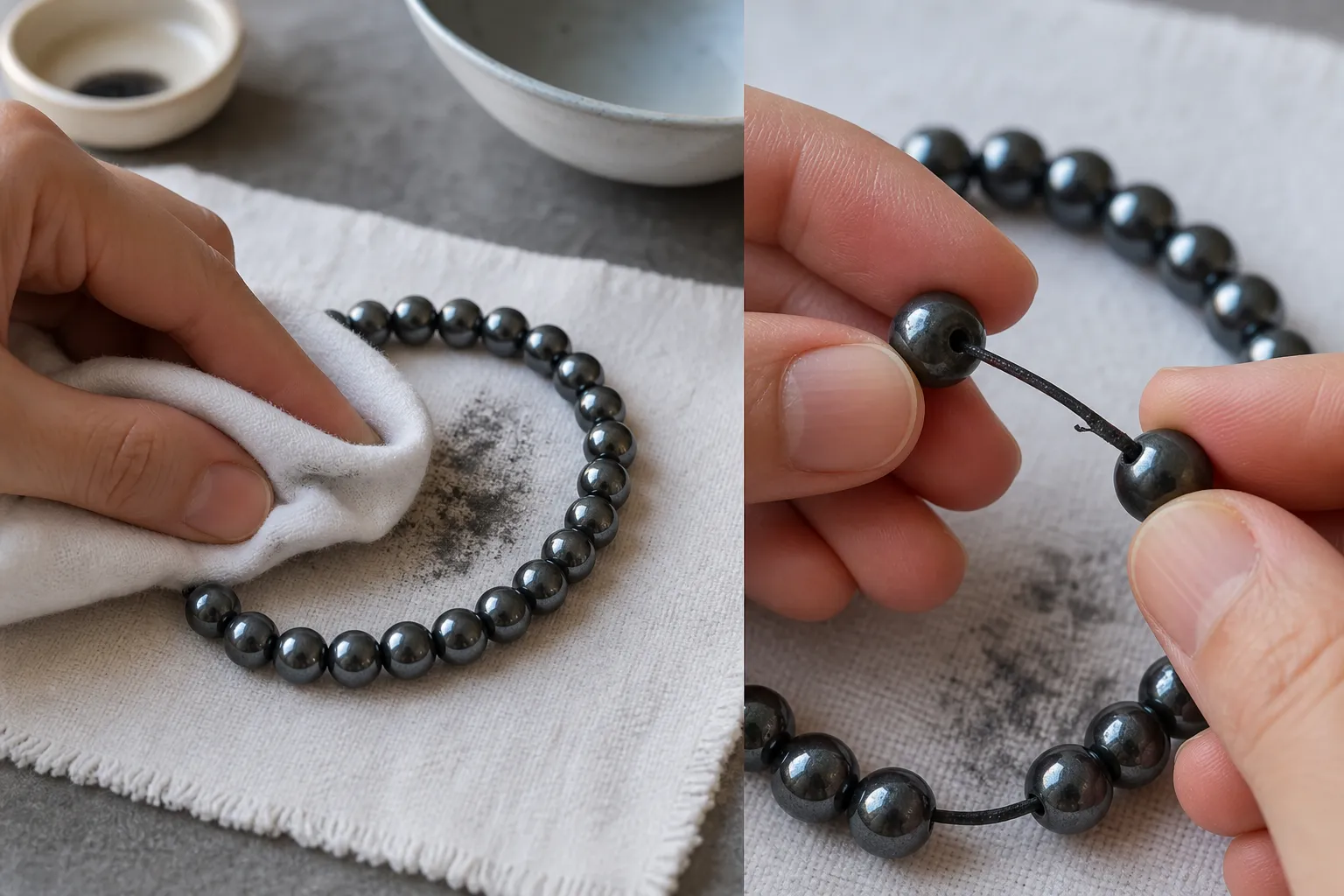
Those observations are useful, but they are not proof of what the bead is made from. A useful home check is simple: wipe the beads with a clean, slightly damp cloth, dry them thoroughly, and see whether the cloth picks up dark residue.
Then inspect the bracelet under good light for flaking, powdery patches, chipped coating, sharp bead edges, or damp elastic. This helps you decide whether to keep wearing it, clean it more carefully, or stop using that bracelet. It cannot verify authenticity.
When Skin Discomfort Is a Wearing Signal
Hematite skin irritation is a skin-contact question, not a crystal identity test. Redness, itching, soreness, tenderness, or a burning feeling can have more than one cause, and this page cannot diagnose the reason.
Treat discomfort as a stop signal.
Remove the bracelet if the skin underneath becomes uncomfortable, visibly irritated, or tender. Wash and dry the skin normally. Do not put the bracelet back on the same irritated area just to test it again. If the reaction persists, worsens, spreads, breaks the skin, or worries you, consider appropriate medical guidance.
From a bracelet-care point of view, look for practical triggers: tight fit, trapped moisture, rough bead edges, chipped surfaces, elastic that stays damp, metal spacers, charms, glue, or unknown coatings. What looks like a “hematite bracelet sweat” issue may involve pressure, residue, finish wear, moisture, or individual sensitivity.
If the same bracelet repeatedly causes discomfort while other bracelets do not, retire it from direct skin wear or keep it for short, dry periods. A protective crystal can still have personal or cultural meaning without being kept against uncomfortable skin.
How to Clean and Dry It After Sweat
There is no need to treat a sweaty hematite bracelet harshly. A cautious routine is better: clean lightly, avoid soaking, and dry thoroughly.
After sweat exposure
- Take the bracelet off before sweat dries into bead holes and elastic.
- Wipe the beads with a soft, slightly damp cloth.
- Use a dry cloth to remove remaining moisture.
- Let the bracelet air-dry fully before storage.
- Check elastic, knots, spacers, and bead holes for trapped moisture.
- Avoid wearing it again immediately if your skin is already irritated.
Do not scrub aggressively if the surface looks coated or flaky. Scrubbing can make a weak finish look worse and may push residue into bead holes or elastic. Metal charms, spacers, glued parts, and elastic cord may also respond differently from the beads.
Avoid sealing a damp bracelet in a pouch. Let it dry first, then store it away from pieces that could scratch or rub it.
This routine cannot prevent every mark or comfort issue. It is a low-risk care step for a bracelet worn against sweaty skin.
What Changes the Answer
The answer changes most when the same signs keep returning.
Repeated marks
A single faint gray smudge after a hot day may be residue transfer. A bracelet that leaves dark marks every time deserves closer inspection. If the beads look powdery, the coating flakes, or the elastic stays damp, sweat exposure may be part of a larger wear-and-care issue.
Fit
A tight bracelet can trap sweat and pressure against one patch of skin. A loose bracelet can slide, rub, and catch. The bracelet should not pinch, leave deep impressions, or hold moisture against the wrist for long periods.
Surface condition
Smooth, intact beads are different from beads with chipped edges, rough drill holes, peeling surfaces, or finish that comes off on cloth. Rough bead edges on hematite-style bracelets are a practical wearing concern even when the bracelet looks attractive at a distance.
Other materials
Elastic cord, metal spacers, charms, glue, coatings, and unknown bead treatments can all complicate the skin-contact question. If you are trying to understand hematite bracelet marks on skin, inspect the whole bracelet, not just the gray beads.
Common Confusion About Sweat, Hematite, and Meaning
Dark skin marks do not prove the bracelet is real hematite. They also do not prove it is fake, unsafe, or toxic. A mark is an observation, not a lab result.
Protective crystal language can add confusion. Hematite is often described in crystal circles as grounding or protective, and many buyers choose it for that personal meaning. That context may explain why someone wants to wear the bracelet daily. It does not mean the bracelet should be worn through sweat, discomfort, or visible surface wear.
Seller wording can also be too thin. “Everyday wear” or “water-resistant” language in a listing should not be treated as a full material assessment. A short description usually cannot tell you how the beads were finished, whether the surface is coated, or how the elastic will respond to repeated sweat exposure.
Stay close to the visible cues: residue, dulling, flaking, roughness, trapped moisture, and recurring discomfort. Those cues will not answer every material question, but they can guide the next step.
A Simple Decision Rule
If your hematite bracelet gets sweaty once, wipe it, dry it, and inspect it. If it leaves one light mark, clean both the bracelet and your skin, then watch whether the mark repeats.
If it repeatedly leaves dark residue, shows flaking coating, catches on skin, or feels uncomfortable, stop wearing it directly against the wrist. If you still like the bracelet, wear it for shorter dry periods, keep it a little looser, avoid workouts or hot weather, or carry it instead of wearing it tightly.
The useful boundary is this: sweat may be associated with visible marks, moisture, friction, and finish wear on a hematite bracelet, but the mark alone does not prove damage, authenticity, toxicity, or a specific skin reaction. Check what you can see. Be cautious with what you cannot verify.