ProtectCrystal handling note
Jewelry Wear Guide
Hematite Jewelry Safety and Wear Considerations
Hematite jewelry safety is mostly a wear-and-care question: does the bracelet sit comfortably, are the beads intact, can the finish handle sweat or water, and is the piece sold as magnetic? Hematite is often chosen for its dark metallic look, weighty feel, and personal crystal meaning, but the safety judgment depends as much on construction as on the mineral name.
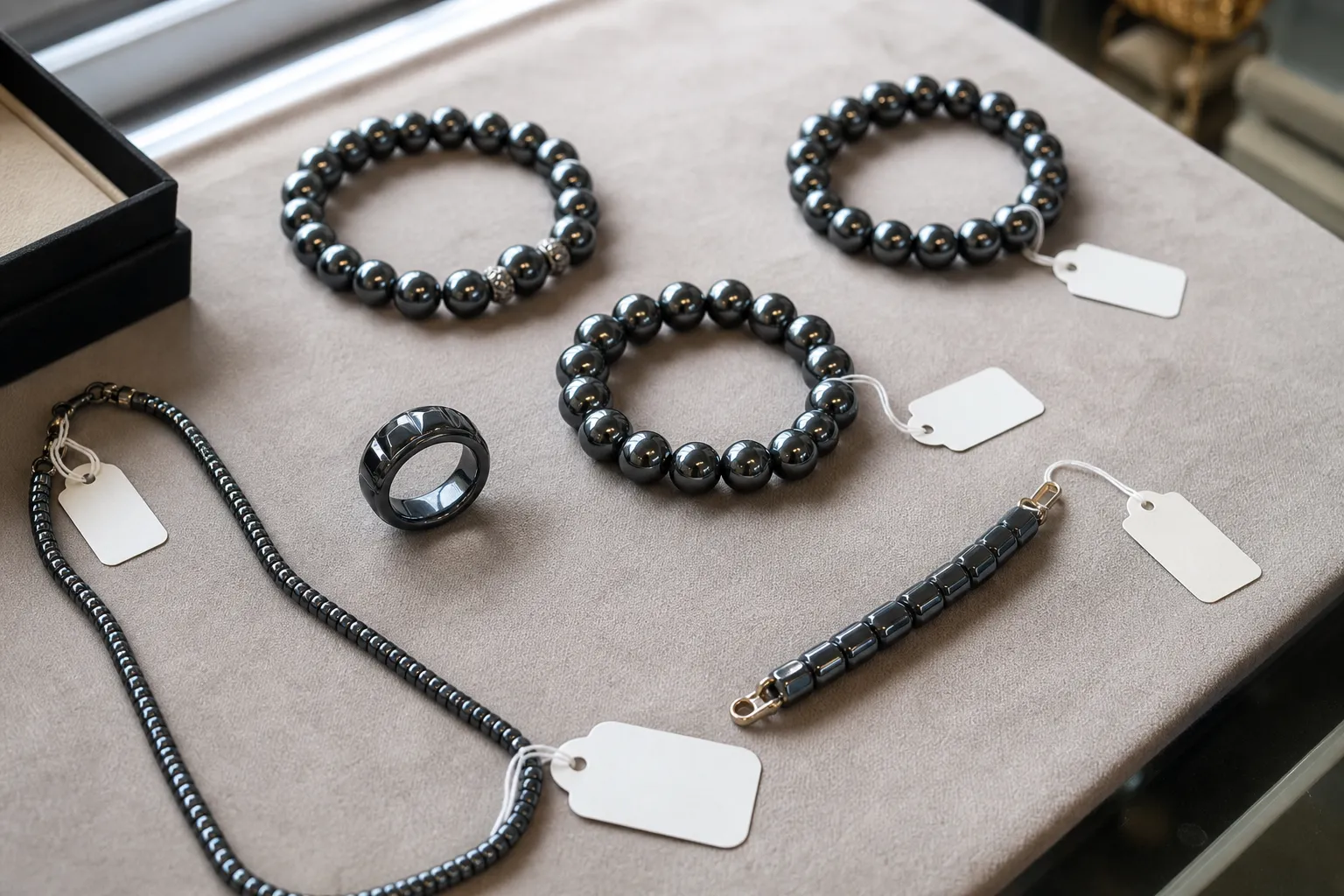
A polished bead bracelet, a coated necklace, a rigid ring, and a magnetic hematite-style anklet can behave differently. Treat each piece as jewelry first. Check the beads, stringing, clasp, coating, hardware, magnet claims, and skin-contact materials before assuming it belongs on your body all day.
upward
Read the full overview first
Use the broader guide first if you need the full scope before this page.
When Hematite Jewelry Is Usually Wearable
For many adults, hematite jewelry is a reasonable daytime accessory when it is intact, comfortable, dry, non-irritating, and not part of a magnetic-product concern. The more cautious answer begins when the bracelet is tight, beads are chipped, elastic is weakening, the surface leaves marks, the seller emphasizes magnetism, or the wearer has an implanted medical device.
Hematite is an iron oxide mineral. Mineral references commonly describe it as metallic to dull in luster, with a red to reddish-brown streak and moderate hardness. Those facts help explain why polished hematite can look sleek and dense while still showing wear in jewelry form. Hardness does not make a bracelet indestructible. Beads can chip near drill holes, polished surfaces can dull, coatings may wear, and rings can feel unforgiving if the sizing or shape is awkward.
Practical Wear Judgments
Smooth intact bracelet, no irritation, no magnet concern
Usually fine for normal dry daytime wear.
Showering, swimming, heavy sweating, or cleaning chemicals
Better to remove it to reduce finish wear, trapped moisture, and elastic strain.
Chipped beads, cracked ring, loose elastic, or broken clasp
Stop wearing until repaired, restrung, or replaced.
Magnetic hematite-style jewelry near an implanted medical device
Use extra caution and follow clinician, device manufacturer, or official device-safety guidance.
Children, pets, or loose beads in the home
Treat broken pieces as choking or ingestion concerns.
The available sources support mineral background and a narrow magnet-related caution. They do not test finished bracelets, coatings, clasps, elastic cords, skin reactions, or long-term wear. That matters because the practical issue is often the manufactured item, not the word “hematite” on a listing.
What Changes the Safety Judgment
“Hematite jewelry” can hide several variables. Two bracelets may look similar in a product photo while differing in bead quality, coating, stringing, magnetic components, and metal hardware.
Material Condition
Visible signs may include surface scratches, dull patches, chips, bead cracks, worn coating, or rough edges near drill holes. These signs do not prove that a piece is unsuitable, but they suggest the jewelry is under stress or has lost some surface integrity.
A small smooth scratch may be cosmetic. A sharp chip is different because it can catch on fabric, rub skin, or worsen with movement. A crack near a drill hole deserves attention because pressure from stringing can concentrate there.
Construction Quality
A hematite bracelet is not only hematite. It may include elastic cord, thread, metal spacers, plated findings, glue, coatings, and sometimes magnetic beads. Skin-contact problems are often more likely to involve these added materials, trapped moisture, friction, or worn finishes than the mineral name alone. From appearance alone, you usually cannot identify the exact cause of redness, staining, or discomfort.
Marketplace wording can be loose. “Natural hematite,” “magnetic hematite,” and “hematite beads” may not fully explain composition, treatment, coating, or magnet content. Shine, weight impression, streak color, and magnet response can suggest possibilities, but they do not prove composition by themselves.
Fit and Wear Pattern
A hematite bracelet worn all day should not pinch, leave deep pressure marks, or slide so loosely that it repeatedly hits hard surfaces. Rings need extra caution because a rigid hematite ring can be uncomfortable when sizing is off, and a cracked or brittle ring may damage more easily than a metal band during knocks or falls.
Necklaces and anklets bring different issues. A necklace needs secure stringing and a clasp that does not pull hair or rub the neck. An anklet is more exposed to impact, sweat, water, and footwear friction. The same material can be comfortable in one design and inconvenient in another.
Before wearing hematite jewelry every day, check:
- whether the elastic returns firmly or looks stretched;
- whether knots, crimps, or clasps are exposed;
- whether metal parts repeatedly touch the same area of skin;
- whether any bead feels sharp, powdery, sticky, or flaking;
- whether the seller describes the item as magnetic, plated, coated, or “hematite-style.”
Showering, Sweat, Skin Marks, and Daily Wear
Should you take hematite jewelry off before showering? Usually, yes. Water is not the only issue. Soap, shampoo, chlorine, salt water, repeated wet-dry cycles, and trapped moisture under beads can affect elastic, coatings, metal spacers, and surface appearance. A piece may survive occasional water contact, but regular showering can shorten the useful life of jewelry components.
Sweat creates a similar problem. It may not instantly damage a well-made bracelet, but repeated moisture, salt, friction, and skin products can contribute to dulling, residue, or irritation around hardware and coatings. After exercise or hot-weather wear, remove the bracelet, wipe it with a soft dry cloth, and let both the jewelry and your skin dry before wearing it again.
Dark marks on skin can come from residue, worn coating, metal spacers, sweat, trapped dirt, or skin products collecting under the bracelet. Hematite is known for a reddish-brown streak in mineral identification contexts, but a mark from finished jewelry should not be treated as a simple authenticity test. If a bracelet repeatedly leaves dark marks, stop wearing it directly against skin until you can inspect and clean it. If irritation appears, give the area a break and consider the role of hardware, coatings, tight fit, moisture, or friction.
A simple daily routine works well:
- Put hematite jewelry on after lotions, sunscreen, or fragrance have dried.
- Remove it before showering, swimming, sleeping, or heavy manual work.
- Wipe it dry after sweaty wear.
- Store it separately from harder or sharper jewelry.
- Inspect elastic, beads, and clasps before putting it back on.
These habits are conservative, not dramatic. They reduce avoidable wear without assuming every hematite piece is fragile.
Magnetic Hematite Jewelry Needs a Separate Check
Magnetic hematite jewelry safety should be considered separately from ordinary polished hematite jewelry. Some products are sold as “magnetic hematite” or “hematite-style” beads. The wording can be confusing because magnetism is sometimes presented as a feature, a selling point, or a sign of identity. It should not be treated as proof that a piece is natural hematite or appropriate for every wearer.
The clearest boundary concerns implanted medical devices. Government magnet guidance warns that magnets can interfere with certain implanted devices, including pacemakers and defibrillators, if brought too close. That guidance is not a hematite-bracelet study, and it should not be stretched into a claim about all hematite jewelry. It does support a practical caution: if you have an implanted medical device, avoid wearing magnetic jewelry near it unless you have device-specific guidance from a qualified source.
If a bracelet is sold as magnetic, ask:
- Does the seller state that the beads contain magnets or are magnetic hematite-style beads?
- Where will the jewelry sit on the body?
- Could it rest near an implanted device during normal wear or sleep?
- Are there children or pets who could access loose magnetic beads if the bracelet breaks?
- Is magnetism actually necessary for your reason for buying it?
For readers without implanted devices, magnet content may still matter for household handling. Small loose beads are already a concern around children and pets; magnetic beads add another reason to collect broken pieces quickly. Keep the categories separate: ordinary jewelry wear, product durability, and magnet-near-device caution are not the same issue.
Broken Bracelets, Chipped Beads, and Sleeping in Hematite Jewelry
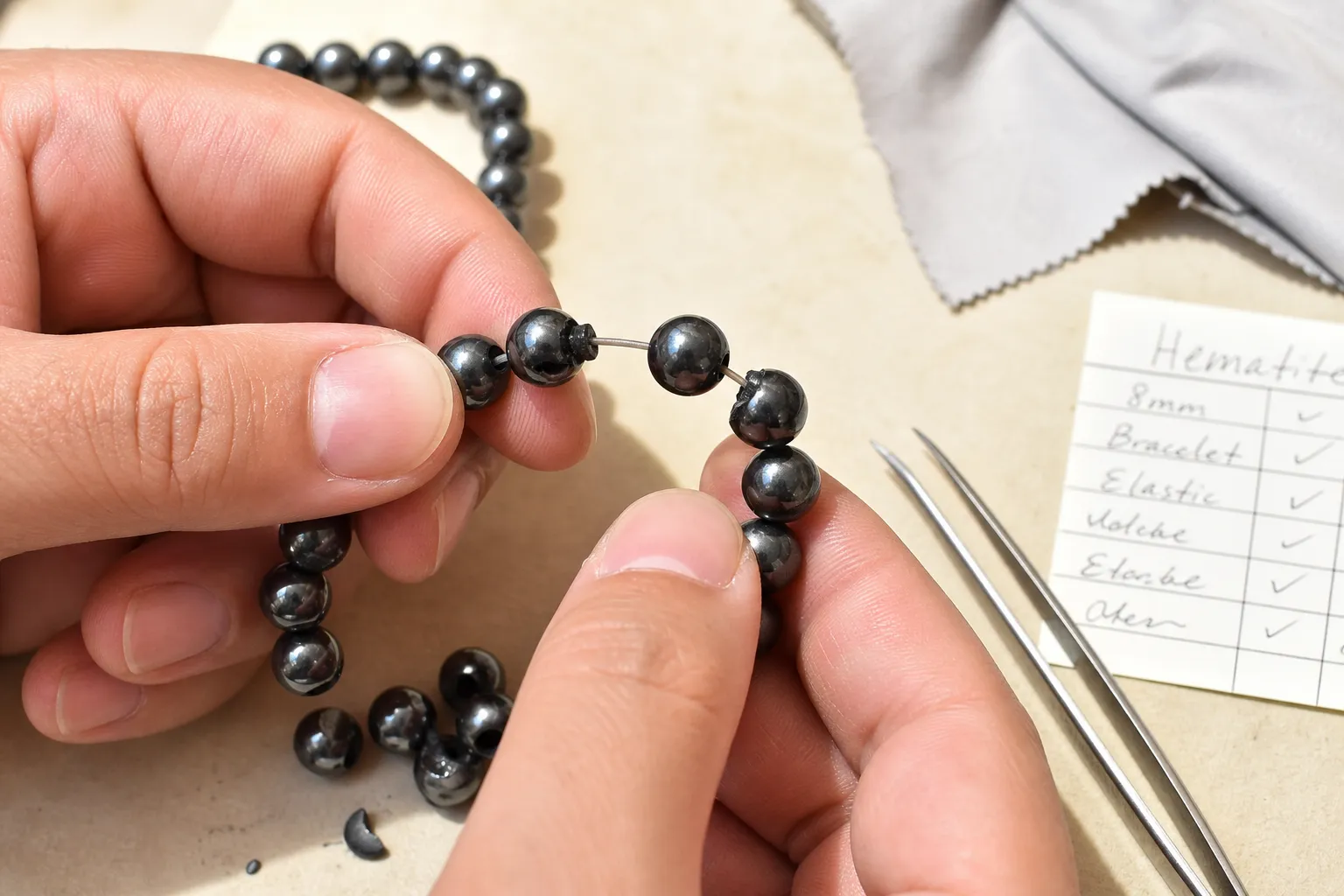
If a hematite bracelet breaks while you are wearing it, stop and collect the beads immediately. Loose beads can roll under furniture, become stepping hazards, or be picked up by children or pets. Check the cord, knots, and metal findings before deciding whether the piece can be restrung. Do not keep wearing a bracelet that is shedding beads or held together by visibly failing elastic.
Chipped hematite beads are a judgment call. A tiny smooth nick may not matter much if it is stable and does not touch the skin. A sharp chip, a crack running through the bead, or damage near a drill hole is a stronger reason to retire or repair the piece. The concern is how the damaged bead interacts with pressure, movement, and stringing.
Sleeping in hematite jewelry is usually not the best default. Bracelets can twist, catch, press into skin, stress elastic, or break without being noticed. Necklaces can tangle or pull. Rings can become uncomfortable if fingers swell overnight. If the piece is magnetic, sleep also increases the chance that it stays close to the same area of the body for hours.
Children need stricter judgment than adults. Small beads, broken elastic, detachable charms, and magnetic pieces can create choking or ingestion concerns. A child may chew beads, pull at elastic, or miss a sharp chip. If hematite jewelry is used around children, it should be age-appropriate, supervised, well-constructed, and removed as soon as it is damaged.
Marketplace Claims and What They Cannot Prove
Hematite jewelry is often sold with language around protection, grounding, calm, or personal energy. Those meanings may be part of why someone likes hematite, and they can be understood as personal or cultural crystal-use language. They should not be converted into physical safety claims, health-outcome promises, or proof that the jewelry is better made.
Seller phrases around “real hematite,” “natural hematite,” or “magnetic hematite” also need careful reading. They may help you ask better questions, but they do not settle composition, coating, treatment, durability, or magnet content.
Seller phrases to question
“Natural hematite”
Is it untreated, coated, plated, dyed, or mixed with other materials?
“Magnetic hematite”
Is magnet content present, and is there guidance for implanted-device wearers?
“Hematite protection bracelet”
What are the bead size, cord type, clasp, coating, and return policy?
“Real hematite beads”
Is there product documentation, or only visual description?
“Everyday bracelet”
Does that include water, sweat, sleep, and impact, or only normal dry wear?
For certainty about composition, coating, plating, magnet content, or treatment, specialized testing or reliable product documentation may be needed. Most buyers will not pursue that for a casual bracelet, so the practical alternative is to choose conservative wear habits and avoid treating seller language as proof.
A Pre-Wear Check for Hematite Bracelets, Rings, and Necklaces
Before wearing hematite jewelry, spend a minute checking the parts most likely to affect comfort and durability.
For bracelets
- Roll each bead gently between your fingers and feel for sharp chips or cracks.
- Stretch the elastic slightly; it should recover without visible fraying or gaps.
- Look near drill holes, where stress and chipping often show first.
- Check spacers and charms for rough plating, discoloration, or exposed edges.
- Confirm whether the product is magnetic, especially if magnet exposure matters in your household.
For rings
- Check for cracks before wearing, especially if the ring has been dropped.
- Avoid wearing it during lifting, cleaning, sports, or tasks where it may strike hard surfaces.
- Remove it if the fit feels tight, the edge rubs, or the ring catches on objects.
- Store it where it will not knock against harder jewelry.
For necklaces
- Inspect the clasp, cord, and bead holes.
- Avoid sleeping in pieces that can twist or pull.
- Keep damaged or loose beads away from children and pets.
- Remove the piece before swimming, showering, or heavy sweating.
If the jewelry passes these checks and feels comfortable, normal dry daytime wear is usually the least complicated use case. If it fails one of them, repair, restring, replace, or reserve the piece for display rather than skin contact.
Bottom Line for Wearing Hematite Jewelry
Hematite jewelry can work as an everyday accessory when it is intact, comfortable, non-irritating, and handled with ordinary jewelry care. The main concerns are practical: chipping, worn finish, tight fit, elastic failure, loose beads, moisture exposure, irritation around added materials, and confusion over magnetic products.
The answer changes when a piece is damaged, worn in water, used by a child, worn during sleep, or sold as magnetic. It also changes when seller language asks you to believe more than the product details show. Treat crystal meanings as personal context if they matter to you, but make the wear decision from visible condition, construction, fit, magnet content, and your own skin response.
A careful rule is enough for most buyers: wear hematite jewelry dry, inspect it often, remove it before rough or wet use, take irritation seriously, keep broken beads away from children and pets, and be especially cautious with magnetic jewelry near implanted medical devices.
Sources
Sources and further reading
Reference links are limited to sources considered suitable for public citation in this page.