
ProtectCrystal handling note
Hematite ring safety
Can Hematite Rings Be Uncomfortable or Easy to Break
Yes. Hematite rings can feel uncomfortable, and they may chip, crack, or become poor to wear if the fit is wrong, the edge is damaged, the finish is flaking, or the ring has been dropped or struck. For hematite ring safety, the most useful first check is simple: does the ring fit without pinching, and does every surface that touches your finger feel smooth and intact?
This page does not claim a breakage rate, a verified durability grade, or a medical conclusion about skin reactions. The practical answer stays with what a buyer or wearer can check: pressure, sharp edges, cracks, chips, flaking finish, impact marks, and discomfort during normal wear.
upward
Read the full overview first
Use the broader guide first if you need the full scope before this page.
The Short Practical Answer
A hematite ring is more likely to feel uncomfortable when it is too tight, too loose, bulky between the fingers, uneven inside the band, or damaged around the rim. It is more likely to become a problem when it shows cracks, chips, flaking finish, or new marks after a drop or strike.
That does not mean every hematite ring is unpleasant or delicate. The question depends on the individual ring in your hand. Two rings sold under similar names can feel very different if one has a smoother interior, cleaner edges, and better sizing, while the other has rough points or a shape that presses into nearby fingers.
If the ring hurts, scrapes, catches on fabric, pinches your finger, or shows a new crack after impact, remove it and inspect it before wearing it again. If you cannot tell whether a mark is only surface wear or deeper damage, treat the ring cautiously instead of forcing it into daily use.
What Can Make a Hematite Ring Feel Uncomfortable?
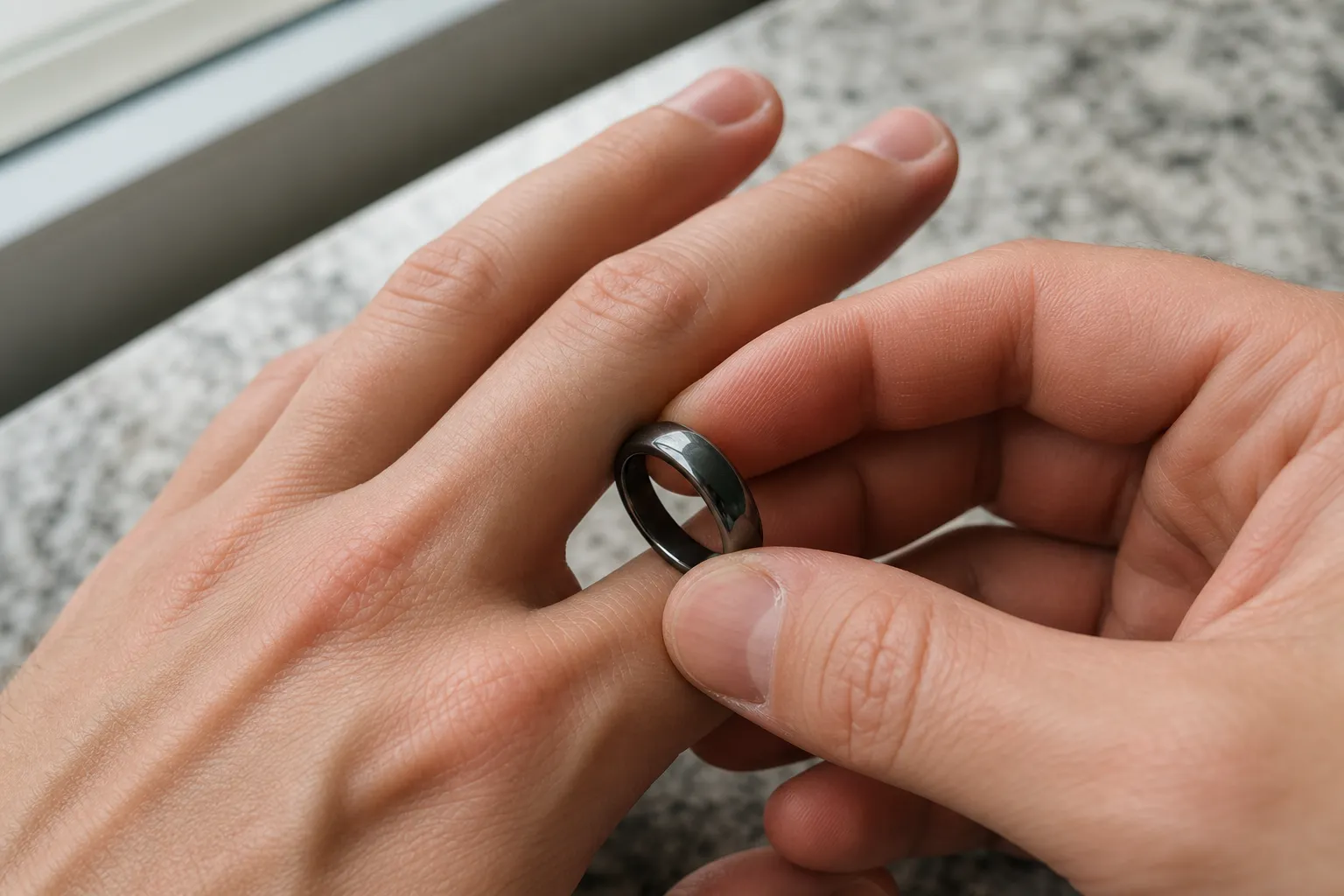
The most common issue is fit. A poorly sized hematite ring may feel tight when your finger changes size slightly during the day, or it may shift around and bump nearby fingers if it is too loose. Either problem can make wearing a hematite ring distracting rather than comfortable.
Shape matters too. A thick band can press between fingers even when the size seems right. A wide band may feel snugger than a narrow one because more of it touches the finger. A flat inner surface may feel different from a more rounded interior. These are practical wearing factors, not universal rules for every hematite ring.
Surface condition is the next thing to check. Visible signs may include:
- A chipped edge that feels sharp when you rotate the ring
- A rough inner band that rubs the skin
- A small point that catches on clothing or hair
- Uneven finish along the rim
- Flaking finish that makes the surface feel patchy
- A crack that creates a raised or split edge
A ring can look smooth and still feel wrong after a few minutes. Put it on briefly, move your hand normally, bend your fingers, and notice whether it presses, pinches, or scrapes. If discomfort appears right away, the issue is probably fit, shape, or finish rather than something you need to “get used to.”
Do Hematite Rings Break Easily?
The cautious answer is that hematite rings can chip, crack, or break if they are dropped, struck, squeezed against a hard object, or already weakened by visible damage. This page cannot give a specific hardness number, brittleness comparison, or breakage probability from the available source pool.
For a buyer, the better question is narrower: does this ring show warning signs before you wear it?
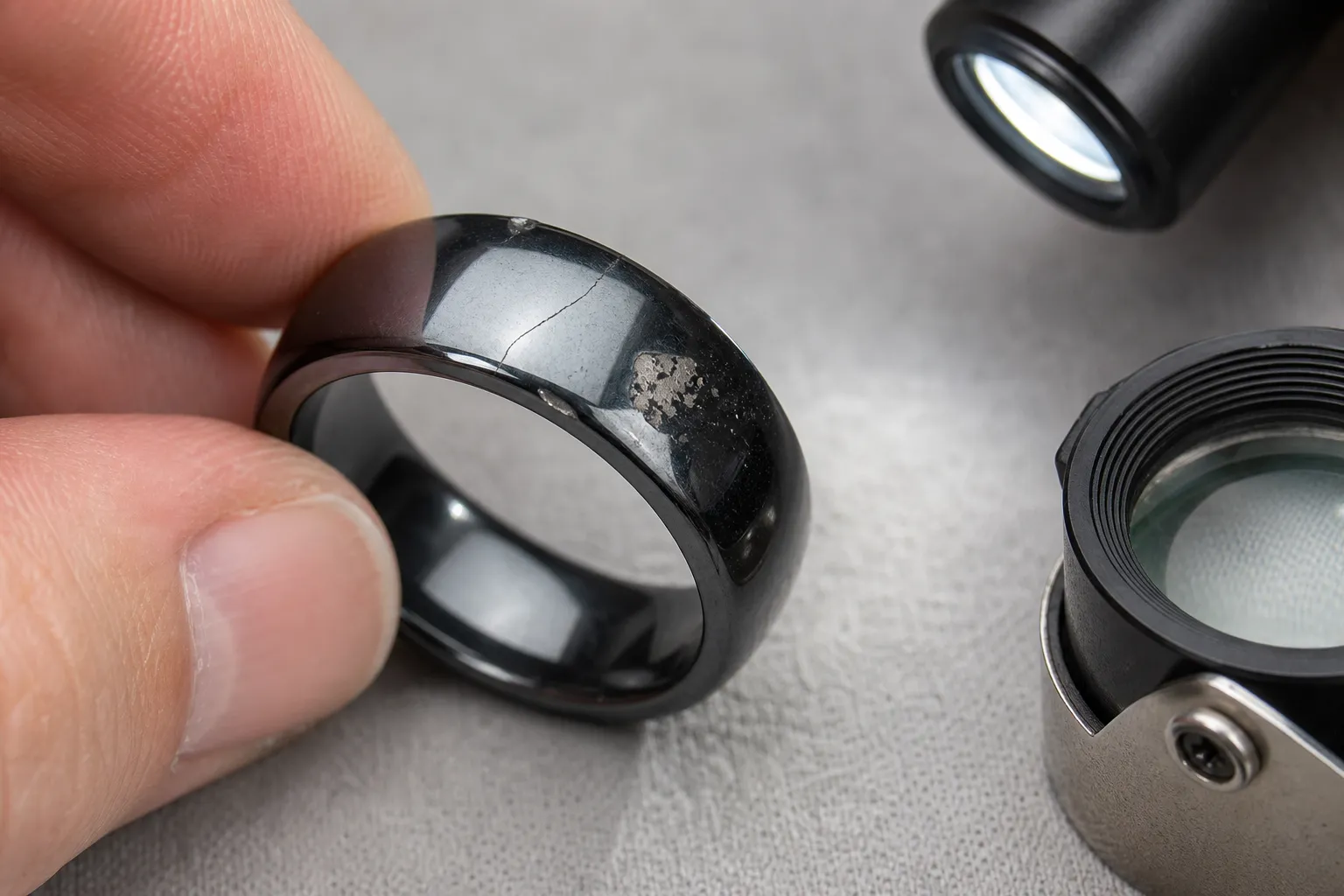
Look closely in bright light. Rotate the ring slowly and check the outside, inside, and both rims. Hematite ring cracks may appear as fine lines, darker separations, or irregular marks that continue across an edge. This can suggest damage, but it cannot prove the cause or depth of the problem. A surface mark, coating issue, natural-looking line, or structural crack may be difficult to separate by eye. For certainty, specialized testing may be needed.
A dropped hematite ring deserves another look even if it does not split apart. The impact may leave a chip, flat spot, new edge, or line that was not visible before. A ring knocked against a countertop, door handle, gym weight, or tile floor should be checked the same way. If a new mark feels sharp, spreads across the band, or sits near a thin area, stop wearing it until you are comfortable with its condition.
The clearest warning sign is change. If the ring used to feel smooth and now has a sharp edge, crack, flaking finish, or scraping point, pause before wearing it again.
Quick Comfort and Damage Check
A short inspection cannot prove authenticity, composition, or long-term durability. It can help you catch the issues that matter most for daily comfort.
Fit
Look for a snug, not tight fit, with no pinching when fingers bend. Poor sizing is a common reason rings feel uncomfortable.
Inner surface
Look for a smooth contact area against the finger. Roughness can rub or scrape during wear.
Outer edge
Look for no sharp chips or raised points. Sharp edges can catch or scratch.
Cracks
Look for lines that cross the band or reach an edge. Visible cracks may indicate damage.
Finish
Look for no obvious flaking, peeling, or patchy surface. Finish wear can change feel and appearance.
Recent impact
Look for new marks after a drop or strike. Impact damage can make wear less predictable.
If the ring passes the visual check but still bothers you after a short wear period, trust the discomfort. A ring does not need to be visibly damaged to be the wrong size or shape for your hand.
If the ring fails the check, do not try to fix the problem by bending it, scraping the finish, forcing it over a knuckle, or continuing to wear it through discomfort. Those actions can create new problems, and this page does not have enough evidence to support a repair method for hematite rings.
Where Buyers Often Misread the Problem
One common mistake is treating “hematite” as if the word explains everything about comfort and durability. In practice, the buyer-facing issue is usually the individual object: its sizing, polish, edge condition, thickness, finish, and damage history. A ring can feel wrong because it is the wrong shape for your hand, not because every hematite ring behaves the same way.
Another mistake is assuming shine means good condition. A glossy product photo may look appealing, but the comfort check happens at the edges and inner band. A ring that looks polished on top can still have a rough point near the finger. If you are buying online and the listing does not show those areas clearly, ask for images of the inner band and both side edges.
A third mistake is using crystal meaning as a substitute for inspection. Hematite is often discussed in symbolic or personal-use language, and that context may matter to the wearer. It does not answer whether a specific ring pinches, cracks, flakes, or handles impact well. For this question, the condition of the ring matters more than the wording attached to it.
There is also a testing limit. A home visual check may help you notice cracks, chips, or flaking finish. It cannot reliably verify exact composition, coating behavior, magnetic behavior, authenticity, or long-term durability. If those questions affect a purchase decision, appearance alone is not enough.
When to Stop Wearing the Ring
Remove the ring if it hurts, cuts, scrapes, catches repeatedly, traps the finger uncomfortably, or develops a sharp damaged area. Remove it as well if your finger becomes irritated during wear and the irritation does not clearly match ordinary pressure from poor fit. This is not a diagnosis; it is a practical wearing boundary. Jewelry that bothers the skin or finger should not be forced into daily use.
Also avoid wearing the ring during activities where impact is more likely, such as lifting hard objects, working with tools, exercising with equipment, moving furniture, or doing tasks where your hand may hit stone, metal, tile, or glass. The point is not to predict exactly how the ring will fail. It is to avoid obvious impact situations that can leave a ring chipped or cracked.
If a ring breaks, do not keep wearing the remaining piece because it “mostly still fits.” Broken edges can be sharp, and a changed shape can create new pressure points. Store the pieces separately if you want to keep them, and avoid handling jagged edges casually.
For routine hematite ring care, keep it modest: store the ring where it will not be knocked around, avoid dropping it onto hard surfaces, and inspect it after impact. If cleaning, finishing, or repair instructions matter, rely on guidance from a qualified jewelry or lapidary source rather than assuming one general crystal-care routine applies to every ring.
The Evidence Limit for This Question
The available source pool does not support specific public-facing claims about hematite composition, hardness, brittleness, coating behavior, magnetic behavior, allergy rates, or exact care procedures. That limit changes the answer.
Instead of saying hematite rings always break easily or are always comfortable, the better answer is conditional: they can feel uncomfortable when fit or finish is poor, and they may become poor to wear after visible damage, drops, or strikes. The strongest buyer action is inspection, not assumption.
If stronger sources are added later, they may support more detailed material or jewelry-care guidance. Until then, this page keeps the focus on what the wearer can see and feel.
Bottom Line
Hematite rings can be uncomfortable, and they can break or become damaged, but the useful answer depends on the individual ring. Check the fit, inner surface, edge smoothness, visible cracks, flaking finish, and any damage after a drop or strike. If the ring hurts, catches, cuts, or changes after impact, stop wearing it and inspect it carefully.
A hematite ring should be treated as a real object on your hand, not as a claim in a product description. Comfort comes from fit and finish. Wearability depends on condition. Anything beyond what you can see and feel may require better evidence or specialized testing.