ProtectCrystal handling note
Meaning with material caution
What Does Cinnabar Crystal Mean in Modern Crystal Use
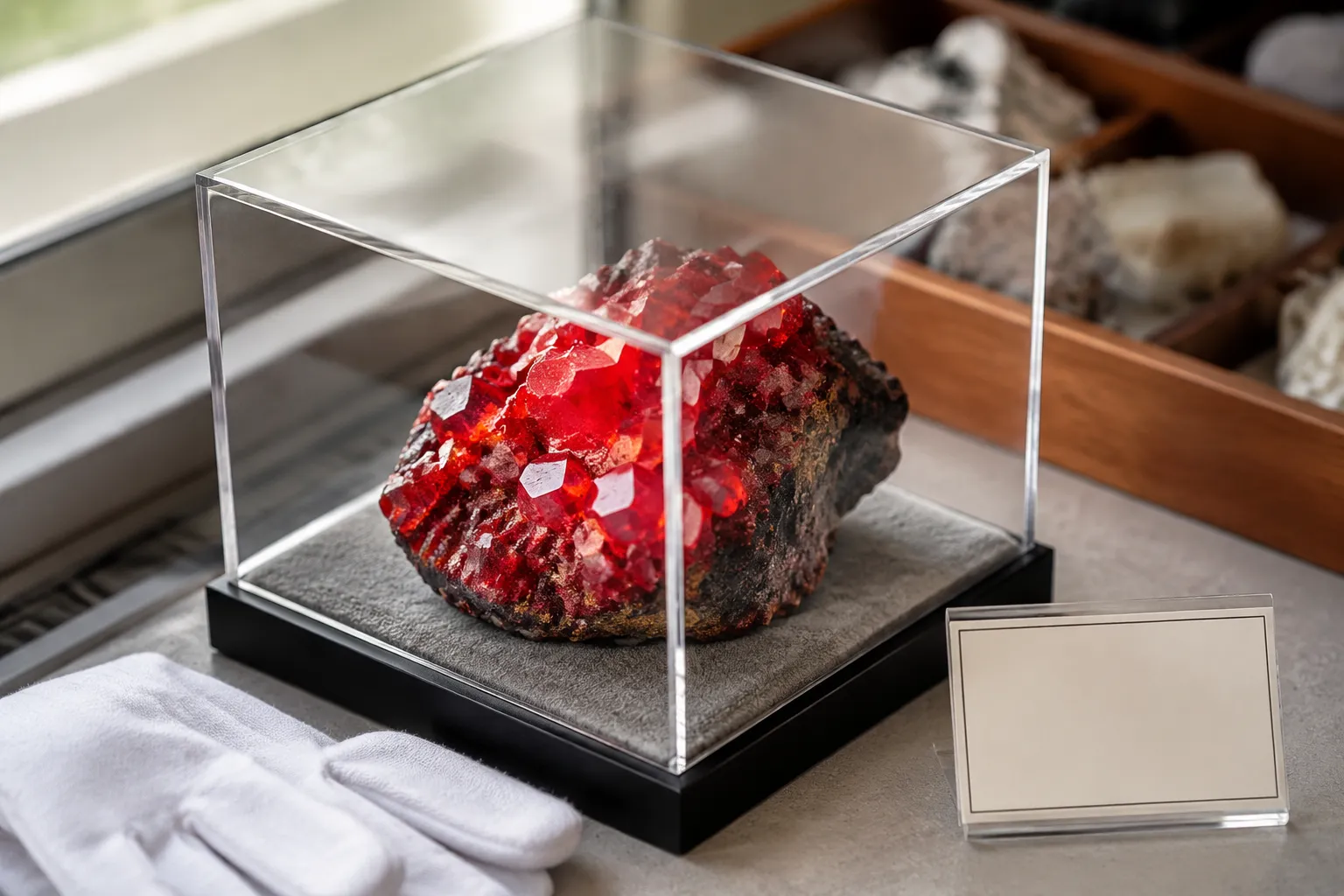
A red cinnabar specimen can look intense on a shelf, but cinnabar crystal meaning in modern crystal use is mostly symbolic. It is often associated with protection language, transformation, personal power, manifestation, abundance, and auspicious red color. Those words describe how crystal sellers and users commonly frame cinnabar, not guaranteed results from the mineral itself.
The material side is less flexible: cinnabar is mercury sulfide, HgS, and it has a long history as a natural source connected with vermilion pigment. Because it is mercury-bearing, the meaning should not be separated from handling caution. The practical answer is two-part: cinnabar carries strong red-stone symbolism, and it also deserves careful treatment as a mineral.
upward
Read the full overview first
Use the broader guide first if you need the full scope before this page.
The Short Meaning: Power, Change, and Red-Stone Symbolism
In modern crystal circles, cinnabar stone meaning usually points to intensity. It is commonly described with words such as ambition, focused change, material success, strong boundaries, and personal power. Some sellers frame it as a manifestation stone; others connect it with protection symbolism, abundance, or auspiciousness.
That does not mean cinnabar creates those outcomes. It means the mineral’s vivid red color, mercury history, and older cultural associations make it easy to place in a category of active, forceful stones. In that way, cinnabar reads differently from black obsidian or metallic gray hematite. Obsidian is often discussed through grounding or shield-like language. Hematite is often discussed through weight, iron-like appearance, and steadiness. Cinnabar is usually given sharper red vocabulary: power, activation, wealth language, and transformation.
The cinnabar metaphysical meaning is best read as a personal or cultural frame. If someone keeps a cinnabar specimen near a workspace, they may be using it as a reminder of focus, commitment, or decisive action. If a seller calls it protective, that is crystal-use wording. It is not a material test, a safety statement, or proof that the piece is natural cinnabar.
Keep the meaning symbolic. Keep the handling practical.
What the Mineral Facts Change
Cinnabar is not just “a red crystal.” Mineral references identify cinnabar as mercury sulfide, HgS, and describe it as an important ore of mercury. That matters because a crystal buyer should read the word “cinnabar” differently from a simple color label in a bracelet description, specimen tag, or marketplace listing.
Red color is part of the story, but it is not enough. Cinnabar may appear bright scarlet, deep red, brick red, earthy, granular, massive, encrusting, or crystalline. Some specimens occur on a pale host rock, and collector descriptions may mention red crystals against a lighter matrix. Strong red color can suggest cinnabar, but it cannot prove composition, natural origin, quality, or appropriate use.
There is also a visual complication: mineral references note that naturally red cinnabar can show silver-looking surface changes from photo-oxidation involving metallic mercury at the surface. That detail is useful because it weakens simple color rules. A red surface is not automatic confirmation, and a silver-looking area is not something to interpret casually at home.
This is where cinnabar mercury sulfide meaning differs from cinnabar crystal symbolism. The symbolic side says red, power, transformation, and manifestation. The mineral side says HgS, mercury-bearing material, visual uncertainty, and caution with dust, damage, and handling.
Both layers can exist, but they do different jobs.
How to Read Seller Language
Modern listings often mix material words with symbolic claims. A single description may call a piece “natural cinnabar,” “high quality,” “protective,” “auspicious,” “powerful,” or “for manifestation.” These phrases do not carry the same weight.
“Cinnabar,” “mercury sulfide,” “HgS”
May tell you the seller is naming a mineral identity.
Does not prove that the item has been tested or is suitable for every use.
“Deep red,” “scarlet,” “red crystal cluster”
May tell you the visible color or style being marketed.
Does not prove authenticity, purity, origin, or handling status.
“Protection,” “manifestation,” “abundance,” “power”
May tell you the symbolic or metaphysical framing.
Does not prove a guaranteed effect.
“Natural,” “best quality,” “high purity”
May tell you the marketplace positioning.
Does not prove independent verification.
“Jewelry,” “beads,” “carved piece”
May tell you the form being sold.
Does not prove that the material is appropriate for skin contact or daily wear.
This is especially important with cinnabar protection symbolism. In a crystal shop, “protection” usually means a belief-framed association, not a material safety property. A cinnabar pendant described as protective still raises practical questions: What is it made from? Is it natural cinnabar, cinnabar-colored material, lacquer, resin, composite, or something else? Is the surface sealed? Is there dust, damage, flaking, or unknown treatment?
A buyer cannot answer all of that from photos. Visible signs may help you decide whether to ask more questions, avoid a piece, or keep it as a display specimen rather than wear it. For certainty, specialized testing may be needed.
Vermilion History Adds Context, Not Proof
Cinnabar has a strong historical link with vermilion, the red mercury sulfide pigment used in art and material culture. Museum sources often discuss cinnabar and vermilion together because natural cinnabar was historically connected with this intense red pigment.
That history helps explain why modern cinnabar crystal symbolism feels forceful. Red pigment traditions, ceremonial color, lacquerware associations, and alchemical language all feed the modern sense of cinnabar as a stone of potency, change, and status. Commercial crystal pages often borrow from that atmosphere when they describe cinnabar as ancient, powerful, auspicious, or transformational.
But history is not proof of modern crystal effects. Cinnabar vermilion history can explain why the mineral carries strong visual and cultural associations. It does not show that wearing, holding, or displaying cinnabar produces a specific result.
The same boundary applies to alchemy and feng shui references. They can explain why people attach ideas of transformation, wealth, or luck to cinnabar. They should not override material caution.
Handling Caution Belongs With the Meaning
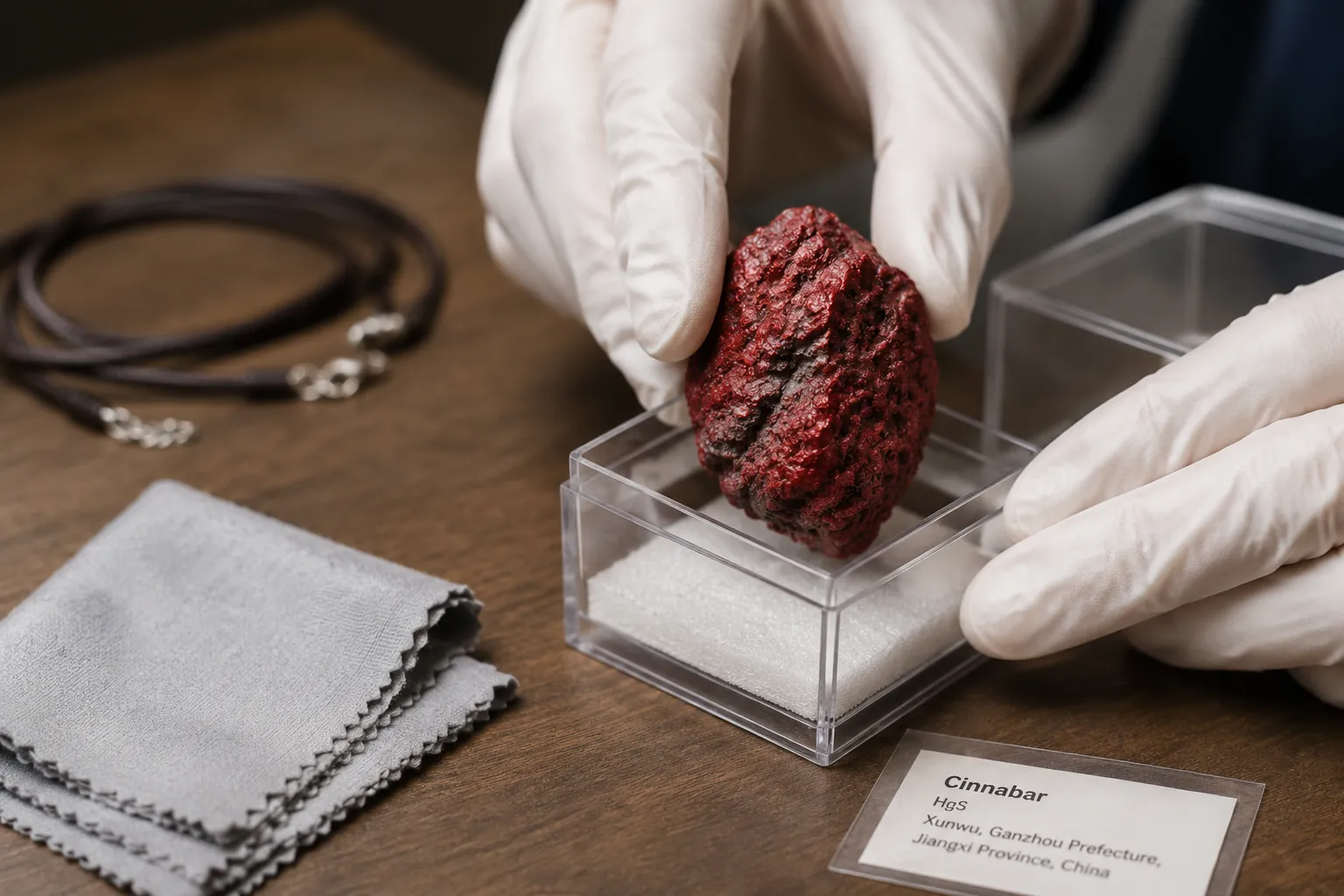
Because cinnabar is mercury-bearing, cinnabar safety meaning is part of the modern answer. The point is not to create fear around every red stone. The point is to treat cinnabar as a mineral where handling choices matter.
For practical crystal use:
- Do not ingest cinnabar.
- Avoid dust, powder, sanding, grinding, or polishing unknown cinnabar material.
- Treat damaged, crumbly, flaking, or unsealed natural pieces cautiously.
- Wash hands after handling mineral specimens, especially if the surface is dusty or uncertain.
- Keep cinnabar away from children, pets, food areas, and casual handling surfaces.
- Do not assume polished appearance or seller wording settles the handling question.
This is not a full toxicology guide. The public source set is stronger for cinnabar’s mineral identity and pigment history than for detailed handling thresholds, so the guidance should stay general and conservative.
If you want cinnabar for symbolic reasons, display-first use is usually easier to keep within cautious habits than frequent wearing or handling. If a piece is sold as jewelry, ask what the material actually is and how the surface is finished. “Cinnabar jewelry” can refer to different market items, including cinnabar-colored carved material or other decorative products, not always the same thing as a raw mineral specimen.
Do not let the spiritual label do the safety work.
Color and Surface Clues Can Suggest, Not Confirm
Cinnabar color identification is tempting because the red can be distinctive. Still, appearance alone is a limited check. Cinnabar is commonly associated with scarlet to brick-red tones, sometimes with earthy or granular texture and sometimes in more formed crystal habits. It may feel unusually heavy for its size because cinnabar has high specific gravity compared with many common minerals. References also describe low hardness and nonmetallic to adamantine luster.
These clues can support a cautious suspicion, but they are not enough for certainty. Other red minerals, pigments, dyed materials, composites, resins, and carved decorative pieces can confuse the picture. A seller’s “natural cinnabar” phrase is not the same as independent identification.
For a home buyer, the better move is not to perform scratch tests or abrasive checks. Those can damage the piece and may create dust. Instead, look for low-contact information: clear seller disclosure, mineral name, matrix description, treatment notes, return policy, and whether the object is being sold as a specimen, bead, lacquer-like carving, or fashion accessory.
If the answer matters for safety, value, or authenticity, visual inspection is only a starting point.
Common Misunderstandings
Symbolic language is not mineral evidence
A listing may say cinnabar supports transformation, manifestation, protection, or wealth. Those phrases describe cinnabar spiritual meaning as it appears in modern crystal culture. They do not identify the material, confirm quality, or remove handling concerns.
Historical use does not make modern use simple
Cinnabar’s connection with vermilion explains why the color has been valued for a long time. It does not mean every modern item labeled cinnabar should be worn, polished, washed aggressively, or placed where it can be handled casually.
Red is a clue, not a conclusion
Cinnabar can have a strong red identity, but color by itself cannot confirm HgS. In the other direction, surface changes or matrix material can make a specimen look less like the bright red image a buyer expects.
The cleaner reading is this: cinnabar transformation meaning belongs to symbolism; cinnabar mercury sulfide meaning belongs to material reality. A good label or seller description should not blur the two.
A Practical Way to Use the Meaning
If you use crystals as personal symbols, cinnabar can reasonably be treated as a reminder of focused action, ambition, change, or strong boundaries. That is the modern meaning layer. It can sit beside obsidian or hematite in a protective crystal collection, but it asks for a different handling posture.
Before buying or using a piece labeled cinnabar, ask three questions:
- Is this meaning language or material information?
- What visible cues support the seller’s description, and what remains uncertain?
- Does the intended use involve touching, wearing, dust, damage, moisture, children, pets, or food areas?
That keeps the answer narrow and useful. Cinnabar’s modern crystal meaning is commonly about protection symbolism, transformation, manifestation, power, and auspicious red color. Its real-world boundary is that cinnabar is mercury sulfide, color alone cannot verify it, and handling should stay cautious.
Sources
Sources and further reading
Reference links are limited to sources considered suitable for public citation in this page.