ProtectCrystal handling note
Listing term guide
Hematite Shield Meaning in Crystal Listings
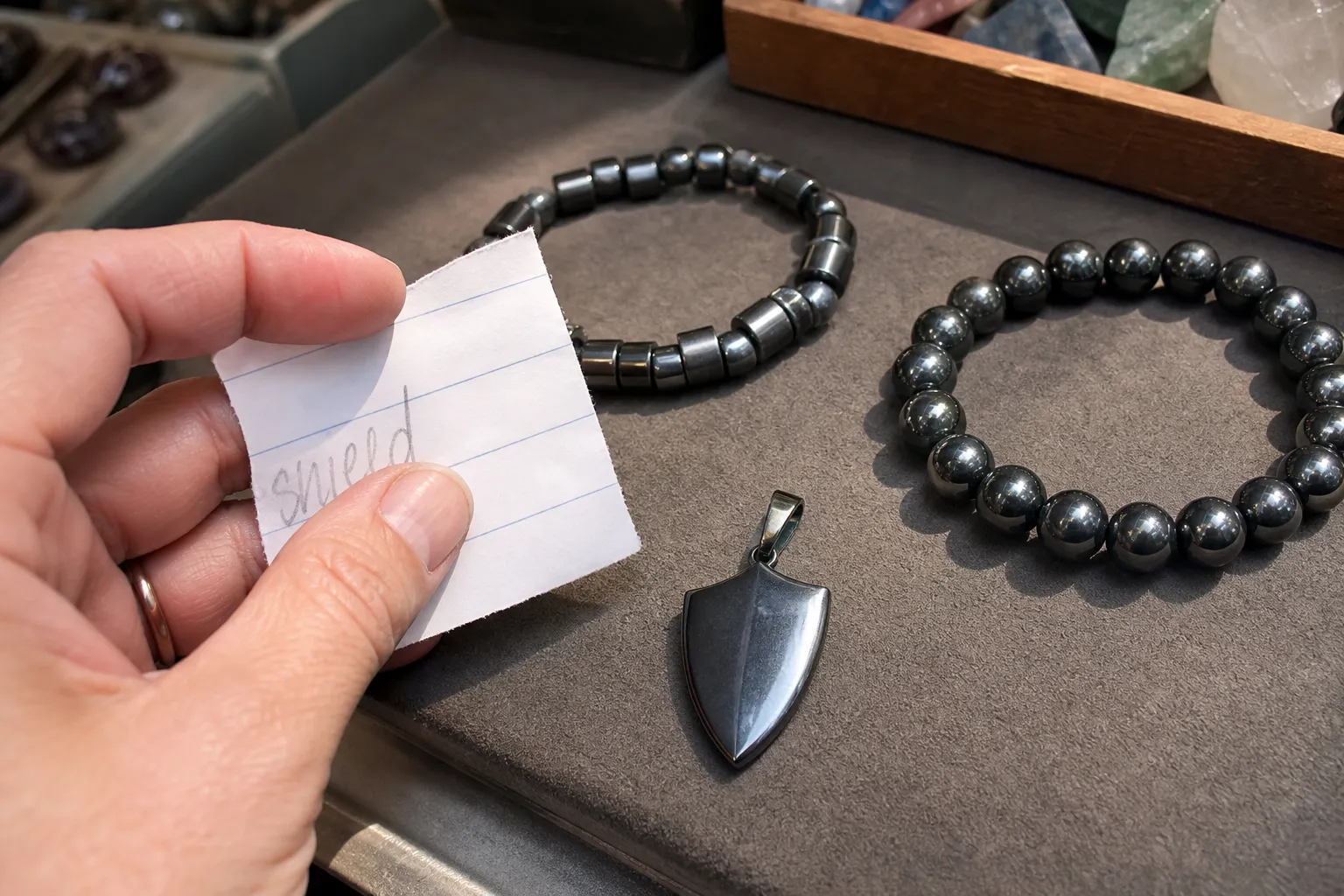
In a crystal listing, hematite shield meaning usually refers to how the seller is framing the item, not to a verified property. “Shield” may be a symbolic protection phrase, a product style name, a shape description, or simply strong-sounding marketing language attached to a hematite item.
The key is to separate the object from the meaning. The object may be a bead bracelet, pendant, charm, cabochon, palm stone, carving, or shield-shaped hematite piece. The meaning language usually belongs to crystal-use culture or product presentation. By itself, the word “shield” does not confirm literal protection, material identity, product safety, or special performance.
upward
Start with the broader guide
Use the broader guide first if you need the full scope before this page.
What “Shield” May Mean in a Hematite Listing
“Shield” can do several different jobs in a listing. Before reading it as a strong claim, check how the word appears in the title, photos, description, and product options.
A seller may mean:
- Symbolic use: “Shield” may point to personal, spiritual, or protective crystal language.
- Product name: “Hematite Shield” may be the name of a bracelet, pendant, charm, or set.
- Shape: The item may be carved, stamped, or framed in a shield-like outline.
- Visual style: The word may support a dark, metallic, bold, protective-looking design.
- Marketing language: “Shield” may be used because it sounds strong, even if no specific feature is explained.
How to Read the Listing Without Over-Interpreting It
Start with the most concrete details. If the listing says “hematite shield pendant,” check whether the photo shows a pendant shaped like a shield. If it says “hematite shield bracelet,” see whether “shield” describes the design, the bead style, or only the symbolic paragraph.
A practical reading order:
- 1. Read the noun after the phrase. Is it a pendant, bead, bracelet, ring, cabochon, carving, or worry stone?
- 2. Check the shape in the photos. A shape claim should show a shield outline, charm, plaque, or shield-like face.
- 3. Separate meaning words from material words. Terms such as energy, grounding, intention, or protection describe use language, not identification.
- 4. Look for material detail. The listing may say hematite, magnetic hematite, coated beads, plated material, or hematite-colored material.
- 5. Watch for vague upgrades. If “shield” is used to imply special strength or certainty without ordinary product detail, slow down.
Seller wording can still be useful. If a listing uses “shield” symbolically, it tells you how the item is meant to be styled, gifted, or used in personal practice. It just should not be read as a promise about what the item will do.
The same applies to “hematite protection meaning.” In crystal-use language, hematite is often described in grounding or protective terms, but this page does not have a source base that can verify those effects. A listing can describe a theme or intention; it cannot make that theme certain by adding the word “shield.”
Visual Cues That Help, and Their Limits
Photos and wording can help you decide whether a hematite shield listing is clear. They cannot settle every question.
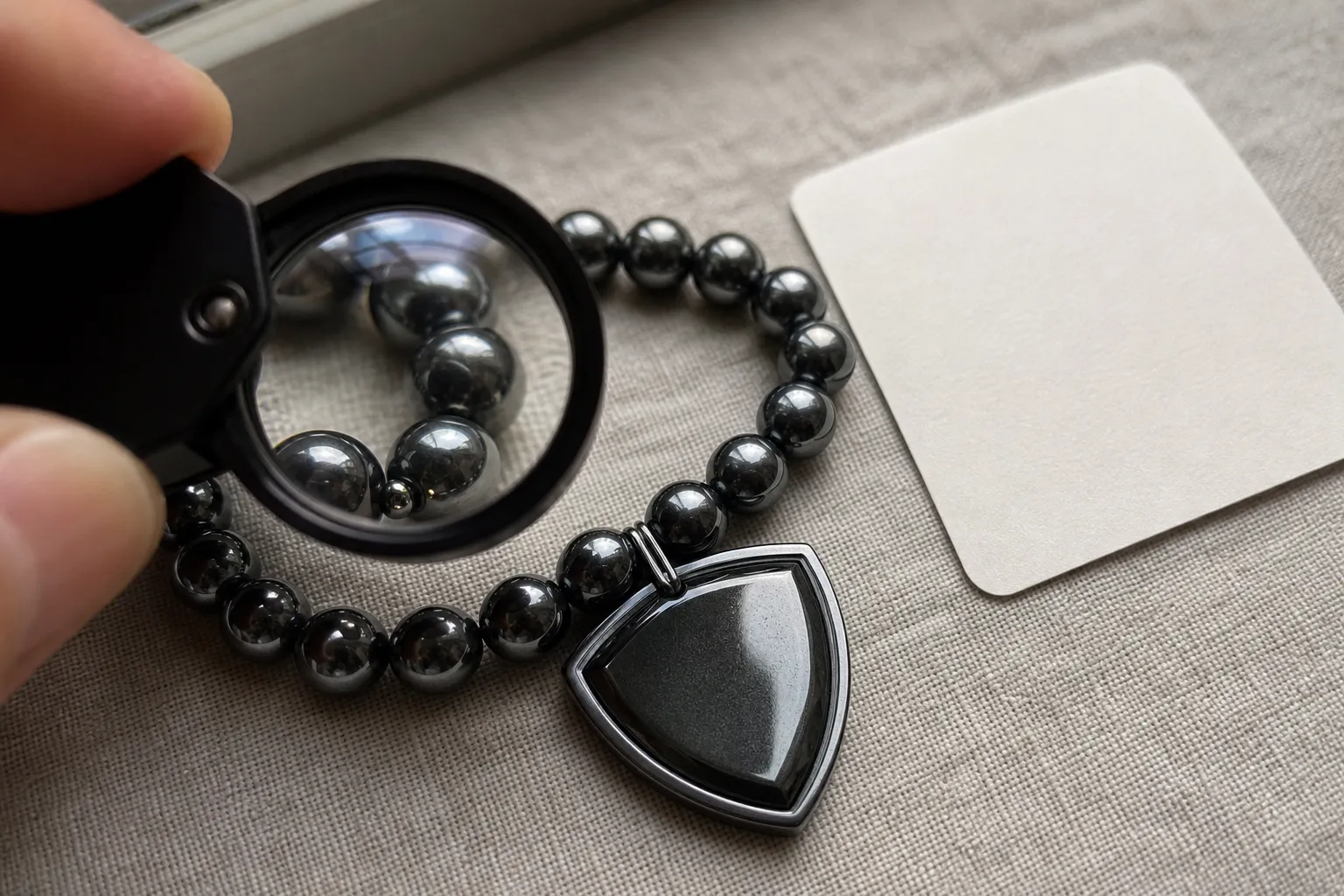
Visible signs may include a dark gray to black appearance, metallic-looking surface, smooth polish, bead finish, coating-like shine, or a heavier visual impression than light plastic or resin. These cues can suggest possibilities, but they cannot prove identity, authenticity, coating status, safety, or performance.
For a shield-shaped hematite item, the useful question is: does the listing match the object shown?
- If the title says “shield pendant,” the photo should show a shield-like pendant or charm.
- If the title says “hematite bead bracelet,” the listing should give bead size, strand length, or bracelet measurements.
- If the item is coated, plated, magnetic, dyed, or imitation-looking, that detail should not be hidden behind symbolic wording.
- If the description focuses on protective symbolism, you still need separate information about size, finish, cord, fittings, setting, and care.
Hematite identity has limits from photos alone. A dark metallic finish may fit hematite presentation, but similar looks can appear in coated, plated, glassy, or hematite-colored items. If exact material matters, look beyond the headline and ask for clearer composition details. For certainty, specialized testing may be needed.
Common Misreadings of “Hematite Shield”
Reading it as a result
The biggest mistake is reading “shield” as a literal result instead of a listing phrase. In crystal listings, protective wording may matter to someone’s personal practice, but it is not evidence of physical safety, emotional outcome, financial security, or measurable spiritual performance.
Treating it as authenticity
Another mix-up is treating “shield” as an authenticity clue. It is not. A “hematite shield crystal” may be genuine hematite, a coated bead product, a hematite-colored item, a symbolic charm, or a design name. The word does not answer the material question.
Assuming it always means shape
A third confusion is assuming “shield” always describes shape. Sometimes it does; sometimes it does not. If the item is a round bead bracelet, “shield” is probably symbolic or stylistic. If the item is a flat charm with a broad top and pointed base, it may be a shape descriptor. Let the photos and product details decide that part.
A Simple Buyer Check
Use this quick check when you see a hematite shield listing:
- Meaning: Does “shield” appear in a symbolic paragraph, or does it describe the item’s form?
- Object: Do the photos show a shield shape, or a different item such as a bead, bracelet, palm stone, or pendant?
- Material wording: Does the listing clearly say hematite, coated hematite, magnetic hematite, hematite-colored material, or something else?
- Details: Are size, finish, fittings, bead diameter, chain, cord, or setting described clearly?
- Limits: Does the seller keep symbolic meaning separate from claims that would need proof?
If the listing is mostly symbolic and light on physical details, treat it as incomplete. You can still like the item for its look, theme, or personal meaning, but the wording does not verify what it is.
A useful seller question is: “Does ‘shield’ describe the shape, the product name, or the intended symbolism?” If material matters, ask separately about composition, coating, magnetism if mentioned, size, and whether the photos show the exact item or a sample.
What This Page Can and Cannot Confirm
This page can help interpret hematite listing terminology. “Shield” may refer to symbolism, shape, style, or marketing language. It can also point you toward visible cues and product-description checks.
It cannot confirm that a specific item is genuine hematite. It cannot verify product safety from a listing phrase. It cannot show that a hematite shield crystal provides literal protection. It also cannot turn poetic seller wording into mineral evidence.
For a narrow buying decision, the safest reading is simple: “hematite shield” is usually a descriptive or symbolic phrase until the photos and product details show otherwise. If you like the item for personal meaning, style, or display, that is a separate choice. If you need material certainty, do not rely on the word “shield”; look for clearer seller detail, stronger documentation, or appropriate testing.