ProtectCrystal handling note
Hematite Meaning Boundaries
What Hematite Grounding Meaning Cannot Promise
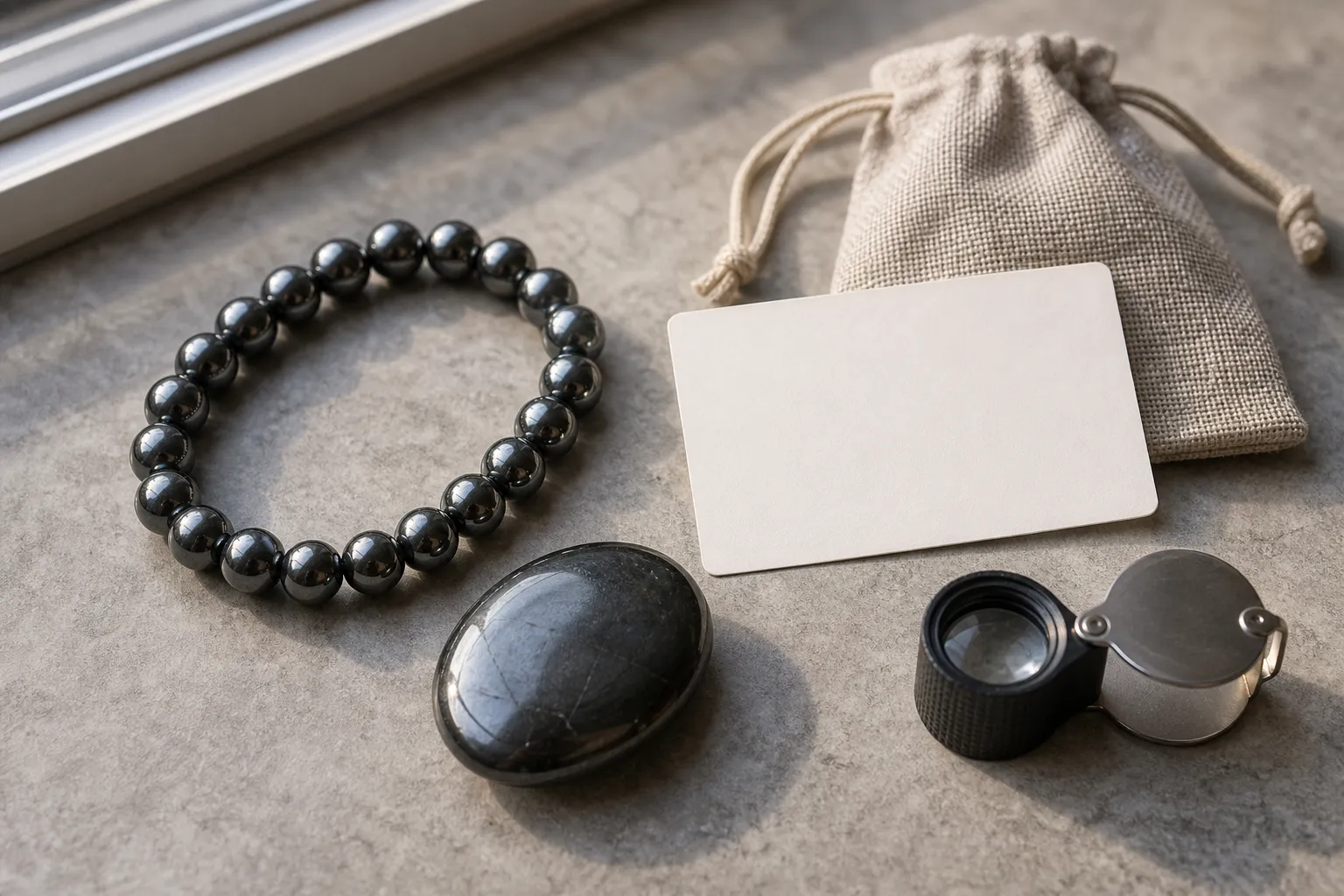
Hematite grounding meaning can describe how people in crystal culture talk about steadiness, weight, focus, and personal ritual. It also appears in seller wording for bracelets, bead strands, palm stones, and polished pieces marketed as “grounding” stones.
The important hematite grounding limitations are simple: this meaning does not prove protection, emotional stability, wellness results, physical safety, spiritual shielding, financial outcomes, or authenticity. It is use-language, not a result certificate. You can treat hematite as a symbolic object, a reminder, or part of a personal routine, but the wording around it should not be read as evidence that the stone will change real-world outcomes.
upward
Read the full overview first
Use the broader guide first if you need the full scope before this page.
What “grounding” can reasonably mean with hematite
In cautious crystal-use language, “grounding” is best understood as a description of intention. Someone may choose hematite because its dark metallic look, dense-feeling presence, or common protective-crystal association fits the mood they want from a pocket stone, bracelet, or desk piece.
That can be meaningful without becoming a promise.
“Grounding crystal” may simply mean:
- A stone used as a focus object during a quiet routine.
- A symbolic reminder to slow down before making decisions.
- A crystal-culture label used by sellers and collectors.
- A style preference for darker, metallic-looking stones.
- A personal association built through habit, repetition, or belief.
None of those uses are automatically wrong. The problem starts when hematite grounding language is treated as proof. A seller phrase, ritual description, or personal belief may explain why a buyer is drawn to hematite, but it cannot show that a specific piece will produce a defined result.
A practical reading is: “This is how the stone is commonly framed or personally used.” It should not be read as: “This stone will create a specific outcome.”
What hematite grounding meaning cannot promise
Hematite protection limitations become clearest when wording shifts from symbolism into results. A careful description should not imply that hematite can promise safety from harm, prevent unwanted events, stabilize emotions, change health-related outcomes, remove hazards, or make uncertain situations turn out well.
The same caution applies to grounding crystal claims that sound practical but are still outcome-based. If a listing says hematite is for protection, calm, confidence, energy clearing, or personal strength, that language may describe a belief system or marketing category. It does not prove the piece can deliver those results.
Area
What the wording may describe
What it cannot promise
Personal ritual
A reminder, intention, or focus object.
A certain change in mood, behavior, or outcome.
Protection language
A common crystal-culture association.
Physical safety or spiritual certainty.
Wellness language
A personal belief or symbolic practice.
Medical, mental-health, or body-function results.
Buyer confidence
A reason someone prefers hematite.
Proof that the item is genuine.
Seller claims
Marketplace positioning.
Verified performance or universal safety.
This does not mean buyers must avoid hematite or reject grounding language. It means the phrase belongs with meaning, preference, and personal practice—not with evidence of promised results.
Why seller wording can sound stronger than it is
Seller pages often compress meaning into short phrases. A bead strand may be described as grounding, protective, stabilizing, or powerful without explaining what those words can and cannot support. That shorthand can help with browsing, but it can also blur hematite belief versus results.
For a buyer, it helps to separate three things:
Meaning language
What hematite is commonly associated with in crystal culture.
Material description
What can be seen, weighed, felt, or checked by a suitable method.
Outcome language
What the seller implies the stone will do for the person.
Only the first category fits hematite grounding meaning. The second may need careful observation or specialized testing, depending on the question. The third should be treated cautiously when it becomes a promise.
This matters with authenticity, too. A seller may use grounding or protective language on a listing, but that wording does not verify the material. A dark metallic bead, polished stone, or magnetic-feeling item may suggest possibilities, but appearance and product wording cannot prove identity on their own. For certainty, specialized testing may be needed.
The same applies to use and handling. A crystal meaning label does not tell you whether a piece is suitable for every setting, person, or form of use. Avoid using unknown stones in ways that involve ingestion, powder, prolonged water exposure, or contact with damaged surfaces unless reliable material information supports that use.

A practical way to use hematite without over-reading it
A balanced approach is to let hematite serve a modest role. If the word “grounding” helps you remember to pause, place your feet on the floor, tidy your desk, or begin a quiet evening routine, that is a personal ritual meaning. It does not need to be dressed up as proof.
Before buying or using a hematite-labeled item, ask:
- Am I buying this because I like the look and meaning, or because I expect a promised result?
- Is the seller describing observable features, or mostly making outcome claims?
- Does the listing separate crystal-use language from material identification?
- Would I still want the piece if the grounding meaning were personal rather than certain?
- Am I using the stone as jewelry, décor, or a pocket object rather than relying on it for safety or wellness decisions?
These questions keep hematite personal ritual meaning useful without letting it overstep. A bracelet can be a reminder. A palm stone can be the object you choose to hold during a routine. A display piece can match the visual language of protective crystals. Those uses depend on your interpretation and habits, not on a promised effect.
If a decision involves health, emotional crisis, physical danger, financial pressure, legal exposure, or personal safety, do not outsource that decision to a crystal description. Hematite grounding language is not built for that job.
Where this page draws the line
The available reference set for this page does not include public sources selected for hematite mineral properties, identification tests, safety rules, wellness boundaries, or verified marketplace wording. That gap should not be filled with stronger claims.
So this page stays narrow: it explains how to read hematite grounding language, where not to overinterpret it, and when a claim needs better support.
Because no confirmed firsthand testing or professional review is available here, this article should not pretend to have tested hematite pieces, compared seller batches, verified material identity, or observed long-term user results. It can only give cautious interpretation guidance.
That still leaves a useful answer. “Hematite grounding meaning” can be meaningful as cultural language, buying context, or a personal reminder. It cannot carry the weight of proof. When a claim depends on what a stone is made of, whether it is suitable for a specific use, or whether it will change a person’s condition or circumstances, the claim needs support beyond crystal wording.
Quick reader check
Use this simple test when a hematite description feels too strong:
- If the sentence describes how people use or interpret hematite, it may fit crystal-use language.
- If the sentence promises what hematite will do, treat it cautiously.
- If the sentence claims safety, authenticity, health-related results, or certain protection, do not rely on the grounding meaning as proof.
That is the heart of hematite grounding limitations: the meaning can guide personal symbolism, but it cannot verify outcomes. Keep the stone if you value its look, weight, ritual role, or protective-crystal association. Just do not let a meaningful label become a promise the material itself has not proven.