ProtectCrystal handling note
Cinnabar comparison
Raw Cinnabar Meaning vs Polished Cinnabar Meaning
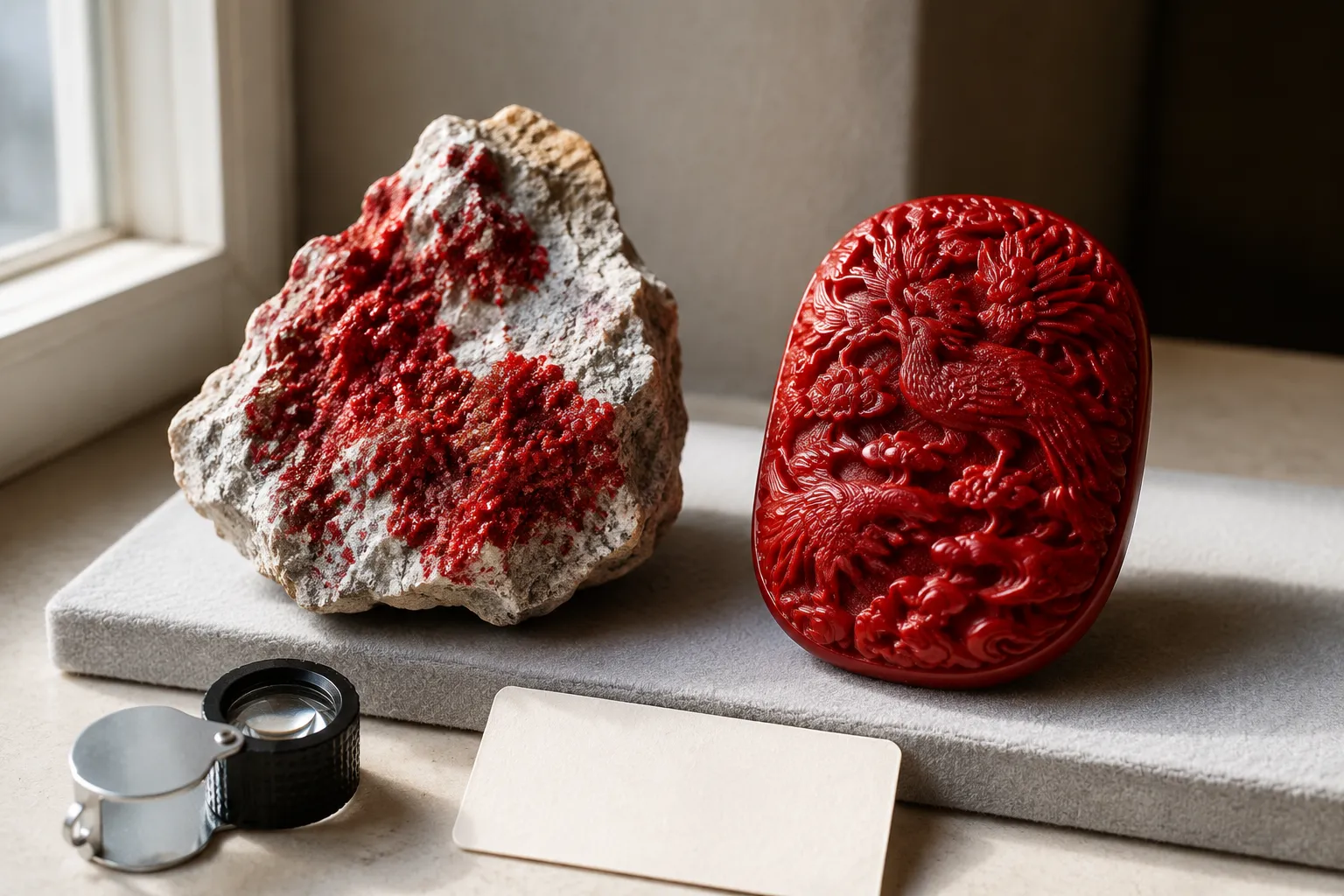
Raw cinnabar meaning is usually mineral-first: red, ore-like, specimen-focused, and tied to the material as it appears in the earth. Polished cinnabar meaning is finish-first: smoother, carved, decorative, or jewelry-adjacent, with more attention on how the object has been worked and described.
For a buyer, the difference is practical before it is symbolic. Raw cinnabar points toward mineral identity, matrix, red pigment history, and collector display. Polished cinnabar points toward surface finish, treatment questions, imitation risk, seller wording, and contact limits. Because cinnabar is a mercury-bearing mineral, a smooth finish should not be treated as permission for casual use.
upward
Start with the broader guide
Use the broader guide first if you need the full scope before this page.
The Short Comparison: Raw Versus Polished Cinnabar
Raw cinnabar
Usually suggests specimen, ore identity, earthy red surface, matrix, and pigment history.
Check dust, crumbling areas, seller provenance, and display-only wording.
Polished cinnabar
Usually suggests decorative object, carved piece, smooth finish, and jewelry-like presentation.
Check whether it is cinnabar, cinnabar-containing material, a treated surface, a lacquer-like object, or a simulant.
Both forms
Both can carry strong red symbolism and crystal-language associations.
Meaning language is personal or cultural context, not proof of effect, identity, or suitability for handling.
Raw cinnabar appearance often includes granular, earthy, massive, encrusting, coating, or fracture-filling textures. It may look more like a mineral specimen than a clean gem crystal. That is why raw cinnabar crystal meaning is often described as intense, elemental, and close to the ore itself.
Polished cinnabar changes the relationship. A smooth surface, carved form, bead, pendant, or glossy object can make the piece feel more wearable or decorative. It can also hide the underlying material, coating, or treatment. Polish improves presentation, not certainty.
The clearest reading is simple: raw cinnabar feels closer to specimen meaning; polished cinnabar feels closer to object and finish meaning. Neither form proves the seller’s claims by appearance alone.
What Raw Cinnabar Meaning Emphasizes
Raw cinnabar meaning begins with the material. Cinnabar is commonly identified as mercury sulfide, often written as HgS, and is known as an important ore of mercury. Mineral references usually place it in a scarlet, vermilion, brick-red, red, or reddish-brown range. That red is part of why cinnabar has carried strong symbolic weight in pigment history, art, and crystal-market language.
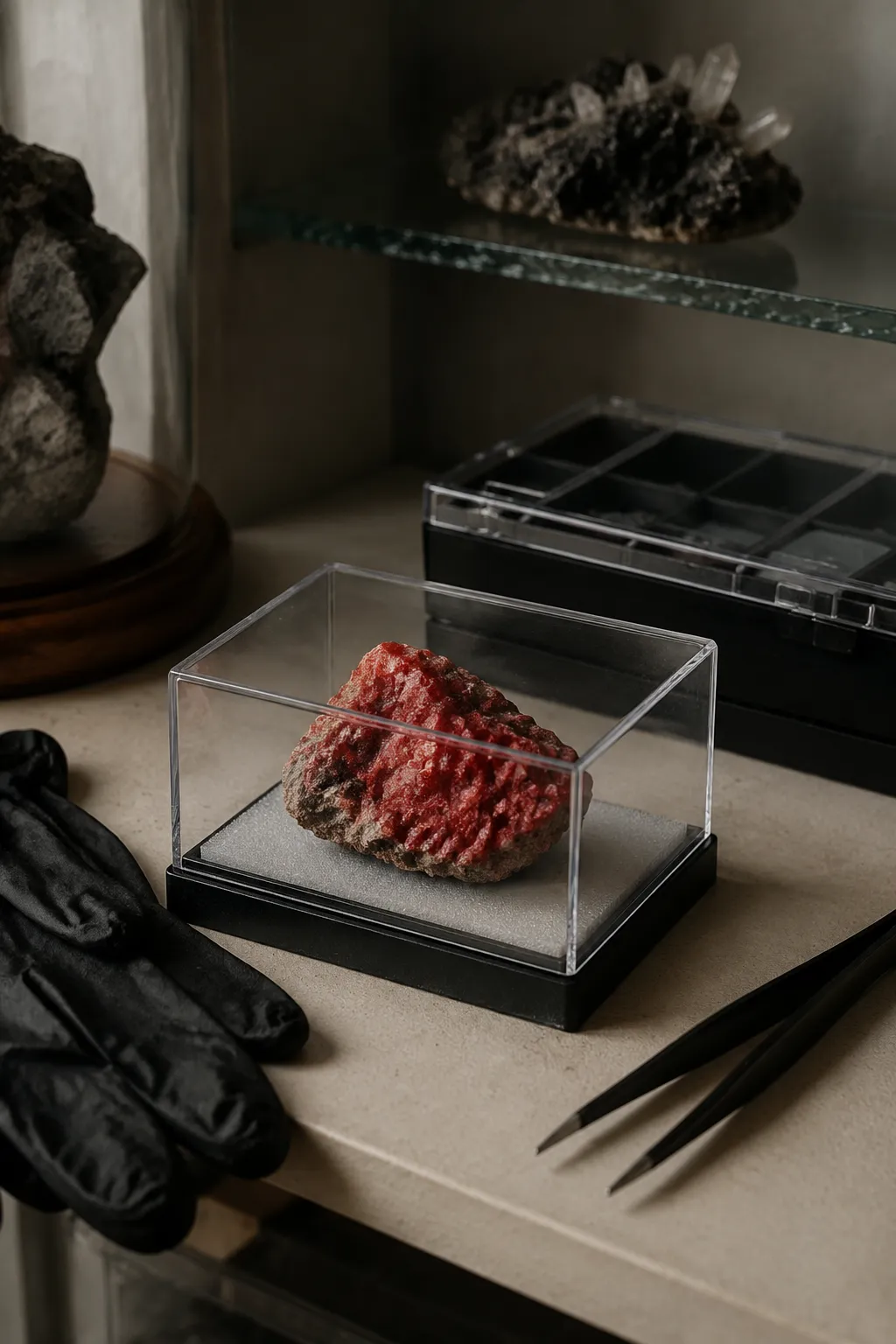
As a specimen, raw cinnabar often suggests earth, weight, intensity, and origin. The meaning is not only spiritual vocabulary. It is also the visible condition of the piece: red mineral on matrix, rough texture, possible crumbly areas, and a form that may belong in a display box rather than in frequent handling.
This is where cinnabar specimen meaning differs from many polished protective crystals. Obsidian is commonly sold as a palm stone because the material and finish suit repeated touch. Hematite beads are often judged by metallic sheen and coating behavior. Cinnabar needs a tighter boundary because the mineral itself is mercury-bearing.
If a seller uses phrases such as “natural red mercury sulfide crystal,” “collector display stone,” or “China specimen,” treat them as listing clues, not final proof. They may describe how the item is being marketed, but they do not independently prove composition, locality, or handling history.
Raw cinnabar is best read as a display-first mineral with strong red symbolism and clear handling caution.
What Polished Cinnabar Meaning Emphasizes
Polished cinnabar meaning shifts attention from the ore-like specimen to the finished object. A polished piece may look smoother, brighter, more controlled, and more decorative. It may be carved, bead-like, ornament-like, or presented in a way that resembles jewelry or collectible art.
That finish changes the emotional impression. Raw cinnabar can feel severe and mineral-heavy; polished cinnabar can feel intentional, refined, or ceremonial. In crystal-language contexts, sellers may connect polished forms with transformation, power, abundance, life force, or protective themes. Those are common associations and market words, not reliable outcomes.
The more polished the item looks, the more important it becomes to separate cinnabar finish meaning from cinnabar mineral meaning. A glossy red carved object may be genuine cinnabar, a cinnabar-containing material, a treated surface, a lacquer-like object, or a simulant. The appearance may suggest a category, but it cannot settle the question.
This matters especially for pendants, beads, cabochons, and carved charms, because they invite more skin contact than a boxed specimen. The practical answer is not “polished is fine.” It is: polished may be easier to display or style, but the finish does not remove the need for caution.
A polished surface makes cinnabar look more shaped by human design. It does not make the material self-explanatory.
How Handling Changes the Meaning
Cinnabar handling belongs near the comparison because it affects how the piece should be understood. Since cinnabar is mercury-bearing, handle it more carefully than many common decorative stones. Avoid mouth contact, licking, ingesting, heating, sanding, cutting, polishing, acid cleaning, or creating dust. Do not give cinnabar to children for casual handling. If you directly handle a specimen, wash your hands afterward.
This does not mean every red object in a listing is confirmed cinnabar, and this page cannot provide exposure thresholds or personal health advice. The available material supports a conservative handling approach, not a detailed toxicology rulebook. For medical, classroom, workplace, or conservation decisions, a general crystal article is not enough.
Raw cinnabar usually raises dust and crumbling concerns more visibly because the surface may be earthy or granular. Polished cinnabar raises a different concern: the object may look touch-friendly even when the material identity, coating, or treatment is unclear. The concern is not only the mineral; it is also the confidence created by a smooth finish.
For everyday buyers, the useful distinction is practical: raw cinnabar belongs in the specimen category; polished cinnabar belongs in the decorative-object category with extra questions. Neither belongs in mouth contact or rough use.
Seller Descriptions: Words That Help, Words That Do Not
Cinnabar seller descriptions often mix mineral terms, collector terms, and spiritual-market language. Some wording is useful. “Mercury sulfide,” “cinnabar on matrix,” “display specimen,” “massive,” “granular,” “vermillion red,” or “collector piece” can help you understand how the seller is presenting the object.
Other wording needs more caution. “Natural,” “powerful,” “rare,” “ancient,” “alchemy,” or “high energy” may explain the sales angle, but it does not verify the material. A polished red item described as cinnabar may still need clearer provenance, better photos, or specialist evaluation if identity matters.
The same applies to raw pieces. A rough red surface can look convincing, but color alone does not prove composition. Cinnabar-like color may support a possibility; it cannot confirm the item’s identity, treatment, source, or suitability for handling. For certainty, specialized testing or a qualified mineral assessment may be needed.
Useful buyer questions
- Is it sold as a natural cinnabar mineral specimen?
- Is it sold as carved or polished cinnabar?
- Is it described as cinnabar-colored, lacquer-like, treated, or imitation?
- Is the piece intended for display rather than wear?
- Does the listing explain handling caution without overstating comfort or certainty?
Those questions keep the focus on observable details instead of sales atmosphere.
Common Confusion About Raw and Polished Meaning
Raw does not mean stronger
Raw cinnabar can feel more direct because it shows the mineral’s earthy surface and ore identity. That does not make its crystal meaning more powerful in any measurable sense. It changes presentation and association.
Polished does not mean easier to use
A smoother surface may shed less visible grit than a crumbly raw specimen, but finish alone does not establish suitability for contact. A polished item may still be mercury-bearing, treated, coated, imitation, or unclear.
Pigment history is not object proof
Cinnabar’s connection with vermilion pigment helps explain its strong red symbolism and cultural weight. It does not tell you whether a specific bead, carving, or specimen is what the listing says it is.
Meaning is not material evidence
Transformation, alchemy, success, protection, and vivid life-force language can explain why people are drawn to cinnabar, but they should stay in the realm of personal or cultural context.
A careful reading keeps two tracks separate: what the object visibly suggests, and what people symbolically associate with it.
Which Form Fits Which Reader?
Choose raw cinnabar if your interest is specimen-based. It fits readers who want to study the red mineral surface, matrix, ore context, and display presence. The better use case is careful storage and viewing, not frequent touch.
Choose polished cinnabar if your interest is object presentation. It may suit someone comparing carved forms, decorative pieces, or a smoother display object. But the more wearable the object looks, the more important it is to question identity, finish, coating, and handling advice.
If your main interest is protective crystal meaning, cinnabar may not be the easiest everyday choice. Obsidian and hematite are more commonly handled as polished stones, beads, or pocket pieces. Cinnabar carries a stronger material caution, so its symbolic meaning should be balanced with storage and contact limits.
If your main interest is authenticity, neither raw nor polished appearance is enough. Raw texture can suggest a mineral specimen; polished finish can suggest a worked object. Both still leave uncertainty unless the seller provides strong provenance or the piece is assessed through appropriate methods.
Bottom Line
Raw cinnabar meaning is best read as mineral-first: earthy red surface, mercury sulfide identity, ore symbolism, pigment history, specimen display, and careful handling. Polished cinnabar meaning is finish-first: smoother presentation, carved or decorative use, market language, and more questions about treatment, imitation, and contact.
The finish changes how cinnabar is presented. It does not prove authenticity, remove handling concerns, or make the crystal meaning stronger. A careful buyer can check visible texture, seller wording, intended use, and caution language, but some uncertainty remains unless the material is properly evaluated.
Sources
Sources and further reading
Reference links are limited to sources considered suitable for public citation in this page.