
ProtectCrystal handling note
Handling comparison
Raw vs Polished Crystal Handling Precautions
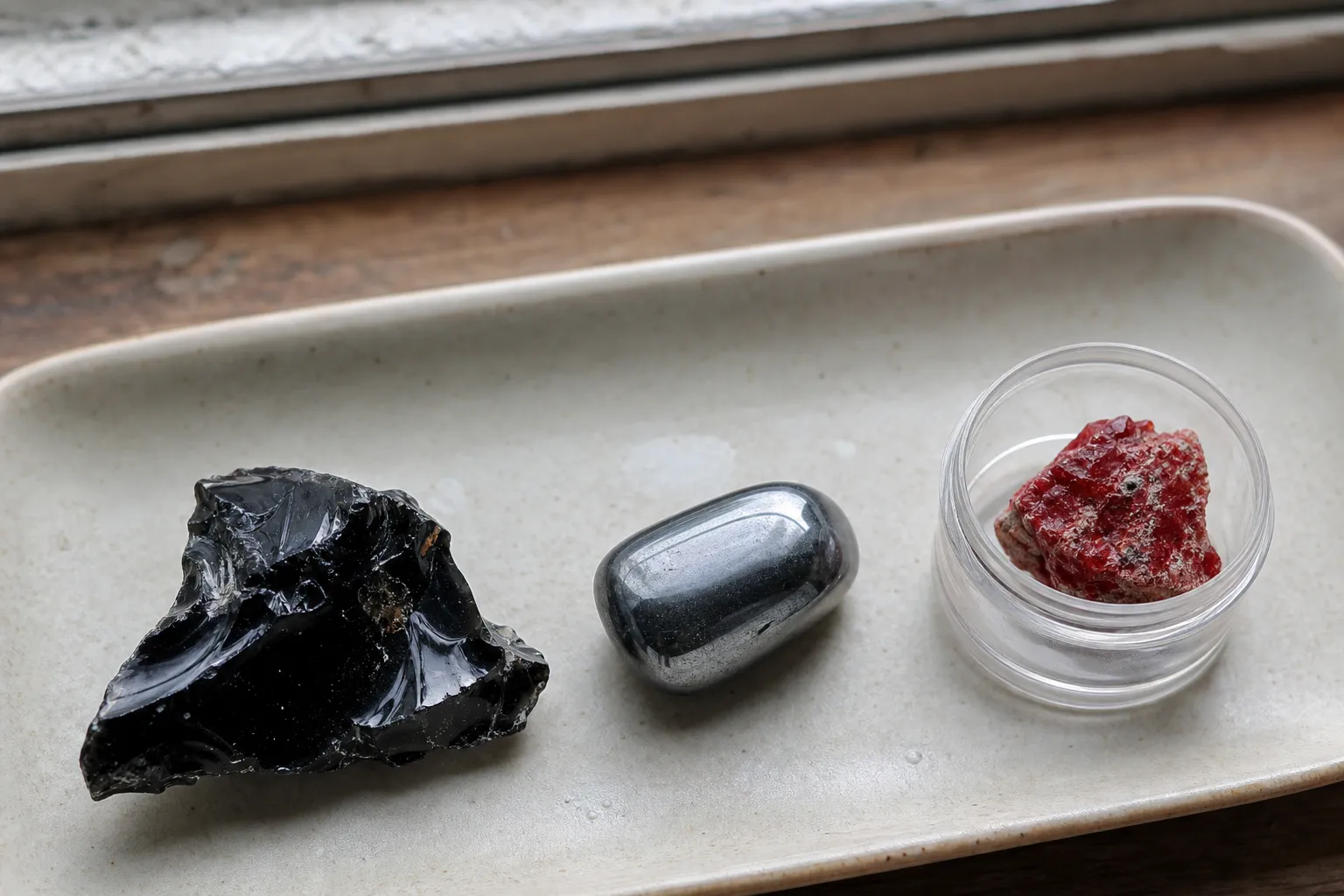
A raw obsidian chip, a smooth tumbled hematite stone, and a red mineral sold as cinnabar can sit in the same tray, but finish is only one part of the handling decision. Raw vs polished crystal handling precautions come down to the surface in front of you: sharp edges, loose grit, dust, residue, chips, coatings, mineral identity, and how often the piece will touch skin.
Polishing can make a crystal easier to hold, wipe, or wear. It does not verify what the material is, remove every handling concern, or make a damaged piece suitable for all contact. Start with what you can check before relying on the label.
upward
Start with the broader guide
Use the broader guide first if you need the full scope before this page.
The Short Answer: Polished Usually Means Easier, Not Automatically Safer
Raw crystals often need more caution because they may have points, naturally rough edges, attached matrix, dusty pockets, crumbly zones, or fragile areas that break under pressure. Polished crystals usually feel more comfortable because rough surfaces have been rounded and the finish is easier to inspect.
That difference matters, especially for first-time buyers. It is not the whole answer.
A polished stone can still be chipped. A bead can have a sharp drill hole. A glossy surface can hide a coating or treatment. A tumbled crystal can carry polishing residue, shop dust, or packaging film after shipping. A red stone sold under a familiar mineral name still needs cautious handling if its identity is uncertain.
A useful rule is this: raw crystal safety depends more on loose material, sharpness, and mineral sensitivity; polished crystal handling depends more on chips, coatings, residue, and skin-contact habits. Finish changes the routine. It does not settle the full question.
For obsidian, the edge matters. For cinnabar or an unknown red mineral, dust and residue matter. For hematite, marks and surface wear may be useful clues, not final proof.
What Changes When a Crystal Is Raw, Polished, Tumbled, or Chipped
Raw, polished, tumbled, and chipped are handling categories before they are identity claims. They describe the surface you can touch, not the certainty of what the crystal is.
The common mistake is assuming raw means “natural and fine” while polished means “processed and settled.” Neither shortcut works. Raw pieces may carry more loose material. Polished pieces may carry treatments, wear, or damage. Tumbled crystals are usually easier to hold than jagged raw pieces, but they still need basic checks.
Chipped polished crystals deserve special attention because they combine both categories. The smooth side may feel comfortable, while a fresh break behaves more like a raw edge. With obsidian, which geology sources describe as volcanic glass, broken or fractured areas deserve extra care because glass-like edges can be sharp.
Polish reduces some roughness. It does not erase material-specific caution.
Raw Crystal Dust vs Polished Crystal Residue
Raw crystal dust and polished crystal residue are often noticed the same way: something appears on the fingers, cloth, or packaging. The handling response is different.
Dust needs less disturbance
Raw pieces can shed grit from matrix, fractures, pockets, or crumbly zones. A raw crystal with powdery areas should not be rubbed hard, brushed into the air, sanded, ground, or handled in a way that creates more dust. This is especially important when the identity is uncertain or when the piece is a red mineral sold as cinnabar. Mineral and compound references connect cinnabar with mercury sulfide terminology, so dust-producing handling should stay conservative rather than experimental.
Residue needs inspection
Polished pieces may leave residue from storage, finishing compounds, coatings, labels, packaging, or shop handling. A smooth surface can still carry a film. That film does not prove a serious problem, but it does mean the piece should be inspected before wearing or prolonged handling. If a polished stone feels greasy, powdery, sticky, or unusually colored on a cloth, pause before putting it against skin.
For most known, stable polished stones, a soft dry cloth is usually the lowest-impact first step. A slightly damp cloth may be reasonable for many familiar pieces, but soaking is a different level of exposure. Avoid soaking coated stones, glued jewelry, uncertain materials, and cinnabar or unknown red mineral specimens. Do not lick crystals to test them or brighten the surface.
Dust calls for less disturbance. Residue calls for inspection and gentle cleaning limits.
Does Polishing Make a Crystal Safer to Handle?
Polishing can make a crystal easier to handle in ordinary ways. It can round sharp points, remove some loose grit, make the surface easier to wipe, and reduce snagging on fabric or skin. If a first-time buyer is choosing between a jagged raw point and a smooth tumbled stone, the polished or tumbled piece is often the easier handling choice.
The answer changes with condition and mineral identity.
A polished obsidian palm stone may be more comfortable than raw obsidian with broken glass-like edges, but one chip can create a sharp spot. A polished hematite bead may feel smooth, while surface wear, gray marks, or coating changes can suggest abrasion or treatment without proving exactly what the material is. A polished red piece sold as cinnabar still deserves caution around dust, residue, and prolonged skin contact unless the buyer has stronger identity information than color and seller wording.
Gloves are not needed for every polished crystal. They may be reasonable when a piece is dusty, unknown, freshly broken, heavily shedding, labeled as cinnabar, or being sorted and stored in quantity. For smooth, clean, familiar pieces, brief handling followed by handwashing may be enough for ordinary care. The point is not to treat every stone as high-alert. Match the precaution to the surface and uncertainty.
A smooth crystal surface can reduce one handling concern while leaving others in place.
Mineral Examples Without Turning Finish Into Proof
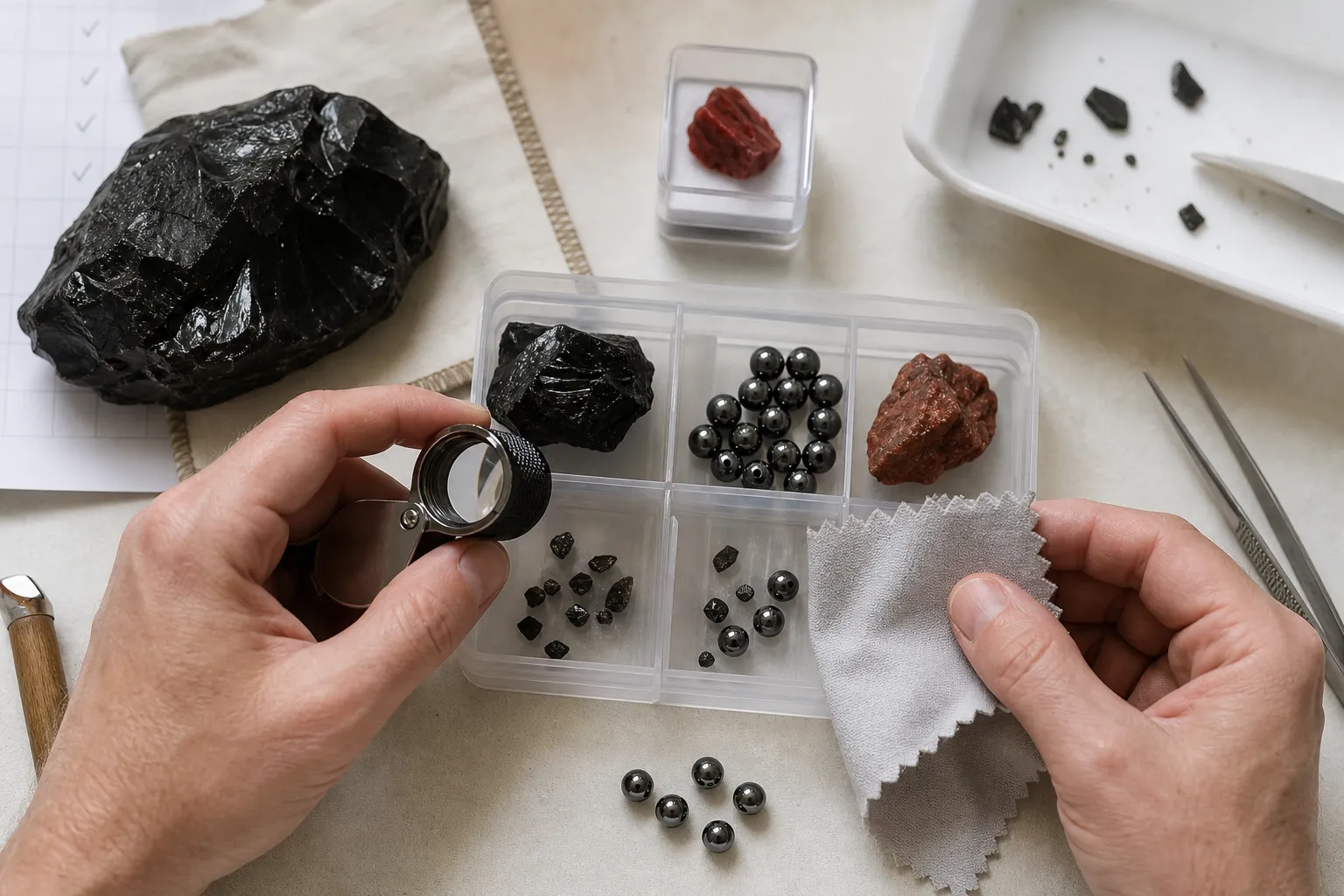
The raw-versus-polished question becomes clearer when the material changes. Obsidian, cinnabar, and hematite show three different ways finish can mislead buyers.
Obsidian: Edge and Chip Differences
Obsidian is commonly described in geology references as volcanic glass. That matters for handling because raw obsidian, broken obsidian, and chipped polished obsidian can have sharp edges. A glossy black surface may look clean and attractive, but a fracture line or pointed chip can still cut or snag.
For raw obsidian sharp edges, inspect before wrapping your fingers around the piece. Look for thin flakes, fresh breaks, needle-like points, and areas that catch on cloth. For polished obsidian chips, treat the damaged spot like a raw edge rather than assuming the whole stone is smooth. Store obsidian where it will not knock against harder objects or other stones that may chip it further.
With obsidian, finish helps most when the surface is intact.
Cinnabar: What Changes With Raw vs Polished Handling
Cinnabar handling precautions should be more conservative than generic crystal care. Mineral references identify cinnabar as a specific mineral, and compound terminology connects it with mercury sulfide. That does not let a home buyer draw broad toxicology conclusions from appearance alone, but it does support careful boundaries around dust, powder, residue, and uncertain red mineral pieces.
Raw cinnabar or an unknown red mineral specimen should not be sanded, ground, soaked, licked, or handled in a way that loosens powder. Keep it away from children, pets, food areas, and casual jewelry experiments unless the identity and suitability are better established by appropriate expertise. A polished piece sold as cinnabar may feel smoother, but polish does not turn it into an all-purpose skin-contact object.
Cinnabar is the example where smoother should not be mistaken for settled.
Hematite: Dust, Marks, and Surface Wear
Hematite is often recognized by buyers through metallic gray color, weight impression, shine, and sometimes streak-like marks. Mineral-property context can support discussion of surface appearance, but visible cues alone cannot confirm authenticity or full handling suitability.
Raw or rough hematite may leave marks or show abrasion. Polished hematite beads and tumbled stones can show surface wear, coating changes, or dulling over time. Some marketplace pieces described with magnetic-looking language may not match what buyers expect from natural hematite, so seller wording and surface appearance should be treated as clues.
With hematite, marks and shine are useful observations, not final answers.
How to Check a Raw Crystal Before Handling It Closely
Before you hold a raw crystal firmly, wear it, clean it, or place it with other pieces, slow the process down. The first check should be visual and gentle.
- Look at the edges first. Sharp edges may show as points, blades, flakes, or broken corners, but they can also hide along a glossy fracture. Turn the piece under steady light and avoid pressing fingertips into unknown cracks.
- Check for loose material. Tap lightly over a paper towel or tray, not over food surfaces or daily-use fabric. If grit, flakes, powder, or colored dust appears, do not brush it into the air. Fold the paper, discard it carefully, and wash your hands. If the piece is cinnabar or an unknown red mineral, keep the handling minimal and avoid any action that creates dust.
- Check surface feel without rubbing hard. A raw crystal that feels crumbly, greasy, powdery, or sticky needs more caution than one with stable, clean surfaces. That does not prove the material is unsuitable, but it changes how closely and how often you should handle it.
- Decide the use. Decide whether the piece belongs in display storage, occasional handling, jewelry, or a separate labeled container. Raw pieces with fragile points, unknown residue, or safety-sensitive identity questions are usually better treated as display specimens than frequent pocket stones.
A raw crystal should pass the edge, dust, and residue checks before close handling.
How to Handle Polished and Tumbled Crystals After Unboxing
Polished crystal handling after unboxing starts with the package. A stone may arrive smooth but dusty. A bead may have residue near the drill hole. A tumbled crystal may carry tiny chips from contact with other stones in transit.
Open the package over a clean surface. Inspect the wrap for powder, flakes, or unusual staining before touching your face, food, or other objects. If several stones were shipped together, separate them before checking for chips. Hard knocks during transit can create fresh edges on pieces sold as polished.
Wipe only when the material and setting allow it. A soft dry cloth is the lowest-impact option. A slightly damp cloth may be reasonable for many known, stable polished stones, but soaking should not be the default. Avoid soaking coated stones, glued jewelry, uncertain materials, and cinnabar or unknown red mineral specimens.
Tumbled crystal handling usually follows polished-stone logic because the surface is rounded. Still, tumbled stones can be small enough for children or pets to pick up, easy to drop, and easy to mix with other minerals. Keep labels or notes when the mineral identity matters, especially if one piece requires different care.
After unboxing, smoothness is only the first check. Clean, intact, known, and suitable for contact are separate questions.
Storage and Skin-Contact Habits That Change the Answer
Raw and polished pieces are often damaged by storage habits rather than careful one-time handling. A raw point tossed into a bowl with tumbled stones can chip them. A polished obsidian piece can develop sharp spots if it knocks against harder objects. A coated stone can scuff or transfer residue when stored against rough surfaces.
Store sharp, fragile, dusty, or safety-sensitive pieces separately. Soft pouches, labeled boxes, divided trays, or wrapped display storage can reduce contact damage. A single mixed bowl is a poor choice if the collection includes raw obsidian, cinnabar specimens, hematite beads, and coated decorative stones.
Skin-contact habits also matter. A crystal held briefly for viewing is different from a pendant worn for hours, a bracelet rubbing against sweat and fabric, or a pocket stone handled repeatedly through the day. Polished pieces are commonly chosen for jewelry because they are smoother, but that does not mean every polished mineral belongs against skin for long periods. Cinnabar deserves special caution here; avoid treating a smooth finish as permission for frequent wear.
For rings, beads, pendants, and palm stones, check contact points: drill holes, wire wraps, chipped edges, glue seams, and areas where finish is wearing away. If a stone leaves persistent color, powder, or residue on skin or cloth, stop wearing it until the material and treatment are better understood.
Storage protects the surface. Contact habits decide how much uncertainty matters.
Where Buyers Commonly Mix Concepts Up
Finish is not identity
A polished red stone is not verified cinnabar because it is red. A metallic gray bead is not fully explained by shine alone. A black glassy stone may suggest obsidian, but appearance still has limits. Visible signs may include useful clues; for certainty, specialized testing may be needed.
Meaning is not a material claim
A stone may be bought, worn, or displayed for personal or cultural meaning, but that does not change its edge sharpness, dust behavior, coating, or storage needs. Meaning belongs in one lane. Physical handling belongs in another.
Natural and polished each have limits
A naturally raw edge can be sharper than a worked surface. A natural pocket of powder can be more troublesome than a clean polished face. On the other side, a processed surface can introduce coatings, dyes, adhesives, or finishing residue. Neither category wins automatically.
The practical comparison is not raw versus polished as labels. It is stable versus shedding, intact versus chipped, known versus uncertain, display-only versus skin-contact, and easy to clean versus easy to damage.
A Simple Decision Frame for Raw vs Polished Crystal Handling
Use this frame when deciding how to handle a new crystal:
- Name the surface category. Is it raw, polished, tumbled, chipped, coated, mounted, or unknown?
- Check the contact points. Are there points, flakes, broken corners, rough drill holes, or raw obsidian sharp edges?
- Look for loose material. Is there raw crystal dust, powder, grit, or colored residue on packaging or fingers?
- Consider mineral sensitivity. Is it cinnabar, sold as cinnabar, or an unknown red mineral that deserves conservative handling?
- Decide the use. Will it be displayed, stored, worn, carried, cleaned, or handled often?
- Choose the least aggressive care. Start with separation, a soft cloth, limited handling, and handwashing rather than soaking, scrubbing, or contact-based tests.
For first-time buyers, polished or tumbled stones are often easier to handle because the surface is usually smoother and less likely to snag. Raw pieces may be better as display specimens until you understand their edges, dust, and stability. A careful buyer still checks both.
Raw versus polished is the starting point. Condition and identity decide the precaution.
Bottom Line
Raw vs polished crystal handling precautions come down to surface condition, loose material, and uncertainty. Raw crystals ask for more attention to sharp edges, dust, matrix, and fragile points. Polished crystals are often easier to hold and wipe, but chips, coatings, residue, and uncertain identity still matter. Tumbled stones usually sit closer to polished handling, while chipped polished stones should be treated partly like raw edges.
Use obsidian as the edge example, cinnabar as the dust-and-residue caution example, and hematite as the surface-wear example. None of these examples lets appearance alone prove identity or suitability. Check what you can see, handle conservatively when the material is uncertain, and keep protective crystal meaning separate from physical handling decisions.
Sources
Sources and further reading
Reference links are limited to sources considered suitable for public citation in this page.