ProtectCrystal handling note
Meaning comparison
Obsidian vs Hematite Meaning: Protection and Grounding Claims in Context
If you are comparing obsidian vs hematite meaning, the useful distinction is this: in modern crystal-use language, hematite is more often described as the grounding or steadying stone, while black obsidian is more often described as the protective, boundary-focused, or self-reflective stone.
That is a symbolic comparison. It is not the same as a material fact. Materially, obsidian is volcanic glass, and hematite is an iron oxide mineral. A good reading of any listing keeps those two layers separate: what the stone is, and what the seller or wearer uses it to represent.
upward
Start with the broader guide
Use the broader guide first if you need the full scope before this page.
Quick comparison: grounding language vs boundary language
Which one is more linked with grounding symbolism?
Hematite is more often described that way.
Which one is more linked with protection symbolism?
Black obsidian is more often described that way.
Are obsidian and hematite the same stone?
No. Obsidian is volcanic glass; hematite is an iron oxide mineral.
Does the meaning create a reliable effect?
No. These meanings are personal, cultural, or seller-language context.
In crystal shops and bracelet listings, hematite meaning is commonly tied to steadiness, weight, focus, strength, and being “grounded.” Someone may choose hematite as a personal reminder to slow down, stay organized, or feel more anchored during the day.
Black obsidian meaning is usually framed differently. It is often described as a stone for boundaries, protection symbolism, truth-facing, or self-reflection. In everyday crystal language, “protection” usually means something symbolic: a reminder to keep clearer limits, notice difficult patterns, or pause before taking on other people’s expectations.
Those meanings can be personally important, but they should not be treated as verified outcomes from the stone itself.
The material difference is not just a detail
The difference between obsidian and hematite starts with what they are.
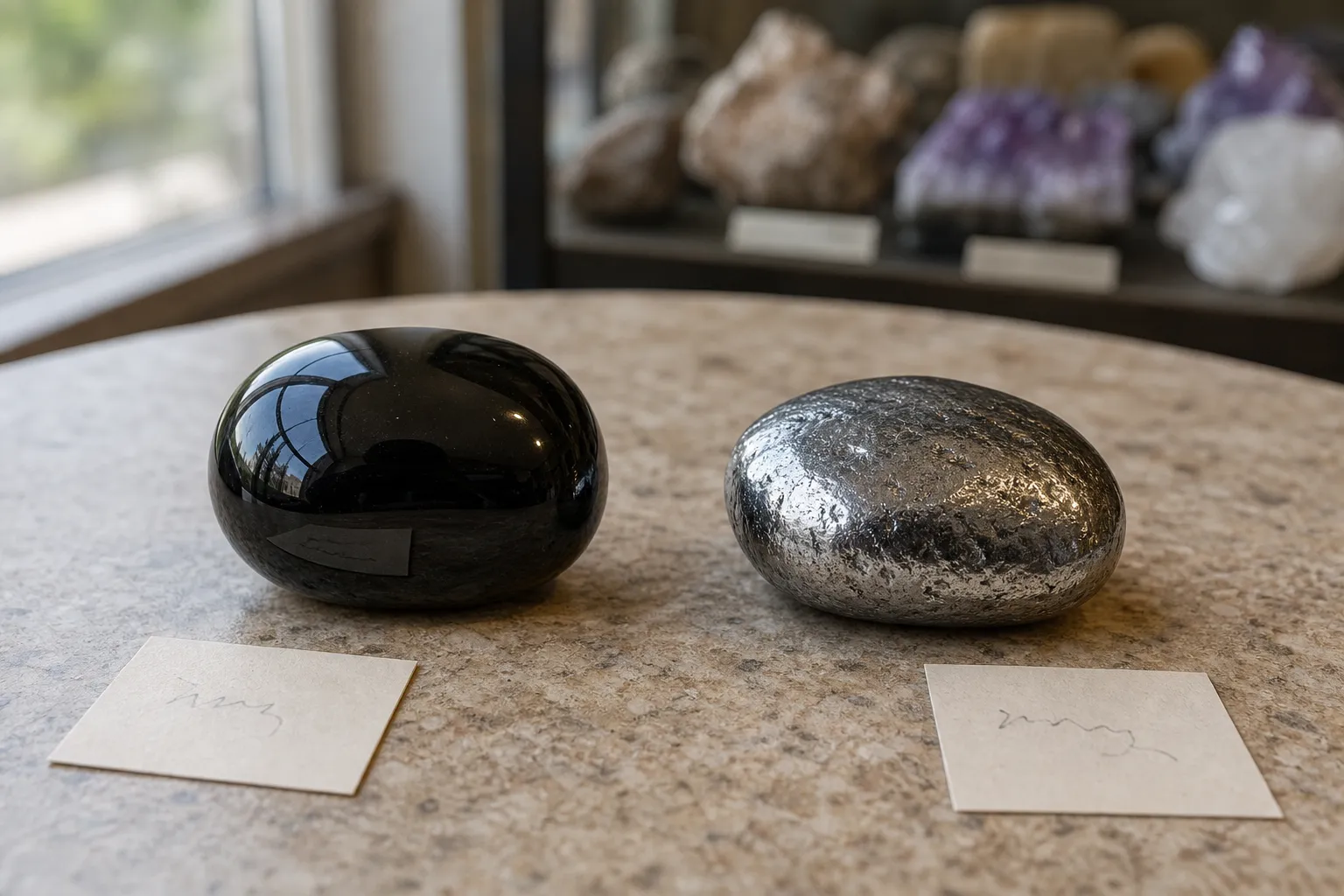
Obsidian is described in geology references as volcanic glass formed from rapidly cooled lava. In polished black pieces, it often looks glassy, smooth, and deeply dark, sometimes with a smoky or reflective surface. Because it is glass-like, chips and sharp edges matter in rough pieces, carvings, or broken beads.
Hematite is an iron oxide mineral. In jewelry and specimen contexts, it is often associated with a metallic grey-black look, a dense feel for its size, and a silvery surface in polished beads. Hematite can also occur in reddish earthy forms, especially where powdered hematite is connected with red coloration.
This matters because hematite vs black obsidian is not a comparison between two names for the same material. They may both be dark, polished, and sold in “protective crystal” categories, but one is volcanic glass and the other is an iron oxide mineral.
A listing can contain both useful and overreaching language
- “Black obsidian is volcanic glass” is a material description.
- “Hematite is an iron oxide mineral” is a material description.
- “This bracelet is for grounding and protection” is symbolic or promotional language unless clearly framed as personal intention.
- “Triple protection bracelet” is a marketplace phrase, not a mineral category.
How to read seller wording without over-interpreting it
Most confusion around protective crystal meanings comes from mixed wording. A product page may list bead size, wrist size, material names, and finish, then shift into claims about energy, stability, or wellbeing. Those parts do not carry the same weight.
A simple way to read the listing is to sort the wording into three groups.
1. Material descriptions
These are the most useful parts, although they still may not prove identity by themselves.
Look for wording such as:
- black obsidian volcanic glass
- polished obsidian bead
- hematite iron oxide mineral
- metallic grey hematite
- 8 mm or 10 mm round beads
- polished bracelet, pendant, palm stone, or pocket stone
Appearance can suggest a category, but it cannot confirm everything. Coatings, dyed materials, reconstructed pieces, and imitation beads can complicate a purchase. For certainty, specialized testing may be needed.
2. Symbolic meaning language
This is where most obsidian and hematite meaning comparisons belong.
Common hematite wording includes:
- grounding symbolism
- steadiness
- focus
- strength
- stability
Common black obsidian wording includes:
- protection symbolism
- boundary setting
- self-reflection
- truth-facing
- clearing or release language
These phrases can help you choose a stone for personal symbolism. If you want a bracelet that reminds you to stay steady, hematite may match the language you are looking for. If you want a dark stone that represents boundaries or reflection, black obsidian may fit better.
3. Outcome-style claims
Be more cautious when a listing moves from symbolism into promised results. Some commercial and social posts connect obsidian or hematite with emotional distress, body function, physical safety, or spiritual threat language. Those statements go beyond what the material comparison can support.
A practical rule: if the wording makes the stone sound like a substitute for professional care, physical safety planning, or measurable health support, treat it as promotional language rather than a dependable result.
Obsidian and hematite bracelet meaning
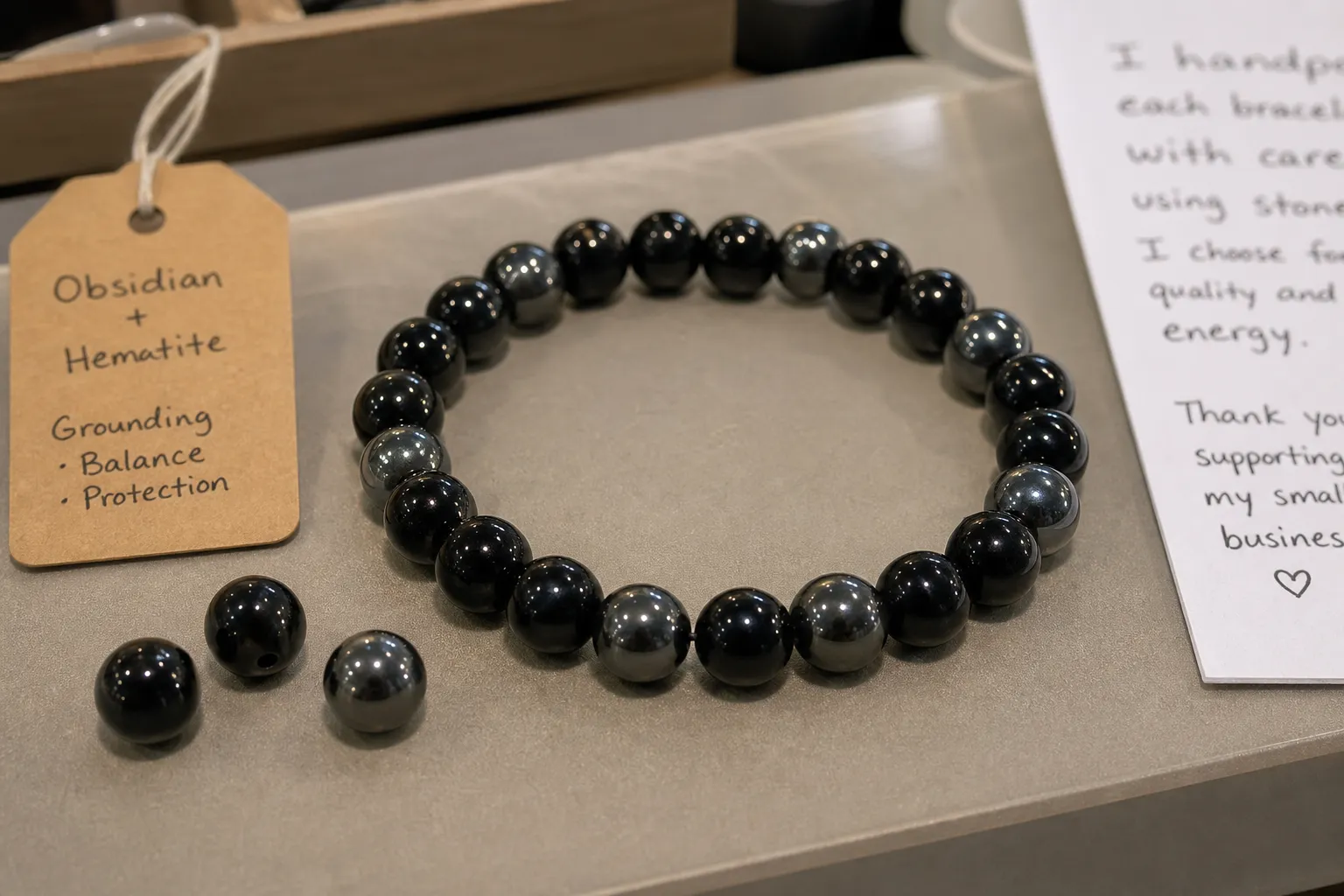
An obsidian and hematite bracelet meaning usually combines the two symbolic roles: hematite for grounding symbolism and black obsidian for protection or boundary symbolism. In marketplace language, that may be presented as a bracelet for staying grounded while maintaining energetic boundaries.
The combination is visually common because both materials can be dark and polished. Hematite’s metallic shine can contrast with the deeper glassy black of obsidian, giving the bracelet more texture than an all-black strand.
Some sellers also combine tiger eye, black obsidian, and hematite under the phrase “triple protection bracelet.” Read that phrase carefully. It is a jewelry and crystal-marketing label, not an official mineral category or a tested standard.
If you like the symbolism, the combined meaning can be read this way
- hematite: grounding, weight, steadiness
- black obsidian: boundaries, reflection, protection symbolism
- tiger eye, when included: often marketed with confidence or courage language
The bracelet format does not change the evidence level. It is still jewelry with symbolic associations.
Common misunderstanding: dark stones are not interchangeable
Because obsidian and hematite are both sold as dark protective stones, people often ask whether black obsidian is the same as hematite. It is not.
The confusion usually comes from three places.
Grouped shop categories
Many crystal shops group dark stones together under “protection stones.” That can make hematite, obsidian, black tourmaline, onyx, and other dark materials sound interchangeable, even when they are different materials.
Polished beads and photos
Polished beads can hide visual differences. In photos, a glossy black obsidian bead and a dark metallic hematite bead may look similar, especially under strong lighting or filters. In person, hematite often feels heavier for its size and has a more metallic surface impression, while obsidian tends to look glassier. These cues can suggest a difference, but they do not confirm identity alone.
Symbolic terms written like material facts
Symbolic terms are sometimes written as if they were material properties. “Grounding” is not the same kind of statement as “iron oxide mineral.” “Protection” is not the same kind of statement as “volcanic glass.” The first pair belongs to meaning and use context; the second pair belongs to material description.
Keeping those categories separate is the main skill this comparison requires.
Which should you choose?
Choose hematite
Choose hematite if you want the symbolic language of grounding, stability, weight, and steadiness. It is often the better match for people asking, “What does hematite stone mean?” in a bracelet or pocket-stone context.
Choose black obsidian
Choose black obsidian if you are drawn to protection symbolism, boundary reminders, self-reflection, or the look of polished volcanic glass. It is the more common match for people searching for black obsidian protection symbolism, as long as “protection” is understood as personal or cultural meaning.
Choose a combined bracelet
Choose a combined bracelet if you like the contrast: hematite as the grounding symbol, obsidian as the boundary symbol. Read “triple protection” and similar phrases as seller shorthand, not as a formal category.
The grounded answer is simple: hematite and obsidian can both carry meaningful personal symbolism, but their factual difference is material. Hematite is an iron oxide mineral. Obsidian is volcanic glass. The meanings people attach to them may guide your choice, but they should not be treated as proof of protection, health improvement, or predictable change.
Sources
Sources and further reading
Reference links are limited to sources considered suitable for public citation in this page.