ProtectCrystal handling note
Buyer comparison
Obsidian vs Hematite: Key Differences for Crystal Buyers
If you are comparing two dark stones in a bracelet, tumbled set, or product photo, the practical question is usually simple: which one is obsidian, which one is hematite, and which should you buy?
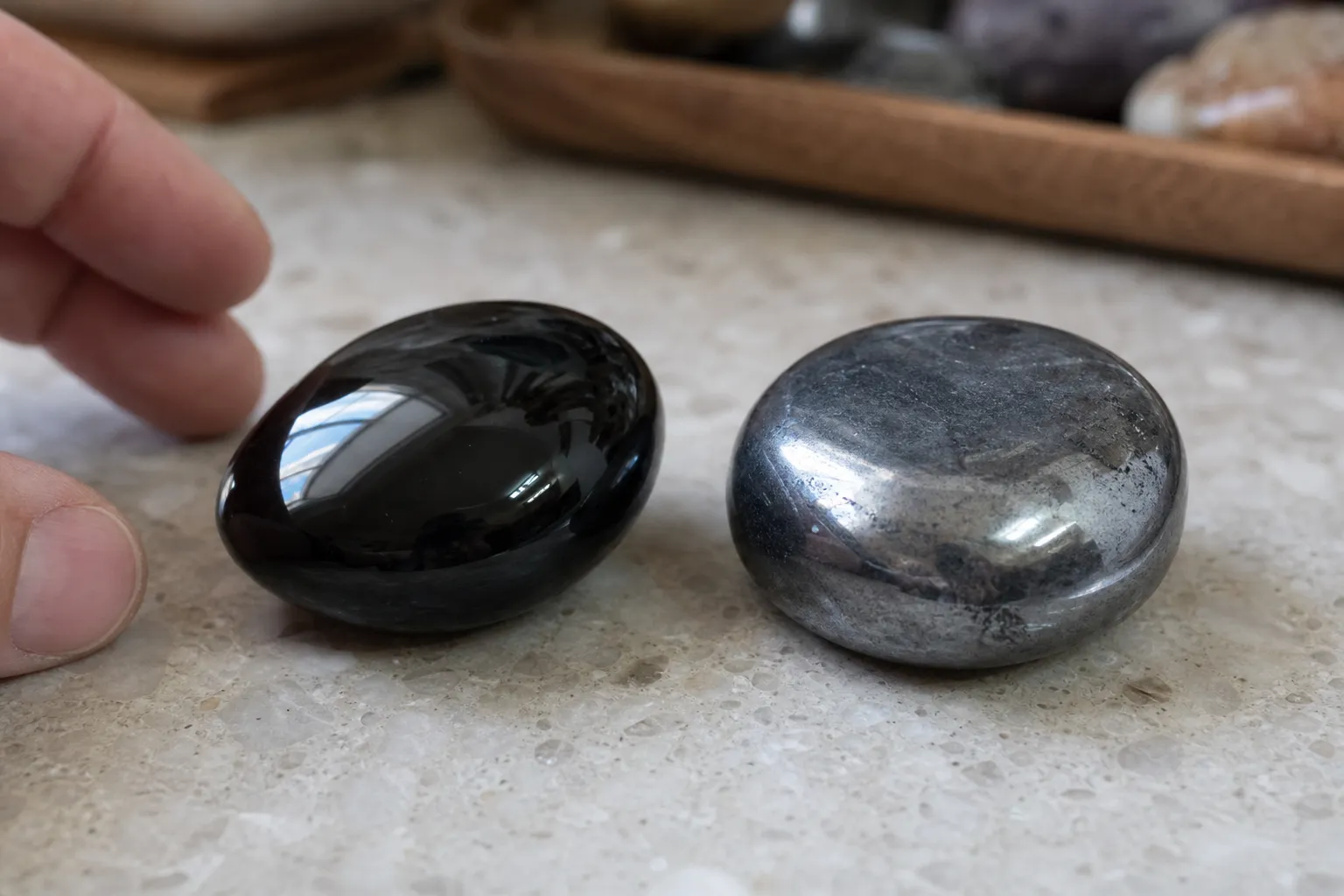
In an obsidian vs hematite comparison, the fastest buyer-level cue is this: obsidian is natural volcanic glass and often looks deep black with a glassy shine; hematite is an iron oxide mineral that often looks metallic gray, gunmetal, silvery-black, or sometimes reddish-brown, and usually feels heavier for its size.
Those clues are useful, but they are not proof. Polish, lighting, coatings, bead size, and seller wording can all blur the difference.
upward
Start with the broader guide
Use the broader guide first if you need the full scope before this page.
Obsidian vs Hematite at a Glance
Gemological and mineral references describe obsidian as volcanic glass and hematite through mineral properties such as iron-oxide identity, luster, streak, hardness, and density. For a shopper, that translates into a simpler counter-level comparison: glassy black vs metallic gray, lighter glass feel vs denser iron-oxide feel.
How to Tell Black Obsidian from Hematite by Look and Feel
Start with three cues: color, shine, and weight. None of them certifies the material alone, but together they help you ask better questions before buying.
1. Look for glassy black vs metallic gray
Black obsidian often appears very dark, smooth, and glass-like. In polished beads or tumbled stones, it may look like black glass with a reflective surface. Some pieces are pitch black; others show subtle brown, smoky, or gray hints under strong light.
Hematite is often grouped with black crystals in shops, but it is not usually the same kind of black. It commonly appears dark gray, steel-gray, silvery-gray, or gunmetal. Highly polished hematite can look mirror-like or metallic. Some hematite material may show reddish-brown tones, especially as powder, streak, or earthy material rather than polished beads.
A useful buyer phrase is: obsidian usually looks black-glassy; hematite usually looks gray-metallic.
2. Notice the shine, not just the darkness
Shine is one of the easiest ways to separate the two when the color is confusing.
Obsidian has a glassy luster because it is volcanic glass. A polished piece may reflect light sharply, but the shine usually still feels like glass rather than metal.
Hematite often has a metallic or submetallic luster. In beads, cabochons, or small tumbled pieces, the surface can look like polished steel, graphite, or gunmetal. If the stone looks black in a dim photo but turns silvery-gray when tilted, hematite becomes more likely.
Product photos can mislead here. Bright studio light can make obsidian look extremely shiny, while a dark listing photo can make hematite look blacker than it appears in hand.
3. Compare weight only when the pieces are similar
Many shoppers notice that hematite feels heavier. That fits the mineral reference data: hematite is denser than obsidian. In practical terms, a hematite bead or tumbled stone may feel surprisingly weighty for its size, while obsidian often feels more like polished glass.
The limit is important: weight only helps when the pieces are similar in size and shape. A large obsidian palm stone can feel heavier than a small hematite bead. Metal findings, hollow settings, coatings, or mixed-material bracelets can also distort the feel.
Use weight as a supporting clue, not a final answer.
Obsidian vs Hematite Properties Buyers Can Actually Check
The most useful hematite properties for crystal buyers are the ones that show up in the hand: metallic luster, density, streak behavior, and surface appearance. The most useful obsidian properties are its glassy nature, dark color, and glass-like breakage.
Material identity
Obsidian is natural volcanic glass. It forms when lava cools rapidly enough that a glassy texture develops rather than a fully crystalline rock. That is why buyer descriptions often use words such as “glassy,” “volcanic glass,” and “deep black.”
Hematite is a mineral, specifically an iron oxide. Mineral references commonly discuss it in terms of metallic luster, reddish streak, hardness, and high density. That is why hematite can feel weighty and look metal-like even when sold in crystal shops.
Streak is useful in mineral ID, awkward for shoppers
Hematite is known in mineral identification for leaving a reddish to reddish-brown streak when rubbed on an unglazed streak plate. That can help distinguish hematite from some other dark metallic minerals.
For buyers, streak testing has limits. It can mark or damage a polished piece, and it is not appropriate before purchase unless the seller allows it. Coatings, finishes, and bead treatments can also interfere.
Obsidian does not share hematite’s classic red-brown streak identity. That does not mean a casual mark test proves obsidian; it only means streak belongs more naturally to mineral ID than to quick jewelry shopping.
Hardness, chips, and surface wear
Both materials are sold as jewelry and tumbled stones, but they wear differently.
Obsidian is glass-like. A polished obsidian bead can stay smooth with careful handling, but chips or breaks may create sharp edges. If a piece is cracked, freshly broken, or flaked, handle it carefully and avoid loose fragments in a pocket or pouch.
Hematite has a metallic-looking surface and a dense feel. Polished hematite beads may show surface wear over time, especially if they rub against harder materials, metal spacers, or abrasive surfaces.
For both stones, avoid rough abrasion, harsh cleaning, and unnecessary impact unless you have specific care information for that exact item.
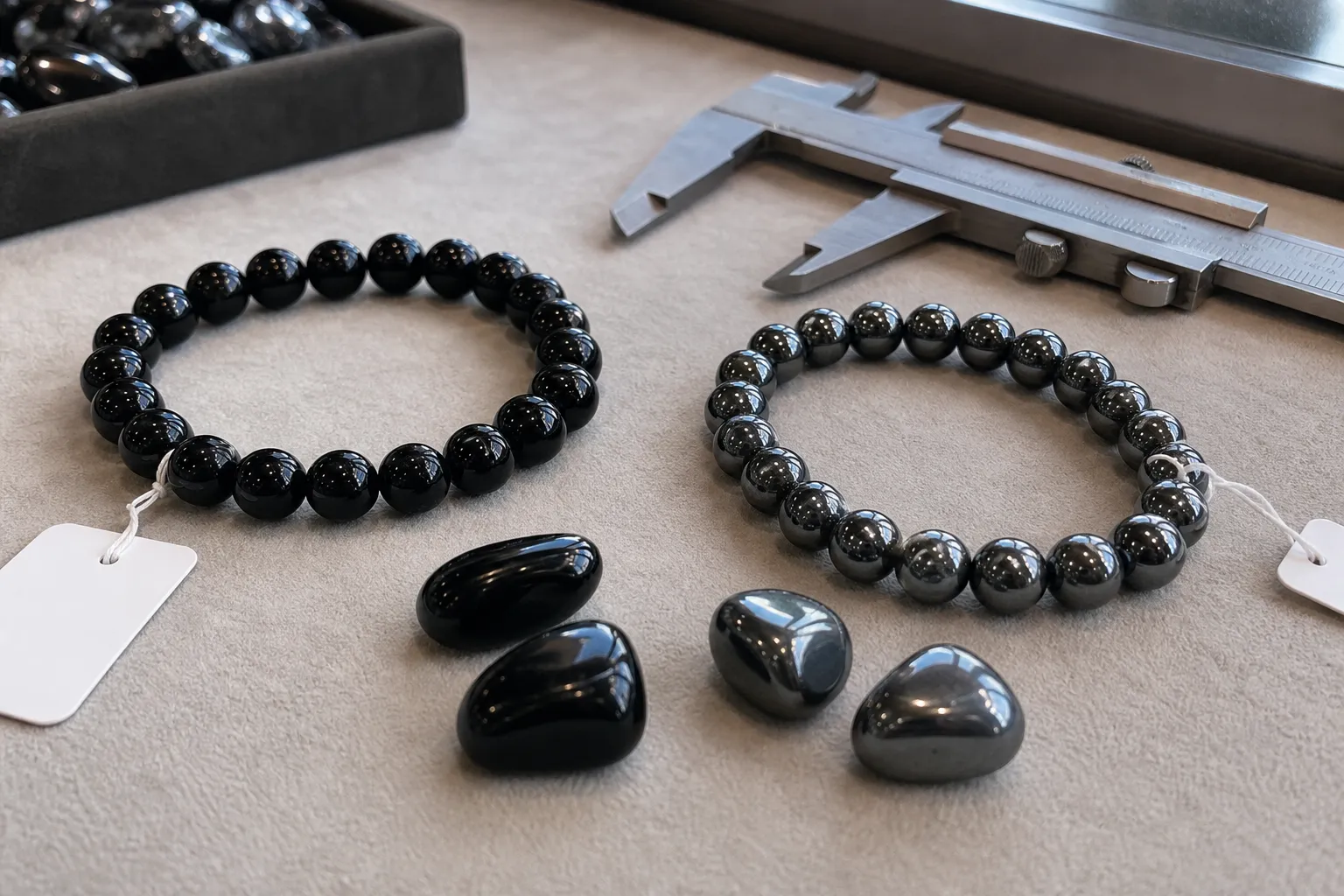
Black Obsidian vs Hematite Beads and Tumbled Stones
Beads and tumbled stones create more confusion than raw specimens because polishing removes many natural surface clues. In a tumbled set, one stone may be pitch black, another may be dark gray with tiny sparkles, and both may be labeled only as “black crystals.”
That is where obsidian and hematite are most often mixed up.
Black obsidian beads
Black obsidian beads are usually chosen for a glossy black look. In bracelets, they often create a clean, dark, glassy appearance. If the beads are uniform, very black, and reflective without a metallic gray cast, obsidian is a reasonable possibility.
Check for
- deep black or smoky-black body color;
- glass-like shine rather than metal-like shine;
- lighter feel compared with same-size hematite beads;
- seller wording such as “volcanic glass,” “black obsidian,” or “natural obsidian.”
Wording alone is not proof. “Obsidian” can be used loosely in marketplace listings, and dyed or coated dark beads can be difficult to judge from photos.
Hematite beads
Hematite beads often give a bracelet a darker metallic accent. They may appear silver-black, gunmetal, steel-gray, or mirror-like. Even small beads can feel dense.
Check for
- metallic or submetallic luster;
- dark gray rather than pure inky black color;
- heavier wrist feel for the bead size;
- seller wording such as “hematite,” “iron oxide,” “metallic,” “magnetic hematite,” or “gunmetal.”
Be careful with the phrase “magnetic hematite.” Strongly magnetic hematite-style beads in jewelry are often not simple natural hematite in the mineral-specimen sense. They may be manufactured, treated, or made from another magnetic material. A magnet response can be interesting, but it should not be treated as a clean authenticity test.
Tumbled obsidian vs tumbled hematite
Tumbled obsidian often looks like polished black glass. Tumbled hematite often looks like polished metal or dark steel. Once both are rounded, polished, and photographed under bright light, the difference can shrink.
Ask
- Does it look black like glass, or gray like metal?
- Does it feel surprisingly heavy for its size?
- Does the shine stay glassy, or does it flash like polished metal?
- Does the seller describe the material clearly, or only use broad labels like “black stone”?
- Are there signs of coating, dye, or an overly uniform surface finish?
Together, these questions give you a better judgment than color alone.
Can Hematite Look Like Black Obsidian?
Yes. In small beads, dark product photos, tumbled sets, or heavily polished pieces, hematite can look close enough to black obsidian to confuse shoppers.
The confusion usually comes from five things:
- Lighting: hematite can look black in low light; obsidian can flash brightly under strong light.
- Polish: both materials can be polished to a high shine.
- Scale: small beads hide texture and weight differences.
- Coatings: some beads may be coated or finished in ways that change the surface look.
- Marketplace grouping: sellers often group both stones under dark, black, grounding, or symbolic protection categories.
The reverse can also happen: a very glossy black obsidian bead may be described in a way that makes buyers expect a metallic stone. If the seller photos are limited, ask for images in natural light and a plain description of weight, luster, and material. If the purchase depends on certainty, visual checks are not enough; specialized testing may be needed.
Where onyx fits into the confusion
Searchers often compare obsidian vs onyx vs hematite because all three appear in black-stone jewelry. The simplest distinction is:
- obsidian: volcanic glass, often glassy black;
- hematite: iron oxide mineral, often metallic gray and dense;
- black onyx: a black variety of chalcedony commonly sold in polished jewelry.
This article focuses on obsidian and hematite, but onyx matters because a generic “black bead” listing may not tell you which material is actually being sold.
Obsidian vs Hematite Meaning: Symbolic Language in Context
Crystal shops commonly describe both obsidian and hematite with grounding, stability, personal-boundary, or symbolic protection language. Many buyers choose one over the other partly because of that vocabulary.
Read those descriptions as cultural, personal-use, or marketplace language—not as a verified result.
In crystal-market wording:
- obsidian is often associated with deep black volcanic-glass symbolism, reflection, and boundary themes;
- hematite is often associated with grounding, steadiness, focus, and its heavy iron-rich character;
- both may be sold together in bracelets or sets because the color palette and symbolic language overlap.
For buying, the more dependable difference is still physical: obsidian gives you a black glass look; hematite gives you a dense metallic look. If the meaning matters to you personally, choose the stone whose symbolism and appearance fit your use, but do not treat sales language as a material guarantee or a promised life result.
Everyday Carry, Cleaning, and Storage Differences
For everyday carry, the choice between obsidian and hematite is less about which stone is “better” and more about how it will be used.
Choose obsidian if you want a glassy black stone
Obsidian fits buyers who want a deep black, glossy, volcanic-glass look in a palm stone, pendant, bead bracelet, or display piece.
The main handling note is simple: obsidian is glass-like. If it chips, breaks, or flakes, the edges may be sharp. Do not carry broken fragments loose in a pocket or pouch where they can scrape skin or other stones.
For care:
- wipe with a soft cloth;
- avoid dropping it on hard surfaces;
- store it away from harder stones or metal edges that may scratch or chip it;
- avoid aggressive scrubbing or abrasive cleaners.
Choose hematite if you want a weighty metallic stone
Hematite is a better fit if you like the look of dark metal, gunmetal gray, or silvery-black beads. It can feel substantial in bracelets, which some buyers like and others find too heavy for all-day wear.
For care:
- wipe with a soft dry or slightly damp cloth when needed;
- dry it promptly if moisture is involved;
- avoid harsh chemicals, abrasive pads, and rough storage;
- keep it from rubbing constantly against harder or sharp-edged materials.
Jewelry findings, coatings, elastic cord, plating, and mixed materials vary. When a bracelet includes metal spacers, glue, coatings, or unknown bead treatments, the weakest part of the jewelry may determine the best care routine.
Seller Descriptions That Matter
Seller wording can help, but it can also create confusion. Look for specific material language rather than broad mood labels.
More useful wording includes
- “black obsidian”;
- “natural volcanic glass”;
- “hematite”;
- “iron oxide”;
- “metallic luster”;
- “gunmetal gray”;
- “tumbled hematite”;
- “black obsidian beads.”
Less useful wording includes
- “black crystal”;
- “grounding stone”;
- “symbolic protection bracelet”;
- “energy stone”;
- “mystery dark stone”;
- “hematite-style” without material detail;
- “magnetic hematite” without explaining what the beads are made from.
A clear listing should show multiple photos, name the material, and avoid relying only on symbolic claims. If a seller describes a stone as hematite but it looks like pure black glass, ask for clarification. If a seller describes a stone as obsidian but it looks strongly metallic or unusually heavy, ask the same.
A Practical Buying Decision
If you are choosing obsidian or hematite for a bracelet, tumbled stone, or small carry piece, use this decision frame.
Choose obsidian when you want
- a deep black or inky glass appearance;
- a volcanic-glass material;
- a smoother, lighter-feeling dark stone;
- a glossy black bead or palm stone;
- a piece where sharp chips can be avoided through careful handling.
Choose hematite when you want
- a metallic dark gray or gunmetal look;
- a denser, heavier feel;
- a stone known in mineral ID for iron-oxide properties and reddish streak;
- a bracelet with more weight and metallic shine;
- a dark stone that reads more like polished metal than glass.
When the piece in front of you is small, polished, poorly photographed, or described with vague shop language, do not force certainty. The better buyer answer is often: “This looks more consistent with obsidian” or “This looks more consistent with hematite,” followed by the reason—glassy black, metallic gray, heavier feel, reddish-brown streak context, or clearer seller wording.
That is the most reliable way to handle the difference between obsidian and hematite: use observable cues, know what can mislead you, and save certainty claims for situations where the material has actually been tested.
Sources
Sources and further reading
Reference links are limited to sources considered suitable for public citation in this page.