ProtectCrystal handling note
Everyday carry comparison
Obsidian vs Hematite for Everyday Carry: Durability and Surface Wear
If you are choosing obsidian vs hematite everyday carry for practical durability, hematite is usually the less glass-chip-prone option. Obsidian can be carried, but it deserves closer checks for chips, flakes, cracks, and sharp edges.
That does not make hematite automatically “tougher” in every bracelet, pocket stone, or charm. Real wear depends on the cut, polish, bead holes, coatings, cord quality, storage, and whether the stone rides loose against keys, coins, or metal hardware.
upward
Start with the broader guide
Use the broader guide first if you need the full scope before this page.
The short choice rule
- Choose hematite if you want a heavier, metallic-looking carry stone and are mainly worried about sharp glass-like chips.
- Choose obsidian if you prefer the glossy black volcanic-glass look, but carry it in a pouch or protected setting and inspect the edges after impacts.
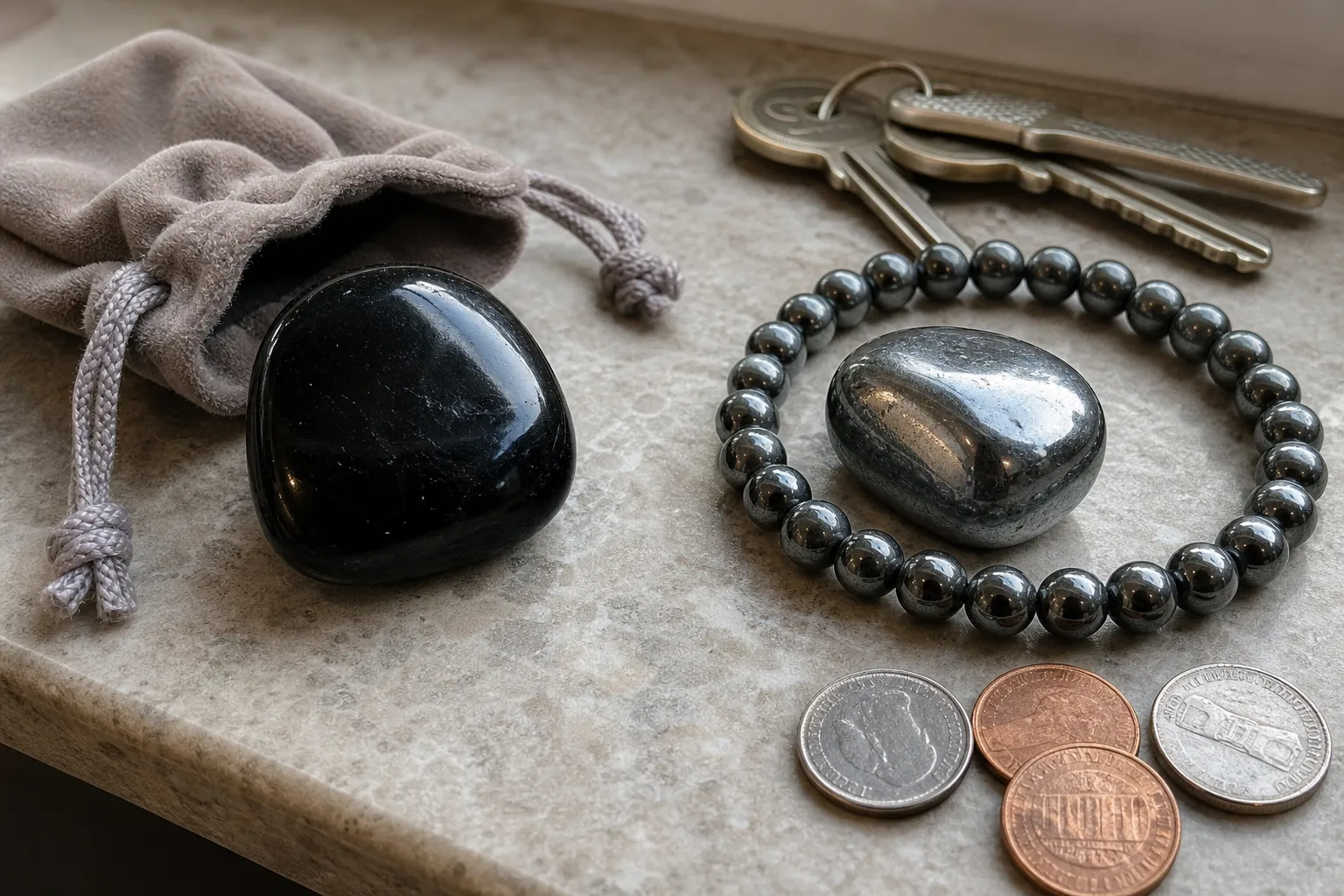
Quick wear comparison for everyday carry
Obsidian and hematite are often sold together in dark bead bracelets, pocket stones, and protection-style crystal sets. This comparison is about material wear and handling, not promised effects from the stone.
Loose pocket carry
Obsidian can scuff, chip, or break with glass-like edges if knocked against hard items. Hematite can show scuffs, dulling, coating loss, or bead wear depending on the piece. Use a pouch for either; be stricter with obsidian around keys and coins.
Bracelet wear
Polished obsidian beads may chip near edges or bead holes if struck. Hematite concerns often include bead holes, cord wear, surface finish changes, and imitation or coated beads. Inspect cord, bead holes, cracks, and finish rather than judging by shine alone.
Bag charm or keychain
Both stones are exposed to impact, grit, and metal contact. Neither is ideal if it bangs against hardware all day.
Tumbled pocket stone
Rounded obsidian pieces are easier to carry, but chips can still become sharp. Heavy metallic-looking hematite tumbles may feel sturdy, but surface changes can appear. Tumbled does not mean damage-proof.
Occasional carry or display
Either stone is usually fine with gentle handling. This is best if you want the look without constant abrasion.
The difference starts with material identity. Obsidian is commonly described as natural volcanic glass, which helps explain its glossy look and curved, glassy fracture surfaces. Hematite is a mineral often described with metallic to earthy luster, dark gray to reddish-brown appearances, and a red-brown streak. Those are useful property cues, but they do not turn a seller listing or product photo into proof of identity.
Why obsidian chips matter in daily carry
The main everyday-carry concern with obsidian is not only scratching. It is the combination of glassy luster, brittle behavior, and conchoidal fracture. In plain buyer language, obsidian can chip or flake in a way that leaves a curved, sharp, glass-like edge.
That matters most with:
- Loose pocket carry: keys, coins, knives, tools, and zipper pulls can knock against the stone repeatedly.
- Bracelet impacts: beads can hit desks, counters, car doors, gym equipment, or other bracelets.
- Drops: a polished tumble or bead may survive many normal uses, then chip from one fall onto tile, concrete, or stone.
Visible signs to check on obsidian include small crescent-shaped chips, fresh glossy flakes, tiny edge notches, hairline cracks, and any point that catches on fabric. A chip does not automatically make the stone unusable, but a sharp edge should not be worn tightly against skin or carried loose where it can cut pocket lining or scratch other items.
This is why tumbled obsidian vs hematite is not only a hardness question. A rounded tumble has fewer exposed edges than a point, carving, or faceted bead. But if obsidian breaks, it can still form sharp surfaces. Thin pendants, carved tips, and angular beads deserve closer inspection than smooth palm stones.
What hematite surface wear usually looks like
Hematite is often chosen for its gunmetal gray color, metallic sheen, heavier feel, or dark sparkly appearance. Its everyday wear concerns are different from obsidian’s glassy chip issue.
With hematite, look for:
- dull patches where a polished surface has rubbed against other objects;
- fine scratches or scuffs on high-contact bead surfaces;
- finish changes around bead holes;
- reddish-brown marks or undertones on worn areas;
- coating loss if the item is a processed, coated, composite, or imitation hematite-style bead;
- cracks or chips on beads that have been struck or strung tightly.
The marketplace caution is important: many beads sold as “hematite” may not behave like a textbook mineral specimen. Very shiny, strongly magnetic, unusually uniform, or coating-like beads may involve processed or imitation materials. Appearance, magnetic response, weight, and seller wording can suggest possibilities, but they cannot confirm identity by themselves. For certainty, specialized testing may be needed.
For a buyer, the useful question is not “does hematite ever wear?” It can. The better question is whether the surface change bothers you. Hematite bracelet wear often shows as dulling, rubbing, finish loss, or bead-hole wear rather than the same sharp glass-like flaking you would watch for with obsidian.
Hardness helps, but it does not settle the whole comparison
Hardness is useful, but it is often overused in crystal durability discussions. In mineral identification, hardness mainly relates to scratch resistance: what can scratch what under a given contact. Everyday carry adds other forces, including impact, grit, cord tension, bead-hole friction, surface coatings, and accidental drops.
That is why a heavier-feeling or harder-looking stone is not automatically the better daily carry piece. A bracelet can fail at the cord before the beads look worn. A polished bead can chip at the drill hole because that is a stress point. A coated bead can look damaged because the surface layer changed, not because the underlying material was deeply worn. A pocket stone can become scuffed simply because it spent weeks against keys.
There is also a source limit here: strong public references help explain mineral properties, fracture behavior, luster, hardness, and identification terms, but they do not provide a controlled, long-term ranking of obsidian and hematite as pocket stones, bracelets, keychains, or bag charms. Wear depends heavily on contact material, pressure, time, and abrasive particles.
So the fair conclusion is narrow: obsidian’s glassy fracture makes chips and sharp edges a more prominent daily inspection issue. Hematite can be the easier everyday choice if you want a heavy metallic carry stone, but its surface wear depends strongly on finish quality and whether the bead is truly what the seller says it is.
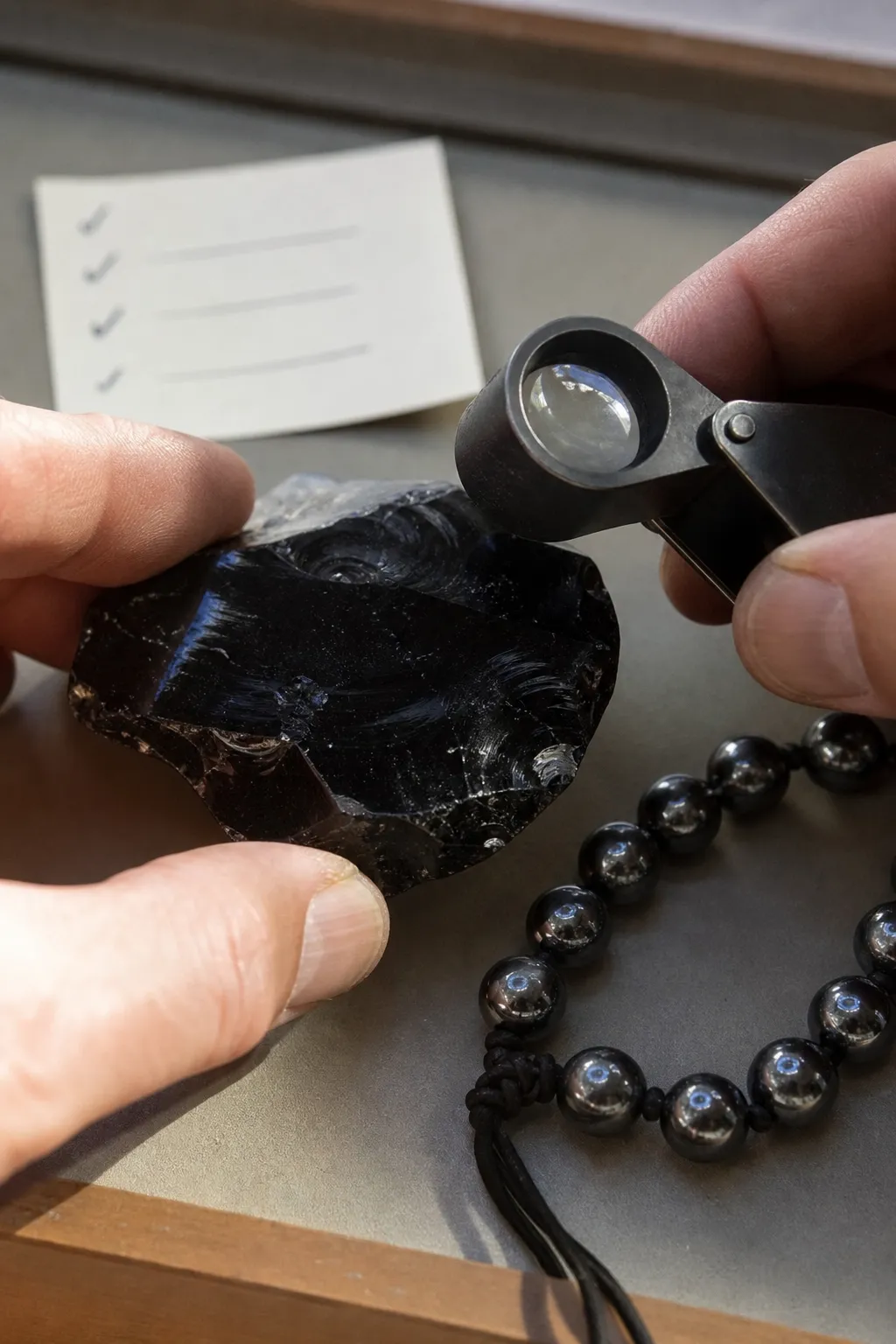
How to inspect before buying or carrying
A quick inspection is more useful than deciding from a product title alone.
For carrying obsidian, check
- Edges and corners: avoid pieces with fresh chips, sharp flakes, or points that snag cloth.
- Surface cracks: hold the piece under light and rotate it slowly.
- Shape: rounded tumbles are easier for pocket carry than thin points or sharp carvings.
- Contact plan: if it will share space with keys, use a small pouch.
- After a drop: inspect again before putting it back in a pocket or bracelet rotation.
For carrying hematite, check
- Surface finish: look for coating-like peeling, cloudy dull spots, or uneven shine.
- Bead holes: inspect for roughness, chips, or widening around the drilled area.
- Cord wear: especially on bracelets with heavy beads.
- Color clues: metallic gray, dark gray sparkle, or reddish-brown undertones can be consistent with hematite, but are not proof.
- Seller wording: be cautious with listings that rely on broad effect language instead of clear material description.
For either stone, avoid tossing it into a bag with metal tools, keys, loose change, or rough stones. If you want daily carry with fewer visible changes, separate storage matters more than most buyers expect.
Common confusion: black, gray, shiny, heavy, and “protective” labels
Buyers often compare dark polished obsidian and hematite in tumbled sets or bracelet listings. The language is familiar: one stone looks pitch black, another is dark gray with sparkle, one feels heavier, and one looks more glassy. These observations can help, but they are not final identification.
A glossy black stone may suggest obsidian, especially if it looks glass-like. A dark gray metallic sheen or sparkly gunmetal look may suggest hematite. A heavier feel may also point some buyers toward hematite. But polished stones, lighting, coatings, dyed materials, and photo editing can blur those cues.
The same caution applies to combined obsidian and hematite bracelets. They are commonly marketed in grounding or protection-style language, and many buyers value that personal or cultural context. Still, those labels do not verify durability, identity, or any promised result. For this question, the useful comparison is physical: what can chip, what can dull, what can lose finish, what should be inspected, and how the piece is carried.
A practical choice rule
Loose stone in a pocket
Hematite is often the more forgiving choice for people worried about sharp glass-like chips, but it should still be separated from keys and coins. If you choose obsidian pocket carry, use a pouch and inspect it after drops or hard knocks.
Bead bracelet
Do not choose only by stone name. Check bead quality, cord strength, bead-hole smoothness, finish consistency, and whether any bead has cracks or sharp chips. Obsidian needs closer edge inspection; hematite needs closer attention to surface finish, bead-hole wear, and possible coating or imitation issues.
Keychain or bag charm
Neither stone is ideal for staying pristine. That use exposes the piece to repeated impacts, grit, and metal contact. Choose a setting that protects the stone, or accept that surface changes may appear.
For most buyers, the answer is simple: hematite is usually easier for daily carry if you want weight and a metallic look with less concern about sharp glass-like flakes. Obsidian is still carryable, especially as a rounded tumbled stone or protected pendant, but it asks for more careful handling and more frequent edge checks.
Sources
Sources and further reading
Reference links are limited to sources considered suitable for public citation in this page.