
ProtectCrystal handling note
Material care comparison
Obsidian vs Hematite Cleaning: What Changes Between Glass and Iron Oxide
For obsidian vs hematite cleaning, the practical difference is this: polished obsidian can usually be treated like a glossy glassy surface, while hematite needs a drier, more cautious routine because it is an iron oxide mineral and is often sold as beads, coated pieces, or mixed-material jewelry.
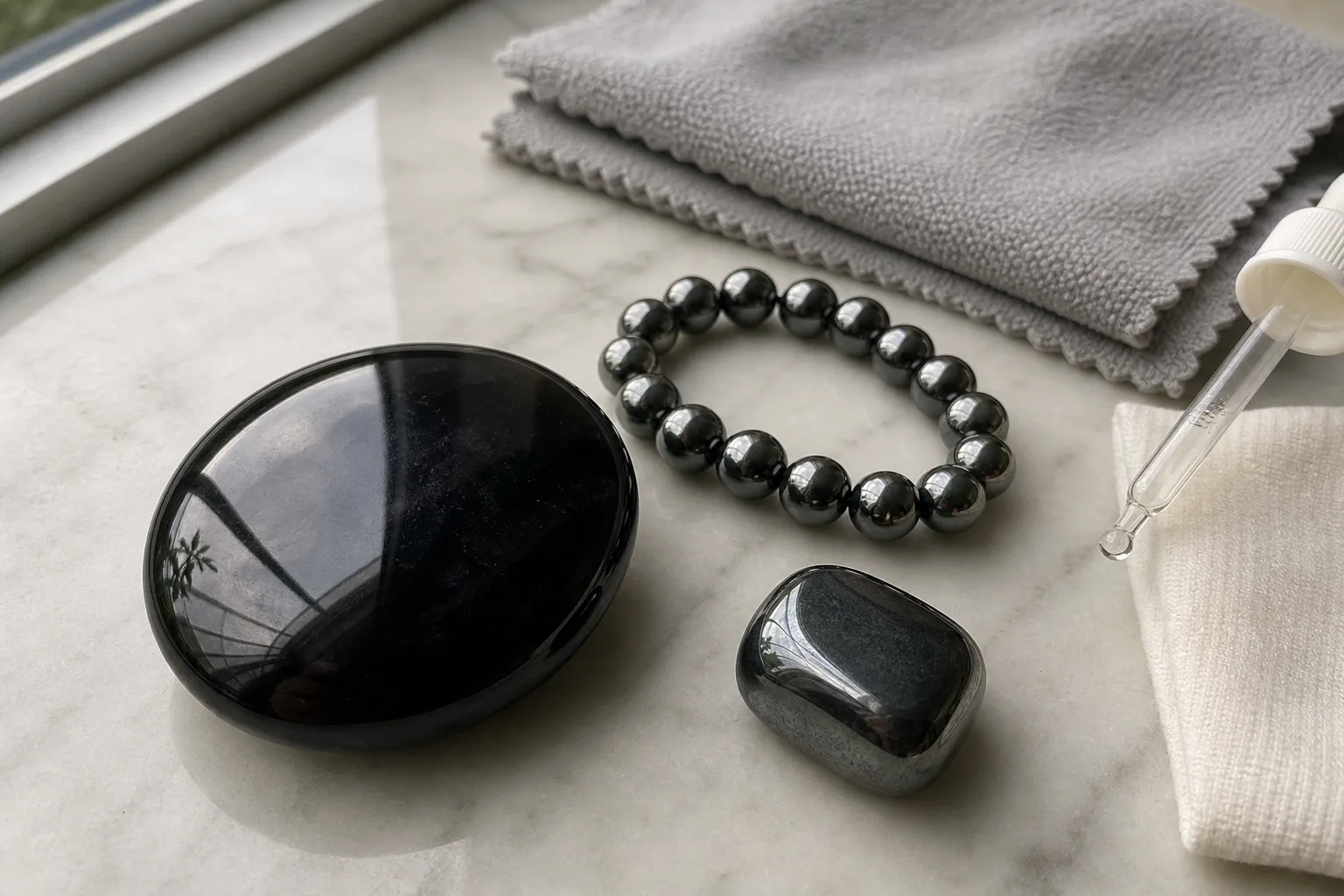
Start both with a soft dry cloth. For obsidian, a lightly damp cloth is often enough for fingerprints or skin oil, followed by drying. For hematite, dry wiping should stay the normal habit; use a barely damp cloth only when residue will not lift, then dry the piece right away. Salt water is not a good default for either, and it is especially poor for hematite.
upward
Read the full overview first
Use the broader guide first if you need the full scope before this page.
Quick comparison: what changes in the cleaning method
For ordinary polished pieces, the aim is not “deep cleaning.” It is removing dust, lint, fingerprints, lotion film, or grit without dulling the finish, loosening settings, or trapping moisture in bead holes.
| Situation | Obsidian | Hematite |
|---|---|---|
| Fingerprints on a polished stone or pendant | Soft dry cloth first; lightly damp cloth if needed; dry afterward | Soft dry cloth first; barely damp cloth only if needed; dry immediately |
| Dust on a display piece | Blow off loose dust or use a soft brush/cloth | Soft dry cloth or soft brush; avoid wetting crevices |
| Body oil on beads | Gentle wiping; avoid soaking cord, elastic, glue, or metal parts | Dry wiping hematite beads is the better everyday habit |
| Salt water advice | Avoid as a default, especially for jewelry or uncertain pieces | Avoid salt water, soaking, and repeated wetting |
| Abrasive scrubbing | Avoid dragging grit across the glossy surface | Avoid rubbing that may affect luster, coating, or finish |
The point is not that obsidian can be handled carelessly. It can still chip, scratch, or show marks if grit is rubbed across it. The real shift is that cleaning hematite should be more moisture-conscious, especially when the item is a bracelet, bead strand, pendant with findings, coated bead, magnetic-looking piece, or anything with an unclear seller description.
Cleaning obsidian: gentle wiping is usually enough
Obsidian is commonly described as volcanic glass. For a polished crystal owner, that usually means the surface behaves more like a smooth glossy material than a porous soft stone. Still, it is not a reason to scrub, soak, or ignore edges.
A simple routine for cleaning obsidian:
- 1. Check for grit before rubbing. If you see sand, dirt, or hard particles, lift them with a soft brush or blow off loose dust first.
- 2. Wipe with a clean microfiber or soft cotton cloth.
- 3. If fingerprints or residue remain, use a cloth lightly dampened with plain water.
- 4. Dry with a second soft cloth, especially around a bail, cord, drill hole, glue point, or metal setting.
- 5. Store it where it will not knock against harder jewelry or sharp metal edges.
The main concern with obsidian volcanic glass cleaning is scratch avoidance and edge protection. A palm stone is not the same as a wire-wrapped pendant, and a bead is not the same as a loose tumbled piece. Clean the whole object, not just the mineral name.
Avoid abrasive powders, rough brushes, scouring pads, gritty cloths, and ultrasonic shortcuts for uncertain pieces. If the object has glue, metal, carving, cracks, or a coating, choose the mildest method that removes the visible grime and stop there.
Cleaning hematite: dry first, barely damp only when necessary
Hematite is an iron oxide mineral, so moisture-heavy care deserves more caution. That does not mean every hematite bead will visibly change after one accidental splash. It does mean the better owner routine is low moisture, no soaking, no salt water, and prompt drying.
For cleaning hematite, use this order:
- 1. Wipe with a soft dry cloth. On beads, roll each bead gently rather than scrubbing one spot.
- 2. Use a soft dry brush for dust in carved lines, bead gaps, or textured areas.
- 3. If grime remains, use a barely damp cloth, not a wet rinse or soak.
- 4. Wipe only the dirty area.
- 5. Dry immediately around bead holes, knots, elastic, caps, and metal findings.
- 6. Leave the item in open air briefly before storing it, so moisture is less likely to stay trapped.
How to read common hematite water warnings
This is the practical meaning behind common shop wording such as “keep hematite away from water” or “don’t soak hematite.” A controlled wipe is different from leaving a bracelet in a bowl, rinsing it under running water, wearing it in the shower, or placing it in salt water. Soaking gives moisture more time to reach bead holes, stringing material, coatings, metal parts, and tiny surface irregularities.
Some sellers say hematite can lose its shine with water or salt exposure. A more careful way to read that is: moisture, salt, rubbing, coatings, and unknown marketplace materials may affect the look of some hematite items. Visual inspection alone cannot prove exactly what a bead is made of or how it was finished. If a piece is valuable, older, unusually plated-looking, magnetic, dyed, coated, or built into complex jewelry, do not test it with soaking, solvents, or polishing compounds.
Why glass and iron oxide lead to different care habits
The cleaning answer changes because material and object design both matter.
Obsidian is a glassy volcanic material. A polished surface can often be cleaned with minimal moisture, but it may still have delicate edges, fractures, carvings, or glued jewelry parts. The rule is not “obsidian likes water.” The rule is: use gentle wiping, avoid grit, and do not wet the whole object longer than needed.
Hematite is an iron oxide mineral. Scientific work on hematite surfaces shows that iron oxide surfaces can interact with water at the surface level, but that should not be turned into a direct prediction for every bracelet bead or polished stone. Consumer hematite also brings marketplace uncertainty: beads may be polished, coated, mixed with other iron-rich materials, strung on elastic, paired with base-metal findings, or sold under simplified crystal-shop names.
Obsidian
Gentle wiping; light moisture if needed; dry afterward; protect from scratches and chips.
Hematite
Dry wiping first; barely damp wiping only when needed; no soaking; no salt water; dry promptly.
Conservation-style care points in the same direction: cleaning can change a surface through abrasion, residue, moisture movement, or chemical interaction, and the effect depends on the exact object. At home, that becomes a simple habit: remove only what needs to be removed, start mild, and stop before the finish changes.
Cleaning versus cleansing crystals
A lot of confusion comes from the words “cleaning” and “cleansing.” In crystal-shop language, “cleansing” may refer to a personal or cultural ritual practice. People may mention moonlight, smoke, sound, rice, selenite, quartz, or intention-setting. That is a different category from physical care.
Physical cleaning means removing something visible or touchable: fingerprints, skin oil, dust, lint, soap residue, dirt, or grit. A ritual practice does not wipe lotion film from hematite beads or remove grime from the setting of an obsidian pendant.
You can keep the categories separate without dismissing personal practice. If someone uses ritual cleansing as part of their crystal routine, that is their choice. But when the task is protecting a polished finish, cleaning around a drill hole, or avoiding water exposure, the decision should come from the material and construction of the object.
When the answer changes
The basic advice fits many polished stones, bracelets, pendants, and display pieces, but a few details can change the cleaning decision.
A loose stone is simpler than jewelry.
A solid obsidian palm stone has fewer weak points than an obsidian pendant with a glued bail. A hematite bracelet has elastic, drill holes, and repeated skin contact. Clean the entire object, not just the stone.
Coatings and lookalike materials add uncertainty.
Some hematite-like beads are coated, magnetic, plated-looking, or sold with unclear descriptions. A shiny, heavy, cool feel can suggest hematite, but it does not prove composition or finish. If the surface looks painted, rainbow-coated, mirror-plated, or unusually uniform, stay with dry wiping.
Specimens are not the same as tumbled stones.
A delicate hematite rose, rough matrix specimen, or fragile display piece may hold dust in crevices and may not respond well to rubbing. Use a soft brush and avoid pushing moisture into cracks.
Residue near metal findings needs local cleaning.
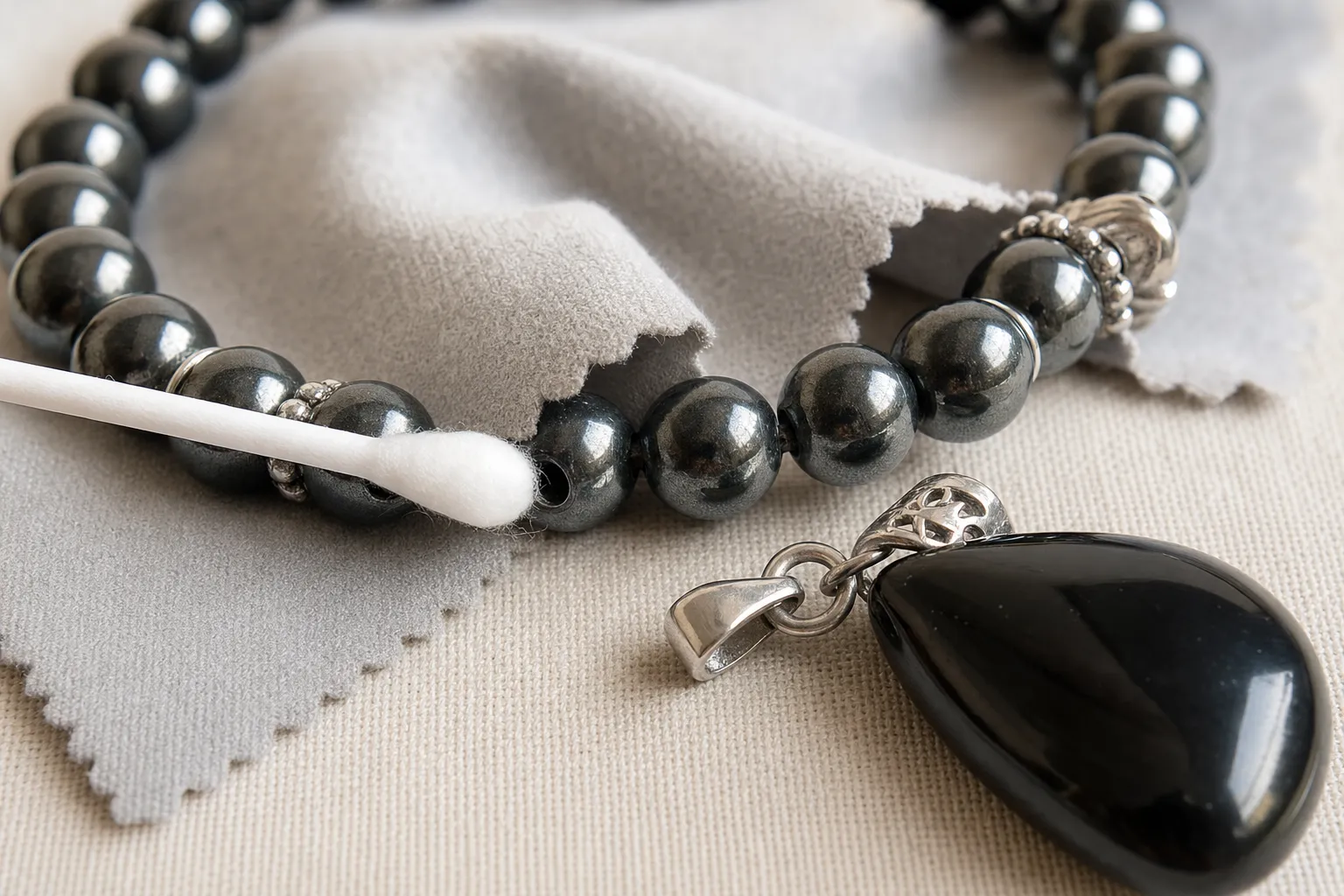
If lotion or soap film is trapped near a clasp, cap, wire wrap, or spacer, do not soak the whole piece. Use a barely damp cloth or cotton swab on that area, keep moisture controlled, then dry thoroughly.
Valuable or older pieces deserve restraint.
If the object is antique, expensive, sentimental, or possibly treated, ask a jeweler, mineral dealer, or conservator before trying water, solvents, ultrasonic cleaners, polishing compounds, or abrasive tools.
Compact routine for most owners
For obsidian, use a soft dry cloth first. If needed, use a lightly damp cloth, then dry the piece. Keep grit away from the glossy surface and avoid abrasive scrubbing.
For hematite, use a dry cloth first and make that the normal routine. If oil or grime remains, use a barely damp cloth only on the dirty area and dry immediately. Do not soak hematite, do not use salt water, and do not assume a ritual cleansing method has physically cleaned the surface.
The short takeaway: both stones prefer gentle handling, but hematite care should be drier. Obsidian’s glassy surface usually allows careful wiping with minimal moisture; hematite’s iron oxide identity, bead holes, finishes, and marketplace uncertainty make dry or near-dry cleaning the better everyday default.
Sources
Sources and further reading
Reference links are limited to sources considered suitable for public citation in this page.