
ProtectCrystal handling note
Buyer comparison
Black Obsidian vs Hematite Beads: What Buyers Should Check
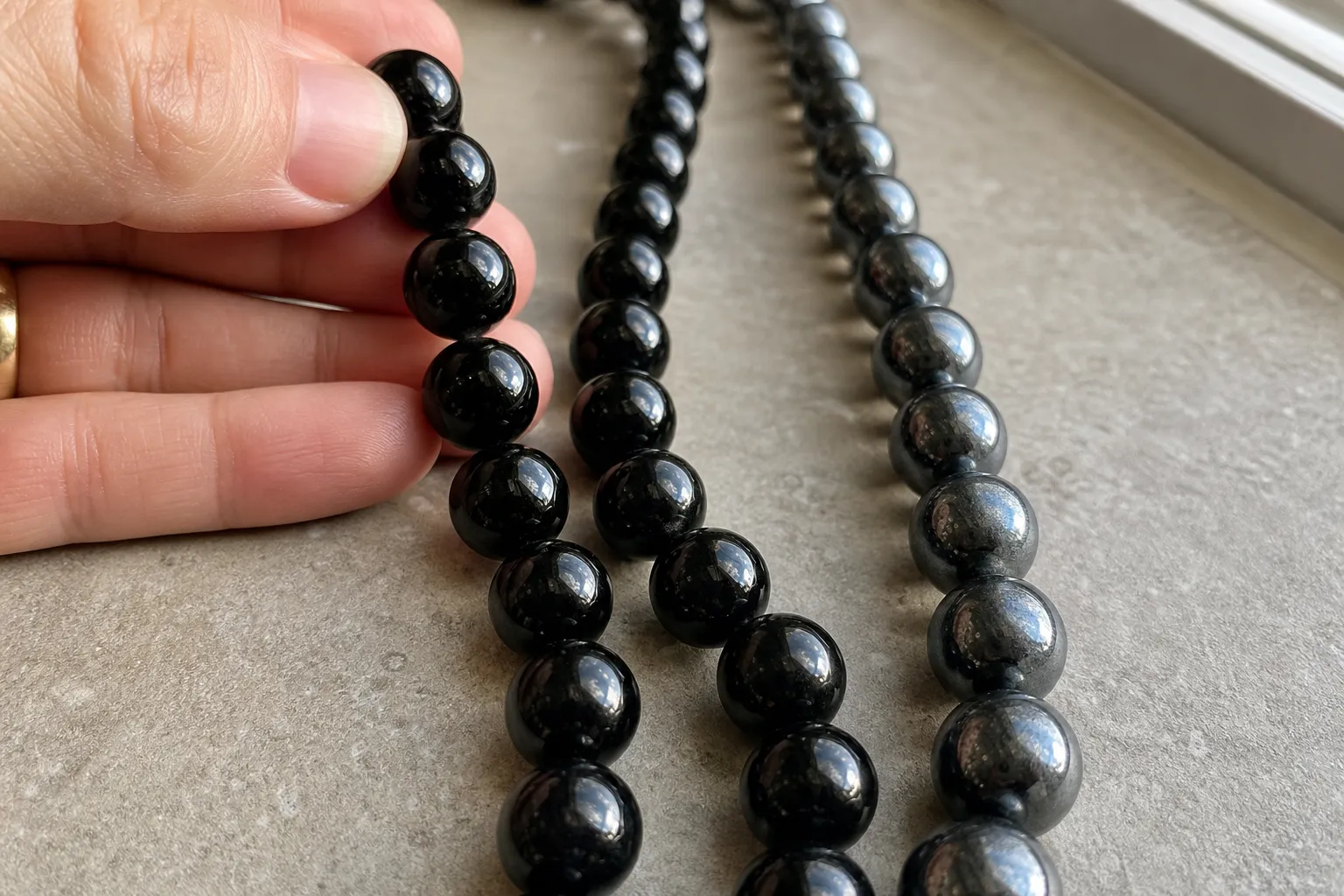
When comparing black obsidian vs hematite beads, begin with what you can actually see. Black obsidian usually reads as polished black glass. Hematite usually reads as polished dark metal, steel gray, or gunmetal. Obsidian is volcanic glass; hematite is an iron oxide mineral.
That difference often shows up in luster, undertone, and weight impression, but none of those checks can confirm a bead’s identity on their own. For a finished bracelet or online listing, use them as buying clues: glassy versus metallic shine, deep black versus gray-black tone, heavier feel for hematite, coating or flaking signs, bead consistency, and clear seller wording about natural, dyed, coated, magnetic, synthetic, composite, or treated beads.
upward
Start with the broader guide
Use the broader guide first if you need the full scope before this page.
The fastest side-by-side check
If you have the beads in hand, rotate them slowly in ordinary daylight. If you are shopping online, compare several photos instead of trusting one highly polished product image.
The practical rule: obsidian volcanic glass beads usually look glassy; hematite iron oxide beads usually look metallic. The caution: glass, coatings, dyes, composites, and vague seller wording can make a bead look convincing without confirming what it is.
Look at luster before color
Color alone is a weak separator because both bead types can look dark in bracelet photos. Luster is usually more useful.
Polished black obsidian has a glassy surface, like a small black mirror made from glass. It may reflect strongly, but the reflection still feels glass-like rather than metallic. If a bead already has a chip or exposed edge, that area may also look glassy. Do not create a chip to test it.
Polished hematite usually has a metallic luster. Listings may describe it as gunmetal, silvery gray, dark gray, mirror-like, or steel-like. Even when hematite is sold in a “black stone” bracelet, it often does not look black in the same way obsidian does. Under light, it may turn noticeably gray.
Online photos complicate this. Strong studio lighting can make obsidian look extremely reflective and hematite look nearly black. A black background can flatten both materials. Better listings show side angles, drill holes, and the beads on a neutral surface or skin tone.
A useful crystal bead identification question is simple: does it shine like black glass, or like dark polished metal? If you cannot tell, treat the listing as uncertain.
Weight can support the visual clues
Hematite beads are commonly experienced as heavier or more substantial for their size. Black obsidian bracelet beads tend to feel closer to polished glass. If your eyes see a metallic luster and your hand notices extra weight, hematite becomes the more likely reading.
Use that clue carefully. Weight is not a clean home test when the bracelet has metal spacers, charms, elastic cord, mixed stones, large focal beads, or unknown fillers. Small beads also make weight differences harder to judge. Dense substitutes, coated beads, or composite designs can confuse the impression.
If you are at a crystal counter, compare beads of the same diameter and similar stringing. A metallic-looking strand that feels unexpectedly substantial may fit hematite better than obsidian. A deep glossy black strand that feels more like glass may fit obsidian better.
Avoid scratch tests, streak tests on tile, heat, acids, impact, or cutting apart the bracelet. Hardness, streak, fracture, and density are real mineral-identification concepts, but they are not good shopping tests for finished beads. They can damage the polish, cord, coating, or drill-hole area and still leave you with an uncertain answer.
Finish and coating clues worth checking
A bead can be correctly named, treated, coated, dyed, or mislabeled. This is why the finish matters.
For black obsidian bead identification, look for a smooth glassy polish and a consistent deep black appearance. Some obsidian pieces may show internal variation, subtle inclusions, or slight translucency at thin edges, but small polished beads can also look very uniform. Be extra cautious with bright blue, green, or red products sold as “obsidian” if they look more like colored glass than natural volcanic glass. Glittery “goldstone” style materials are also often mixed into natural-stone language in marketplaces.
For hematite bead identification, check whether the metallic surface looks integral or painted on. Coated hematite beads may show wear around drill holes, along bead edges, or at high-contact points. Visible signs may include flaking, dull patches, uneven shine, or a different tone beneath a worn area. These signs do not automatically identify the base material, but they are good reasons to ask about coatings, treatments, or synthetic material.
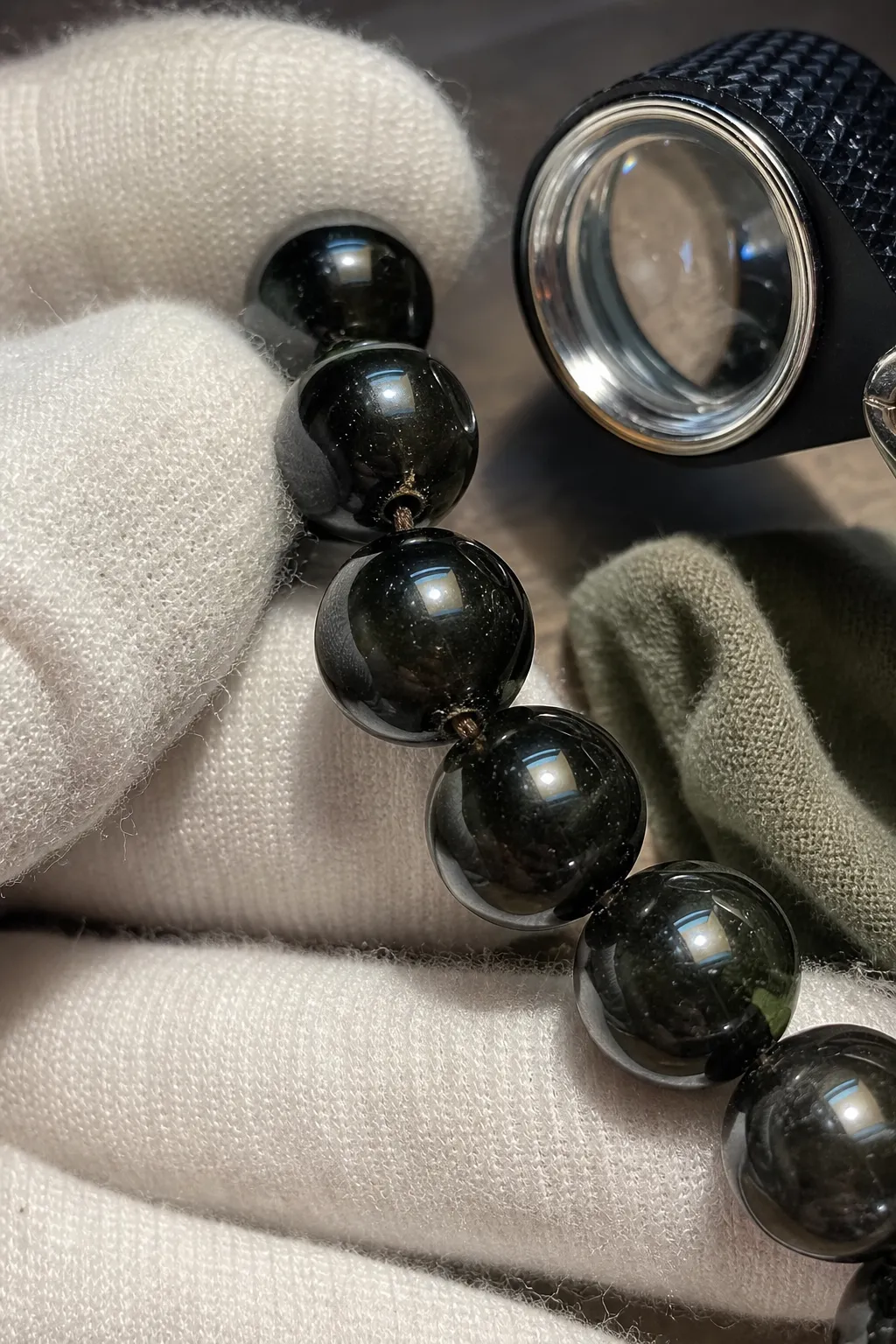
Non-destructive warning signs include:
- Painted-looking surfaces: the finish appears to sit on top of the bead.
- Flaking near holes: common wear zones on bracelets and strands.
- Bubbles or seams: possible signs of molded or substitute material.
- Over-broad wording: “real” or “natural” without treatment details.
- One-photo listings: especially when shine, undertone, and drill holes are hidden.
- Vague paperwork: seller documents vary in quality and should not replace clear disclosure.
A dyed glass bead warning does not mean every dark bead is fake. It means black beads can be visually persuasive, and appearance has limits.
Seller wording to check before buying
A useful listing should explain the material, not just decorate the product with impressive words.
For obsidian, helpful wording may include “black obsidian,” “volcanic glass,” and treatment or origin notes. Phrases such as “natural black obsidian” or “real black obsidian bracelet” are common, but they are only starting points. Ask whether the beads are natural volcanic glass, dyed glass, reconstituted material, coated, or mixed with other black stones.
For hematite, look for whether the seller says “hematite,” “iron oxide,” “magnetic,” “non-magnetic,” “coated,” “synthetic,” or “composite.” The phrase magnetic hematite beads needs special attention. It may be used as a jewelry category, but it does not mean natural hematite and strong manufactured magnets are the same thing. If a bracelet contains small strong magnets or loose magnetic parts, keep it away from children and pets because swallowed magnets can be dangerous.
Before buying, ask:
- 1. Are the beads sold as obsidian volcanic glass beads or hematite iron oxide beads?
- 2. Are they natural, dyed, coated, synthetic, composite, or otherwise treated?
- 3. If the listing says magnetic, what magnetic component is used?
- 4. Are all beads the same material, or is the bracelet mixed?
- 5. Can the seller show close photos of drill holes, surface wear, and side lighting?
- 6. Is there a return policy if the item is not as described?
Price can prompt more questions, but it is not a verdict. A very low price may justify caution. A high price does not confirm material identity.
Common confusion: are black obsidian and hematite the same?
No. Black obsidian and hematite are different materials. Obsidian is volcanic glass. Hematite is an iron oxide mineral. In bead shopping, they are sometimes grouped together because both appear in dark bracelets and both are used in protective-crystal language. That shared market setting does not make them the same stone.
Another source of confusion is the broad “black stone” category. Black onyx, jet, black tourmaline, black glass, dyed beads, obsidian, and hematite may all appear beside one another in product listings. They do not have the same look or handling cues. Some appear glassy, some waxy, some metallic, and some may be treated or manufactured.
“Triple protection” bracelet wording is also common in commercial listings that combine tiger’s eye, black obsidian, and hematite. Treat that as marketplace language, not as evidence of material identity or a guaranteed effect. The useful buying point is that these bracelets often mix bead types, so each bead type should be checked separately.
A compact crystal bead identification checklist
Use this checklist at a counter or while reviewing an online listing:
- Color: deep black, gray-black, steel gray, or gunmetal?
- Luster: polished black glass or polished dark metal?
- Weight impression: unusually substantial for the bead size, or closer to glass?
- Drill holes: chips, flaking, dull rims, or coating wear?
- Surface: even finish, or painted, plated, or peeling?
- Consistency: do the beads match in a way that fits the material and listing?
- Listing terms: natural, dyed, coated, magnetic, synthetic, composite, or treated?
- Photos: close-ups in neutral lighting, not only glossy lifestyle images?
- Claims: are symbolic or spiritual phrases replacing material details?
- Next step: if certainty matters, ask a reputable gem or mineral professional rather than relying only on photos and feel.
This checklist is meant for finished beads, so it avoids damaging tests.
What visual checks cannot prove
Visual bead authenticity limits are real. Luster, color undertone, weight impression, finish, and seller wording can help you make a better buying decision, but they cannot confirm the material by themselves. Polished surfaces, coatings, dyes, substitutes, mixed bracelets, and edited photos can all interfere.
The strongest shopper-level conclusion is usually conditional: “This looks more consistent with glossy black obsidian beads,” or “This looks more consistent with metallic hematite beads.” For certainty, specialized testing or evaluation by someone equipped to identify gem and mineral materials may be needed.
So the practical answer is this: choose black obsidian beads if you want the look of deep glossy black volcanic glass; choose hematite beads if you want a dark metallic, gunmetal look with a heavier feel. Before buying, check finish wear, treatment disclosure, magnetic wording, and return terms. Let the visible clues guide your questions, not replace verification.
Sources
Sources and further reading
Reference links are limited to sources considered suitable for public citation in this page.