ProtectCrystal handling note
Hematite meaning note
Why Hematite Is Often Called a Grounding Stone
Hematite is often called a grounding stone because the phrase fits how many buyers experience it: dark, metallic-looking, smooth when polished, and often noticeably weighty in the hand or on the wrist. In crystal-use language, those cues make words like “steady,” “anchored,” and “grounded” feel natural.
That does not mean hematite has a verified physical, emotional, or protective effect. On this page, “grounding” is best read as a symbolic and personal-use label tied to the stone’s look, feel, and the way it is commonly described in crystal shops and listings.
upward
Start with the broader guide
Use the broader guide first if you need the full scope before this page.
What “Grounding Stone” Means Here
In crystal vocabulary, a grounding stone is usually associated with steadiness, focus, weight, or a feeling of being brought back to the present. It is not the same kind of statement as color, size, surface finish, or bead shape.
For hematite, the grounding stone meaning usually comes from a few buyer-facing impressions:
- A heavier feel than many small polished stones
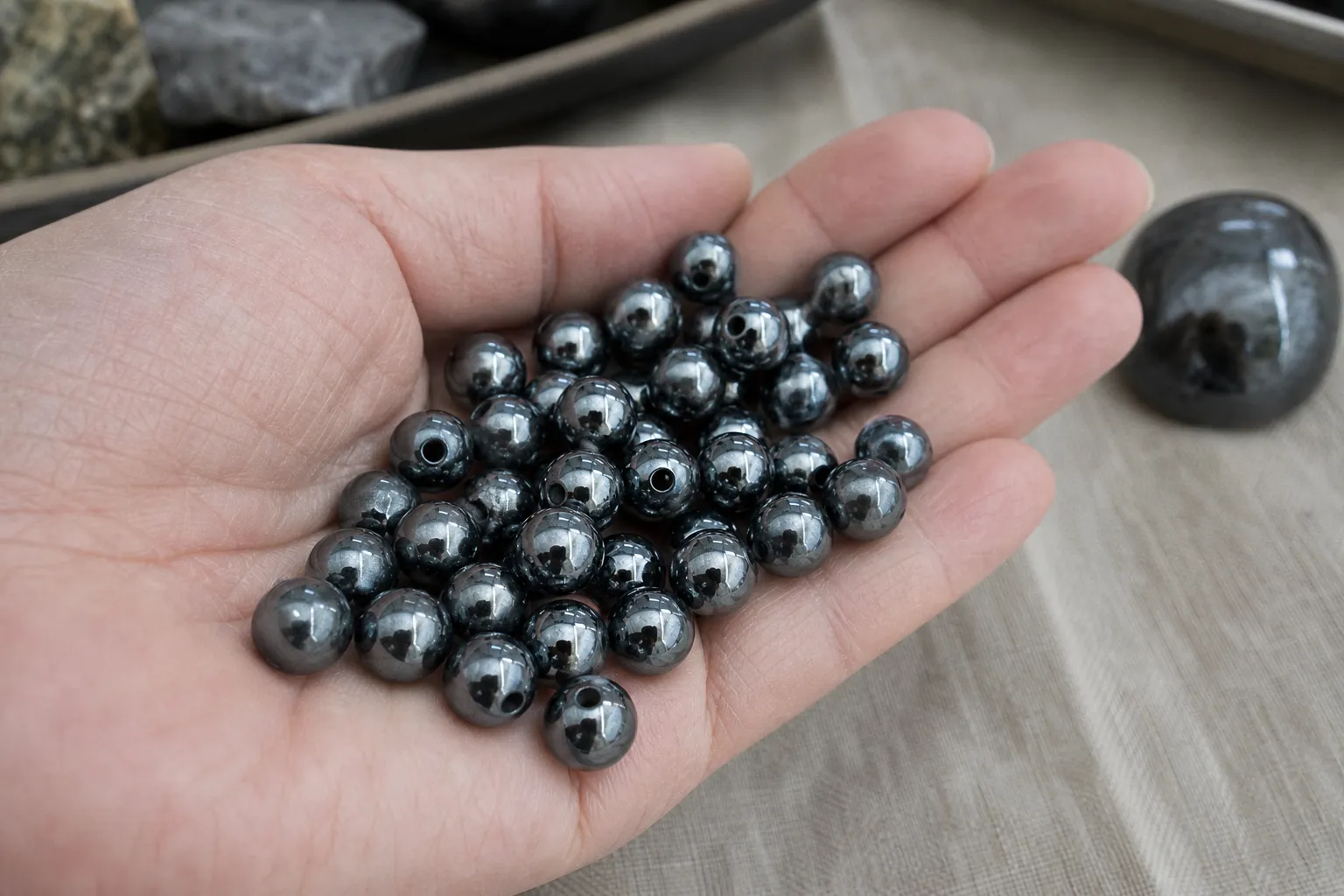
- A dark metallic or steel-like appearance
- A smooth bead, palm stone, or tumbled form that is easy to hold or wear
- A market habit of describing dense dark stones with stabilizing language
Those cues help explain why the wording has stuck. A polished hematite bracelet, for example, may feel more substantial on the wrist than a lighter-looking crystal bracelet. That ordinary handling impression can make the word “grounding” feel believable, even though it does not prove an effect.
The useful distinction is simple: hematite may feel grounding to someone because of its weight, appearance, and personal meaning, but that is different from saying the stone produces a verified result.
Why Hematite’s Weight Shapes the Meaning
When people search for hematite weight meaning, they are often trying to connect a physical sensation with a crystal term. The connection is understandable. A compact, weighty object can feel steady in the hand, and that sensation supports grounded language.
Weighty stones are easy to associate with:
- Stillness rather than airiness
- Contact rather than distance
- Stability rather than movement
- A clear sense of “there-ness” when held or worn
Still, not every hematite piece will feel the same. Size, cut, finish, bead style, stringing, and the item you compare it with all change the impression. A tiny bead may not feel especially heavy. A larger polished piece may feel more noticeable. A bracelet may feel different from a pocket stone because it moves with the body.
The heavy feel helps explain the metaphor. It should not be treated as evidence of an energetic property or as proof that a piece is genuine hematite.
The Role of Dark Metallic Appearance
Hematite’s grounding reputation is also tied to how it looks. Buyers commonly meet it as a dark, glossy, metallic-looking material, especially in polished beads and smooth shapes. That visual language matters.
A steel-like surface can suggest firmness, restraint, and seriousness. A dark glossy bead can feel more controlled than a bright, translucent, or delicate-looking stone. These are impressions, not proof, but they help explain why hematite fits grounding crystal vocabulary so easily.
This is also where seller language can become slippery. Words like “grounding,” “balance,” or “protection” often appear because they are familiar in the crystal market. They tell you how the item is being positioned, not what it can be verified to do.
A better reading is practical: if a hematite piece looks dark, smooth, metallic, and weighty, it is easy to see why it is described as grounding. If a listing moves from that language into broad outcome promises, read it more cautiously.
Why Polished Beads Reinforce the Association
Many buyers first encounter hematite as polished beads rather than rough specimens. That form changes the experience. Beads are worn, stacked, handled, rolled between the fingers, and compared with other bracelets.
Polished hematite beads can strengthen grounding stone language because they:
- Show the dark metallic look clearly
- Feel smooth and cool-looking in presentation
- Create a repeated weight pattern across a strand
- Appear in listings where crystal meaning language is expected
That does not make bead form more powerful or more authentic. It only explains why the language spreads easily. A buyer sees a dark metallic bracelet, notices its weight, reads the word “grounding,” and the description seems to match the object.
The same logic can apply to palm stones or tumbled pieces. If the object is smooth enough to hold comfortably and substantial enough to notice, grounding language may feel fitting. If a piece is very small, unusually lightweight, coated, brightly colored, or paired with strong promises, separate the visible qualities from the claims attached to it.
What Can Change the Answer
It is reasonable to say hematite is often described as a grounding stone in crystal contexts. It is not reasonable to treat “grounding” as a verified property in the same way you would treat color, shape, or surface finish.
The common mistake is overreading the word. “Grounding” sounds concrete, so it can seem like a material feature. In this article’s careful use, it is a meaning label placed on top of observable impressions.
Common Misunderstandings
The first misunderstanding is treating grounding language like a material description. A material description points to something you can inspect: dark surface, polished finish, bead size, metallic look, visible wear, or ordinary handling feel. Grounding language points to a use context or symbolic association.
The second misunderstanding is assuming that heavier means better. A weighty stone can feel satisfying, and for hematite that can support the grounding association. But heavier does not automatically mean higher quality, stronger meaning, or verified identity. It may simply mean the piece is larger or made in a form that feels more substantial.
The third misunderstanding is grouping all dark stones together. Dense dark stones are often described with overlapping crystal vocabulary, but they are not interchangeable. Obsidian, hematite, and other dark-looking stones can differ in appearance, finish, handling feel, and buyer expectations.
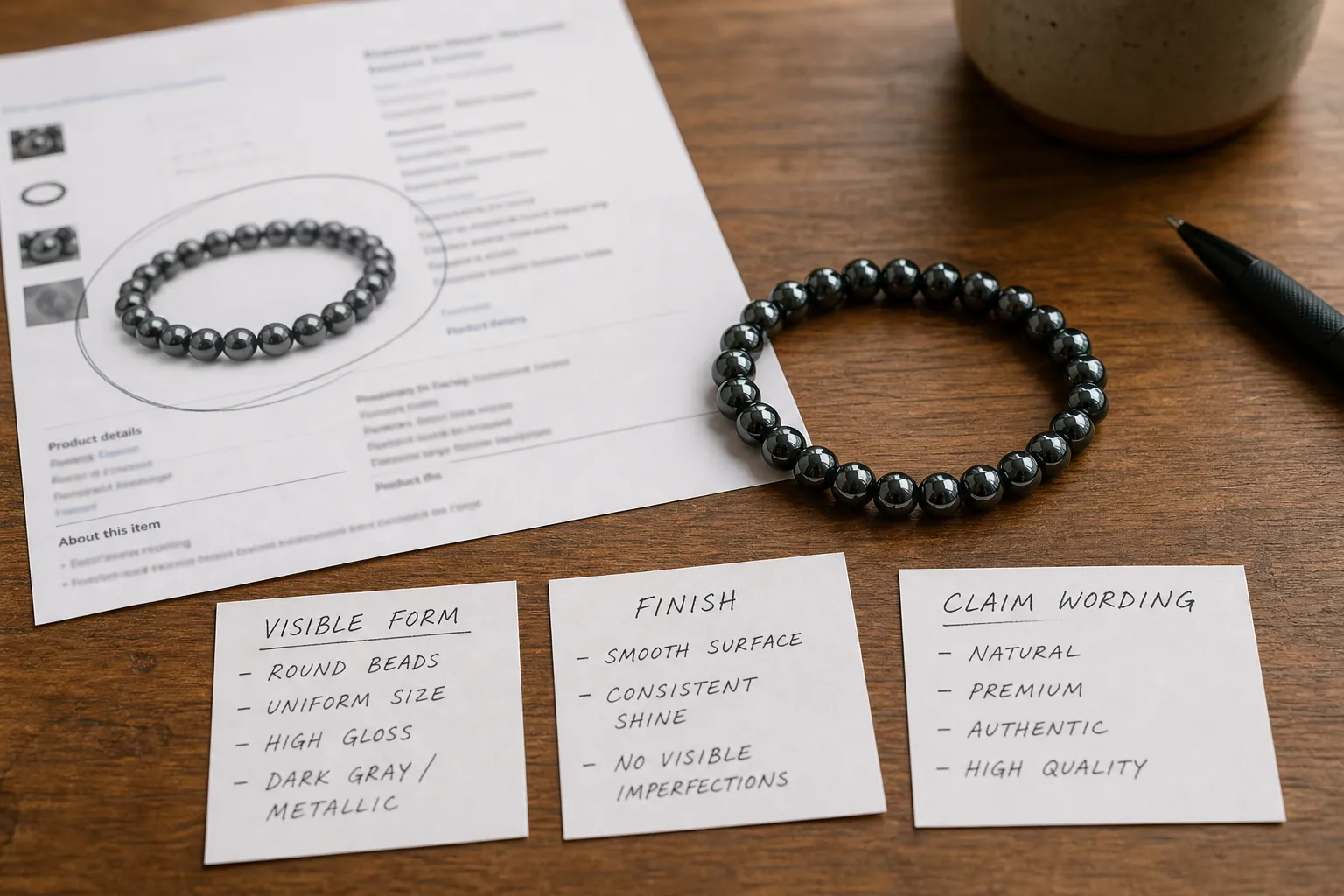
A careful buyer can separate a listing into four parts:
- Appearance: what the piece looks like
- Handling impression: what it may feel like in ordinary use
- Crystal meaning: how it is commonly described
- Outcome language: what should be treated cautiously
That separation keeps the grounding crystal meaning useful without turning it into an unsupported claim.
A Practical Way to Read “Grounding” on a Hematite Listing
When a listing calls hematite a grounding stone, use the phrase as a prompt to inspect the piece, not as a conclusion.
Ask:
- Does the piece look dark, metallic, or steel-like?
- Is it shown as polished beads, a tumbled stone, or another smooth form?
- Does the description give size, finish, and form, or mostly rely on meaning words?
- Is the language symbolic and personal, or does it promise a specific result?
- Are you choosing it for appearance and personal meaning rather than certainty about effects?
This keeps the buying decision close to what can be observed. If hematite appeals to you because it looks dense, dark, polished, and steady, the grounding label may be a useful shorthand. If the label is used to imply certainty about personal outcomes, it is doing more than the evidence supports.
For identity questions, appearance and weight are not enough. A photo, title, or heavy feel can suggest possibilities, but specialized testing may be needed if material certainty matters.
Quick Questions
Is hematite called grounding because it is heavy?
Partly. Its weighty feel is one reason the word fits, especially in polished beads or palm stones. But weight alone does not prove identity, quality, or any effect.
Does “grounding” mean the same thing as “real hematite”?
No. “Grounding” is crystal-use language. “Real hematite” is a material identity question, and appearance or seller wording cannot settle that by itself.
Are hematite beads more grounding than other forms?
Not in a verifiable sense. Beads may make the association feel stronger because they are worn, handled, and felt repeatedly, but that is a difference in user experience and presentation.
The Better Short Answer
Hematite is often called a grounding stone because its common crystal vocabulary matches its buyer-facing presence: dark, metallic-looking, smooth when polished, and often perceived as weighty. Those qualities make “grounding” feel like a natural metaphor.
The limit is just as important as the meaning. Grounding is not a verified result in this context. It is a symbolic, personal, and marketplace term that works best when kept close to observable impressions. If you like hematite for its heavy feel, polished bead look, or steel-like appearance, the grounding label may describe why it appeals to you. It should not be treated as proof of personal effects, authenticity, or safety.