ProtectCrystal handling note
Comparison guide
Hematite Grounding Meaning Compared With Black Obsidian
If you are comparing hematite grounding meaning compared with black obsidian, the practical difference is simple: hematite is often described in crystal shops as the steadier, heavier, more anchoring stone, while black obsidian is commonly described as darker, more reflective, and more boundary-oriented.
Both may be sold with grounding or protection language. Read that as cultural, personal, or marketplace wording—not as something the stone itself can prove.
The meaning can help you choose the style of stone language you prefer. The material cues help you judge whether a piece may actually be hematite or obsidian. One does not prove the other.
upward
Start with the broader guide
Use the broader guide first if you need the full scope before this page.
The meaning difference: steady grounding versus protective grounding
In crystal-use language, hematite and black obsidian overlap because both are commonly sold as dark grounding stones. That is why product listings can make them sound almost interchangeable. The useful distinction is the kind of grounding being described.
Hematite grounding meaning is usually tied to steadiness, anchoring, focus, and a weighted feeling. In shop descriptions, hematite often has a practical, dense, no-nonsense tone. People may choose it when they like the idea of a stone that represents structure, centeredness, or a daily-carry reminder to slow down.
Black obsidian grounding meaning is usually tied to protection, reflection, clearing, and boundaries. Seller descriptions often give it a darker and more intense tone, especially in bracelets, palm stones, and tumbled-stone sets. It is often chosen by people who like glossy black stones and symbolic language around reflection or personal boundaries.
A quick way to choose
- Choose hematite if words like steadiness, focus, anchoring, structure, or grounded daily use appeal to you.
- Choose black obsidian if words like protection, reflection, clearing, boundaries, or a stronger dark-stone presence appeal to you.
- If both meanings appeal to you, choose by the actual object: finish, comfort, photos, seller detail, and whether the material is clearly identified.
“Grounding crystals meaning” is broad. In many shops, grounding simply means the stone is being used as a personal reminder or ritual object. That is different from saying the stone produces a measurable outcome.
What to look for when shopping
Meaning language does not identify a stone. When comparing hematite versus black obsidian in a shop photo, tray, or tumbled set, look at visible material cues first.
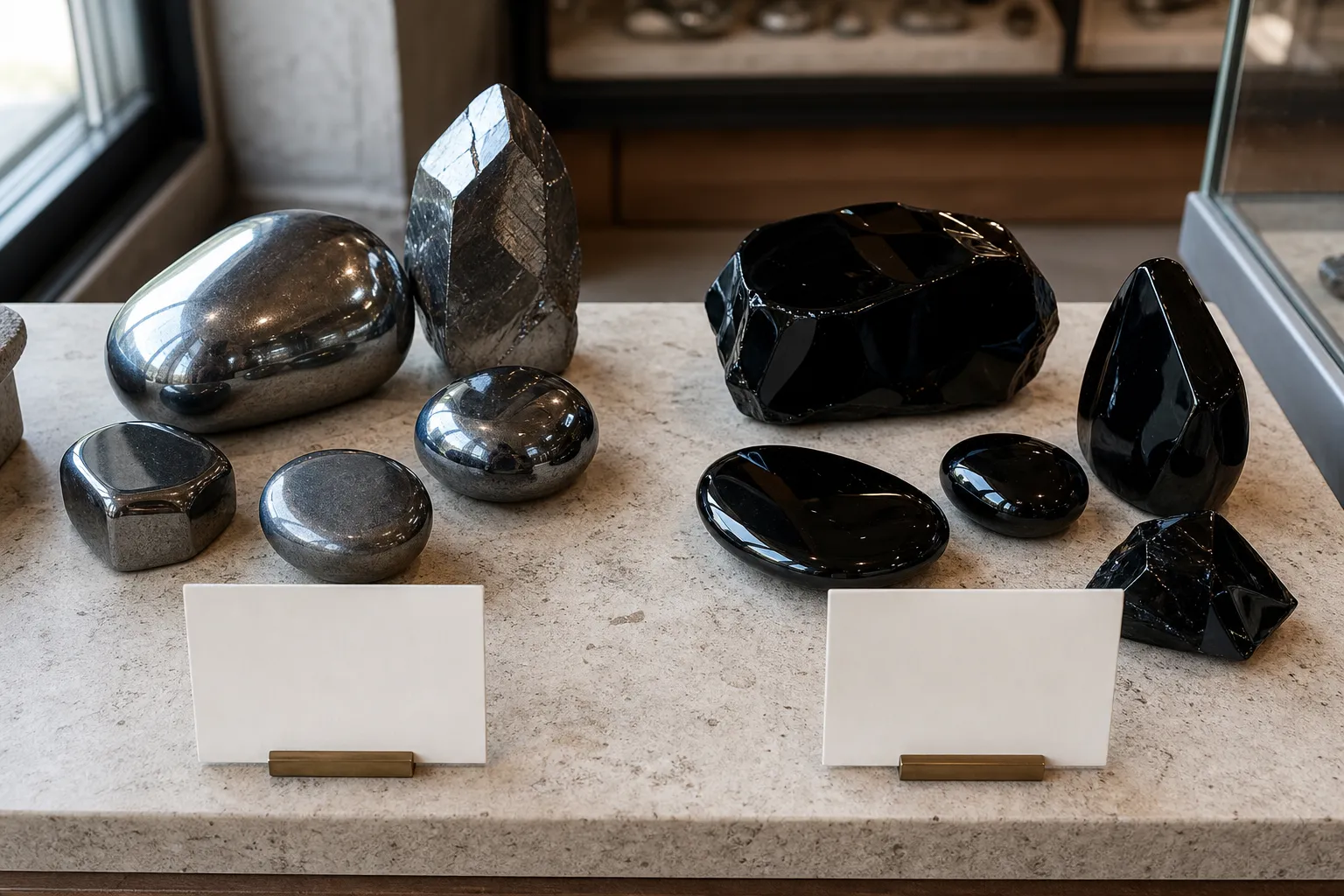
Hematite is an iron oxide mineral. Mineral references describe hematite in forms that can appear metallic, earthy, steel-gray, dark gray, blackish, reddish brown, or red-brown depending on the specimen and surface. In polished crystal items, the most useful buyer cue is often a metallic gray hematite cue: a gunmetal shine, mirror-like polish, or dense reflective look. Many polished hematite beads also feel weighty for their size, which can be a helpful clue.
Black obsidian is commonly described as volcanic glass. In crystal retail, the clearest glassy black obsidian cues are a smooth dark surface, glossy polish, and deep black or very dark brown-black appearance. Chipped or broken areas may look glass-like rather than metallic. Because obsidian behaves like glass, inspect pieces for chips, sharp edges, or impact marks before wearing them or carrying them loose with other items.
These clues help, but they do not give final certainty.
A common shopping situation: two tumbled stones are both dark. One looks deep black and glossy; the other looks dark gray with a metallic flash. The glossy black piece may suggest obsidian. The dark gray metallic-looking piece may suggest hematite. But lighting, camera exposure, coatings, dyes, and polishing can all distort what you see.
Quick cue list for polished pieces
Hematite may suggest itself when you notice:
- Gunmetal gray or metallic reflection
- A dense or heavy impression for the size
- Dark gray rather than pure black color
- Occasional reddish brown tones, especially on rougher areas
- A polished finish that looks more metallic than glassy
Black obsidian may suggest itself when you notice:
- Deep black, glossy, glass-like polish
- A smoother surface with less metallic flash
- Glassy chips or shell-like breaks on damaged edges
- A more uniform black look in tumbled pieces
- Less of the steel-gray shine associated with polished hematite
The word “may” matters. A cue can point you in a direction, but it cannot fully confirm the material.
Why seller grounding claims are not identification
A seller may use words like “grounding,” “protection,” “clearing,” or “stability” beside either stone. Those words describe the way the item is being positioned for crystal use. They do not prove that the piece is hematite, black obsidian, or any specific mineral or glass.
Separate three questions
- What meaning is being given to the stone?
Hematite may be framed as steady and anchoring. Black obsidian may be framed as protective and reflective. - What is the material?
Hematite is a mineral. Black obsidian is a glassy volcanic material. Their surfaces, weight impressions, and breakage behavior can differ. - Does the listing give enough evidence for the identity?
Meaning is personal or cultural. Identity may require more than a product title or a single polished photo.
This is why “grounding protection crystal meanings” should be read as descriptive language, not as a promise. If a listing says hematite is for steadiness or black obsidian is for protection, that tells you how the seller is presenting the stone. It does not tell you what you will experience, and it does not replace basic material checks.
A stronger listing usually gives clear photos, a plain material name, and useful notes about finish, coating, magnetism, dye, or treatment when relevant. A weaker listing may lean almost entirely on symbolic language while giving little information about what the item is.
Polished stone identification limits
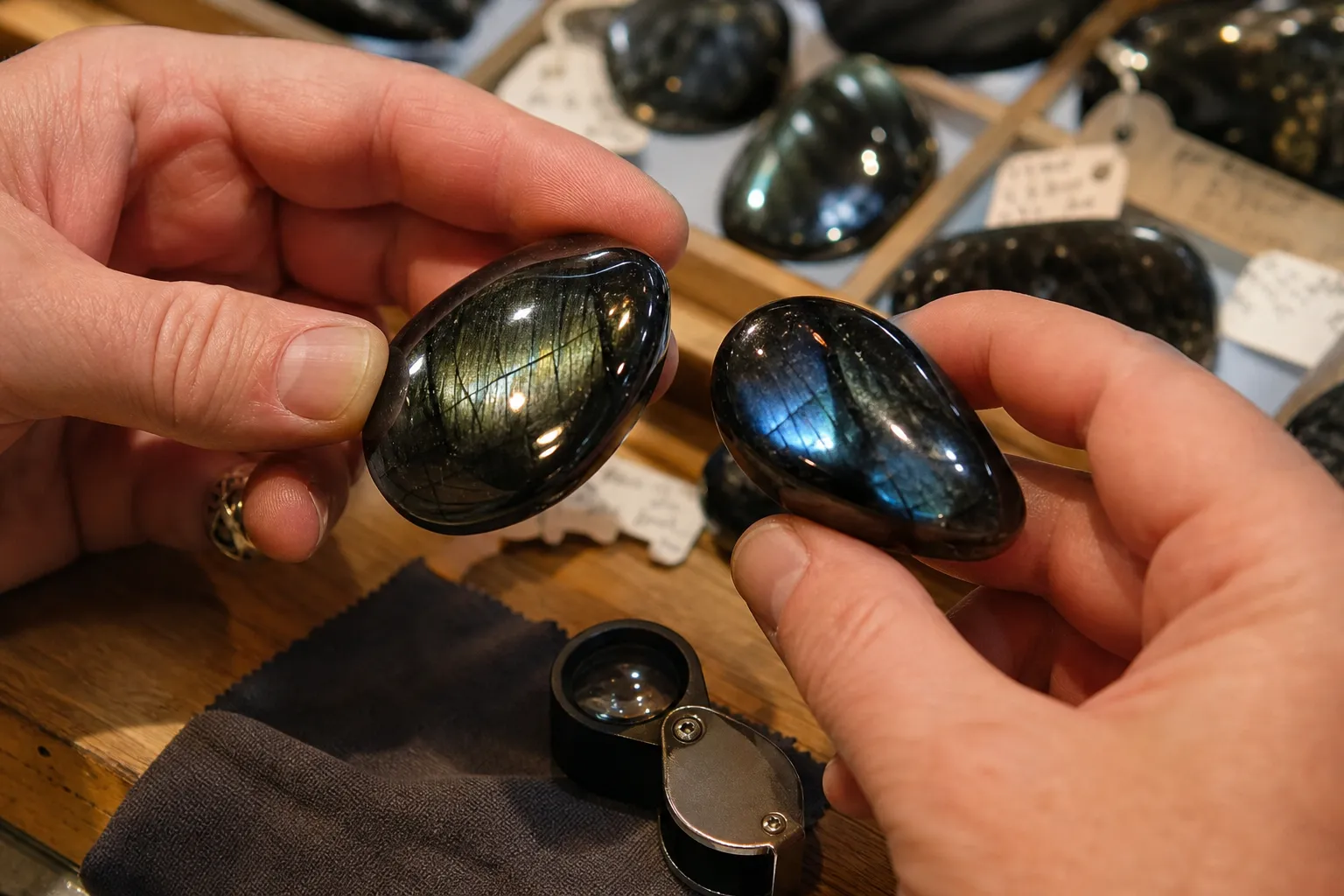
Tumbled hematite and obsidian can be hard to separate in poor lighting because polishing removes many rough-surface clues. A dark polished stone may look more uniform than it really is. Photos can also make metallic gray look black, while glossy black obsidian may reflect light in a way that seems metallic.
Polished stone identification has limits because:
- Surface finish changes the look. A high polish can make different materials appear similarly glossy.
- Lighting changes color. Hematite may photograph as black; black obsidian may show gray reflections.
- Coatings and treatments can interfere. Some beads or decorative pieces have finishes that hide the original surface.
- Small stones give fewer clues. Tiny beads, chips, and rounded tumbles may not show enough texture.
- Seller photos may be incomplete. One image rarely shows weight impression, luster, chips, undertone, and surface detail.
For certainty, specialized testing may be needed. That does not mean every casual tumbled stone needs lab work. It means color, weight, and seller meaning should not be treated as final identification methods.
If you are buying online, read the material description first, then compare the visible cues. Ask for clearer photos if the piece is expensive or if the listing mixes several dark stones together.
Choosing hematite or obsidian without over-reading the claims
If your main question is meaning, choose the stone whose language fits your intended use. If your main question is identity, slow down and look at the object.
Choose hematite when you want the common market meaning of steadiness, grounded focus, and a heavy metallic presence. It fits buyers who like polished gray stones, reflective beads, and the symbolic feel of something dense and anchoring.
Choose black obsidian when you want the common market meaning of protection, reflection, and boundary-setting. It fits buyers who like glossy black stones, glassy surfaces, and a darker visual style.
If the product title says “grounding stone bracelet” or “protection crystal set,” do not assume every dark bead is hematite or obsidian. Look for the actual material name and photos that label each stone. In mixed tumbled sets, ask which piece is which before assuming.
If you already own a dark polished stone
- More metallic, gunmetal, and dense-feeling: may suggest hematite.
- More deep black, smooth, and glass-like: may suggest black obsidian.
- Unclear from photos or lighting: treat the identity as uncertain.
- Chipped glassy edge: handle carefully and avoid loose contact with delicate items.
The most useful answer is not that one stone is “stronger.” Hematite and black obsidian are given different styles of grounding language. Hematite is usually the steadiness stone in marketplace wording. Black obsidian is usually the protective-reflective stone. The meaning can guide preference, but the material still needs its own careful look.
Sources
Sources and further reading
Reference links are limited to sources considered suitable for public citation in this page.