
ProtectCrystal handling note
Daily wear decision
Can You Wear a Hematite Bracelet All Day
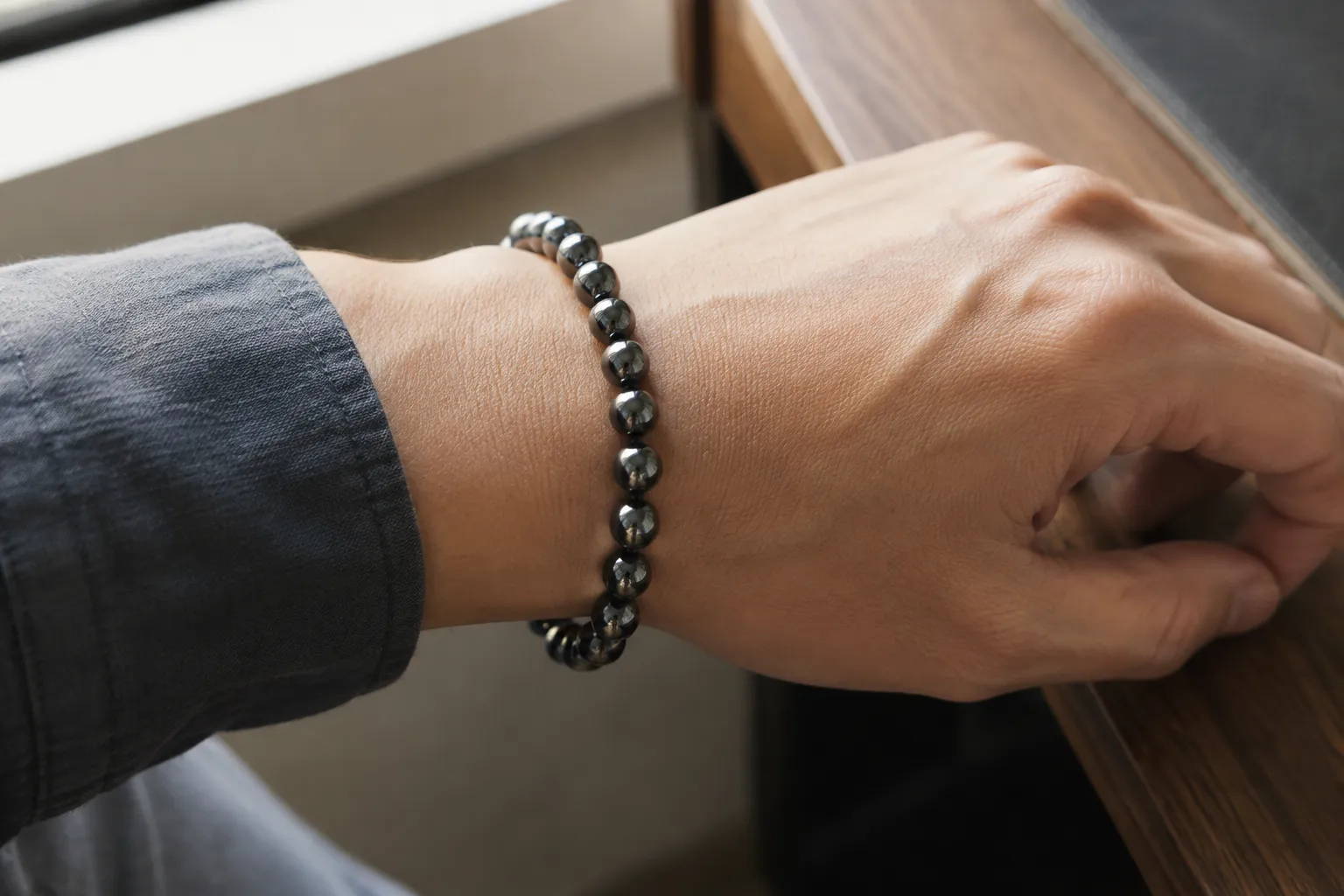
A metallic gray hematite bead bracelet can feel like easy everyday jewelry. For many wearers, all-day use is mainly a fit, comfort, and care question: if the bracelet sits well, stays mostly dry, does not rub, and is not a magnetic item that conflicts with an implanted device, daytime wear is usually reasonable.
The short answer: you can often wear a hematite bracelet all day during normal, low-impact activities. Remove it for showering, swimming, heavy sweating, hard work, sports, sleep if it presses or catches, and any skin discomfort. Magnetic or magnetized bracelets need one extra check if you have a pacemaker or another implanted medical device.
upward
Start with the broader guide
Use the broader guide first if you need the full scope before this page.
When All-Day Wear Usually Makes Sense
Hematite is a real mineral, and gem references describe it as a jewelry material with a metallic to submetallic look. In bracelets, it is commonly sold as polished beads with a gray-black shine. That surface is part of the appeal, but it also means the finish and stringing matter.
All-day wear is more reasonable when the bracelet:
- Moves slightly without sliding over your hand.
- Has smooth beads with no sharp chips or rough drill holes.
- Uses elastic, cord, wire, or clasps that do not pinch.
- Stays mostly dry during the day.
- Is kept away from impact-heavy or chemical-exposure tasks.
- Does not leave residue, redness, itching, soreness, or deep pressure marks.
A bracelet that feels fine for one hour may not feel fine after eight. Large beads can press against a desk, keyboard edge, steering wheel, or sleeve cuff. Tight elastic can feel acceptable at first and then become irritating as your wrist warms or swells slightly during the day.
A practical test is simple: wear the bracelet for a normal, low-stress day, then check your wrist and the bracelet. If your skin feels normal, the beads remain smooth, and the cord or clasp is not strained, that suggests the bracelet may suit similar daily wear. It does not prove universal skin compatibility.
Remove It for Water, Sweat, Impact, and Harsh Contact
Treat a polished hematite bracelet more like finished jewelry than outdoor gear. The care concern is not only the hematite bead. It is also the polish, coating, stringing material, glue, metal findings, spacers, and any treatment that may not be obvious from the listing.
Take the bracelet off before:
- Showering.
- Swimming.
- Washing dishes.
- Cleaning with household chemicals.
- Gym sessions or heavy sweating.
- Gardening, lifting, or tool work.
- Sports or impact-prone activity.
- Sleeping if it catches, presses, or stretches the elastic.
Water exposure is a common weak point because water can affect parts you do not see. It may sit inside bead holes, weaken elastic over time, dull a surface, loosen glue, or interact with metal components. Showering and swimming add soap, shampoo, chlorine, salt water, friction, and temperature changes.
Sweat is similar. A warm day may not visibly change anything, but repeated sweat, skin oils, and rubbing can affect the surface and stringing. If you wear the bracelet through a long day, wipe it with a soft dry cloth afterward and let it dry before storage. Avoid soaking it as a cleaning routine unless the seller gives clear material-specific care instructions, and still treat elastic and metal parts cautiously.
Impact is the other limit. Bracelet beads get knocked against desks, door frames, gym equipment, and stone countertops. Visible signs may include small chips, dull spots, cracks near drill holes, or rough edges. A chip does not prove what the bracelet is made from, but it does tell you the piece is less comfortable against skin.
Hematite wears best when daily use stays dry, moderate, and low-impact.
Skin Contact: What to Watch During a Full Day
The available public sources do not give bracelet-specific dermatology testing, coating analysis, or long-term wearer data. So skin-contact advice should stay practical: watch what happens on your wrist, and do not try to diagnose the bracelet from one sign.
Pause wearing the bracelet if you notice:
- Itching, burning, soreness, or persistent redness.
- A rash-like area where beads, spacers, or a clasp sit.
- Dark residue or color transfer on the skin.
- A strong metallic smell from hardware.
- Rough bead edges after a chip.
- Pressure marks that remain after removal.
- Pinching from a clasp, charm, spacer, or tight elastic.
These signs may come from friction, sweat, metal findings, coatings, dyes, dirt buildup, elastic tension, or another material used in the bracelet. They do not prove that the beads are natural hematite, treated hematite, imitation material, or unsuitable material. For certainty about composition, treatment, or coating, specialized testing may be needed.
Fit solves many everyday problems. A hematite bracelet should not grip the wrist like a tight band. You should be able to move it slightly without force. If elastic leaves a strong indentation, the issue may be sizing rather than the stone. If a clasp bracelet catches arm hair or presses into one spot, the hardware may be the weak point.
Skin response is individual, and appearance alone cannot settle it.
Magnetic Hematite Bracelets Need One Extra Check
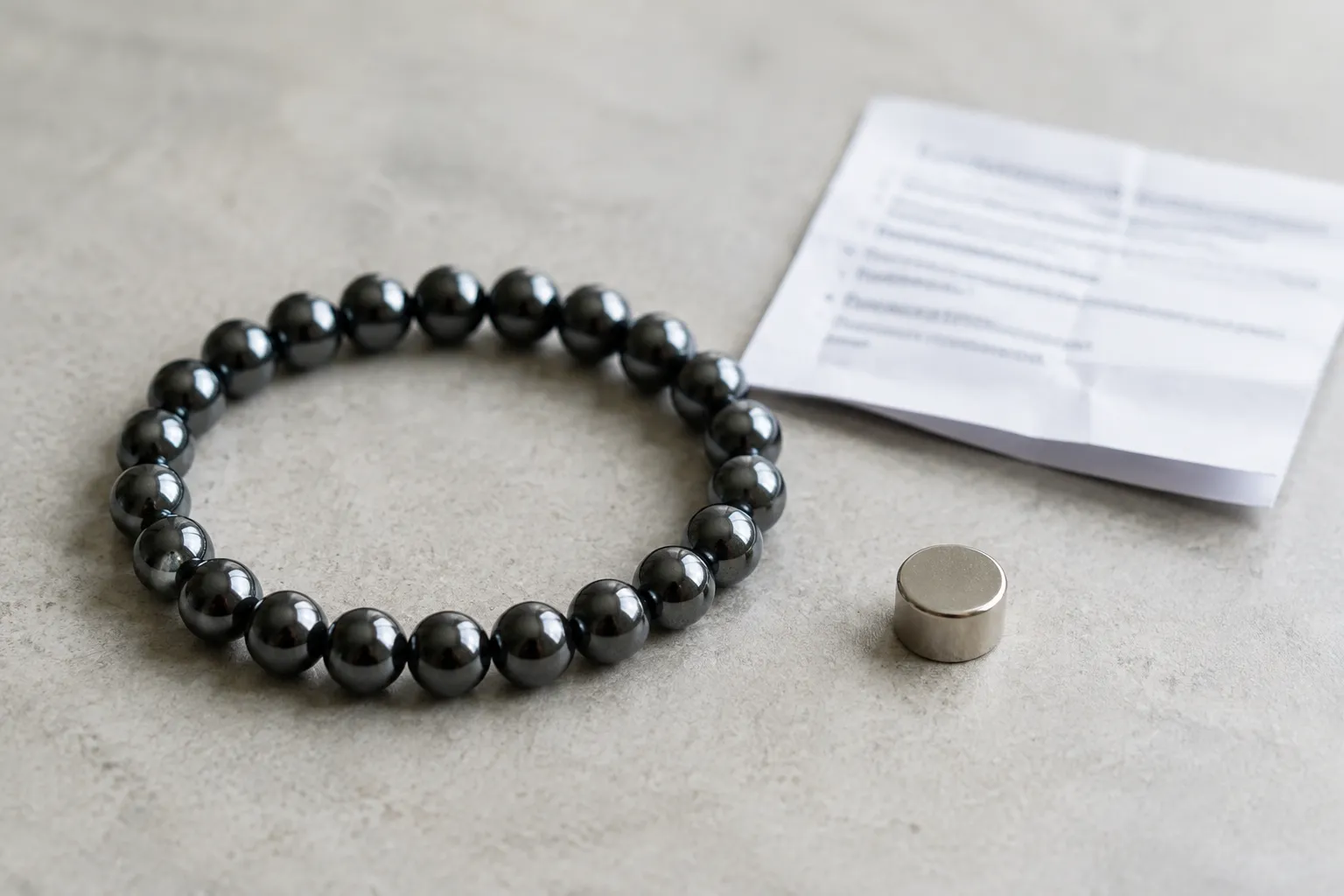
Not every bracelet sold as hematite behaves the same way. Some products are sold as “magnetic hematite,” “magnetized hematite,” or magnetic-style bead bracelets. A simple magnet response may suggest magnetic behavior, but it cannot prove full composition, treatment history, magnetic strength, coating, or skin compatibility.
The clearest added caution is for people with pacemakers or other implanted medical devices. The FDA has warned that magnets in some consumer products may affect certain implanted devices when they are close enough. That warning is not specifically about hematite jewelry, and it does not mean every hematite bracelet is strongly magnetic. It does mean a bracelet marketed as magnetic or magnetized deserves extra care if you use an implanted device.
If you have a pacemaker or another implanted device, do not rely on a crystal seller’s wording or a quick magnet test to judge distance, strength, or compatibility. Follow your device instructions, and contact your clinician or device manufacturer if you are unsure. Keep magnetic jewelry away from the device area unless your device guidance says otherwise.
For readers without implanted devices, the magnetic label is still worth noticing because it changes the question. Magnetic hematite bracelet safety is not exactly the same as ordinary polished hematite bracelet comfort. A magnetic product may involve different materials, hardware, or manufacturing choices. Seller wording can guide your questions, but it is not proof.
Magnetic claims deserve a closer look, not panic.
What Seller Wording Can and Cannot Tell You
Listings often use phrases such as “hematite bead bracelet,” “polished hematite,” “magnetic hematite,” “grounding,” or “protection.” Some of this language explains how the bracelet is being presented to buyers. It does not verify what the bracelet is made from or what it will do for the wearer.
For a practical buying check, look at:
- Bead surface: smooth, chipped, scratched, flaking, or unusually dull.
- Bead holes: cleanly drilled or rough.
- Stringing: elastic, cord, wire, or clasp construction.
- Hardware: spacers, charms, clasps, and rubbing points.
- Seller detail: whether “magnetic,” “coated,” “plated,” or “natural” is explained.
- Return policy: useful if the bracelet arrives damaged or irritates your skin.
A shiny gray-black appearance can be consistent with hematite-style jewelry, but it cannot prove natural hematite. A heavy feel may be suggestive, but it is not a reliable home test. A magnet response may show that something is magnetic, but not why. If a seller makes broad benefit claims while giving little material detail, treat the listing cautiously.
Protective crystal language belongs in personal or cultural context. Many people wear hematite because its symbolism feels grounding, steady, or meaningful to them. That is different from proving a physical safety effect or a measurable protective result. For an all-day bracelet decision, stronger buyer evidence comes from fit, finish, water exposure, hardware, magnetic cautions, and skin response.
Meaning can be personal. Material limits remain practical.
A Simple All-Day Wear Checklist
Before making a hematite bracelet part of your daily routine:
- Start short. Try a few hours before wearing a new bracelet all day.
- Check the fit. It should not dig in, trap skin, or stretch tightly.
- Inspect the beads. Look for chips, sharp edges, rough drill holes, dulling, or residue.
- Check the construction. Elastic should not be frayed or overstretched; clasps should close cleanly.
- Keep it dry. Remove it before showering, swimming, cleaning, and heavy sweating.
- Avoid impact. Take it off for workouts, lifting, sports, or tool use.
- Watch your skin. Stop wearing it if rubbing, redness, itching, soreness, swelling, or residue appears.
- Notice magnetic labeling. If it is magnetic or magnetized and you have an implanted device, follow device-specific guidance.
This checklist cannot prove authenticity, composition, coating safety, or magnetic strength. It can help you decide whether one specific bracelet behaves well enough for your normal day.
So, Can You Wear It All Day?
Yes, wearing a hematite bracelet all day can be reasonable when it is comfortable, dry, smooth, well-strung, and suited to your routine. The strongest reasons to take it off are water, sweat-heavy activity, impact, chemical exposure, sleep pressure, catching, worn elastic, pinching hardware, visible surface damage, or any skin discomfort.
The answer changes if the bracelet is magnetic or magnetized and you have a pacemaker or another implanted medical device. In that case, treat it as a magnet-related item and follow device guidance instead of relying on seller claims.
For everyday hematite bracelet safety, the modest approach is best: wear it like polished jewelry, inspect it like a buyer, and keep crystal meanings separate from material evidence. You can check comfort, finish, fit, and visible wear. You cannot confirm everything from shine, weight, wording, or a magnet response alone.
Sources
Sources and further reading
Reference links are limited to sources considered suitable for public citation in this page.