
ProtectCrystal handling note
Buyer inspection guide
Raw Cinnabar Identification Clues Buyers Can Check Carefully
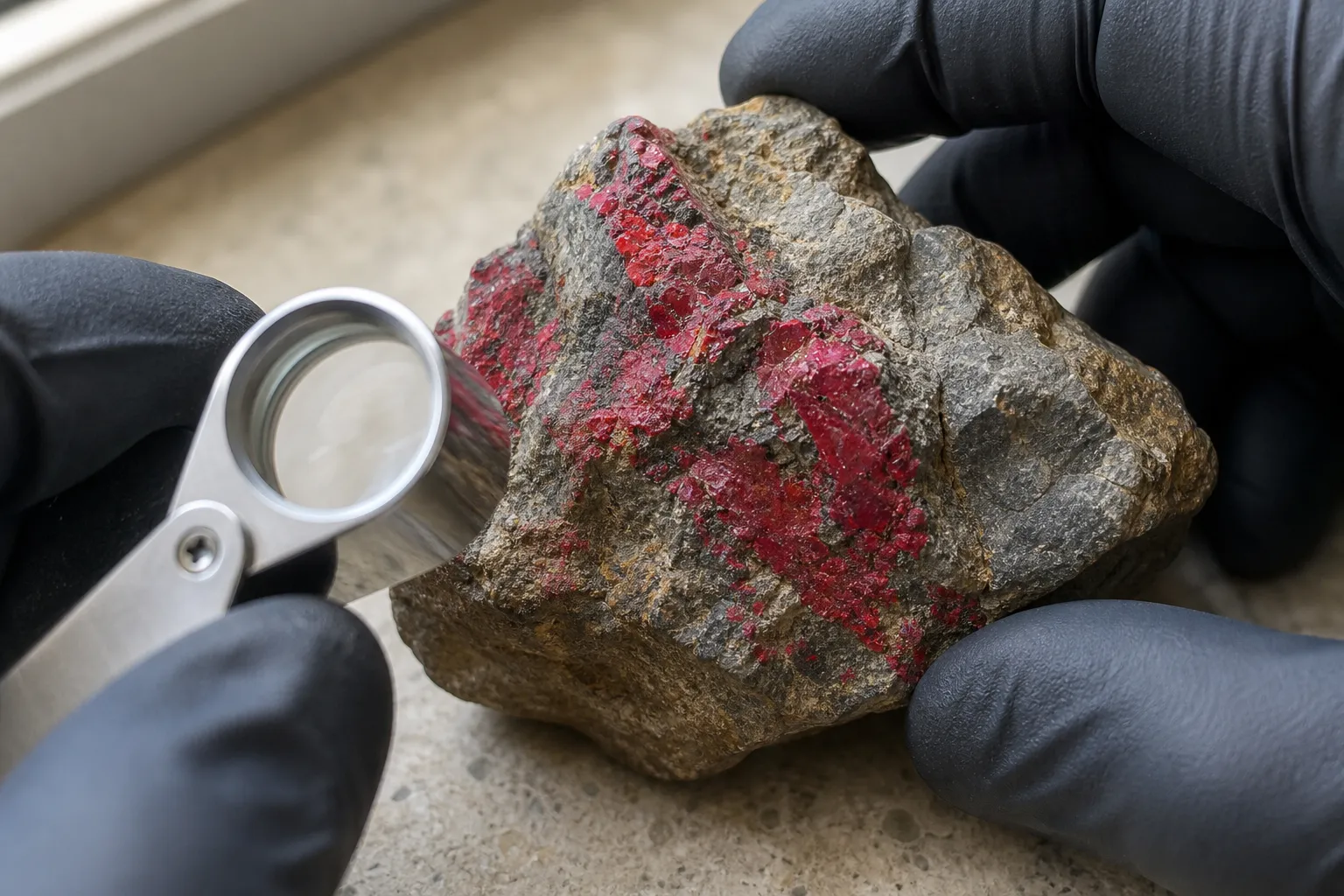
Raw cinnabar identification starts with careful observation, not certainty. A buyer can look for a strong red to scarlet mineral color, bright or resinous luster in places, uneven raw texture, red material sitting with a host rock, and seller wording that describes the specimen instead of overselling it. These clues can make a listing look plausible, questionable, or worth checking further, but they cannot prove authenticity from appearance alone.
Cinnabar is a mercury sulfide mineral, so the inspection should stay gentle. Do not scrape, grind, sand, taste, wet-polish, drill, tumble, or create dust from a raw piece. If the specimen is expensive, crumbly, meant for frequent handling, or sold with very confident claims, treat visual inspection as only a first screen.
upward
Read the full overview first
Use the broader guide first if you need the full scope before this page.
What You Can Check Without Damaging the Piece
A useful first pass looks at the specimen as a whole: color, luster, surface, matrix, photos, and wording. One clue is weak by itself. Several consistent clues can support a cautious “possibly cinnabar” reading, while contradictions should slow the purchase down.
Careful first pass
Look for red mineral areas, a luster that fits cinnabar descriptions, raw uneven texture, believable contact with matrix, and a seller description that gives practical details. Keep the conclusion provisional.
Color
Color is the clue most buyers notice first. Cinnabar is commonly associated with red, scarlet, or deep red tones. Still, red mineral identification has real limits. Other minerals, coatings, pigments, dyed material, and edited photos can also look red. A bright red specimen in a crystal listing is not automatically cinnabar.
Luster
Luster can help when read with the color. Cinnabar may be described as bright, resinous, or somewhat metallic depending on the surface and specimen habit. On a raw piece, that shine may appear only in small patches. A dull powdery surface, an artificial-looking gloss, or color that seems to sit only on the outside does not settle the question, but it gives the buyer a reason to look more closely.
Texture
Texture matters because raw cinnabar is different from a polished red stone, carved ornament, or dyed bead. A raw specimen may show uneven mineral patches, small crystalline areas, earthy sections, or red material associated with host rock. The question is whether the red areas seem naturally integrated, or whether they look painted, rubbed on, or suspiciously uniform.
Matrix
Cinnabar on matrix can be a helpful context clue. Red mineral attached to host rock may look more plausible than a loose red coating, but matrix is not proof. The host rock may be genuine while the red material is misidentified, enhanced, or simply another red mineral. Let the matrix support the reading, not carry the whole conclusion.
Read the Clues Together
For a buyer, the best method is to group the visible signs instead of treating one feature as decisive.
Clue to Check
What It May Suggest
What It Cannot Prove
Red to scarlet mineral color
The piece may fit common cinnabar descriptions
That the mineral is definitely cinnabar
Bright or resinous-looking luster
The surface may be consistent with reference descriptions
That the specimen is untreated or natural
Uneven raw texture
The piece may be a raw mineral specimen rather than a polished object
That the red mineral has been correctly labeled
Red mineral on matrix
The occurrence may look geologically plausible
That the matrix or red material is authentic
Measured seller detail
The listing may be more careful than a vague label
That the seller has verified the specimen
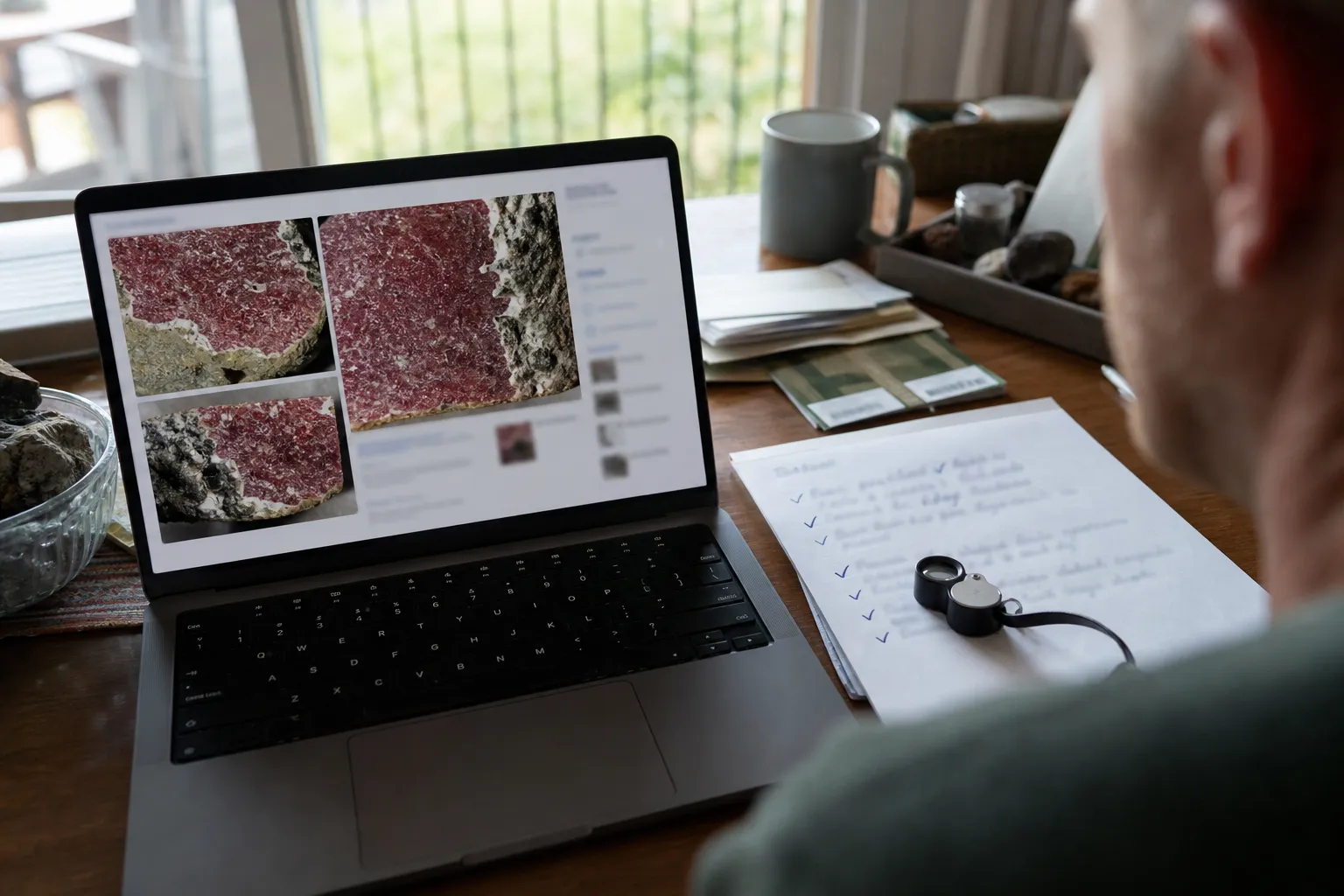
Photos should show the specimen under neutral light, not only under warm, saturated, or high-contrast lighting. If every image is extremely vivid, filtered, wet-looking, or taken from one angle, the color clue becomes weaker. For a meaningful purchase, ask for daylight photos, close-ups of the red mineral against the matrix, and images of the whole piece.
Variation across the surface can look more natural than a perfectly even red coating. A raw piece may include intense red areas, darker red zones, dull patches, and non-red matrix. Even then, the identification remains open. A surface that looks “too perfect” is not automatic proof of treatment, but it is a reason not to pay as though the piece has been confirmed.
Some mineral references mention cinnabar streak and hardness, but those checks can involve abrasion. For a mercury-bearing mineral, casual scratch or streak testing is not a good buyer habit. Treat streak and hardness as reference context or as a controlled specialist step, not as something to try at home.
Weight is also less useful than many buyers expect. Matrix, size, moisture, metal-rich minerals, and mixed material can all change how a specimen feels in the hand. “Heavy for its size” may be interesting, but it is not enough.
Seller Wording That Should Slow You Down
Seller wording is part of raw cinnabar identification because many buyers first see the piece through a listing, label, or shop card. Words do not verify a mineral, but they can show whether the seller understands the limits of visual identification.
Be cautious when a listing sounds highly certain but gives little detail. A careful description does not need to sound technical, but it should give the buyer something concrete to evaluate: raw specimen, cinnabar on matrix, red mineral areas, approximate size, weight, origin if known, and handling notes.
Seller wording red flags include:
- The listing depends only on “bright red crystal” with no mineral details.
- The piece is described mainly through spiritual or decorative language.
- Photos avoid close-ups of the red mineral and matrix contact.
- The seller discourages questions about source, treatment, or handling.
- The description uses certainty without explaining why.
- The piece is priced as important material with no path to independent confirmation.
Crystal-use language needs a separate boundary. Some buyers look for cinnabar in protective crystal collections, and shops may describe it in symbolic, personal, or cultural terms. That can explain interest in the piece, but it is not evidence of identity, authenticity, or handling suitability.
The same applies to vermilion pigment history. Cinnabar’s historical connection with vermilion helps explain why its red color is so recognizable, but pigment history is not an authentication shortcut. A red powder, red coating, or red decorative object should not be assumed to be cinnabar because it resembles a historic color.
Where Visual Inspection Must Stop
Visible clues can suggest, narrow, or raise doubts. They cannot verify a raw cinnabar specimen by themselves. Mineral references can describe cinnabar’s composition and common properties, but they do not identify the individual piece in a seller’s photo.
This matters when the purchase depends on exact identity, natural origin, untreated condition, high price, resale, or long-term collection accuracy. A specimen may look plausible and still be mislabeled. A piece may contain real cinnabar but also include matrix or surface conditions that make the visible red areas hard to interpret. A seller may repeat a supplier’s label without having checked the material.
For certainty, specialized testing may be needed. The right method depends on the context and should be handled by an appropriate mineral, gem, or laboratory professional rather than improvised through destructive home tests. That is especially important for cinnabar because of its mercury content.
Online buying adds another limit. Screen color, camera settings, lighting, dust, wet surfaces, and background contrast can all change how red or glossy a specimen appears. If the listing does not show scale, multiple angles, and close surface detail, the buyer is missing basic information.
A practical way to sort the decision:
- Plausible but unverified: several visible clues fit, and the seller gives careful details.
- Unclear: some clues fit, but photos or wording leave major gaps.
- Confirm first or skip: the price, claims, handling plan, or visual contradictions make certainty important.
That keeps the decision grounded without turning one attractive red image into proof.
Handling Notes While Inspecting Raw Cinnabar
Cinnabar handling safety belongs close to identification because inspection itself can create avoidable exposure if the piece is handled roughly. Keep the specimen intact and stable. Handle it briefly, avoid rubbing loose surfaces, and wash hands afterward.
Do not place raw cinnabar near food preparation areas, drinks, bedding, children’s objects, or pet-accessible shelves. If the specimen is crumbly, powdery, or shedding particles, contain it instead of continuing to handle it.
Storage can be simple: use a labeled container, display case, or stable box where the piece will not rub against other items or shed onto surfaces. If it is part of a broader crystal collection, keep it separate from stones that are frequently handled, carried, or placed in open decorative bowls.
Wearable use deserves caution. A raw, friable, or poorly sealed cinnabar piece is not the same as a stable display specimen, and this page cannot evaluate whether any individual item is suitable for skin contact. If a seller presents raw cinnabar as an everyday wearable item without clear handling context, ask more questions or choose a less complicated material.
Bottom Line for Buyers
Raw cinnabar identification is best treated as cautious screening. Look for red to scarlet mineral appearance, luster that fits common descriptions, raw surface texture, believable matrix association, and seller wording that describes observable features. Then keep the conclusion light.
The main misunderstandings are simple: a red mineral is not automatically cinnabar, cinnabar on matrix is not proof of natural origin, seller labels do not verify authenticity, and crystal-use language does not confirm identity. Streak and hardness belong in controlled identification context, not casual destructive testing.
If the piece is inexpensive and only being considered as a labeled display specimen, careful visual screening may be enough to decide whether to ask questions or keep looking. If the purchase depends on confirmed identity, handling suitability, resale value, or accurate collection labeling, visual inspection should stop at “possible” and move toward specialist confirmation.
Sources
Sources and further reading
Reference links are limited to sources considered suitable for public citation in this page.